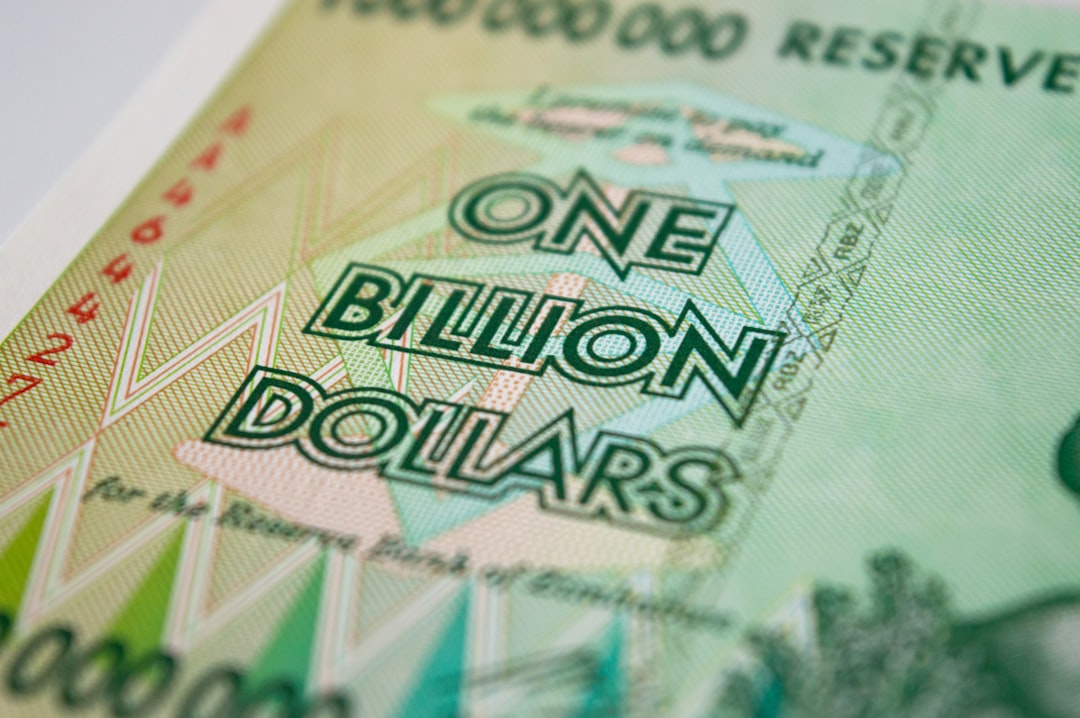
You stand on the precipice of an economic shift, a recalibration that feels both unnerving and, perhaps, inevitable. This isn’t just a cyclical turn of the economic wheel; some would argue you are witnessing a “Cosmic Reboot” of inflation, a fundamental resetting of its behaviors and impacts. For too long, the established understanding of inflation has been a comfortable, predictable pattern. But recent events suggest you are entering a new epoch, one where the old heuristics may no longer apply. This article will delve into the multifaceted nature of this phenomenon, exploring its historical context, the forces driving its current resurgence, and the potential implications for your financial future.
You’ve encountered inflation before, likely in historical accounts or whispered warnings from older generations. It’s the force that erodes the purchasing power of your hard-earned money, making yesterday’s luxuries tomorrow’s dreams. To understand the current recalibration, you must first appreciate its historical lineage.
The Silent Thief: Early Manifestations
Historically, inflation has often been a consequence of unchecked government spending, particularly during times of war or significant infrastructure projects. Imagine a king, needing to fund an army, debasing his currency – mixing base metals with gold or silver. The coins might look the same, but they held less intrinsic value. This was an early form of printing money without a corresponding increase in goods and services, leading to a general rise in prices. You can see this pattern repeated throughout history, from Roman Emperors to the Weimar Republic.
The Post-War Boom and Bust Cycles
Following major conflicts, economies often experienced periods of both inflation and deflation. Post-World War II, many nations saw a surge in demand as consumers, having deferred purchases during wartime, began spending. This, coupled with pent-up supply chains, could lead to price increases. Conversely, periods of rapid technological advancement and increased productivity could exert deflationary pressures, making goods cheaper. You’ve witnessed these cycles of boom and bust, each leaving its mark on economic policy and public perception.
The Great Moderation: A False Sense of Security?
For a significant period, particularly in developed economies during the late 20th and early 21st centuries, inflation appeared to be relatively tame. This era, often dubbed the “Great Moderation,” was characterized by stable economic growth and low inflation. Central banks, with their newfound tools and mandates, seemed to have tamed the beast. You became accustomed to a low-interest-rate environment and a general predictability in price movements. This period fostered a comfort level, a belief that inflation was a manageable, even vanquished, foe. However, as you are now experiencing, this comfort may have been a temporary lull before a more significant storm.
In exploring the intriguing concept of inflation as a cosmic reboot sequence, one can draw parallels to various phenomena in both economics and astrophysics. A related article that delves deeper into this fascinating topic can be found at Freaky Science, where the author examines how inflation not only shapes our understanding of the universe’s expansion but also mirrors the cyclical nature of economic fluctuations on Earth. This connection between cosmic events and economic principles invites readers to ponder the broader implications of inflation in both realms.
The Cosmic Shift: Forces Behind the Reboot
The current resurgence of inflation isn’t a simple echo of the past; it’s a convergence of several powerful, interconnected forces that are fundamentally altering the economic landscape. What you are seeing is not just a minor correction but a potential paradigm shift, a “Cosmic Reboot” that is rewriting the rules.
The Supply Chain Singularity: A Fragile Web Torn Asunder
The interconnectedness of the global economy, once a source of efficiency and cost reduction, has become a significant vulnerability. The COVID-19 pandemic exposed the fragility of your global supply chains. Lockdowns, labor shortages, and shipping disruptions created bottlenecks that are still reverberating. Imagine a vast, intricate spiderweb, where a single broken thread can cause ripples throughout the entire structure. You’ve experienced this firsthand with shortages of everything from semiconductors to lumber, driving up prices as demand outstripped incredibly constrained supply.
The Just-in-Time Juggernaut’s Collapse
The “just-in-time” inventory management system, a cornerstone of modern manufacturing, meant that companies held minimal stock, relying on precise delivery schedules. While cost-effective in stable times, this system proved disastrous when disruptions occurred. You found that when a single component or shipment was delayed, entire production lines could grind to a halt, creating cascading price increases as the limited available goods were bid up.
Geopolitical Tremors: The New Frontier of Uncertainty
Beyond the pandemic, you are witnessing a rise in geopolitical tensions. Wars, trade disputes, and protectionist policies are disrupting established trade routes and creating uncertainty. These events act as shockwaves through the global economy, further exacerbating supply chain issues and contributing to price volatility. You are seeing nations re-evaluate their reliance on certain global partners, leading to reshoring or near-shoring efforts, which often come with higher initial costs.
The Monetary Multiplier: Stimulus and Its Echoes
Governments worldwide responded to economic downturns, particularly during the pandemic, with unprecedented fiscal and monetary stimulus packages. While intended to prevent a complete collapse, these injections of money into the economy have had a profound impact on inflation. You’ve heard about quantitative easing and direct stimulus checks – mechanisms designed to put money into the hands of consumers and businesses.
The Printing Press Unleashed: A Flood of Liquidity
Central banks, in an effort to maintain liquidity and stimulate borrowing, significantly expanded their balance sheets. This effectively increased the money supply. When there is more money chasing the same or a reduced amount of goods and services, prices tend to rise. You’ve seen this as the money you hold, and the money circulating in the economy, has arguably become less scarce.
The Demand Surge: Pent-Up Consumer Enthusiasm
The prolonged periods of lockdown and restrictions led to a significant accumulation of savings for many households. Once restrictions eased, this pent-up demand was unleashed, creating a surge in consumer spending. This sudden increase in demand, hitting against the backdrop of constrained supply, is a textbook recipe for inflation. You’ve experienced this with crowded restaurants, busy travel destinations, and a general buzz of economic activity that, while welcome, comes with an inflationary price tag.
The Shifting Sands of Labor: Wages and Expectations
The dynamics of the labor market are also playing a crucial role in the current inflationary environment. You’ve observed a significant shift in power towards workers in many sectors, leading to wage increases. This is partly a reaction to earlier periods of stagnant wages and partly a consequence of labor shortages caused by demographic shifts, early retirements, and changing worker expectations.
The Great Resignation and its Aftermath
The “Great Resignation,” where large numbers of individuals voluntarily left their jobs, has fundamentally altered the labor landscape. This has led to increased competition for talent, driving up wages as businesses strive to attract and retain employees. You see companies offering signing bonuses and enhanced benefits, all of which contribute to increased labor costs.
The Wage-Price Spiral Threat
When wages rise, businesses often pass these increased labor costs onto consumers in the form of higher prices. If prices rise, workers then demand further wage increases to maintain their purchasing power, creating a self-perpetuating cycle known as a wage-price spiral. You are in a position to observe whether this vicious cycle begins to take hold.
The Repercussions: Navigating the New Inflationary Terrain

The “Cosmic Reboot” of inflation means more than just higher prices at the grocery store; it has profound implications for your personal finances, investment strategies, and the broader economic landscape. You are now tasked with understanding how to thrive, or at least survive, in this altered reality.
The Eroding Value of Savings: A Timeless Enemy in a New Guage
Your savings, once a secure nest egg, are particularly vulnerable to inflation. If the rate of inflation consistently exceeds the interest you earn on your savings accounts, the real value of your money is declining. Imagine your savings as a leaky bucket; without sufficient inflows to offset the leaks, the contents will eventually diminish.
The Diminishing Purchasing Power of Cash
Holding large amounts of cash, or money in low-interest-bearing accounts, becomes increasingly inefficient during periods of high inflation. The dollars in your pocket buy less today than they did yesterday, and will buy even less tomorrow. You are faced with the challenge of finding ways to preserve or grow your wealth in a way that outpaces inflation.
The Need for Strategic Investment: Moving Beyond the Sidelines
This environment necessitates a more strategic approach to investing. Simply keeping your money in traditional savings accounts is no longer a viable long-term strategy for wealth preservation. You must consider investments that have historically demonstrated the ability to keep pace with or outperform inflation.
The Shifting Landscape of Debt: A Double-Edged Sword
Inflation’s impact on debt is complex and can be seen as a double-edged sword. For borrowers, it can make existing fixed-rate debt cheaper to repay in real terms. However, for lenders and for new borrowers, it presents a different set of challenges.
The Real Value of Fixed-Rate Debt Diminishes
If you have a fixed-rate mortgage or loan, and inflation is high, the real value of the debt you owe decreases over time. The dollars you use to repay the loan in the future are worth less than the dollars you borrowed. This can be a silver lining for existing debtors.
The Rising Cost of New Borrowing
Conversely, lenders will demand higher interest rates to compensate for the eroding purchasing power of the money they will receive back. This means that taking out new loans, whether for a home or a business, becomes more expensive. You are likely observing interest rates on mortgages and other loans trending upwards.
The Impact on Businesses: Navigating Margin Squeeze and Consumer Demand
Businesses are at the forefront of this inflationary battle, facing a delicate balancing act between rising costs and maintaining consumer demand. You are witnessing how companies are forced to adapt to survive and thrive.
The Challenge of Passing On Costs
While businesses may have the option to increase prices, they must do so cautiously. If prices rise too quickly or too high, consumers may reduce their spending or switch to cheaper alternatives. This can lead to a “margin squeeze,” where profitability is eroded due to rising input costs and stagnant or declining sales.
Innovation and Efficiency as Inflation Hedges
Companies that can innovate and find efficiencies in their operations are better positioned to withstand inflationary pressures. This might involve streamlining production, investing in automation, or finding more cost-effective suppliers. You are seeing businesses that were already on the cutting edge of efficiency fare better.
The Role of Central Banks: The Tightrope Walk Continues
Central banks find themselves in a familiar, yet more challenging, position. Their primary mandate is often to maintain price stability, and the current inflationary environment demands decisive action. However, their actions have significant consequences for economic growth and employment.
Interest Rate Hikes: The Primary Weapon
The primary tool at a central bank’s disposal to combat inflation is raising interest rates. This makes borrowing more expensive, which can cool down economic activity and reduce demand. You are closely watching central bank pronouncements and rate decisions.
The Risk of Recession: A Familiar Trade-Off
However, raising interest rates too aggressively can lead to an economic slowdown or even a recession. Finding the right balance – tightening monetary policy enough to curb inflation without triggering a severe downturn – is the central bankers’ ultimate tightrope walk. You are witnessing the intricate dance between controlling inflation and sustaining economic growth.
The Long View: Adapting to the New Economic Reality

The “Cosmic Reboot” of inflation suggests that the era of persistently low inflation might be over, at least for the foreseeable future. This requires a fundamental shift in your thinking and your approach to financial planning.
Rethinking Your Financial Toolkit: Beyond the Conventional Wisdom
The strategies that served you well during the “Great Moderation” may need to be re-evaluated. You are in a position to ask yourself: are my current savings and investment vehicles still adequate? Am I adequately diversified to protect against the unique risks of this inflationary period?
Diversification as a Bulwark Against Volatility
Diversification across different asset classes becomes even more crucial. This includes not only traditional stocks and bonds but also potentially real assets like real estate and commodities, which have historically performed well during inflationary periods.
The Importance of Financial Literacy and Adaptability
In this new landscape, continuous learning and adaptability are your greatest assets. Understanding the forces driving inflation, the potential impacts, and the various strategies for navigating them will empower you to make informed decisions.
Staying Informed: The Ever-Evolving Narrative
The economic narrative is constantly evolving. Staying informed about economic indicators, central bank policies, and global events is essential for making timely adjustments to your financial plans.
The Potential for a New Equilibrium: Post-Reboot Landscape
While the current period is characterized by disruption, it’s also possible that this “Cosmic Reboot” will lead to a new economic equilibrium. Understanding the principles that govern this new equilibrium will be key to long-term prosperity. The exact nature of this future state is still being written, and your actions today will help to shape it.
In exploring the intriguing concept of inflation as a cosmic reboot sequence, one can draw parallels to various scientific theories that address the origins of our universe. A related article that delves into these fascinating ideas can be found on Freaky Science, where the implications of cosmic inflation are discussed in depth. This exploration not only sheds light on the early moments of the universe but also invites readers to consider how such phenomena might relate to our understanding of time and space. For more insights, check out the article here.
Conclusion: Embracing the Reset
| Metric | Description | Value | Units | Relevance to Cosmic Reboot |
|---|---|---|---|---|
| Inflation Duration | Time span of the rapid expansion phase | 10-32 | seconds | Defines the length of the cosmic reboot sequence |
| Expansion Factor | Ratio of universe size before and after inflation | 1026 | dimensionless | Measures the scale of cosmic reboot expansion |
| Energy Scale | Energy density driving inflation | 1016 | GeV (giga-electronvolts) | Represents the power source of the reboot |
| Temperature Post-Inflation | Temperature after reheating phase | 1027 | K (Kelvin) | Sets initial conditions for new cosmic cycle |
| Scalar Field Value | Value of the inflaton field initiating reboot | ~1019 | GeV | Triggers and sustains the inflationary phase |
| Quantum Fluctuation Amplitude | Magnitude of primordial density perturbations | ~10-5 | dimensionless | Seeds structure formation post-reboot |
You stand at a pivotal moment, a witness to what could be a fundamental reprogramming of inflation’s role in the global economy. The familiar ghost of inflation has returned not as a fleeting apparition, but as a pervasive force reshaping your financial landscape. The “Cosmic Reboot” is not a cause for panic, but for informed action and strategic adaptation. By understanding the historical context, the potent forces at play, and the far-reaching repercussions, you can equip yourself to navigate this new economic reality. Your ability to adapt, to learn, and to make conscious, informed financial decisions will be the ultimate determinant of your success in this evolving, and undoubtedly transformative, era.

WATCH NOW ▶️ SHOCKING: The Universe Has Hit Its Compute Limit
FAQs
What is cosmic inflation?
Cosmic inflation is a theory in cosmology that proposes a period of extremely rapid exponential expansion of the universe immediately following the Big Bang. This expansion smoothed out the universe and set the initial conditions for the formation of galaxies and large-scale structures.
How does inflation act as a cosmic reboot sequence?
Inflation can be thought of as a “cosmic reboot” because it resets the conditions of the early universe by stretching space-time, erasing irregularities, and creating a nearly uniform and flat universe. This process effectively “reboots” the universe’s structure, allowing it to evolve in a predictable way.
What evidence supports the theory of cosmic inflation?
Evidence for cosmic inflation includes the uniformity of the cosmic microwave background radiation, the large-scale structure of the universe, and the observed flatness of space. These observations align with predictions made by inflationary models.
When did cosmic inflation occur?
Cosmic inflation is believed to have occurred within the first tiny fraction of a second after the Big Bang, approximately between 10^-36 and 10^-32 seconds after the universe began.
What role does inflation play in modern cosmology?
Inflation provides a framework for understanding the initial conditions of the universe, explaining its large-scale uniformity and structure. It is a key component of the standard cosmological model and helps address several problems in Big Bang cosmology, such as the horizon and flatness problems.