You’re standing in your kitchen, a blank canvas of potential meals before you. You reach for your favorite pan, the one that promises even searing and effortless gliding. But have you ever stopped to wonder how it gets so hot, so quickly, and so precisely? It’s not magic, though sometimes it feels like it. It’s induction, a fascinating dance of electromagnetism and metallurgy that transforms your stovetop into a precise cooking instrument. This isn’t just about getting food cooked; it’s about understanding the science behind your cookware’s heat, and for you, the cook, it’s about unlocking a new level of control and culinary success.
You might have seen induction cooktops and been intrigued by their sleek, modern appearance and the way they seem to heat up almost instantaneously. The secret lies not in generating heat within the cooktop itself, but in leveraging the properties of your cookware. Forget the glowing red coils or the visible flames of traditional stovetops. Induction is a silent, efficient conductor of energy, and it all starts with magnetism.
The Electromagnetic Principle
At its core, induction cooking relies on Faraday’s Law of Induction. Don’t let the scientific jargon intimidate you. Think of it like this: when you have a changing magnetic field, it can induce an electric current in a nearby conductor. Your induction cooktop is essentially an electromagnet. Beneath the smooth ceramic surface, a coil of copper wire generates a high-frequency alternating magnetic field. This field oscillates back and forth, rapidly changing direction.
Generating the Magnetic Field
When you turn on your induction burner and place a compatible pot or pan on it, something remarkable happens. The alternating magnetic field produced by the copper coil penetrates the base of your cookware. This field is not static; it’s constantly shifting. Imagine it like a powerful, invisible wave washing over the bottom of your pan.
The Role of Ferromagnetism
This is where the science gets particularly relevant to your kitchen. Not all cookware materials can harness this magnetic energy. The key ingredient is ferromagnetism. Ferromagnetic materials, like iron and certain types of stainless steel, are strongly attracted to magnets. This magnetic attraction is precisely what allows them to interact with the magnetic field generated by the induction cooktop.
Why Some Pans Work and Others Don’t
If you’ve ever tried to use an aluminum or copper pan on an induction cooktop, you’ve likely experienced disappointment. These materials are not ferromagnetic, meaning they don’t have the right magnetic properties to be heated by the induction field. The magnetic field passes right through them without inducing any significant electrical current. However, cookware with a ferromagnetic base – often indicated by a magnet sticking firmly to the bottom – is designed to be a receptive audience for the cooktop’s magnetic signal.
Induction cooking is a fascinating technology that utilizes electromagnetic fields to generate heat directly in cookware, making it an efficient and precise method for preparing meals. For a deeper understanding of the science behind induction heating and its advantages over traditional cooking methods, you can explore this related article on the topic at Freaky Science. This resource provides insights into how induction cooktops work and the materials best suited for this innovative cooking technique.
From Magnetic Waves to Culinary Heat: The Science of Eddy Currents
The interaction between the induction cooktop’s magnetic field and your ferromagnetic cookware isn’t just about attraction; it’s about generating practical heat. This is where the concept of eddy currents comes into play, transforming invisible magnetic energy into the tangible heat you need for cooking.
Induced Electrical Currents
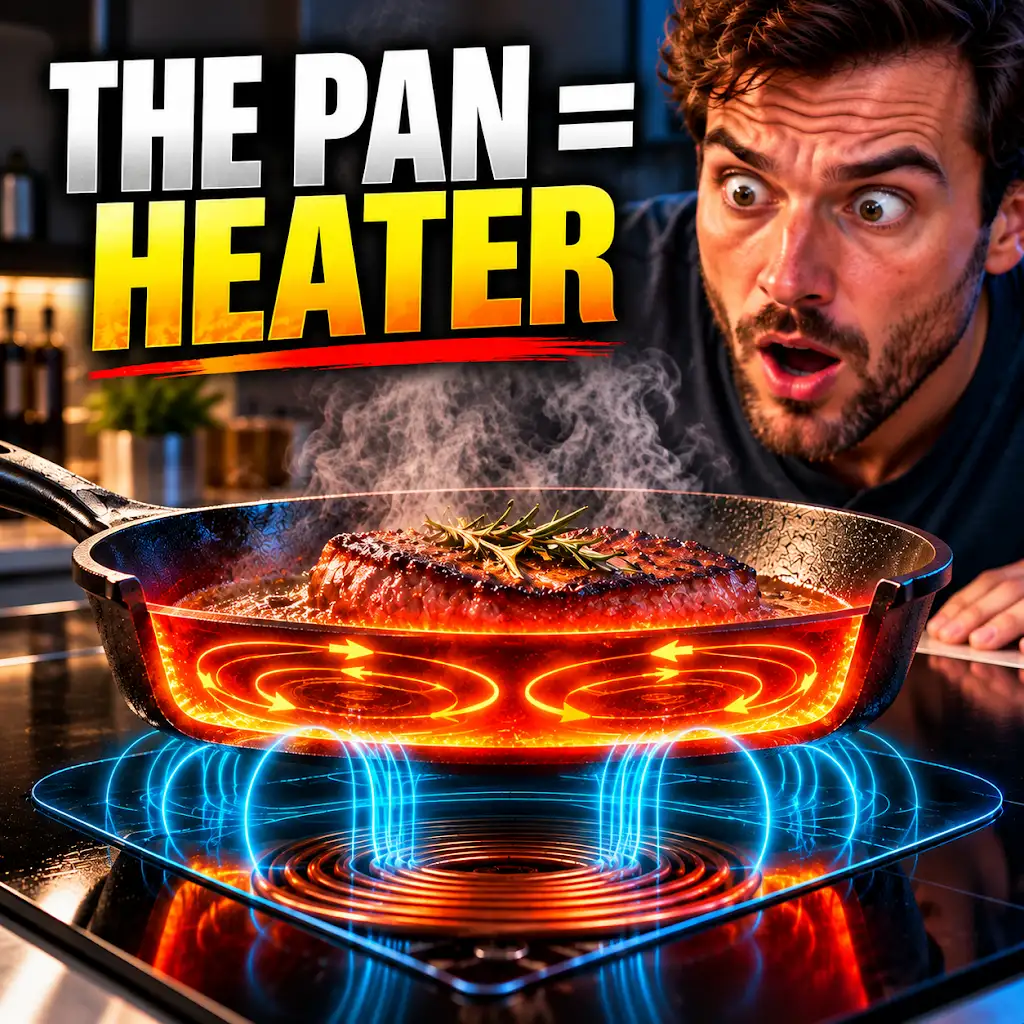
When the oscillating magnetic field from the cooktop penetrates the ferromagnetic base of your pan, it forces the free electrons within the metal to move. These electrons are pushed and pulled by the rapidly changing magnetic field, creating swirling currents within the cookware’s material. These circulating currents are known as eddy currents.
The Flow of Electrons
Imagine the magnetic field as a conductor directing traffic for the electrons in your pan’s base. As the magnetic field flips direction, it reverses the direction of the electron flow, creating a continuous, churning motion. These eddy currents are not just randomly moving electrons; they are organized, circulating pathways of electrical energy.
Resistance and the Generation of Heat
Here’s the crucial step: metals, even excellent conductors like iron and stainless steel, possess a certain degree of electrical resistance. This resistance opposes the flow of electrons. As these eddy currents surge through the metal, they encounter this resistance. This opposition to electron flow is what generates heat.
The Joule Heating Effect
This phenomenon is known as Joule heating, or resistive heating. It’s the same principle that makes a light bulb filament glow or an electric heater warm up. The faster and more intense the eddy currents, and the higher the electrical resistance of the cookware material, the more heat is generated. In induction cooking, the high frequency of the alternating magnetic field ensures that these eddy currents are generated rapidly and intensely, leading to quick and efficient heating of your cookware.
The Symphony of Materials: Understanding Cookware Construction for Induction
You’ve learned how induction works, but the story doesn’t end there. The materials used in your cookware play a vital role in how effectively and efficiently they interact with the induction cooktop. It’s not just about having a magnetic base; it’s about the careful engineering and composition of your pans.
Induction cooking has revolutionized the way we prepare meals by utilizing electromagnetic fields to generate heat directly in the cookware. This efficient method not only speeds up cooking times but also ensures that the surrounding area remains cooler compared to traditional methods. For a deeper understanding of the science behind induction heating and its benefits, you can explore this informative article on induction cooking technology. By harnessing the power of induction, chefs can achieve precise temperature control, making it an ideal choice for both home cooks and culinary professionals alike.
Ferromagnetic Base: The Foundation
As we’ve established, a ferromagnetic base is non-negotiable for induction compatibility. This typically means the cookware will have a layer of cast iron, carbon steel, or a specific type of stainless steel on its underside. This layer is designed to capture and respond to the magnetic field.
Cast Iron and Carbon Steel: The Traditional Powerhouses
Cast iron and carbon steel are naturally ferromagnetic and have been used for centuries. They are excellent at retaining heat, which contributes to even cooking. However, they can also be heavy and require specific care (seasoning) to prevent rust and sticking.
Stainless Steel: The Versatile Choice
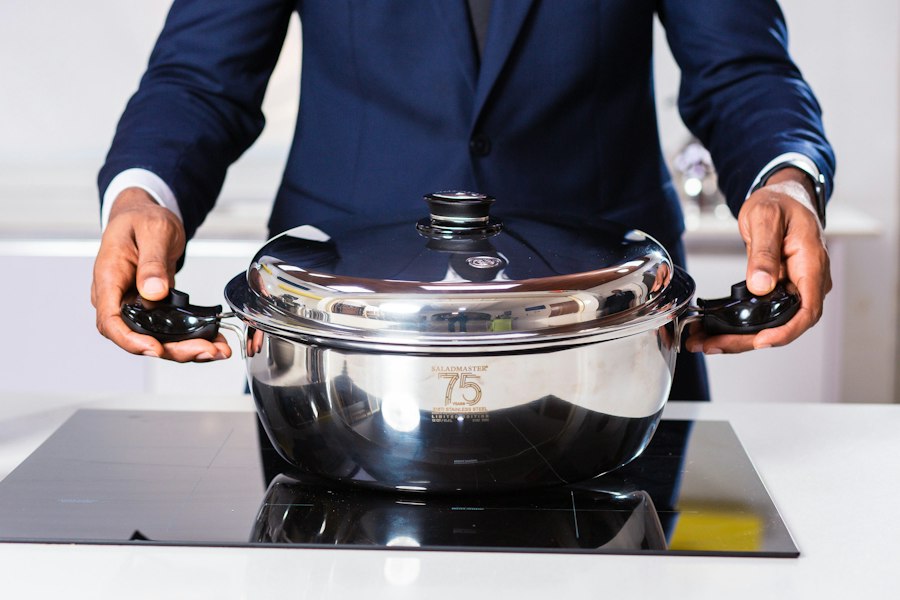
Many modern induction-compatible pans use stainless steel. Not all stainless steel is created equal, however. For induction, a “ferritic” or “martensitic” grade of stainless steel is often used, which possesses stronger magnetic properties than the more common “austenitic” grades (like 18/8 or 18/10). Some stainless steel pans also have a sandwiched core, often with aluminum or copper for better heat distribution, with a ferromagnetic stainless steel exterior for induction compatibility.
Clad Construction: Enhancing Heat Distribution
While a ferromagnetic base is essential, it doesn’t always guarantee perfect heat distribution on its own. This is where “clad” construction comes into play. Cladding involves layering different metals together to leverage their individual strengths.
The Sandwich Effect: Aluminum or Copper Cores
Many high-quality induction pans feature a “sandwich” construction. This typically involves a layer of ferromagnetic stainless steel on the exterior (both bottom and sometimes sides), with a core of highly
The Pan Is the Heater: How Induction Cooking Really Works
FAQs
What is induction cooking?
Induction cooking is a method of cooking that uses electromagnetic energy to heat cookware directly, without the need for a traditional heating element like a gas flame or electric coil.
How does induction create heat in cookware?
Induction cooktops generate a magnetic field that excites the iron molecules in compatible cookware, causing them to vibrate and generate heat. This heat is then transferred to the food inside the cookware.
What types of cookware can be used with induction cooking?
Cookware made from ferrous materials such as cast iron or magnetic stainless steel are compatible with induction cooking. Non-magnetic materials like aluminum or copper will not work unless they have a magnetic base.
Is induction cooking energy-efficient?
Yes, induction cooking is known for its energy efficiency because it heats the cookware directly and quickly, resulting in less heat loss compared to traditional cooking methods. It also allows for precise temperature control.
Are there any safety concerns with induction cooking?
While induction cooking is generally safe, it is important to note that the cookware and cooktop can get very hot during use. Additionally, only certain types of cookware are compatible with induction cooking, so using the wrong type can lead to inefficient heating or damage to the cookware.