
Induction cooking, a technology that might seem futuristic at first glance, is actually a remarkably efficient and intuitive way to transfer energy directly to your cookware, transforming the way you prepare meals. You’ve likely encountered it in professional kitchens or seen it featured on cooking shows, marveling at how quickly water boils or how precisely you can control the heat. But beyond the initial wow factor, understanding the science behind induction cooking unlocks its full potential and demystifies the magic. This article will guide you through the fundamental principles, explore its advantages, and help you appreciate the elegant simplicity of how induction transfers energy to cook your food.
At its core, induction cooking is about harnessing the power of electromagnetism. Unlike traditional stovetops that heat a burner and then transfer that heat to your cookware, induction directly energizes the pan itself. This seemingly subtle difference leads to a cascade of benefits in terms of speed, efficiency, and control.
The Role of the Induction Coil
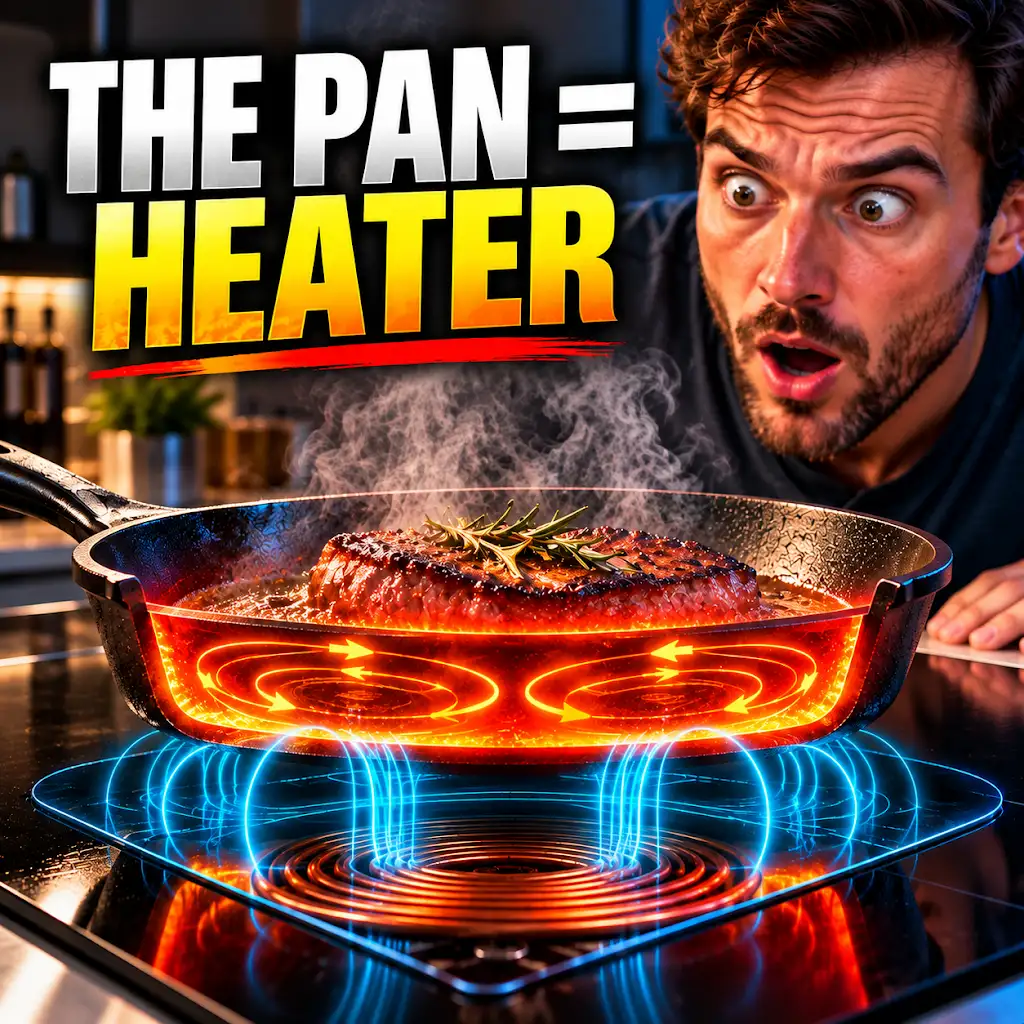
Beneath the smooth, ceramic-glass surface of your induction cooktop lies the heart of the operation: the induction coil. This coil, typically made of copper, is where the magic begins. When you turn on an induction burner and place a compatible pot or pan on it, an alternating electric current is passed through this coil. This current fluctuates rapidly, creating a dynamic magnetic field that extends upwards from the coil.
Generating the Alternating Magnetic Field
The key here is the alternating current. This means the direction of the electrical flow is constantly changing, which in turn causes the magnetic field to oscillate. Think of it like an invisible wave of magnetism pulsing up and down. The frequency of this alternation is crucial; most induction cooktops operate at frequencies between 20 to 100 kHz, a range that’s ideal for inducing current in cookware. This high frequency ensures a rapid and effective transfer of magnetic energy.
The Power of Eddy Currents
When a ferromagnetic (iron-containing) cookware is placed within this oscillating magnetic field, something remarkable happens. The fluctuating magnetic field interacts with the metal of the pan, inducing tiny electrical currents within it. These are known as eddy currents. Imagine the magnetic field “pushing and pulling” the electrons in the metal, causing them to flow in circular paths. These eddy currents are the direct source of heat.
Faraday’s Law of Induction in Action
This phenomenon is governed by Faraday’s Law of Electromagnetic Induction. In essence, the law states that a changing magnetic field through a conductor will induce an electromotive force (voltage), which drives the flow of current. In the case of induction cooking, the oscillating magnetic field from the coil acts as the changing magnetic field, and the metal of your pan is the conductor.
Resistance and Heat Generation
As these eddy currents flow through the metal of your cookware, they encounter resistance. Just like electricity flowing through a wire generates heat (the principle behind toasters and incandescent light bulbs), the resistance of the cookware material causes these eddy currents to convert electrical energy into thermal energy. This is why the pan itself gets hot, not the surface of the cooktop.
Joule Heating: The Source of Pan Heat
The scientific principle at play here is Joule heating, also known as resistive heating. The formula for Joule heating is $P = I^2R$, where $P$ is the power dissipated as heat, $I$ is the current flowing through the conductor, and $R$ is the resistance of the conductor. In induction cooking, the induced eddy currents ($I$) flowing through the cookware’s material ($R$) generate the heat ($P$) that cooks your food.
The Importance of Ferromagnetic Cookware
This direct energy transfer is why induction cooking requires specific types of cookware. Not all metals can be effectively heated by induction. The cookware needs to be ferromagnetic, meaning it must contain iron or be attracted to a magnet. This property allows for the efficient generation of eddy currents. Stainless steel with a magnetic base, cast iron, and enameled cast iron are all excellent choices for induction cooking.
Why Non-Magnetic Cookware Won’t Work
Cookware made from materials like aluminum, copper, or glass, which are not ferromagnetic, will not be heated directly by an induction cooktop. While they might absorb some residual heat from a hot pan, they cannot generate their own heat through induction. If you’re unsure about your cookware’s compatibility, a simple magnet test will suffice: if a magnet sticks firmly to the base of the pan, it’s likely induction-compatible.
Induction cooking is a fascinating method that transfers energy directly to cookware through electromagnetic fields, allowing for efficient and precise heating. For those interested in learning more about the science behind this technology and its applications in modern kitchens, you can explore a related article on the topic at Freaky Science. This resource delves into the principles of induction heating and offers insights into how it revolutionizes cooking methods.
The Superior Transfer of Energy: Advantages of Induction
The directness of energy transfer in induction cooking translates into a host of advantages over traditional stovetop technologies like electric coil, radiant glass-ceramic, and even gas. You’ll notice these benefits from the moment you start using an induction cooktop.
Unmatched Speed and Responsiveness
One of the most immediate and noticeable benefits is the speed. Because the energy is transferred directly to the cookware, heat is generated almost instantaneously. Water can boil significantly faster on an induction cooktop compared to other methods. This translates to quicker meal preparation and less waiting time.
Boiling Water in Record Time
Imagine needing to boil water for pasta or tea. On an induction hob, you’ll see bubbles forming within seconds of turning on the burner, and a full rolling boil can be achieved in a fraction of the time it takes on a conventional electric stove. This efficiency is a game-changer for busy kitchens.
Precise Temperature Control
Induction offers a level of temperature control that is difficult to achieve with other cooking methods. The magnetic field can be modulated with extreme precision, allowing for very fine adjustments to the heat output. This is invaluable for delicate cooking tasks.
Simmering Without Sticking or Burning
For tasks like making sauces, tempering chocolate, or gently simmering stews, precise temperature control is paramount. Induction allows you to maintain a very low, consistent simmer, drastically reducing the risk of scorching or burning your food. You can achieve the exact heat you need, down to the degree in some advanced models.
Energy Efficiency
Induction cooking is remarkably energy-efficient. Because the heat is generated directly within the cookware, very little energy is lost to the surrounding environment. This means less wasted electricity and a more sustainable cooking experience.
Minimal Heat Loss to the Kitchen
In contrast, gas stoves lose a significant amount of heat to the air around the flame, and electric radiant cooktops lose heat through the heating element and the cooktop surface. Induction’s direct energy transfer minimizes these losses, making it a more efficient choice for your home.
Enhanced Safety Features
The direct energy transfer also contributes to enhanced safety. The cooktop surface itself only gets warm from the residual heat of the cookware, rather than becoming extremely hot from a dedicated heating element. This significantly reduces the risk of accidental burns.
Cool-to-Touch Surface
If you accidentally touch an induction cooktop surface while it’s in use (though caution is still advised), it will be much cooler than a gas or electric burner that has been on. This is a major safety advantage, especially in households with children or pets. Additionally, many induction cooktops have automatic shut-off features when no cookware is detected.
Easy Cleaning
The smooth, flat ceramic-glass surface of an induction cooktop is incredibly easy to clean. Since spills and splatters don’t bake onto a scorching hot element, they can usually be wiped away with a damp cloth once the surface has cooled slightly.
Spills Wipe Away Effortlessly
No more scrubbing burnt-on food from grates or coils. The absence of exposed heating elements means that any food that does drip onto the cooktop is unlikely to burn and can be easily removed.
The Physics of Heat Transfer: From Pan to Plate
While induction directly heats the cookware, the ultimate goal is to cook the food within. Understanding how that heat then transfers from the pan to your ingredients reveals the nuances of induction cooking.
Conduction: The Primary Transfer Method
Once the cookware is heated by induction, the primary method of heat transfer to your food is conduction. This is the direct transfer of heat through physical contact. When your hot pan touches your food, heat energy moves from the pan into the food molecules.
Direct Contact for Efficient Cooking
This is the same principle you’re familiar with from other stovetop methods. The more surface area of the food that is in direct contact with the hot pan, the more efficient the conduction of heat will be. This is why searing meats works so well – creating a large contact area for rapid browning.
Convection: Stirring and Movement
Convection plays a role, especially when cooking with liquids. As the liquid at the bottom of the pan heats up, it becomes less dense and rises, while cooler, denser liquid sinks to take its place. This natural circulation helps distribute heat throughout the food and the cooking liquid.
Gentle Circulation of Heat
While not as dominant as in boiling water, convection within your food or cooking liquid assists in ensuring even cooking. Stirring your food further enhances convection by mixing the hotter and cooler parts.
Radiation: A Minor Contributor
Radiation, the transfer of heat through electromagnetic waves, plays a very minor role in induction cooking. The primary heat source is the hot pan, and while the pan will emit some infrared radiation, it’s not the main driver of the cooking process.
Heat Emitted by the Hot Pan
The primary heat emitted by the pan is in the form of infrared radiation. However, compared to the direct conduction and convection, this component of heat transfer is relatively insignificant in the overall cooking process.
Beyond the Basics: Factors Influencing Induction Performance
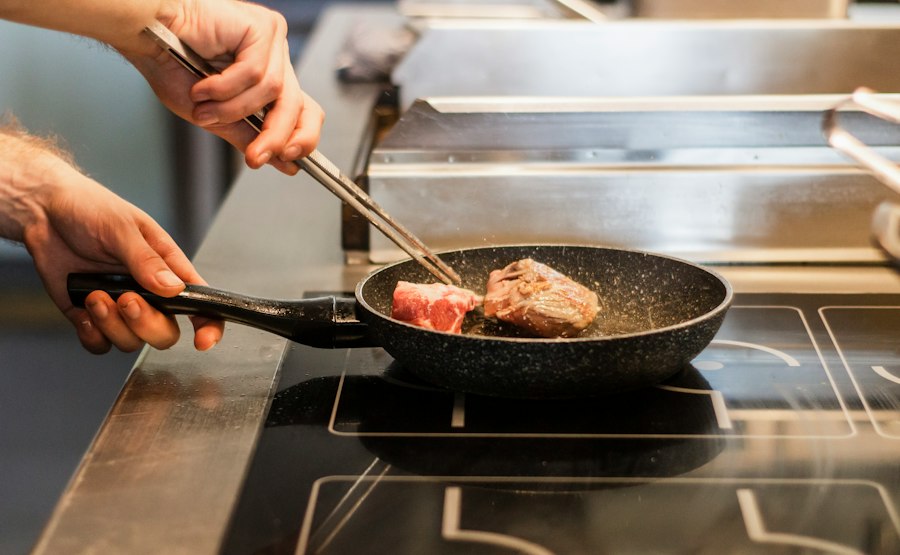
While the core principles of induction are straightforward, several factors can influence how effectively energy is transferred and how your cooking turns out. Being aware of these can help you optimize your induction cooking experience.
Cookware Material Properties
As mentioned, ferromagnetic properties are essential, but the specific composition of your cookware can also impact heat distribution and retention. Different types of cast iron, for instance, will have slightly different heat-up times and heat retention capabilities.
Thickness and Alloy Composition
Thicker pans generally distribute heat more evenly, preventing hot spots. The alloy composition can affect the pan’s overall thermal conductivity. A good quality, heavy-bottomed pan will generally perform better than a thin, flimsy one.
Pan Surface Flatness
For optimal energy transfer, the base of your cookware needs to be as flat as possible. Any significant warping or unevenness can create gaps between the pan and the induction surface, reducing the efficiency of the magnetic field’s interaction.
Ensuring Good Contact
A perfectly flat pan ensures maximum contact with the induction element, allowing the magnetic field to induce eddy currents across the entire base. This leads to more uniform heating and prevents localized overheating or undercooking.
Power Levels and Settings
Induction cooktops offer a range of power levels, often represented by numbers. Understanding how these settings translate to heat output is crucial for effective cooking. Higher numbers mean more powerful magnetic fields and faster heating.
Interpreting Power Settings
Different brands may have slightly different scales for their power levels, but generally, a higher number indicates a stronger magnetic field and thus more rapid energy transfer. Experimenting with your specific cooktop will help you learn its nuances.
The Induction Coil’s Design
The design and size of the induction coil itself can influence the heating area and uniformity. Some cooktops feature larger, more complex coil systems that can accommodate a wider range of pan sizes and provide more even heating across the entire surface.
Bridging and Multi-Zone Induction
Advanced induction cooktops often offer features like “bridging” where two separate heating zones can be combined to create a larger cooking area. This is particularly useful for griddles or larger roasting pans, allowing for more consistent heat distribution.
Induction cooking has revolutionized the way we prepare meals by efficiently transferring energy directly to cookware, allowing for faster heating and precise temperature control. For a deeper understanding of this innovative technology and its benefits, you can explore a related article that delves into the science behind induction cooking and its impact on modern kitchens. To learn more, check out this informative piece on Freaky Science.
Embracing the Future of Cooking: Your Induction Journey
| Metric | Description | Typical Value | Unit |
|---|---|---|---|
| Energy Transfer Efficiency | Percentage of electrical energy converted to heat in cookware | 80-90 | % |
| Frequency of Induction Coil | Operating frequency of the induction coil generating magnetic field | 20-50 | kHz |
| Magnetic Field Strength | Intensity of magnetic field inducing eddy currents in cookware | 10-30 | mT (millitesla) |
| Cookware Material | Type of metal affecting induction heating efficiency | Cast Iron, Stainless Steel (ferromagnetic) | — |
| Heat Generation Mechanism | Process by which eddy currents produce heat in cookware | Joule Heating (Resistive losses) | — |
| Power Input | Electrical power supplied to induction cooktop | 1000-3000 | Watts |
| Cookware Temperature Rise Rate | Speed at which cookware temperature increases | 5-10 | °C per minute |
Induction cooking represents a significant leap forward in culinary technology, offering a combination of speed, efficiency, control, and safety that is hard to match. By understanding the electromagnetic principles at play, you can move beyond simply using the appliance to truly mastering it.
The Elegance of Direct Energy Transfer
The elegance of induction lies in its directness. You are no longer relying on intermediaries to heat your food; the cookware becomes the heating element, powered by invisible electromagnetic forces. This simplicity belies its sophisticated engineering.
A More Intuitive Cooking Experience
As you become more accustomed to the rapid response and precise control of induction, you’ll find your cooking becomes more intuitive. You’ll be able to react to your food’s needs with unprecedented accuracy, leading to consistently better results.
Investing in Compatible Cookware
Making the transition to induction often involves investing in compatible cookware. While this might seem like an added expense, the durability and superior performance of induction-ready pans can be a worthwhile investment in the long run.
Building Your Induction-Ready Kitchen
Start by testing your existing cookware with a magnet. As you replace worn-out items, opt for those specifically designed for induction. Over time, you’ll build a collection that complements your new cooking technology.
Experimentation and Discovery
The best way to fully appreciate induction cooking is to experiment. Try cooking your favorite dishes, paying attention to how the heat responds to your adjustments. You’ll likely discover new ways to enhance your culinary creations.
Unlocking New Culinary Possibilities
From achieving the perfect sear to gently melting chocolate without a hint of seizing, induction opens up a world of possibilities. Embrace the learning curve, and you’ll be rewarded with a more enjoyable and successful cooking experience. Induction cooking isn’t just a trend; it’s a fundamental shift in how we approach cooking, making it more efficient, safer, and ultimately, more delicious.
The Pan Is the Heater: How Induction Cooking Really Works
FAQs
What is induction cooking?
Induction cooking is a method of cooking that uses electromagnetic energy to heat cookware directly, without the need for a traditional heating element like a gas flame or electric coil.
How does induction transfer energy to cookware?
Induction cooktops generate an electromagnetic field that creates a current in the cookware, which in turn produces heat. This process is known as induction heating.
What types of cookware can be used with induction cooking?
Cookware must be made of a magnetic material, such as cast iron or magnetic stainless steel, in order to work with induction cooktops. Non-magnetic materials like aluminum or copper will not heat up on an induction cooktop.
What are the advantages of induction cooking?
Induction cooking is faster and more energy-efficient than traditional cooking methods. It also provides precise temperature control, immediate heat adjustment, and a cooler cooking surface.
Are there any safety concerns with induction cooking?
While induction cooking is generally safe, there are a few safety considerations to keep in mind. Induction cooktops can get very hot, so it’s important to use caution and avoid touching the cooking surface directly. Additionally, only certain types of cookware can be used with induction cooktops, so it’s important to check compatibility before using.