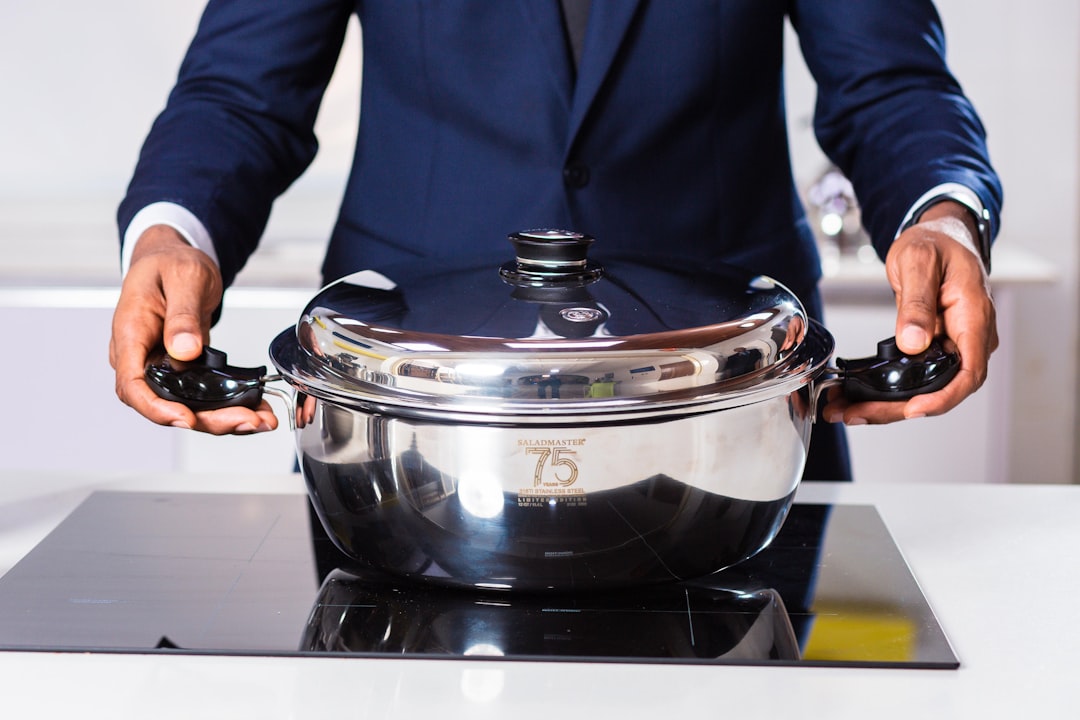
You’re standing in your kitchen, a sleek, flat surface humming softly beneath your control. You place a pot on it, dial up the heat, and within moments, steam begins to rise from your ingredients. Yet, if you were to touch that surface, you’d find it remarkably cool – or at least, not searing hot. This is the magic of induction cooking, a revolutionary approach to heat that bypasses the traditional flame or red-hot element, yet delivers precise and powerful cooking. You might be wondering, how is this even possible? How can you cook food without directly applying heat to the cooking vessel? The answer lies in a fascinating interplay of electromagnetism, a principle that sounds like science fiction but is now a staple in many modern kitchens.
This article will demystify induction cooking for you. We’ll delve into the fundamental principles that govern its operation, explore the specific components that make it work, and explain why this method offers a superior cooking experience in so many ways. Prepare to be amazed by the science that brings effortless heat to your fingertips.
At its core, induction cooking is all about harnessing the power of electromagnetism. You’re not heating the cooktop itself; instead, you’re using it to generate heat directly within your cookware. This might sound counterintuitive at first, as most of your cooking experiences have involved a visible source of heat – a dancing flame from a gas burner or a glowing red coil on an electric stovetop. Induction flips this script entirely.
Understanding the Basics: Electromagnetism in Action
To grasp how induction works, you need a foundational understanding of two key electromagnetic concepts:
The Principle of Electromagnetic Induction
This is the bedrock of induction cooking. Discovered by Michael Faraday in the 19th century, electromagnetic induction describes how a changing magnetic field can induce an electric current in a conductor. Think of it like this: you have a magnet, and you move it back and forth near a wire. This movement creates a ripple effect, causing electrons within the wire to flow, thus generating an electrical current. In induction cooking, this principle is reversed, or rather, applied in a slightly different, yet equally ingenious, way.
The Role of Alternating Current (AC)
The electricity that powers your home is typically alternating current (AC). This means that the direction of the electric current reverses periodically – it flows one way, then the other, many times per second. This constant switching is crucial for induction. It’s this fluctuating flow of electricity that generates the changing magnetic field we discussed earlier. Without AC, the magnetic field wouldn’t be changing, and thus, no current would be induced in your cookware.
The Induction Coil: The Engine of the Magnetic Field
Beneath the smooth glass surface of your induction cooktop lies a specially designed coil of wire, usually made of copper. This coil is the key component responsible for generating the magnetic field.
How the Coil Generates a Magnetic Field
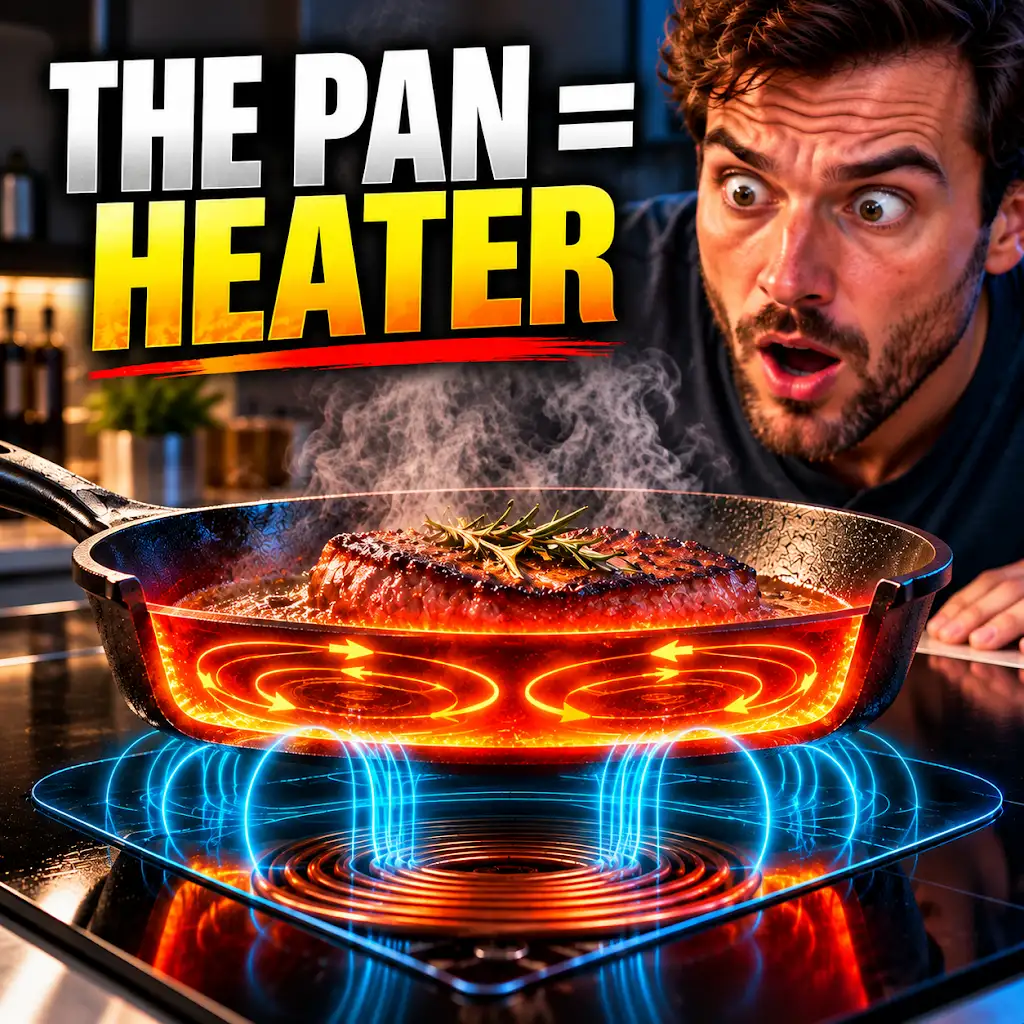
When you turn on your induction cooktop, AC electricity is sent through this copper coil. As the current surges back and forth, it creates a powerful, oscillating magnetic field that extends upwards from the coil, through the glass, and into the bottom of your cookware. The frequency of this AC current is typically in the range of 20-100 kilohertz (kHz), which is far higher than the 60 Hz (or 50 Hz in some regions) used for household power. This high frequency is essential for efficiently inducing currents in the cookware.
The Importance of the Glass Ceramic Surface
The flat, smooth surface you see is usually made of a glass-ceramic material. This material is chosen for several reasons. Firstly, it’s an excellent electrical insulator, meaning it prevents the magnetic field from directly heating itself. Secondly, it’s a poor thermal conductor, which is why the surface remains relatively cool to the touch even when the cookware above it is scorching hot. This feature contributes significantly to the safety and efficiency of induction cooking.
Induction cooking is a fascinating technology that allows for cooking without direct heat, using electromagnetic fields to generate heat directly in the cookware. This method not only provides precise temperature control but also enhances energy efficiency. For a deeper understanding of how induction cooking works and its benefits, you can explore a related article on this topic at Freaky Science. This resource delves into the science behind induction cooking and offers insights into its advantages over traditional cooking methods.
The Interaction: Making Your Cookware the Heat Source
Now that you understand how the magnetic field is generated, let’s explore how it interacts with your cookware to create heat. This is where the magic truly happens, as your pots and pans themselves become the heating elements.
Eddy Currents: The Unseen Movers of Heat
The oscillating magnetic field emanating from the induction coil penetrates the bottom of your cookware. For this to work, your cookware must be made of a ferromagnetic material – meaning it can be magnetized. This includes materials like cast iron and most stainless steel cookware.
Generating Eddy Currents
When the magnetic field passes through the conductive material of your ferromagnetic cookware, it “pushes” and “pulls” the free electrons within the metal. Because the magnetic field is constantly changing due to the AC current in the coil, these electrons are forced to move in swirling, circular patterns within the base of the pot or pan. These circulating currents are known as eddy currents. Think of them as tiny, electrical whirlpools within the metal.
The Role of Electrical Resistance
The base of your cookware, while conductive, also possesses a certain degree of electrical resistance. As these eddy currents flow through this resistive material, they encounter opposition. This opposition generates friction at the molecular level, and this friction, in turn, produces heat. The greater the electrical resistance and the stronger the eddy currents, the more heat is generated. This is why your cookware gets hot, not the cooktop.
Hysteresis Losses: Another Contributing Factor
In addition to eddy currents, another phenomenon called hysteresis losses also contributes to the heating of ferromagnetic cookware.
Understanding Magnetic Hysteresis
When a ferromagnetic material is subjected to a changing magnetic field, its magnetic domains (tiny regions within the material that act like microscopic magnets) attempt to align themselves with the external field. As the field alternates direction, these domains are constantly being reoriented. This process of realignment requires energy, and some of this energy is dissipated as heat. The continuous flipping and aligning of these magnetic domains contribute to the overall heat generation within the cookware.
The Combined Effect for Efficient Heating
While eddy currents are the primary driver of heat generation in induction cooking, hysteresis losses play a supplementary role. Together, these two phenomena ensure that your ferromagnetic cookware quickly and efficiently becomes the source of heat for your cooking. This is why using the correct type of cookware is absolutely essential for induction cooking to function.
The Cookware Requirement: Not All Pans Are Created Equal

The effectiveness of induction cooking is intrinsically linked to the material properties of your cookware. You can’t just grab any old pot and expect it to work. This specific requirement is one of the most significant differences between induction and other cooking methods.
Ferromagnetic Materials: The Key to Induction
As we’ve discussed, induction relies on generating heat within the cookware. This means the cookware must be able to interact with and be heated by the magnetic field.
What Makes a Material Ferromagnetic?
Ferromagnetic materials are those that are strongly attracted to magnets and can be permanently magnetized. Common examples include iron, nickel, cobalt, and their alloys. In the context of cookware, this translates to cast iron and most stainless steel pots and pans. Aluminum, copper, and glass, while excellent conductors of heat, are not ferromagnetic and therefore will not work on an induction cooktop.
The Magnet Test: A Simple Way to Check
A simple and effective way to determine if your cookware is induction-compatible is the magnet test. Simply take a common refrigerator magnet and try to stick it to the bottom of your pot or pan. If the magnet sticks firmly, then your cookware is likely ferromagnetic and will work on an induction cooktop. If the magnet slides off or doesn’t stick at all, that particular piece of cookware is not suitable for induction.
Types of Induction-Compatible Cookware
Within the realm of induction-compatible cookware, you’ll find a variety of materials and constructions, each offering its own benefits:
Cast Iron Cookware
Cast iron is a classic choice for induction cooking. Its inherent ferromagnetic properties make it an ideal candidate. Cast iron heats evenly and retains heat exceptionally well, making it perfect for searing, frying, and slow cooking. However, it can be heavy and requires seasoning to prevent rust.
Stainless Steel Cookware
Many stainless steel pots and pans are designed with a ferromagnetic base, often a layer of magnetic stainless steel sandwiched between other layers. This construction provides the necessary magnetic properties while offering the durability and ease of cleaning associated with stainless steel. Look for cookware specifically labeled as “induction compatible” or that passes the magnet test.
Enameled Cast Iron Cookware
This type of cookware combines the excellent heat retention of cast iron with a protective enamel coating. The enamel makes it easier to clean and prevents the cast iron from reacting with acidic foods. The cast iron core ensures it works perfectly with induction.
Specialized Induction Cookware
There are also specialized cookware lines designed specifically for induction. These might feature advanced materials or construction techniques to optimize heat transfer and performance on induction cooktops.
Advantages of Induction: Why You’ll Love This Method
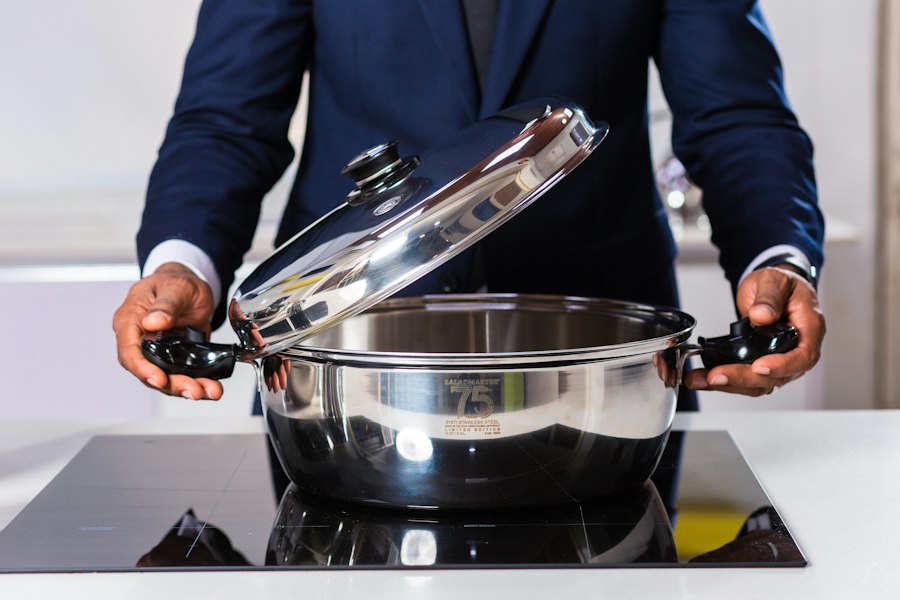
Induction cooking isn’t just a novelty; it offers a host of practical advantages that can significantly improve your cooking experience. You’ll find yourself appreciating its speed, precision, and efficiency.
Unparalleled Speed and Responsiveness
One of the most immediately noticeable benefits of induction cooking is its incredible speed. Because the heat is generated directly within the cookware, there’s virtually no energy lost in heating the surrounding air or the cooktop surface itself.
Rapid Heating of Liquids
You’ll be amazed at how quickly water boils on an induction cooktop compared to conventional methods. This means you can get pasta water boiling in a fraction of the time, making weeknight dinners significantly faster.
Instantaneous Temperature Changes
Beyond just heating up quickly, induction responds instantly to your adjustments. When you turn up the heat, the cookware heats up immediately. When you turn it down, the heat dissipates just as quickly. This precise control allows for delicate cooking techniques and prevents overshooting your desired temperature.
Superior Energy Efficiency
Induction is one of the most energy-efficient cooking methods available. Because the heat is concentrated directly in the cookware, very little energy is wasted.
Minimal Heat Loss to the Environment
Unlike gas stoves that release heat into the kitchen and electric coil stovetops that radiate heat from the element, induction’s magnetic field directs energy solely to the bottom of your pot or pan. This means less heat escapes into your kitchen, making your cooking environment more comfortable and reducing your overall energy consumption.
Lower Utility Bills
This increased efficiency translates directly into lower utility bills. You’ll be using less electricity to achieve the same cooking results, making induction a more environmentally friendly and cost-effective choice in the long run.
Enhanced Safety Features
The inherent nature of induction cooking makes it a safer option for kitchens, especially those with children or pets.
Cool-to-the-Touch Surface
As mentioned earlier, the glass ceramic surface of an induction cooktop remains significantly cooler than conventional cooktops. While it will get warm from residual heat transferred from the cookware, it doesn’t reach the scorching temperatures of a hot coil or flame. This dramatically reduces the risk of accidental burns.
Auto Shut-Off and Pan Detection
Most induction cooktops are equipped with intelligent safety features. They will automatically shut off if no cookware is detected on the surface or if the cookware is removed during cooking. This prevents accidental fires and wasted energy.
Induction cooking is a fascinating method that utilizes electromagnetic fields to generate heat directly in the cookware, rather than relying on direct heat sources like gas or electric burners. This innovative technology not only enhances cooking efficiency but also promotes safety by reducing the risk of burns. For a deeper understanding of how induction cooking works and its benefits, you can explore a related article that delves into the science behind this cooking technique. To learn more, check out this informative piece on Freaky Science.
The Nuances of Induction: Mastering the Art
| Metric | Description | Value/Example |
|---|---|---|
| Operating Principle | How induction cooktops generate heat without direct flame or heating element | Electromagnetic induction creates eddy currents in ferromagnetic cookware |
| Frequency | Typical frequency of the alternating current used in induction coils | 20 kHz to 50 kHz |
| Cookware Material | Type of cookware compatible with induction cooking | Ferromagnetic materials like cast iron or stainless steel |
| Heat Transfer Method | How heat is transferred to the food | Cookware heats up due to induced currents, then transfers heat to food by conduction |
| Efficiency | Energy efficiency compared to traditional gas or electric cooktops | Approximately 80-90% |
| Surface Temperature | Temperature of the cooktop surface during operation | Relatively low, usually below 60°C (140°F) |
| Response Time | Time taken to change heat levels | Less than 1 second |
| Safety Feature | How induction cooktops avoid direct heat hazards | Cooktop remains cool except under cookware; automatic shutoff if no pan detected |
While induction cooking is intuitive, understanding a few nuances can help you master its capabilities and unlock its full potential in your kitchen.
Understanding Heat Settings and Power Levels
Induction cooktops often display heat settings as numbers or power levels (e.g., 1-10 or 1-100). It’s important to understand how these translate to actual cooking temperatures.
Numerical vs. Power Level Settings
Some cooktops use a numerical scale (e.g., 1-9), where higher numbers mean higher heat. Others use a percentage-based power level (e.g., 1-100), indicating the percentage of maximum power the induction element is delivering. Consult your cooktop’s manual to understand its specific settings.
Adjusting for Different Cooking Tasks
You’ll find that you’ll use lower power levels for simmering, melting chocolate, or keeping food warm, while higher power levels are reserved for boiling, searing, and rapid cooking. Experimenting with your cooktop’s settings is the best way to learn its unique responsiveness.
Venting and Airflow Considerations
While induction is more efficient, proper ventilation is still important in any kitchen.
The Need for Adequate Airflow
The induction coil generates a magnetic field, and this process can create some localized airflow. Good kitchen ventilation, whether through an overhead hood or an open window, helps to remove steam and cooking odors efficiently.
Avoiding Obstructions Under the Cooktop
Ensure that there are no obstructions directly beneath the cooktop that could impede airflow or heat dissipation. This is particularly important for built-in induction ranges.
Cleaning and Maintenance
The smooth, seamless surface of induction cooktops makes cleaning a breeze, but there are a few best practices to follow.
Using the Right Cleaning Tools
For everyday cleaning, a damp cloth or a soft sponge with a mild dish soap is usually sufficient. For stubborn stains, a specialized glass ceramic cooktop cleaner can be used. Avoid abrasive cleaners or scouring pads, as these can scratch the surface.
Promptly Cleaning Spills
It’s best to clean up spills and splatters as soon as the cooktop has cooled down. This prevents food from baking onto the surface, making it harder to remove later.
In conclusion, induction cooking offers a sophisticated and highly effective way to prepare your meals. By understanding the fundamental principles of electromagnetism, the role of the induction coil, and the crucial requirement of ferromagnetic cookware, you can unlock a world of faster, more efficient, and safer cooking. So, embrace the future of your kitchen; you might just find yourself wondering how you ever cooked without it.
The Pan Is the Heater: How Induction Cooking Really Works
FAQs
What is induction cooking?
Induction cooking is a method of cooking that uses electromagnetic fields to heat pots and pans directly, without the need for a traditional heating element like a gas flame or electric coil.
How does induction cooking work without direct heat?
Induction cooktops use electromagnetic fields to create heat directly in the cookware. When a pot or pan made of ferrous metal is placed on the induction cooktop, the magnetic field induces electrical currents in the metal, generating heat.
What are the benefits of induction cooking?
Some benefits of induction cooking include faster heating times, more precise temperature control, energy efficiency, and a cooler cooking surface compared to traditional gas or electric stoves.
Is special cookware required for induction cooking?
Yes, in order for induction cooking to work, the cookware must be made of ferrous metal, such as cast iron or magnetic stainless steel. Non-ferrous materials like aluminum or copper will not work on an induction cooktop.
Are there any safety concerns with induction cooking?
While induction cooking is generally considered safe, there are a few safety concerns to be aware of. Induction cooktops can get very hot, so it’s important to use caution and avoid touching the cooking surface directly. Additionally, the electromagnetic fields generated by induction cooktops can interfere with certain medical devices like pacemakers, so individuals with these devices should consult with their doctor before using an induction cooktop.