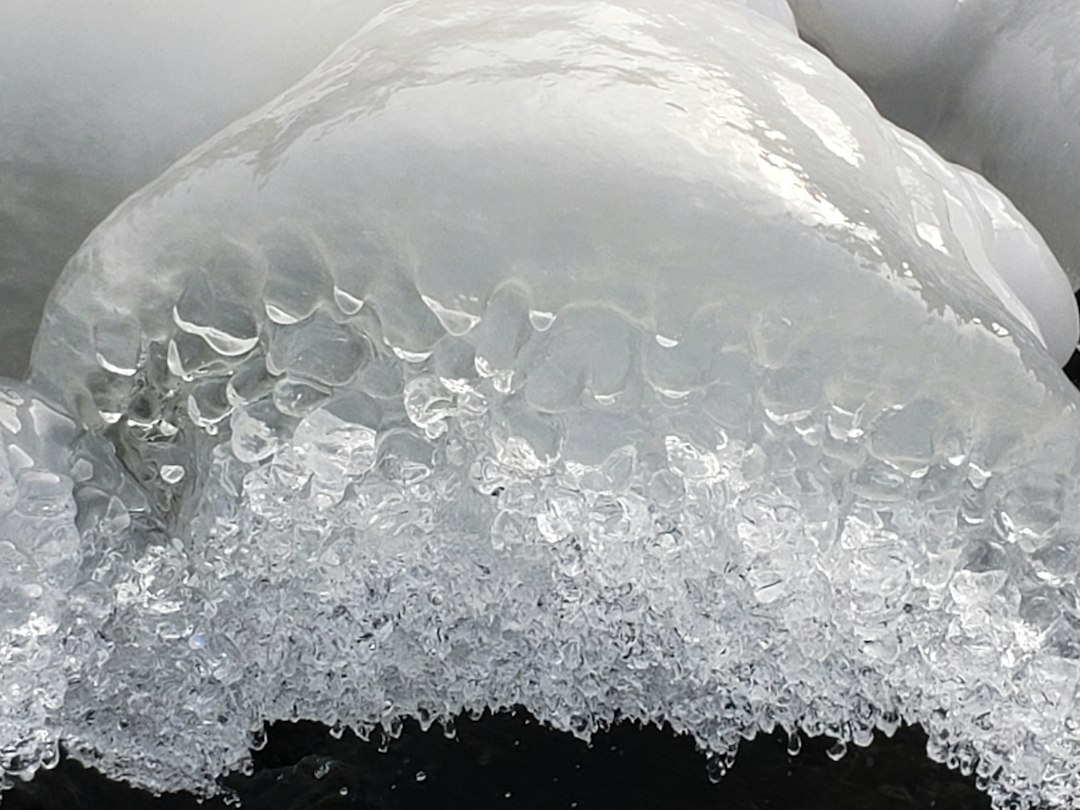
The Essential Trigger: Understanding Ice Nucleation
The formation of ice in nature, from the delicate intricacies of a snowflake to the vast expanses of glaciers, is a process that often appears spontaneous and magical. Yet, beneath this apparent simplicity lies a complex scientific phenomenon known as ice nucleation. It is the critical first step in the transformation of liquid water into solid ice, a process that is far from guaranteed even at temperatures below the freezing point of pure water. This article delves into the fascinating world of ice nucleation, exploring the fundamental mechanisms by which ice crystals begin their existence, both in the natural environment and within controlled scientific settings. Without this essential trigger, water could remain supercooled indefinitely, and the world as we know it, with its snowfalls, frost patterns, and frozen landscapes, would be a very different place.
Ice nucleation is a fascinating process that plays a crucial role in various atmospheric phenomena, including cloud formation and precipitation. For a deeper understanding of this topic, you can explore a related article that delves into the mechanisms and implications of ice nucleation. To learn more, visit Freaky Science, where you will find insightful information and research on this intriguing subject.
The Peculiar Nature of Supercooled Water

Water, in its pure form, exhibits a peculiar behavior when cooled below its standard freezing point of 0 degrees Celsius (32 degrees Fahrenheit). It can persist in a liquid state at temperatures significantly below this point, a condition known as supercooling. This phenomenon is not unique to water; many liquids can be supercooled under certain circumstances. However, water’s ubiquity and its crucial role in Earth’s climate and biological systems make its supercooled state particularly noteworthy.
Why Pure Water Resists Freezing
The resistance of pure water to freezing below 0°C is due to the absence of a suitable template or catalyst to initiate the formation of the ordered crystalline structure of ice. Water molecules in the liquid state are in constant, random motion, held together by hydrogen bonds. For ice to form, these molecules must align themselves into a highly ordered, hexagonal lattice. This alignment requires a significant degree of molecular reorientation and a reduction in kinetic energy. In pure water, the energy barrier to overcome in arranging these molecules into the ice structure is substantial. The molecules would need to spontaneously arrange themselves into a stable ice embryo, a statistically improbable event without some external assistance. This probability decreases dramatically with lower temperatures, as molecular motion slows, but even at -40°C, pure water can remain liquid.
The Critical Role of Nucleation Sites
The key to overcoming this energy barrier lies in the presence of nucleation sites. These are surfaces or particles that provide a favorable environment for water molecules to arrange themselves into the initial ice structure. Think of it like building a house; starting from scratch with just loose bricks is incredibly difficult. However, if you have a foundation laid out, the building process becomes much more manageable. Similarly, nucleation sites act as pre-existing structures that lower the energetic cost of ice formation. Without these sites, the formation of a stable ice crystal embryo is a rare occurrence. The absence of these sites is precisely why pure water can be supercooled; there is no surface to facilitate the ordered arrangement of molecules.
The Two Paths to Ice Formation: Homogeneous and Heterogeneous Nucleation
Ice nucleation can broadly be categorized into two distinct pathways, differing primarily in the origin of the initiating surfaces. Understanding these pathways is fundamental to comprehending how ice forms in both natural and laboratory settings.
Homogeneous Nucleation: The Rarity of Self-Initiation
Homogeneous nucleation occurs when ice forms spontaneously from a liquid phase without the assistance of any foreign substance or surface. In essence, the water molecules themselves must arrange into a stable ice embryo. This process is exceedingly rare and requires extremely low temperatures, typically below -38°C (-36°F), and highly purified water. The probability of a sufficient number of water molecules randomly colliding and orienting themselves correctly to form a stable ice nucleus is very low. For homogeneous nucleation to occur, the water molecules must overcome a significant energy barrier to create the ordered structure of ice from the disordered liquid state. This requires a substantial reduction in temperature to slow down molecular motion to a point where such spontaneous ordering becomes statistically more likely. Even then, the conditions must be perfect, with virtually no impurities present.
Heterogeneous Nucleation: The Dominant Natural Process
Heterogeneous nucleation is the far more common pathway for ice formation in nature. It involves the presence of foreign particles or surfaces that facilitate the ice formation process. These foreign substances, known as ice nucleating particles (INPs), provide a template or a surface that mimics the crystalline structure of ice, thereby lowering the energy barrier required for nucleation. The broader the range of temperatures at which these particles are active, the more significant their role in atmospheric processes. These particles can be of various origins, including mineral dust, soot, pollen, bacteria, and even certain biological molecules. Their effectiveness as INPs depends on their chemical composition, surface structure, and size.
The Role of Impurities and Surfaces
The key to heterogeneous nucleation lies in the interaction between water molecules and the surface of the INP. Water molecules are attracted to the surface, and their orientation on this surface can be more ordered than in bulk liquid water. If the surface of the INP has a crystallographic structure that is similar to that of ice, it can serve as a template for the aligning water molecules. This template effect reduces the free energy required to form a stable ice nucleus. The closer the lattice matching between the INP surface and ice, the more efficient the nucleation. For instance, certain minerals like feldspar are known to be highly effective INPs due to their layered structure, which bears a resemblance to the hexagonal structure of ice.
Bacteria as Potent Ice Nucleators
Among the various types of INPs, certain bacteria stand out due to their remarkable ice-nucleating ability, even at temperatures just below freezing. These bacteria, often found in soil and on plant surfaces, possess specific proteins on their outer membranes that are exceptionally efficient at inducing ice formation. These proteins, known as ice-nucleating proteins (INPs), have a unique structure that allows them to bind water molecules in a way that promotes the formation of ice crystals at surprisingly high supercooled temperatures, sometimes as high as -2°C to -5°C. This “biological nucleation” is of significant interest to scientists, both for understanding natural frost damage to plants and for potential applications in various fields, from artificial snowmaking to cryopreservation.
Ice Nucleating Particles: Nature’s Ice Makers
The efficacy of heterogeneous nucleation hinges on the presence and characteristics of ice nucleating particles (INPs). These microscopic entities are the unsung heroes of ice formation in the atmosphere and many other natural environments, acting as crucial triggers for the transition of water from liquid to solid. Their diversity and widespread distribution underscore their importance in shaping Earth’s climate and ecosystems.
Types and Sources of Atmospheric INPs
The atmosphere is a rich reservoir of INPs, playing a pivotal role in cloud formation and precipitation processes. These particles originate from a variety of terrestrial and extraterrestrial sources. Mineral dust, lofted into the atmosphere from arid regions, is a significant source of INPs, particularly those containing silicate minerals. Combustion processes, both natural (like wildfires) and anthropogenic (like vehicle exhaust and industrial emissions), release soot and ash particles, which can also act as INPs. Biological particles, including fragments of plants, pollen, fungal spores, and bacteria, are increasingly recognized as potent INPs, contributing to ice formation in clouds at relatively warm supercooled temperatures. Even meteoritic dust from space can introduce INPs into the upper atmosphere.
How INPs Lower the Energy Barrier
The mechanism by which INPs lower the energy barrier to ice nucleation is intrinsically linked to their surface properties. When a water droplet encounters an INP, water molecules begin to adsorb onto the particle’s surface. The specific arrangement of atoms on the INP surface can orient these adsorbed water molecules in a manner that approximates the ordered structure of ice. This pre-ordering significantly reduces the entropy penalty associated with forming an ice nucleus. Instead of water molecules having to randomly assemble into a crystalline structure, they can readily attach to the INP surface and begin building upon the existing, albeit microscopic, ice-like arrangement. The larger and more surface-compatible the INP, the more effective it is at guiding water molecules into the crystalline lattice, thus making ice formation energetically more favorable.
Measuring and Identifying INPs in the Lab
Scientists employ a variety of sophisticated techniques to study and identify INPs in controlled laboratory settings. One common method involves using specialized ice nucleation chambers. These chambers allow researchers to precisely control temperature and humidity and to introduce purified water and known INPs. By monitoring the onset of ice formation within these chambers, scientists can determine the ice-nucleating efficiency of different particles and the temperature ranges at which they are active. Techniques like spectroscopy, microscopy (including electron microscopy), and mass spectrometry are used to characterize the chemical composition and physical structure of potential INPs. Researchers might also use single-particle analysis techniques to study individual INPs and their interaction with supercooled water.
Ice nucleation is a fascinating process that plays a crucial role in various atmospheric phenomena, including cloud formation and precipitation. For those interested in delving deeper into this topic, a related article can provide valuable insights into the mechanisms behind ice nucleation and its implications for weather patterns. You can explore more about this subject in the article found here, where the complexities of ice formation are discussed in detail. Understanding these processes not only enhances our knowledge of meteorology but also contributes to advancements in climate science.
Ice Nucleation in Scientific Applications and Research
| Parameter | Description | Typical Values | Units |
|---|---|---|---|
| Ice Nucleation Temperature | Temperature at which ice nucleation initiates | -5 to -40 | °C |
| Homogeneous Nucleation | Ice formation without foreign particles | Approximately -38 | °C |
| Heterogeneous Nucleation | Ice formation catalyzed by particles (e.g., dust, bacteria) | -2 to -15 | °C |
| Critical Radius | Minimum size of ice embryo to grow spontaneously | 1 to 10 | nanometers |
| Nucleation Rate | Number of ice nuclei formed per unit volume per second | 10^3 to 10^20 | nuclei/m³·s |
| Supersaturation | Relative humidity with respect to ice above 100% | 100 to 150 | % |
| Ice Nucleating Particles (INPs) Concentration | Number of particles capable of nucleating ice | 1 to 1000 | particles per liter of air |
Beyond its fundamental importance in nature, understanding and controlling ice nucleation has significant implications for various scientific and technological applications. From improving weather forecasting to developing new methods for food preservation and medical treatments, the ability to manipulate ice formation is a valuable asset.
Cloud Seeding and Weather Modification
One of the most well-known applications of ice nucleation research is in cloud seeding, a form of weather modification aimed at enhancing precipitation. Cloud seeding involves introducing INPs, such as silver iodide or dry ice (solid carbon dioxide), into clouds that are already supercooled but not producing precipitation. The goal is to promote the formation of ice crystals, which can then grow and fall as snow or melt into rain. While the effectiveness of cloud seeding is still a subject of ongoing research and debate, the underlying principle relies heavily on understanding and enhancing heterogeneous ice nucleation. By providing more efficient INPs, the aim is to trigger the ice phase process more readily within the cloud.
Cryopreservation: Freezing Cells and Tissues
The challenge of cryopreservation – the long-term storage of biological materials at very low temperatures – is intimately linked to ice nucleation. When cells or tissues freeze, the formation of ice crystals can cause significant damage. Sharp ice crystals can puncture cell membranes, and the resulting osmotic stresses can dehydrate cells. Therefore, a key goal in cryopreservation is to either prevent ice formation altogether or to control its formation in a way that minimizes damage. This often involves the use of cryoprotective agents (CPAs), which can lower the freezing point of water and reduce the likelihood of damaging ice crystal formation. Researchers also investigate controlled freezing protocols that aim to promote the formation of small, less damaging ice crystals or to achieve vitrification, a glassy state where ice does not form.
Food Science and Preservation
Ice nucleation plays a crucial role in the food industry, influencing the texture, quality, and shelf-life of frozen foods. The rate and manner in which ice crystals form during freezing directly impact the food product. Rapid freezing, for instance, tends to produce smaller ice crystals, which result in less cellular damage and a better-preserved texture compared to slow freezing, which creates larger ice crystals. Understanding ice nucleation kinetics is therefore essential for optimizing freezing processes in food manufacturing. This includes controlling the initial nucleation event and subsequent crystal growth to achieve desired product characteristics. The development of new freezing technologies often hinges on manipulating nucleation processes.
Studying Fundamental Water Properties
At a more fundamental level, studying ice nucleation provides invaluable insights into the unique properties of water. The behavior of water at interfaces and its propensity to supercool are topics of intense scientific curiosity. By investigating the thermodynamics and kinetics of ice nucleation, scientists can refine models of water’s molecular interactions and phase transitions. This research contributes to a deeper understanding of phenomena ranging from the hydration of biomolecules to the formation of astrophysical ice. Experiments designed to precisely measure nucleation rates and identify the specific interactions at nucleation sites help to unravel the complex behavior of this essential substance.
The Future of Ice Nucleation Research
The field of ice nucleation research continues to evolve, driven by advancements in experimental techniques, theoretical modeling, and the increasing recognition of its importance across various disciplines. Future research promises to unlock new applications and deepen our understanding of this fundamental process.
Advanced Modeling and Simulation Techniques
The development of more sophisticated computational models and simulation techniques is revolutionizing our ability to study ice nucleation. Molecular dynamics simulations, for example, can now model the behavior of water molecules at the atomic level and observe the nascent stages of ice formation. These simulations can explore the influence of different surfaces, temperatures, and pressures on nucleation rates, providing atomic-level insights that are difficult to obtain through experiments alone. Advanced theoretical frameworks are also being developed to better describe the complex statistical mechanics involved in the nucleation process, bridging the gap between theoretical predictions and experimental observations.
New INP Discovery and Design
The ongoing exploration of natural environments is continually uncovering new types of ice nucleating particles with unique properties. Scientists are actively searching for novel biological and mineralogical INPs that are active at warmer temperatures or possess specific characteristics that could be harnessed for technological applications. Furthermore, researchers are beginning to explore the possibility of designing synthetic INPs with tailored properties. By engineering the surface chemistry and structure of artificial particles, it may be possible to create highly efficient and specific ice nucleators for applications such as targeted precipitation enhancement or advanced cryopreservation techniques.
Interdisciplinary Connections and Broader Impacts
The study of ice nucleation is becoming increasingly interdisciplinary, drawing connections between atmospheric science, chemistry, physics, biology, geology, and engineering. This collaborative approach is fostering a more holistic understanding of the process. For instance, understanding the role of biological INPs in cloud formation has implications for climate modeling and our understanding of Earth’s biogeochemical cycles. Conversely, insights from atmospheric science can inform the design of industrial freezing processes. The broader impacts of this research are far-reaching, contributing to advancements in climate science, food security, medicine, and our fundamental understanding of matter. The continuous quest to unravel the intricacies of ice nucleation promises to yield exciting discoveries and innovative solutions for years to come.

Why Hot Water Freezes Faster Than Cold (The Mpemba Effect)
FAQs
What is ice nucleation?
Ice nucleation is the process by which ice crystals form in a supercooled liquid, such as water, at temperatures below the freezing point.
How does ice nucleation occur?
Ice nucleation can occur through various mechanisms, including heterogeneous nucleation on foreign particles, homogeneous nucleation in pure substances, and contact freezing when a supercooled liquid comes into contact with an ice crystal.
What are ice nucleating agents?
Ice nucleating agents are substances that promote the formation of ice crystals by providing a surface for nucleation to occur. Examples of ice nucleating agents include dust, pollen, and certain proteins.
Why is understanding ice nucleation important?
Understanding ice nucleation is crucial in various fields such as atmospheric science, cryobiology, and food preservation, as it impacts processes like cloud formation, frost damage in plants, and the quality of frozen foods.
Can ice nucleation be controlled?
Researchers are exploring ways to control ice nucleation for applications like artificial snowmaking, improving crop frost resistance, and enhancing the quality of frozen products, but it remains a complex and challenging area of study.