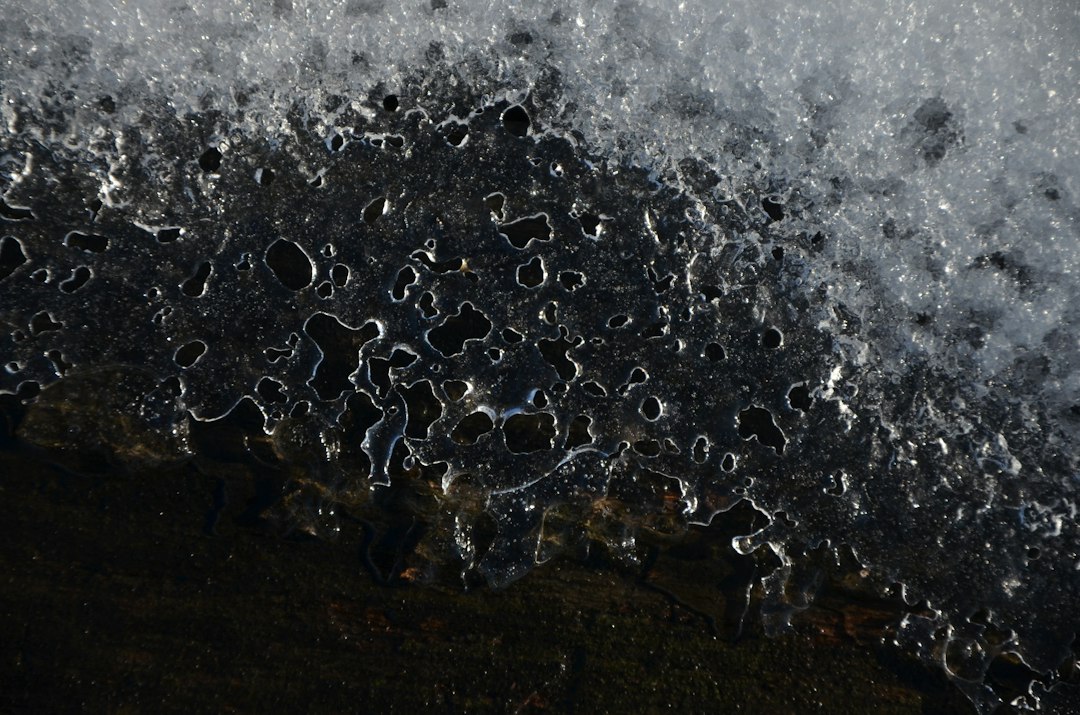
The Ethereal Dance of Frozen Bubbles
Water, in its myriad forms, has long captivated the human imagination. From the serene expanse of a placid lake to the chaotic fury of a raging tempest, its presence shapes our world in profound ways. Yet, it is perhaps in its frozen state, when transformed by the kiss of winter’s chill, that water truly reveals its artistic potential. Among the most enchanting and visually arresting of these frozen manifestations are the intricate structures formed when water bubbles freeze. This phenomenon, often observed in the heart of winter, transforms ordinary pockets of air trapped within water into delicate, crystalline sculptures, a fleeting spectacle that speaks to the subtle power and artistry of nature. The formation of these ice bubbles is not merely a visual delight; it is a testament to the complex interplay of temperature, pressure, and the inherent properties of water. Understanding how these ephemeral sculptures come into being offers a glimpse into the delicate balance of physical forces that govern our environment, reminding us that even the most commonplace substances can yield extraordinary beauty when subjected to the right conditions.
When exploring the fascinating phenomenon of ice formation while water bubbles, one can gain deeper insights by reading a related article that delves into the science behind these processes. This article discusses the intricate relationship between temperature, pressure, and the behavior of water molecules, providing a comprehensive understanding of why ice forms in certain conditions while water is still bubbling. For more information, you can check out the article here: Freaky Science.
The Genesis of an Ice Bubble: From Liquid to Solid Wonder
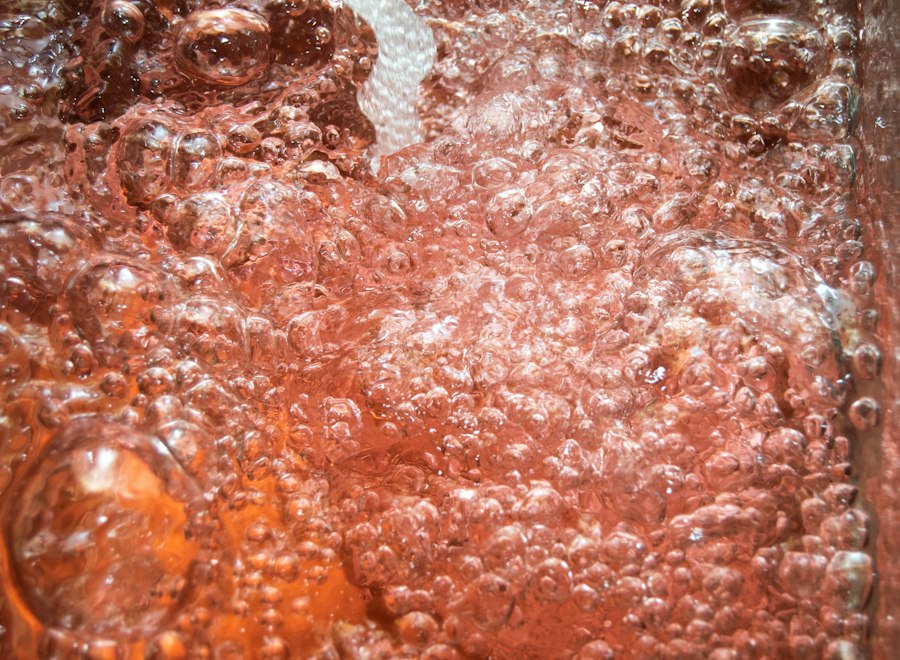
The creation of an ice bubble is a fascinating process that begins with the seemingly simple act of trapping air within water. This can occur in a variety of natural settings, from the surface tension of a pond to the churned water of a flowing stream. The key to the subsequent ice formation lies in the rapid and uniform cooling of the water surrounding these air pockets. When temperatures plummet below freezing, the liquid water molecules begin to lose kinetic energy, slowing their movement and drawing closer together. This transition from a liquid to a solid state, the process of freezing, is what allows for the preservation of the bubble’s form.
Surface Tension and Air Entrapment
The initial entrapment of air within water is a fundamental prerequisite for the formation of ice bubbles. Surface tension, the cohesive force that holds liquid molecules together, plays a crucial role in this. When water is agitated, whether by wind, rain, or the movement of aquatic life, air becomes incorporated into the liquid. Surface tension then acts to create a thin, elastic membrane around these pockets of air, preventing them from immediately dissipating back into the atmosphere. These trapped air bubbles, much like tiny balloons within the water, become the nuclei around which ice can form. The size and distribution of these bubbles are often influenced by the degree of agitation and the water’s inherent properties. For instance, water with a higher mineral content might exhibit different surface tension characteristics, potentially affecting bubble formation. The more vigorous the disturbance, the smaller and more numerous the bubbles are likely to be. This initial stage is a delicate dance between the air seeking escape and the water’s tenacious grip.
The Chilling Embrace: Freezing Dynamics
Once air is successfully trapped within water, the stage is set for the dramatic transformation brought about by freezing temperatures. For ice bubbles to form in their characteristic spherical or elongated shapes, the freezing process must be swift and relatively uniform around the air pocket. This typically occurs when the ambient temperature drops significantly below the freezing point of water (0 degrees Celsius or 32 degrees Fahrenheit). As the surrounding water cools, ice crystals begin to nucleate and grow.
Crystal Nucleation and Growth
The initiation of ice crystal formation, known as nucleation, is a critical step. This can happen spontaneously, or it can be induced by the presence of impurities or dust particles suspended in the water, which provide surfaces for ice crystals to begin forming. Once a crystal nucleus is established, it grows by attracting more water molecules from the surrounding liquid. In the case of ice bubbles, the freezing progresses outward from the water-air interface. The water molecules directly adjacent to the air bubble start to lose their kinetic energy and arrange themselves into the rigid lattice structure of ice.
The Role of Rapid Cooling
The speed at which this freezing occurs is paramount. If the water freezes too slowly, the ice crystals may have time to grow and interlock in a more complex, less uniform manner, potentially crushing or distorting the air bubble. However, with rapid cooling, the ice forms a more homogeneous shell around the air pocket before significant internal stresses can develop. This rapid freezing effectively “locks in” the shape of the bubble, preserving its delicate form within the solid ice. Factors influencing the rate of cooling include the ambient air temperature, wind speed (which can increase heat transfer), and the depth of the water. Shallower bodies of water or the surface layers of deeper ones are more susceptible to rapid freezing. The trapped air within the bubble also plays a subtle role, as it is a poor conductor of heat, providing a small degree of insulation that can influence the rate of freezing at the water-ice interface.
The Pressure Puzzle: Internal Forces at Play
As water freezes, it undergoes a peculiar transformation in volume. Unlike most substances, which contract upon solidifying, water expands. This expansion is due to the unique crystalline structure of ice, where molecules are held further apart in a hexagonal lattice. This expansion exerts pressure on the surrounding water and any trapped air pockets. The interplay of this outward pressure from the expanding ice and the inward pressure from the surrounding, still-liquid water (or already-frozen ice) is what shapes the final form of the ice bubble.
Volume Expansion of Freezing Water
The fundamental principle driving the pressure dynamics within an ice bubble is the expansion of water as it freezes. When water transitions from liquid to solid, its density decreases by approximately 9%. This increase in volume is a direct consequence of the hydrogen bonding between water molecules. In liquid water, these bonds are constantly breaking and reforming, allowing molecules to pack relatively closely. In ice, however, the molecules form a more ordered, open hexagonal structure, with hydrogen bonds holding them at a fixed distance, leading to the expansion.
Compressive and Tensile Stresses
As the ice forms around an air bubble, this expansion creates outward pressure. Simultaneously, the cooling of the surrounding water continues, causing it to contract slightly until it also freezes. This can create compressive stresses. However, the air within the bubble also exerts an outward pressure, pushing against the forming ice shell. If the freezing is sufficiently rapid and uniform, the ice shell can solidify while maintaining the integrity of the bubble, effectively containing the internal air pressure. The resulting shape is often a sphere or an elongated oval, depending on the initial bubble shape and the directionality of the freezing. In some instances, if the ice shell is not uniformly strong or if the internal air pressure is too great, the bubble can deform or even rupture, leading to a less perfect, sometimes fragmented, ice structure. The visual result is a delicate, often translucent sphere or teardrop-like form, with the trapped air appearing as a void within the ice.
Forms and Features: The Aesthetic Diversity of Ice Bubbles
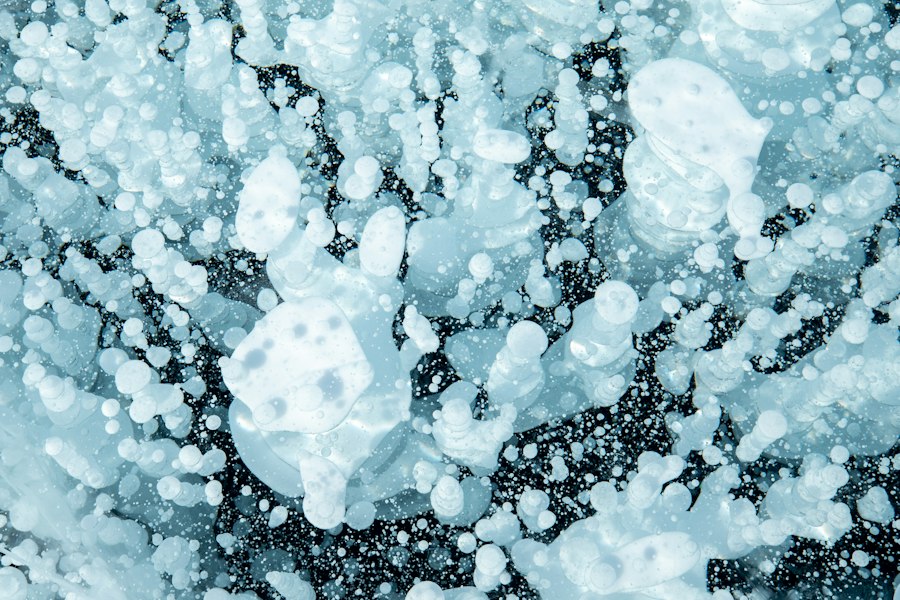
The beauty of ice bubbles lies not only in their existence but also in the astonishing variety of forms they can take. No two ice bubbles are ever precisely alike, each a unique testament to the specific conditions under which it formed. From perfectly spherical orbs to elongated spindles and intricate clusters, their aesthetic appeal is undeniable, often resembling delicate glass sculptures crafted by a master artisan.
Spherical Wonders: The Archetypal Ice Bubble
The most commonly observed and arguably the most aesthetically pleasing ice bubbles are those that form as near-perfect spheres. This ideal shape is achieved when the freezing process is exceptionally uniform around the air pocket. The surface tension of the water, acting equally in all directions, tends to draw the liquid into the most energetically favorable shape – a sphere. When this liquid sphere of water solidifies rapidly and evenly, the trapped air is encased in a perfectly rounded shell of ice.
Symmetry and Transparency
These spherical ice bubbles often exhibit a remarkable degree of symmetry. Their smooth, unblemished surfaces can be incredibly transparent, allowing light to pass through and refract, creating captivating optical effects. The trapped air inside, being less dense than ice, creates a distinct internal void. When sunlight or ambient light illuminates these spheres, they can sparkle and shimmer, appearing like frozen pearls or delicate glass baubles scattered across the icy landscape. The clarity of the ice depends on factors such as water purity and the speed of freezing. Impurities can lead to cloudier ice, while very rapid freezing can sometimes trap tiny air bubbles within the ice itself, creating a more opaque or milky appearance.
Variations in Size and Density
While perfectly spherical ice bubbles are a common sight, they can vary significantly in size, from microscopic specks to orbs several centimeters in diameter. The size of the original air pocket dictates the size of the resulting ice bubble. Furthermore, even within the category of spherical bubbles, there can be subtle variations in density and thickness of the ice shell. A thicker shell might appear more robust, while a thinner one could be more fragile and prone to breaking. The distribution of heat within the water and the rate of crystal growth influence these variations.
Elongated and Irregular Forms: The Art of Imperfection
While spheres are striking, the world of ice bubbles is not limited to perfect circles. Often, the freezing process is not entirely uniform, leading to a fascinating array of elongated, stretched, or even irregular shapes. These variations add another layer of visual intrigue, showcasing the dynamic nature of ice formation.
Spindles and Teardrops
In cases where the freezing occurs more rapidly on one side of the bubble or where there is a slight current or directional force acting on the water, the ice can form in an elongated fashion. This can result in spindle-like shapes, resembling frozen projectiles, or teardrop forms, where one end is more rounded and the other tapers to a point. These forms are a direct visual cue to the prevailing environmental conditions during their formation, hinting at subtle movements or temperature gradients within the water.
Clusters and Filaments
Sometimes, multiple air bubbles can become trapped in close proximity. As freezing occurs, these bubbles can coalesce or freeze together, forming intricate clusters of ice bubbles. These can resemble frozen grapes or delicate chains. In other instances, very fine air bubbles, particularly in agitated water, can form long, thin filaments of ice, creating delicate, thread-like structures that hang suspended in the frozen water. These are often more fragile but equally captivating in their complexity. The interaction between adjacent bubbles during freezing can lead to complex structural patterns, where the ice walls between them become thin and delicate.
Internal Textures and Inclusions: Hidden Details
Beyond the overall shape, the internal structure of ice bubbles can also reveal fascinating details. The way ice crystals grow within the shell, the presence of impurities, and even tiny trapped air pockets within the ice itself can create unique textures and inclusions that add to their visual appeal.
Crystalline Patterns
As ice crystals grow, they often form intricate patterns. Within the shell of an ice bubble, these patterns can sometimes be visible, appearing as delicate, feathery lines or geometric arrangements of ice. These internal crystalline textures can catch the light in unique ways, adding a subtle shimmer and depth to the bubble. The orientation and size of these crystals are influenced by the rate of freezing and the specific nucleation sites.
Trapped Impurities and Micro-bubbles
The water from which ice bubbles form is rarely perfectly pure. Dissolved minerals, organic matter, and even tiny suspended particles can become incorporated into the forming ice shell. These impurities can act as nucleation sites, influence the growth of ice crystals, or simply become visible inclusions within the ice, adding color or texture. Additionally, during rapid freezing, tiny air bubbles can become trapped within the ice itself, creating a milky or cloudy appearance. These micro-bubbles, when viewed in contrast to the clearer ice, can create a beautiful, frosted effect.
The Science Behind the Spectacle: Physics and Chemistry of Ice Bubble Formation
The formation of ice bubbles is a captivating interplay of physics and chemistry. It is a process governed by fundamental principles of thermodynamics, fluid dynamics, and crystallography. Understanding these underlying scientific mechanisms provides a deeper appreciation for the intricate beauty of these frozen marvels.
Thermodynamics and Phase Transitions
At its core, the formation of an ice bubble is a phase transition – the transformation of water from a liquid to a solid state. This process is driven by changes in temperature and energy.
Heat Transfer and Latent Heat
The freezing of water is an exothermic process, meaning it releases heat. This release of energy, known as the latent heat of fusion, must be dissipated into the surroundings for the water to solidify. The rate at which this heat is transferred away from the water dictates the speed of freezing. Efficient heat transfer, facilitated by cold air and potentially wind, is crucial for the rapid formation of intact ice bubbles. If heat is removed too slowly, the ice may form in a more disorganized manner, potentially compromising the bubble’s structure.
Enthalpy and Entropy in Freezing
Thermodynamically, freezing occurs when the enthalpy (heat content) of the system decreases sufficiently, and the entropy (disorder) also decreases as the molecules become more ordered in the crystalline lattice. The balance between these thermodynamic factors, influenced by temperature and pressure, determines the point at which liquid water will spontaneously transition into solid ice. The presence of dissolved substances can also affect the freezing point, typically lowering it.
Crystallography and Ice Structure
The unique properties of ice, particularly its crystalline structure, are central to the formation and appearance of ice bubbles.
Hexagonal Crystal Lattice
Water ice typically forms a hexagonal crystal structure, denoted as Ice Ih. In this structure, water molecules are arranged in a lattice where hydrogen bonds hold them in a relatively open, ordered configuration. This open structure is the reason why ice is less dense than liquid water, leading to its expansion upon freezing. The specific orientation and growth of these hexagonal crystals can create the various textures and patterns observed within the ice shell of a bubble.
Anisotropy of Ice Growth
The growth of ice crystals is not always uniform in all directions; it can be anisotropic, meaning it varies depending on the crystallographic direction. This means that certain faces of an ice crystal may grow faster than others. This anisotropic growth can influence the shape of the ice shell surrounding an air bubble, contributing to the formation of elongated or more complex forms rather than perfect spheres. Factors like impurities and the presence of seed crystals can further influence the directionality of growth.
Fluid Dynamics and Bubble Dynamics
The initial formation and behavior of air bubbles within water are governed by principles of fluid dynamics.
Bubble Formation and Stability
The creation and stability of air bubbles in water are influenced by factors such as the viscosity of the water, the surface tension, and the dynamics of air injection. Agitation, currents, and the presence of surfactants can all affect how air is dispersed and retained within the liquid. The initial size and shape of the bubble are determined by these fluid dynamic processes before the onset of freezing.
Convection and Freezing Fronts
Within a body of water, convection currents can play a role in the distribution of temperature. These currents can influence the location and speed of the freezing front – the boundary between liquid water and solid ice. If convection is strong, it can lead to more turbulent freezing conditions, potentially creating more irregular ice bubble formations. Conversely, still water that cools uniformly can promote the formation of more symmetrical bubbles. The interaction between the freezing front and the air bubble is a dynamic process, where the rate of ice accretion and the internal air pressure must find a balance.
When exploring the fascinating phenomenon of ice forms while water bubbles, one can gain deeper insights by reading a related article on the subject. This article delves into the science behind the unique structures that ice can take on as it interacts with boiling water. Understanding these processes not only enhances our knowledge of physical chemistry but also reveals the beauty of nature’s intricate designs. For more information, you can check out this insightful piece on Freaky Science.
Environmental Significance and Observation Tips: Appreciating Frozen Wonders
| Parameter | Value | Unit | Description |
|---|---|---|---|
| Water Temperature | 0 | °C | Temperature at which ice begins to form |
| Bubble Size | 1-5 | mm | Typical diameter of bubbles in water during freezing |
| Freezing Rate | 0.1-1 | °C/min | Rate at which water temperature decreases to form ice |
| Ice Crystal Growth Speed | 0.5-2 | mm/min | Speed at which ice crystals expand around bubbles |
| Bubble Formation Mechanism | Gas Release | N/A | Gas released from water as it cools, forming bubbles |
| Water Pressure | 1 | atm | Atmospheric pressure during ice formation |
| Ice Density | 0.917 | g/cm³ | Density of ice formed around bubbles |
| Water Density | 1.000 | g/cm³ | Density of liquid water at 0°C |
The ephemeral beauty of ice bubbles, while primarily a visual delight, can also serve as a subtle indicator of environmental conditions. Observing these frozen phenomena offers a unique opportunity to connect with the natural world and appreciate the subtle artistry of winter.
Winter’s Fingerprints: Indicators of Conditions
The presence and characteristics of ice bubbles can offer clues about the specific environmental conditions under which they formed. Their abundance, size, and shape can speak to the intensity of the cold, the movement of water, and even the purity of the water source.
Temperature and Wind Influence
A profusion of small, well-formed ice bubbles often suggests a period of rapid and sustained freezing temperatures, possibly accompanied by wind, which accelerates heat loss from the water surface. Conversely, larger, more irregularly shaped bubbles might indicate slower freezing or the influence of currents that distorted the bubbles before they solidified. Areas with strong winds might see bubbles forming closer to the surface, while calmer conditions could lead to formations at greater depths or in more sheltered spots.
Water Quality and Impurities
The clarity and internal texture of ice bubbles can also provide hints about water quality. If the water is particularly clean and the freezing is swift, the ice bubbles will likely be very transparent. The presence of dissolved minerals or organic matter can lead to cloudier ice or noticeable inclusions within the ice shell. In areas with high levels of dissolved gases, the formation of numerous small bubbles might be more prevalent.
Optimal Viewing and Photography: Capturing the Moment
Witnessing ice bubbles in their full splendor requires a keen eye and an understanding of where and when to look. Capturing their delicate beauty for posterity demands patience and attention to detail.
Location and Timing
Ice bubbles are most commonly found in freshwater environments that experience significant freezing temperatures. Ponds, lakes, slow-moving streams, and even puddles can be prime locations. The best time to observe them is often after a period of intense cold, particularly when the sun is low in the sky, casting long shadows and illuminating the ice with a warm glow. Early morning or late afternoon light can highlight the transparency and internal details of the bubbles.
Photographic Considerations
When photographing ice bubbles, it is essential to consider the lighting and composition. Using a polarizing filter can help reduce glare from the ice surface, allowing the internal details of the bubbles to become more prominent. Macro lenses are ideal for capturing the intricate textures and forms of individual bubbles. Experimenting with different angles and backgrounds can enhance the visual impact of the photographs. Shooting on a tripod is recommended for stability, especially in cold conditions where gloves can make precise adjustments difficult. Capturing the surrounding frozen landscape can also provide context and enhance the storytelling aspect of the images.
The Ephemeral Nature of Ice Bubbles: A Reminder of Transience
Perhaps one of the most profound aspects of ice bubbles is their transient nature. They are a fleeting beauty, destined to melt away as temperatures rise. This impermanence adds a layer of poignancy to their observation, reminding viewers of the cyclical nature of seasons and the delicate balance of the natural world.
The Melting Process
As the temperature rises above freezing, the ice crystals that form the bubble shell begin to lose energy. The hydrogen bonds weaken, and the organized lattice structure breaks down, returning the water to its liquid state. This melting process can happen gradually, with the bubble slowly shrinking and distorting, or it can be rapid, especially under direct sunlight. The water molecules that once held the air captive are released back into the environment, and the bubble ceases to exist.
A Symbol of Winter’s Artistry
The ephemeral existence of ice bubbles makes them a powerful symbol of winter’s unique artistry. They are temporary masterpieces, created by the cold and destined to disappear with the warmth. Their observation encourages mindfulness and an appreciation for the present moment, for these frozen wonders are a testament to the beauty that can emerge from the most ordinary of elements, a fleeting glimpse of nature’s ability to transform the mundane into the magical. Their existence serves as a gentle reminder to cherish the transient moments of beauty that winter so generously offers.
Water Boiled While Ice Formed. Could a Lander Sink Into It?
FAQs
How do bubbles form in ice?
When water freezes, it traps air bubbles that were present in the liquid water. These bubbles become trapped as the water solidifies into ice, creating pockets of air within the ice.
Why do some ice cubes have more bubbles than others?
The amount of bubbles in ice cubes can vary depending on the quality of the water used to make the ice. Water with impurities or air bubbles trapped in it will result in ice cubes with more bubbles compared to distilled water.
Can you prevent bubbles from forming in ice?
To reduce the number of bubbles in ice, you can try using distilled water to make ice cubes. Boiling the water before freezing it can also help release any trapped air bubbles, resulting in clearer ice.
Are the bubbles in ice harmful to consume?
The bubbles trapped in ice are simply pockets of air and are not harmful to consume. They do not affect the taste or safety of the ice, so there is no need to worry about consuming ice with bubbles in it.
Why does ice with bubbles appear cloudy?
The presence of air bubbles in ice can scatter light, making the ice appear cloudy or opaque. The more bubbles present in the ice, the cloudier it will appear compared to clear, bubble-free ice.