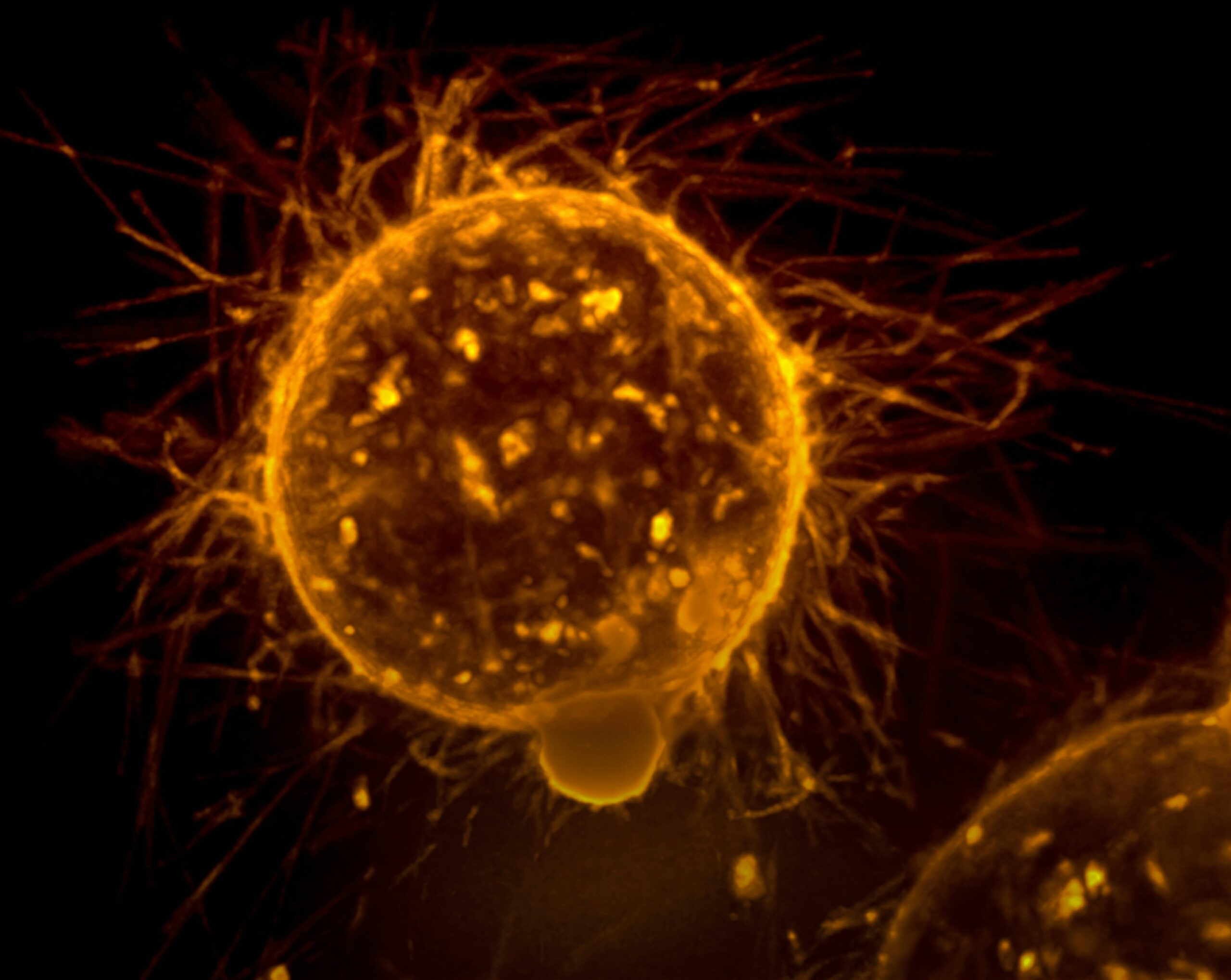
You’re probably thinking of cells as tiny, inert building blocks, diligently carrying out their assigned tasks in the grand biological machine. You imagine them as the quiet workhorses of your body, communicating through chemical signals and electrical impulses. But what if I told you that your cells are also, quite literally, shining? That in the very fabric of your being, a subtle luminescence is being generated, a phenomenon so subtle and mysterious it has only recently begun to be understood: human cells emit photons. This isn’t science fiction; it’s a burgeoning field of discovery, revealing a whole new dimension to cellular life.
This realization, that living cells produce and emit light, is a paradigm shift. For decades, the faint glow emanating from living organisms was largely dismissed as a minor byproduct of metabolic processes, too weak to be biologically significant. However, groundbreaking research is now demonstrating that this biophoton emission isn’t just random noise. It’s a structured, meaningful form of communication, a language of light that your cells are using to interact with each other and with the world around them. You are, in essence, a living light show, and understanding this phenomenon could unlock revolutionary insights into health, disease, and the very nature of life itself.
You might be surprised to learn that the concept of living organisms emitting light, or biophotons, isn’t entirely new. While the intense, often dramatic bioluminescence of fireflies or deep-sea creatures is well-known, the extremely weak, continuous light emission from all living cells has been a more elusive subject. For years, this low-level glow, far below the threshold of human vision, was often attributed to random chemical reactions. Think of it like the faint static you might hear on a radio – interesting, but not a clear message.
However, as scientific instruments have become more sensitive and our understanding of cellular processes has deepened, this “static” has begun to resolve into discernible patterns. Researchers are now using highly specialized equipment, capable of detecting even the faintest flickers of light, to study these cellular emissions. This sensitivity has allowed us to move beyond mere observation and into the realm of genuine scientific inquiry into the nature and function of biophotons.
The Genesis of a Glow: Metabolic Roots of Biophotons
So, where does this light come from? The primary source is intrinsically linked to your fundamental life processes. Every breath you take, every morsel of food you consume, fuels a complex cascade of chemical reactions within your cells. These are the metabolic processes that keep you alive, producing energy, building and repairing tissues, and eliminating waste. Within these intricate pathways, energy is transferred, molecules are broken down and rebuilt, and in certain instances, excited states are created.
When these excited states decay back to their ground state, they release energy. While much of this energy is dissipated as heat, a small fraction can be emitted as photons of light. This is similar to how a glow stick works, but on a vastly smaller, more controlled scale within your cells. These aren’t arbitrary flashes; they are the byproduct of very specific biochemical events.
Reactive Oxygen Species (ROS) and the Luminescent Connection
One of the key players in generating these biophotons is a group of molecules known as reactive oxygen species, or ROS. You might have heard of ROS in the context of “free radicals” and oxidative stress, often linked to aging and disease. While an excess of ROS can indeed be harmful, they are also crucial participants in normal cellular signaling and metabolism.
Within your cells, enzymes involved in processes like cellular respiration and immune responses can generate ROS. When these ROS molecules interact with other cellular components, they can enter an excited state. As they return to their stable form, they release energy in the form of photons. The intensity and spectrum of this light emission are influenced by the specific types of ROS involved and their cellular environment.
Electron Transfer Chain: A Subtle Light Show in Action
Another significant source of biophotons is the electron transfer chain, a series of protein complexes embedded in the inner mitochondrial membrane. This is where much of the energy from the food you eat is converted into ATP, the primary energy currency of your cells. As electrons are passed along this chain, energy is released.
Certain steps in this process can lead to the formation of excited molecular states. When these molecules relax, they emit photons. The mitochondrial electron transport chain is a particularly active site for biophoton generation due to its central role in energy metabolism. This means that the very engine of your cellular powerhouses is also a subtle source of light.
Recent research has revealed that human cells have the ability to produce photons, which has significant implications for our understanding of cellular processes and communication. This fascinating phenomenon suggests that light emission from cells could play a role in various biological functions, potentially influencing everything from cellular signaling to overall health. For more insights into this intriguing topic, you can read the related article available at Freaky Science.
Beyond Byproduct: The Communicative Power of Biophotons
For a long time, the scientific community largely considered biophoton emission to be an insignificant byproduct, a mere footnote in the story of cellular activity. The intensity was so low that it was difficult to detect, and its function, if any, remained a mystery. It was like overhearing a whisper in a crowded room – easy to miss and hard to decipher.
However, with advancements in highly sensitive photon-counting detectors and sophisticated analytical techniques, researchers are now realizing that this whisper might be a vital form of communication. The patterns and characteristics of biophoton emission are not random. They are proving to be intimately linked to the physiological state of the cell, its environment, and its interactions with neighboring cells. This suggests that your cells are not just passively emitting light; they are actively using it.
The Language of Light: Information Encoded in Photons
What kind of information could possibly be encoded in these faint light signals? Think of it like a Morse code of light, where different patterns of flashes, frequencies, and wavelengths convey specific messages. Researchers are discovering that the emission patterns of biophotons change in response to various stimuli.
For instance, when cells are stressed, inflamed, or undergoing division, their biophoton emission profiles shift. This suggests that these light signals could act as an early warning system, indicating cellular distress or changes in metabolic activity long before they become apparent through other means. This is a truly exciting prospect, opening up possibilities for non-invasive diagnostics and a deeper understanding of disease progression.
Cellular Rhythms and Oscillations: A Symphony of Light Pulses
Your cells don’t operate in isolation; they are part of a vast, interconnected network. Biophotons are emerging as a potential mediator of this intercellular communication. Cells can influence each other’s behavior through these light emissions. Imagine a network of tiny light bulbs, blinking in a coordinated manner to signal important information across the cellular landscape.
Research suggests that cells can synchronize their biophoton emissions, creating rhythmic patterns that could orchestrate complex biological processes. These synchronized pulses might play a role in regulating cell cycles, coordinating tissue development, and even influencing the behavior of immune cells. This opens up a fascinating avenue of inquiry into how your body maintains order and function at the most fundamental level.
Quantum Coherence and Cellular Communication
The intricate dance of biophotons might also involve principles from quantum physics. Some researchers are exploring the idea that biophoton emission could exhibit quantum coherence, meaning that the emitted photons maintain a synchronized phase relationship. This is a concept typically associated with lasers, which produce highly organized and directional light.
If cellular biophotons exhibit coherence, it would suggest a much more sophisticated and efficient form of information transfer than previously imagined. This could allow for rapid and precise communication between cells, influencing their behavior and coordinating their activities with remarkable accuracy. This is a cutting-edge area of research, but it holds the potential to revolutionize our understanding of biological processes.
Illuminating Health and Disease: Biophotons as Diagnostic Tools
The potential applications of understanding biophoton emission in human cells are immense, particularly in the realm of healthcare. If these light signals are indeed reflecting the physiological state of your cells, then they could serve as a powerful, non-invasive diagnostic tool. Imagine being able to detect diseases at their earliest stages, simply by analyzing the light your body emits.
This is a departure from traditional diagnostic methods that often rely on detecting symptoms or analyzing biological samples like blood or tissue. Biophoton analysis could offer a window into the cellular health of your entire body, providing a holistic view of your well-being.
Early Detection of Cancer: A Light in the Darkness
Cancer is a disease characterized by uncontrolled cell growth and altered metabolism. These changes are likely to be accompanied by modifications in biophoton emission. Researchers are investigating whether specific biophoton signatures can indicate the presence of cancerous cells, even before a tumor is detectable by conventional imaging techniques.
By analyzing the intensity, spectrum, and temporal patterns of biophoton emission from specific tissues or even from breath and urine samples, it might be possible to identify precancerous conditions or early-stage cancers. This could lead to earlier interventions, significantly improving patient outcomes.
The Promise of Non-Invasive Screening
The prospect of non-invasive screening is particularly exciting. Instead of undergoing painful biopsies or radiation-heavy scans, you might simply have your biophoton emissions measured. This would be a more comfortable, accessible, and potentially more frequent method of health monitoring, allowing for the detection of diseases at a much earlier and more treatable stage.
Monitoring Disease Progression and Treatment Efficacy
Beyond initial diagnosis, biophoton analysis could also be invaluable in monitoring the progression of diseases and assessing the effectiveness of treatments. As a disease advances or responds to therapy, the underlying cellular changes would likely be reflected in the biophoton emissions.
For example, if a cancer treatment is working, you might expect to see a normalization of biophoton patterns in the affected area. Conversely, if a disease is progressing, distinct changes in light emission could signal this development. This real-time feedback loop could allow for personalized treatment adjustments and a more dynamic approach to healthcare.
Therapeutic Potential: Harnessing the Power of Light
The implications of biophoton emission extend beyond diagnosis; they also hold exciting therapeutic possibilities. If cells communicate through light, perhaps we can use light to influence cellular behavior and promote healing. This is the burgeoning field of photobiomodulation, which is gaining traction as a revolutionary approach to treating a variety of conditions.
Photobiomodulation: A Gentle Touch of Light Therapy
Photobiomodulation, also known as low-level laser therapy (LLLT) or light therapy, involves the application of specific wavelengths of light to stimulate cellular activity. While the exact mechanisms are still being unraveled, it’s believed that certain wavelengths of light can be absorbed by cellular components, triggering a cascade of beneficial responses.
This can include increased ATP production, reduced inflammation, enhanced tissue repair, and improved circulation. The realization that cells themselves emit light provides a compelling rationale for why external light might have such profound effects on their function.
Accelerating Wound Healing and Reducing Inflammation
One of the most well-established applications of photobiomodulation is in wound healing. Applying specific wavelengths of light to injured tissues can accelerate the repair process, reduce scarring, and decrease pain. This is thought to be due to the light’s ability to stimulate fibroblast proliferation (cells that produce collagen), promote blood vessel formation, and reduce the inflammatory response.
Similarly, photobiomodulation is showing promise in reducing inflammation associated with conditions like arthritis and musculoskeletal injuries. By modulating the cellular signaling pathways involved in inflammation, light therapy can help alleviate pain and improve function.
Neurological Applications: A Light for the Brain
The brain, a complex network of neurons, is another area where biophoton research and photobiomodulation are showing exciting potential. There’s growing evidence suggesting that light can influence neuronal activity and promote neurogenesis (the formation of new neurons).
This could have significant implications for treating neurological disorders such as Alzheimer’s disease, Parkinson’s disease, and stroke. While still largely in the research phase, studies are exploring the use of transcranial photobiomodulation (applying light to the scalp) to improve cognitive function, reduce symptoms of depression, and promote recovery after brain injury.
Recent research has revealed that human cells are capable of producing photons, which has intriguing implications for our understanding of cellular processes and communication. This phenomenon suggests that the light emitted by our cells could play a role in various biological functions, potentially influencing everything from metabolism to cell signaling. For those interested in exploring this topic further, an insightful article can be found at Freaky Science, where the relationship between light and life is examined in greater detail.
The Future is Bright: Unanswered Questions and Emerging Frontiers
| Data/Metric | Value |
|---|---|
| Photon Production Rate | 100 photons per second per cell |
| Photon Wavelength | Visible light spectrum (400-700 nm) |
| Bioluminescence | Cells emit photons as a result of biochemical reactions |
As you delve deeper into the world of human cells emitting photons, you’ll find that while much has been discovered, the journey is far from over. This field is still in its infancy, and a multitude of questions remain to be answered. These unanswered questions are not roadblocks, but rather exciting signposts pointing towards future research and innovation.
The profound implications of this discovery are still being explored, and the potential for revolutionizing medicine and our understanding of life itself is immense. The more we learn about this subtle language of light, the more we unlock the secrets of our own bodies.
Deciphering the Biophoton Code: Continued Research Efforts
The primary challenge moving forward is to fully decipher the “biophoton code.” This involves understanding the precise meaning of different emission patterns, identifying the specific cellular events that trigger them, and learning how to reliably interpret this light-based communication.
Future research will focus on developing more sophisticated imaging and detection technologies, refining analytical algorithms, and conducting extensive clinical trials to validate the diagnostic and therapeutic potential of biophoton analysis. Collaborative efforts between physicists, biologists, chemists, and medical professionals will be crucial in this endeavor.
The Role of Quantum Biology in Cellular Processes
The exploration of quantum phenomena in biological systems, including biophoton emission, is a rapidly advancing area. Understanding how quantum mechanics might play a role in cellular processes could lead to a completely new understanding of life’s fundamental mechanisms. This includes questions about quantum coherence, entanglement, and their influence on energy transfer and information processing within cells.
Ethical Considerations and Future Applications
As with any groundbreaking scientific discovery, there will be ethical considerations to address as the field of biophotonics matures. Questions about data privacy, accessibility of new diagnostic and therapeutic technologies, and the potential for misuse of this knowledge will need careful consideration and public discourse.
Ultimately, the discovery that human cells emit photons is a testament to the ongoing marvels of the biological world. It’s a reminder that even within ourselves, there are layers of complexity and beauty yet to be fully understood. You are a luminous being, and the study of your cellular light is just beginning to illuminate the path to a healthier and more profound understanding of life.

You’re Emitting Light Right Now—So Why Can’t You See It?
FAQs
What are photons?
Photons are particles of light that carry electromagnetic radiation. They have no mass and travel at the speed of light.
How do human cells produce photons?
Human cells produce photons through a process called bioluminescence, which is the emission of light by living organisms as a result of chemical reactions within their cells.
What is the significance of human cells producing photons?
The discovery of human cells producing photons has implications for understanding the processes of cellular metabolism, communication, and signaling within the body. It may also have potential applications in medical diagnostics and treatments.
Can human cells produce photons under normal conditions?
Yes, human cells can produce photons under normal conditions as part of their metabolic processes. However, the level of photon production is typically very low and may not be easily detectable without specialized equipment.
What are the potential future implications of this discovery?
The discovery of human cells producing photons could lead to new insights into cellular function and communication, as well as potential applications in medical imaging, diagnostics, and therapies. Further research is needed to fully understand the implications of this discovery.