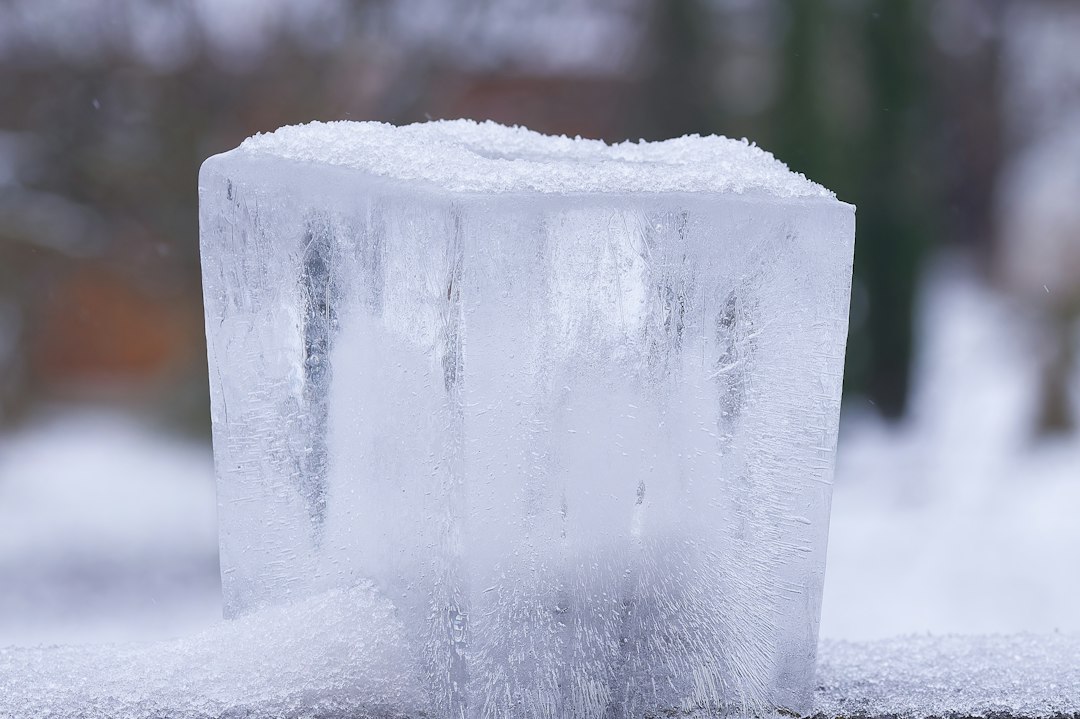
The Counterintuitive Phenomenon: How Evaporation Can Lead to Freezing
It might seem like a paradox at first glance: how can the process of water turning into a gas, which we associate with warmth and dryness, actually lead to water turning into a solid – ice? This phenomenon, known as evaporative cooling, is a fascinating aspect of thermodynamics and plays a crucial role in various natural processes and technological applications. While we often think of freezing as a direct consequence of heat removal, evaporation offers an indirect but potent pathway to achieving sub-zero temperatures. Understanding this process requires delving into the molecular behavior of water and the principles of heat transfer. It’s a testament to the intricate dance of energy and matter that governs our world, demonstrating that even seemingly contradictory events are rooted in fundamental scientific laws.
In exploring the fascinating phenomenon of water freezing by evaporation, one can gain deeper insights by reading a related article that delves into the principles of phase changes and the energy dynamics involved. This article provides a comprehensive overview of how evaporation can lead to cooling effects, ultimately resulting in freezing under certain conditions. For more information, you can check out the article here: Understanding Water Freezing by Evaporation.
Understanding Evaporation at the Molecular Level
Evaporation is not a sudden event but a continuous process that occurs at the surface of a liquid. At any given temperature, water molecules are in constant motion, possessing a distribution of kinetic energies. Some molecules, particularly those at the surface, have enough kinetic energy to overcome the intermolecular forces holding them within the liquid phase. These energetic molecules then escape into the surrounding air as water vapor, transforming from liquid to gas. This escape of the most energetic molecules is the key to evaporative cooling.
Kinetic Energy and Molecular Escape
The kinetic energy of a molecule is directly related to its temperature. In a body of water, molecules are constantly colliding and exchanging energy. While the average kinetic energy of the molecules determines the overall temperature of the water, there will always be a tail of molecules with significantly higher kinetic energies, especially at the surface. These high-energy molecules are the ones that have the best chance of breaking free from the liquid’s surface tension and the attractive forces exerted by their neighboring water molecules. Imagine a crowded dance floor; while most dancers move with moderate energy, a few might be jumping and twirling with exceptional vigor, more likely to break away from the main group. Similarly, the most energetic water molecules are the ones that achieve escape velocity from the liquid surface.
The Role of Intermolecular Forces
Water molecules are held together by hydrogen bonds, a type of intermolecular force. These bonds, while relatively weak compared to covalent bonds within a molecule, are strong enough to keep water in a liquid state at typical environmental temperatures. For a molecule to evaporate, it must possess sufficient kinetic energy to overcome these attractive forces. The energy required to break these hydrogen bonds is drawn from the molecule’s own kinetic energy. Once a molecule gains enough energy to break free, it leaves the liquid behind.
Heat Transfer and the Enthalpy of Vaporization
The process of evaporation requires energy. This energy is known as the latent heat of vaporization, the amount of heat needed to transform a unit mass of a substance from a liquid to a gas at a constant temperature. In the case of evaporation, this energy is absorbed from the immediate surroundings. When water evaporates, it draws this heat from the remaining liquid water and the surrounding air. This absorption of heat energy from the environment causes a decrease in the temperature of both the water and the air. The more readily evaporation occurs, the faster this heat is drawn away, leading to a more pronounced cooling effect.
The Mechanism of Evaporative Cooling
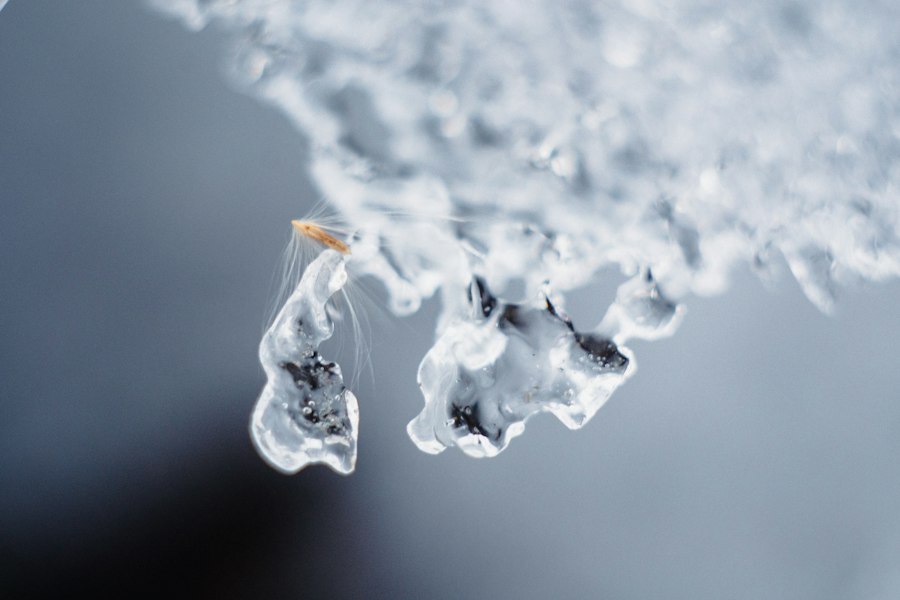
Evaporative cooling is the direct consequence of the molecular escape discussed previously. When the most energetic water molecules leave the liquid, they take their kinetic energy with them in the form of heat. This leaves the remaining water molecules with a lower average kinetic energy, and since temperature is a measure of average kinetic energy, the temperature of the water decreases. This cooling effect can be substantial, especially in environments where evaporation is efficient.
The Cooling Effect on the Remaining Liquid
As high-energy molecules evaporate, the average kinetic energy of the molecules left behind decreases. Since temperature is defined as the average kinetic energy of the molecules within a substance, the temperature of the remaining liquid water drops. This is why on a hot day, wetting your skin can provide a sense of relief; the water evaporates, taking heat from your body and cooling you down. The more water there is and the more efficient the evaporation, the greater the cooling effect. Consider a pot of water on a stove; as steam rises, the water remaining in the pot becomes cooler than it would if it were simply left undisturbed at the same ambient temperature.
Heat Exchange with the Surrounding Environment
Evaporation doesn’t just cool the liquid itself; it also cools the surrounding air. The water vapor molecules that escape into the air carry the absorbed heat with them. This heat exchange between the evaporating water and the air means that the air in the vicinity of the evaporation also experiences a drop in temperature. In enclosed spaces, this can lead to a noticeable decrease in ambient temperature. This principle is utilized in evaporative coolers, also known as swamp coolers, which are particularly effective in dry climates. These devices circulate air through a water-soaked pad, promoting evaporation and thus cooling the air that is then blown into a room.
Factors Influencing Evaporation Rate and Cooling Efficiency
Several environmental factors significantly influence the rate of evaporation and, consequently, the efficiency of evaporative cooling. These include humidity, air movement, temperature, and surface area. High humidity means there is already a significant amount of water vapor in the air, which reduces the driving force for further evaporation. Conversely, dry air readily accepts more water vapor, accelerating the process.
Humidity: The Dampening Effect of Moisture
Humidity refers to the amount of water vapor present in the atmosphere. When humidity is high, the air is already saturated or nearly saturated with water vapor. This reduces the concentration gradient between the liquid water surface and the air, making it more difficult for water molecules to escape into the gaseous phase. In essence, the air is less “thirsty” for more moisture. Therefore, high humidity significantly slows down the rate of evaporation, diminishing the cooling effect. In a humid environment, the water on your skin might feel clammy and cool you less effectively than in a dry environment.
Air Movement: The Breeze of Efficiency
Air movement, or wind, plays a crucial role in enhancing evaporation. As water molecules evaporate from the surface, they increase the concentration of water vapor in the immediate vicinity. If this moist air is allowed to linger, it slows down further evaporation. Wind, however, carries away this saturated air and replaces it with drier air. This maintains a steeper concentration gradient, promoting a faster rate of evaporation and thus a more pronounced cooling effect. This is why a breezy day often feels cooler than a still day, even if the temperature is the same; the breeze facilitates evaporative cooling from our skin.
Temperature: The Energy Driver
While evaporation itself causes cooling, the initial temperature of the water and the surrounding air also influences the rate of evaporation. Higher temperatures mean that more water molecules possess the necessary kinetic energy to escape the liquid phase. Therefore, evaporation occurs more rapidly at higher temperatures, leading to a greater amount of heat being removed from the system and a more significant cooling effect. However, it’s important to distinguish between the rate of evaporation and the final temperature achieved. Even at lower temperatures, if conditions are conducive to evaporation (like low humidity and good airflow), significant cooling can still occur.
Surface Area: Maximizing the Escape Route
The surface area exposed to the air directly impacts the rate of evaporation. A larger surface area provides more opportunities for water molecules to escape. This is why water in a wide, shallow pan will evaporate and cool faster than the same amount of water in a tall, narrow container. This principle is applied in various cooling systems where maximizing surface area is key to efficient heat exchange.
The Pathway to Freezing: When Cooling Becomes Extreme
The cooling effect of evaporation is not limited to simply making water feel cooler. Under specific conditions, this cooling can become so intense that it drives the temperature of the remaining water below its freezing point. This is where the paradox is fully resolved: evaporation, by continuously removing heat, can lead to the formation of ice. This process is most commonly observed in very cold, dry, and windy environments.
The ‘Frost Flowers’ Phenomenon and Cold Deserts
One striking example of freezing by evaporation is the formation of “frost flowers” or “ice ribbons” in certain arid and freezing environments. These delicate, petal-like structures of ice are often found on the stems of plants or on wood as the ambient temperature drops below freezing. As the plant sap or moisture within the wood slowly evaporates, it cools the surrounding liquid. If the humidity is low and there is some airflow, evaporation continues at a rate sufficient to overcome the heat input from the surroundings. The continuous removal of heat eventually lowers the temperature of the remaining moisture to below 0°C, causing it to freeze. The unique, often intricate shapes of frost flowers are a testament to the slow, continuous freezing process driven by evaporation.
Applications in Cryogenics and Preservation
The principle of evaporative cooling, leading to freezing, has practical applications in various fields. In some cryogenic applications, the controlled evaporation of a volatile liquid can be used to achieve very low temperatures. While not as common as other refrigeration methods, it demonstrates the potential of this phenomenon. More tangibly, in historical or simpler preservation methods, the drying of food items through evaporation naturally lowers their temperature, and when combined with cold ambient conditions, can contribute to preservation by preventing microbial growth. While not direct freezing, the initial cooling from evaporation can be a precursor to freezing in such scenarios.
The Critical Role of Low Humidity and Airflow
For water to freeze by evaporation, the environmental conditions must be exceptionally favorable for rapid evaporation. This typically means very low humidity and significant air movement. In such conditions, the rate at which heat is removed by evaporation can exceed the rate at which heat is gained from the environment. This is why freezing by evaporation is less common in humid climates. Imagine leaving a shallow dish of water outside on a very cold, clear, and windy night in a desert. The water will not only cool but will likely freeze over. The wind will constantly whisk away the water vapor, and the dry air will readily accept more, leading to a continuous and aggressive cooling of the remaining water.
The fascinating process of water freezing by evaporation is explored in depth in a related article that delves into the science behind this phenomenon. Understanding how water can transition from liquid to solid through evaporation not only highlights the complexities of thermodynamics but also has practical implications in various fields. For those interested in learning more about this intriguing topic, you can read the full article on Freaky Science.
Freezing by Evaporation in Different Environments
| Parameter | Value/Range | Unit | Description |
|---|---|---|---|
| Freezing Point of Water | 0 | °C | Temperature at which pure water freezes under standard atmospheric pressure |
| Evaporation Rate | 0.1 – 1.0 | mm/hr | Typical evaporation rate of water under ambient conditions |
| Latent Heat of Vaporization | 2260 | kJ/kg | Energy required to convert water from liquid to vapor at 100°C |
| Latent Heat of Fusion | 334 | kJ/kg | Energy released when water freezes at 0°C |
| Surface Temperature for Freezing by Evaporation | -5 to -15 | °C | Typical temperature range where evaporation cooling can induce freezing |
| Relative Humidity | 10 – 40 | % | Low humidity levels favor evaporation and cooling |
| Wind Speed | 1 – 5 | m/s | Increased wind speed enhances evaporation rate |
| Time to Freeze by Evaporation | 30 – 120 | minutes | Estimated time for thin water films to freeze under evaporation cooling |
The realization of freezing by evaporation is highly dependent on the specific environmental conditions. While the underlying principles are universal, their manifestation varies significantly across different climates and settings. From the subtle chilling of a summer breeze to the dramatic formation of ice in arid winter landscapes, the impact of evaporation on temperature is a constant.
Arid and Cold Climates: The Ideal Scenario
The most dramatic examples of freezing by evaporation occur in arid and cold climates. In these regions, the combination of low humidity and freezing temperatures creates the perfect storm for this phenomenon. The dry air acts as a powerful desiccator, readily absorbing moisture. When coupled with sub-zero temperatures and sufficient wind, the rate of evaporative cooling can be so high that it overcomes the ambient heat and freezes the remaining water. This is why frost flowers are a relatively common sight in certain cold deserts or high-altitude regions during winter. The continuous evaporation from plant tissues or porous materials provides a persistent cooling source that, in the absence of significant heat input, drives the water towards its freezing point.
Everyday Observations: The Chilling Effect of a Breeze
While extreme freezing by evaporation might be less common, the cooling effect of evaporation is something experienced daily. When we sweat, the evaporation of perspiration from our skin cools our bodies. Similarly, a breeze on a warm day feels cooler than still air because it enhances the evaporation of moisture from our skin. This everyday experience is a scaled-down version of the same fundamental process that can lead to ice formation under more extreme conditions. The more efficient the evaporation, the more noticeable the cooling effect. The gentle cooling of a shaded area where water is evaporating, such as near a pond or a fountain, is also a manifestation of this principle.
Extreme Conditions: From Space to Laboratory
The principles of evaporative cooling extend beyond terrestrial environments. In the vacuum of space, where there is no atmospheric pressure and thus no resistance to evaporation, any exposed liquid will rapidly evaporate, leading to extreme cooling. This is a phenomenon that can be both a challenge and a useful tool in space exploration. On Earth, scientists utilize controlled evaporative cooling in laboratory settings to achieve extremely low temperatures for various research purposes, often employing specialized vacuum chambers and volatile liquids to maximize the cooling effect. The ability to control the rate of evaporation allows for precise temperature regulation, essential for experiments requiring cryogenic conditions.
The Broader Implications and Future Potential
The understanding of freezing by evaporation opens up avenues for innovative applications and a deeper appreciation of natural processes. From sustainable cooling technologies to a refined understanding of atmospheric phenomena, the implications are far-reaching. The ability to harness this counterintuitive phenomenon efficiently could lead to significant advancements in various fields.
Sustainable Cooling Technologies: Beyond Refrigerants
The environmental concerns associated with traditional refrigeration, which often relies on potent greenhouse gases, have spurred research into more sustainable cooling methods. Evaporative cooling offers a promising alternative, particularly in regions with favorable climates. While direct freezing by evaporation might be challenging to control for large-scale refrigeration, the principle of evaporative cooling itself can be leveraged to reduce energy consumption. Advances in materials science and engineering could lead to more efficient evaporative cooling systems that require less water and operate effectively even in moderately humid conditions, offering an eco-friendly approach to temperature regulation in buildings and industrial processes.
Understanding Climate and Weather Patterns
The role of evaporation in temperature regulation is fundamental to understanding global climate and weather patterns. The evaporation of water from oceans, lakes, and soil is a major driver of the hydrological cycle and influences atmospheric temperature and humidity. The formation of clouds and precipitation, as well as the cooling effects experienced during rain or fog, are all intricately linked to evaporation. A deeper understanding of how evaporation contributes to freezing under specific conditions can refine climate models and improve our predictions of extreme weather events, such as frost formation in unexpected locations or the rapid cooling experienced in certain meteorological phenomena.
Advancements in Food Preservation and Water Management
The potential for utilizing evaporative cooling in food preservation is significant. While not a replacement for freezing or refrigeration, it could offer a low-energy method for extending the shelf life of certain perishable goods, especially in developing regions where access to conventional cooling technologies is limited. Furthermore, understanding the dynamics of water loss through evaporation is crucial for efficient water management, particularly in agriculture. By better predicting and controlling evaporation rates, we can optimize irrigation practices and conserve precious water resources, especially in arid and semi-arid regions where water scarcity is a growing concern.
In conclusion, the process by which water freezes through evaporation is a fascinating demonstration of thermodynamic principles. It highlights how the removal of the most energetic molecules from a liquid can lead to a decrease in its overall temperature, and under the right conditions, below the freezing point. This seemingly paradoxical phenomenon underscores the intricate and often surprising ways in which energy and matter interact in our natural world, offering both a scientific curiosity and a foundation for future technological innovation.
Water Boiled While Ice Formed. Could a Lander Sink Into It?
FAQs
How does water freeze by evaporation?
Water can freeze by evaporation when the liquid water molecules on the surface gain enough energy from the surroundings to escape into the air as water vapor. As the water molecules evaporate, they take away heat from the remaining liquid water, causing it to cool down and eventually freeze.
What is the process of evaporation?
Evaporation is the process by which a liquid, such as water, changes into a gas or vapor state. This occurs when the molecules of the liquid gain enough energy to break free from the surface and enter the surrounding air as vapor.
At what temperature does water freeze by evaporation?
Water can freeze by evaporation at temperatures below its freezing point of 0 degrees Celsius (32 degrees Fahrenheit). This is possible because the process of evaporation removes heat from the liquid water, causing it to cool down and eventually freeze.
Can water freeze by evaporation in a warm environment?
Yes, water can freeze by evaporation in a warm environment if the surrounding air is dry and the liquid water is able to evaporate quickly. The process of evaporation removes heat from the water, causing it to cool down and freeze, even in a warm setting.
Is water freezing by evaporation a common phenomenon?
Water freezing by evaporation is not as common as freezing by traditional means, such as lowering the temperature below the freezing point. However, it can occur under specific conditions where the liquid water is exposed to a dry environment and has the opportunity to evaporate rapidly, leading to freezing.