The Invisible Force: Understanding How Trapped Steam Builds Pressure
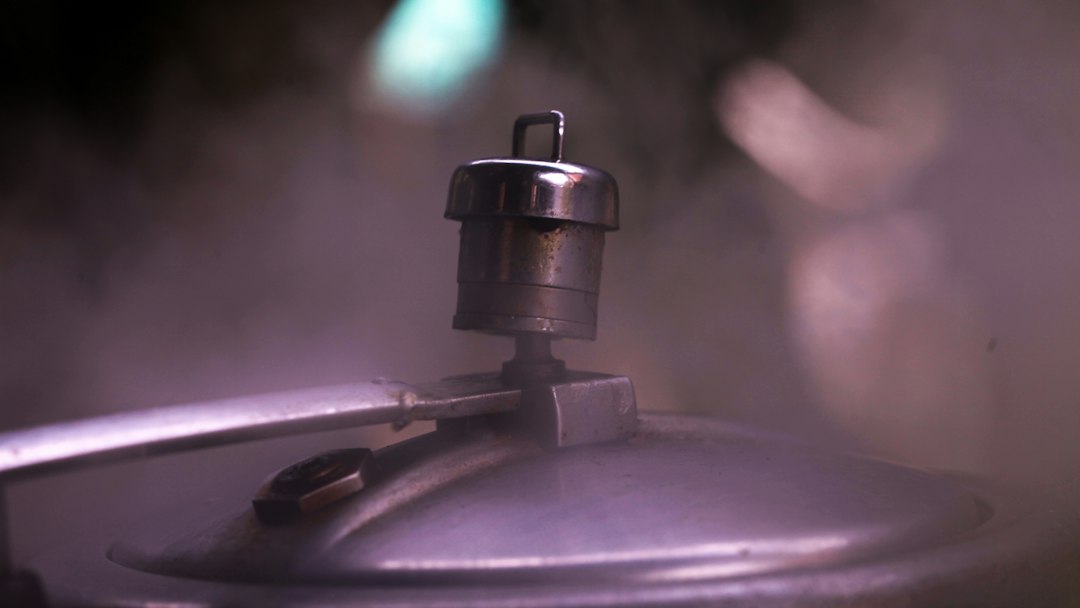
The hiss of steam escaping a kettle is a familiar sound, a gentle release of pent-up energy. However, when that same steam is confined, its behavior transforms dramatically. Trapped steam, whether in a poorly vented pot, a malfunctioning industrial boiler, or even a geological vent, can generate immense forces capable of causing catastrophic damage. Understanding the science behind this pressure buildup is crucial for safety, engineering, and appreciating the power of everyday phenomena. At its core, the phenomenon hinges on the unique thermodynamic properties of water as it transitions from liquid to gas and the principles governing gases.
Trapped steam plays a crucial role in increasing pressure within a closed system, as it allows for the accumulation of energy that can be harnessed for various applications, such as in steam engines or pressure cookers. For a deeper understanding of the principles behind steam pressure and its practical implications, you can explore the article on the science of steam at Freaky Science. This resource provides insights into how steam behaves under different conditions and the fundamental physics that govern its pressure dynamics.
From Liquid to Vapor: The Thermodynamics of Steam Formation
The journey of water into steam is a fundamental concept in thermodynamics, involving a significant energy input and a dramatic change in volume. When water is heated, its molecules absorb energy, increasing their kinetic energy and moving more vigorously. As the temperature rises, these molecules begin to break free from the intermolecular forces that hold them in a liquid state, transitioning into a gaseous state – steam. This phase change is not instantaneous; it requires a specific amount of energy, known as the latent heat of vaporization, to overcome the binding forces between water molecules.
The Astonishing Volume Expansion
One of the most striking aspects of steam formation is the enormous increase in volume. A given mass of liquid water occupies significantly less space than the same mass of steam at the same temperature and pressure. This volume expansion is a direct consequence of the increased molecular motion and reduced intermolecular interactions in the gaseous state. Imagine a cubic centimeter of water. When it vaporizes into steam at atmospheric pressure, it expands to occupy roughly 1,700 cubic centimeters. This dramatic increase in volume is the initial engine driving pressure buildup when the steam is contained. The molecules, now far apart and moving freely, collide with the boundaries of their container with much greater frequency and force than they did in their liquid state.
Latent Heat: The Energy Behind the Transformation
The energy required to convert liquid water into steam at a constant temperature is called the latent heat of vaporization. This energy is absorbed by the water molecules, not to increase their kinetic energy (and thus temperature), but to break the intermolecular bonds holding them together in the liquid. This is why a pot of boiling water, even at 100°C (212°F), will remain at that temperature until all the water has turned into steam. Once all the water has vaporized, any further heat added will increase the temperature of the steam itself, a process known as sensible heat. This stored latent heat is a crucial factor in the potential energy of steam and its ability to do work or exert pressure. When steam is allowed to expand, it can release this latent heat, performing work. Conversely, when it is trapped, this energy is contained, contributing to the increasing internal energy of the system.
The Ideal Gas Law and the Behavior of Trapped Steam
Once water has been converted into steam, it behaves, to a good approximation, like an ideal gas. This is where fundamental gas laws come into play, explaining how pressure, volume, and temperature are interconnected. The ideal gas law, expressed as PV = nRT, is a cornerstone of understanding the behavior of trapped steam.
Pressure, Volume, and Temperature Interdependence
The ideal gas law states that the product of pressure (P) and volume (V) is directly proportional to the product of the number of moles of gas (n) and the absolute temperature (T), with R being the ideal gas constant. In the context of trapped steam, several scenarios can lead to pressure increase:
- Increasing Temperature at Constant Volume: If steam is contained within a fixed volume (like a sealed vessel) and heat is added, the steam molecules will move faster. With nowhere to expand, these faster-moving molecules will collide with the walls of the container more frequently and with greater force, leading to a significant increase in pressure. This is a common scenario in boilers.
- Decreasing Volume at Constant Temperature: While less common for steam generation itself, if steam is somehow compressed to a smaller volume at a constant temperature, its molecules will be forced into a more confined space. This increased density of molecules leads to more frequent collisions with the container walls, thus increasing pressure.
- Adding More Steam (Increasing ‘n’): If more water is added to a heated, partially filled, sealed container, it will vaporize and increase the number of steam molecules within the fixed volume. More molecules mean more collisions and higher pressure. This is a direct, albeit less about phase change thermodynamics, increase in the ‘n’ term of the ideal gas law.
The Role of Intermolecular Forces (Non-Ideal Behavior)
While the ideal gas law provides a good approximation, real gases, including steam, deviate from ideal behavior, especially at high pressures and low temperatures. These deviations are due to the attractive and repulsive forces between gas molecules and the finite volume occupied by the molecules themselves. For steam, these intermolecular forces, primarily hydrogen bonding, become more significant as the steam is compressed. At very high pressures, the steam molecules are closer together, and these attractive forces can momentarily slow them down, slightly reducing the expected pressure increase compared to an ideal gas. However, as pressure continues to rise and temperatures are elevated, the kinetic energy of the molecules often overcomes these attractive forces, and the repulsive forces between closely packed molecules become dominant, leading to pressures that can exceed ideal gas predictions. For most practical scenarios involving steam pressure, the ideal gas approximation is sufficiently accurate to explain the fundamental principles of pressure buildup.
The Catastrophic Potential of Uncontrolled Steam Pressure
The immense pressure that trapped steam can generate is not merely an academic curiosity; it has profound implications for safety and engineering. When this pressure exceeds the structural integrity of the container, the consequences can be devastating.
Boiler Explosions and Their Causes
Boiler explosions are a stark reminder of the power of trapped steam. These catastrophic events typically occur due to a combination of factors:
- Overheating and Overpressure: When a boiler is operated beyond its design limits, or when safety mechanisms like pressure relief valves fail, the internal pressure can climb to dangerous levels. Continuous heating of water beyond its boiling point in a sealed system is a primary culprit.
- Material Fatigue and Corrosion: Over time, the metal components of a boiler can degrade due to corrosion, stress, or fatigue. A weakened vessel is far more susceptible to rupture under pressure.
- Faulty Design or Maintenance: Improperly designed boilers or inadequate maintenance can lead to weak points that fail under stress. Blockages in steam lines or safety valves can also trap pressure.
When a boiler ruptures, the sudden release of superheated steam and hot water causes a violent explosion. The rapid expansion of steam acts like a bomb, projecting debris at high velocity and generating a powerful shockwave. The thermal energy released also contributes to the destructive force.
Safety Mechanisms: Pressure Relief Valves
To prevent such catastrophic failures, virtually all steam-generating systems are equipped with pressure relief valves. These devices are designed to automatically open when the pressure inside a vessel reaches a predetermined setpoint, allowing excess steam to escape and preventing the pressure from reaching dangerous levels. The proper functioning and regular testing of these valves are paramount to ensuring safety. A blocked or malfunctioning relief valve renders it useless, leaving the system vulnerable. The design and calibration of these valves are critical engineering considerations, balancing the need for prompt pressure release with the avoidance of unnecessary steam loss during normal operation.
Trapped steam plays a crucial role in increasing pressure within a closed system, as it allows for the buildup of energy that can be harnessed for various applications. This phenomenon is particularly evident in pressure cookers, where the steam generated from boiling water creates a high-pressure environment that cooks food faster. For a deeper understanding of the science behind steam and pressure, you can explore a related article that delves into these concepts further. If you’re interested, check out this informative piece on steam dynamics to enhance your knowledge on the subject.
Real-World Applications and Implications of Steam Pressure
| Parameter | Initial Condition | After Trapping Steam | Effect on Pressure | Explanation |
|---|---|---|---|---|
| Volume (V) | 1.0 L | 1.0 L (constant) | No change | Volume is fixed, so pressure changes with temperature and moles of steam |
| Temperature (T) | 100 °C (373 K) | 120 °C (393 K) | Increase | Higher temperature increases kinetic energy, raising pressure |
| Number of Moles of Steam (n) | 1.0 mol | 1.2 mol (due to evaporation) | Increase | More steam molecules increase pressure in the confined space |
| Pressure (P) | 1 atm (101.3 kPa) | 1.3 atm (131.7 kPa) | Increase by 30% | Pressure rises due to increased temperature and steam quantity in fixed volume |
The understanding of how trapped steam increases pressure is not just about preventing disasters; it’s also fundamental to harnessing its power for beneficial purposes. From generating electricity to driving machinery, steam’s energetic properties are widely exploited.
Power Generation and Turbines
The vast majority of the world’s electricity is generated using steam turbines. In a power plant, water is heated to produce high-pressure steam in a boiler. This steam is then directed through a turbine, causing its blades to spin at high speed. The spinning turbine is connected to a generator, which converts the mechanical energy into electrical energy. The efficiency of this process relies heavily on the pressure and temperature of the steam. Higher steam pressures and temperatures lead to more energy being extracted from the steam, resulting in greater electricity generation. The careful control of steam pressure is therefore critical for optimizing power output and maintaining the operational stability of the plant.
Industrial Processes and Heating
Steam is an indispensable tool in many industrial processes. Its ability to transfer heat efficiently makes it ideal for applications such as:
- Sterilization: High-pressure steam is used to sterilize medical equipment, food products, and industrial apparatus due to its ability to reach high temperatures and penetrate materials effectively.
- Heating and Cooking: In food processing, steam is used for cooking, blanching, and pasteurization. Industrial facilities often use steam for space heating and process heating.
- Driving Machinery: In some older industrial settings, and in niche applications, steam engines are still used to power machinery. The expansion of steam against pistons is a direct application of its pressure-generating capabilities.
The precise control of steam pressure in these applications is crucial for product quality, process efficiency, and safety. Too little pressure may render a process ineffective, while too much can damage equipment or compromise product integrity.
The Microscopic Dance: Molecular Collisions and Pressure
To truly grasp how trapped steam increases pressure, one must descend to the microscopic level and consider the behavior of individual molecules. Pressure, at its most fundamental, is the result of these molecules colliding with the walls of their container.
Molecular Kinetic Energy and Collisions
In liquid water, molecules are relatively close together and move with moderate kinetic energy. When heat is added, their kinetic energy increases, and they begin to overcome the attractive intermolecular forces. In the gaseous state (steam), the molecules are much farther apart and move at significantly higher speeds. These energetic molecules are in constant, random motion, zipping through the available volume. When these fast-moving molecules strike the internal surfaces of their container, they exert a force. The sum of these innumerable, tiny impacts across the entire surface area of the container constitutes the macroscopic pressure we measure.
The Impact of Confinement on Molecular Behavior
When steam is trapped in a confined space, its behavior becomes more pronounced. The molecules, with nowhere to escape, are essentially bouncing around within the limited volume.
- Increased Collision Frequency: As the volume decreases or the number of molecules increases, the molecules have less space to travel between collisions. This leads to a higher frequency of collisions with the container walls, directly increasing the pressure.
- Increased Collision Force: If the temperature of the trapped steam rises, the molecules move even faster. Faster-moving molecules strike the walls with greater momentum and exert a larger force during each collision, further amplifying the pressure.
- Energy Dissipation and Transfer: During each collision with the container walls, the steam molecules transfer some of their kinetic energy to the walls. This energy transfer is the mechanism by which the steam does work on the container. If the container is rigid, this energy effectively becomes internal pressure. If the container can expand, the steam performs work by pushing the walls outward. The inability to expand is the key to pressure buildup in a trapped system.
Understanding this molecular dance provides a tangible explanation for the seemingly invisible force of steam pressure. It is the collective, energetic impact of billions upon billions of tiny particles, confined and amplified by the boundaries of their enclosure.

Why This Water Doesn’t Boil at 100°C
FAQs
1. How does trapped steam increase pressure?
When steam is trapped in a closed container, such as a boiler, it continues to be heated by the energy source. As the steam is heated, it expands and increases in temperature, causing the pressure inside the container to rise. This increase in pressure is a result of the steam molecules colliding with the walls of the container more frequently and with greater force.
2. What happens if the pressure of trapped steam becomes too high?
If the pressure of trapped steam becomes too high, it can lead to a dangerous situation where the container may rupture or explode. This is because the force exerted by the high-pressure steam on the walls of the container can exceed the structural integrity of the material, causing it to fail catastrophically.
3. How is the pressure of trapped steam measured?
The pressure of trapped steam is typically measured using a device called a pressure gauge. The pressure gauge is connected to the container holding the steam and provides a reading of the pressure inside. This measurement is usually expressed in units such as pounds per square inch (psi) or kilopascals (kPa).
4. What are the factors that can affect the pressure of trapped steam?
Several factors can affect the pressure of trapped steam, including the temperature of the steam, the volume of the container, the amount of steam present, and the efficiency of the energy source heating the steam. Changes in any of these factors can lead to fluctuations in the pressure of the trapped steam.
5. How can the pressure of trapped steam be controlled?
The pressure of trapped steam can be controlled by adjusting the energy input to the system, regulating the release of excess steam through safety valves, or by increasing the size of the container to accommodate higher pressures. Proper maintenance and monitoring of the system are essential to ensure that the pressure of trapped steam remains within safe limits.