
You’re probably not thinking about it right now, but your digestive system is working diligently behind the scenes, transforming the food you eat into the energy and nutrients your body needs to thrive. It’s a complex marvel of biological engineering, a long, winding tube with an intricate network of organs and processes. Understanding how it all works can be fascinating, and it might even empower you to make better choices for your well-being. So, let’s embark on a journey, step by step, from the moment you take your first bite to the very end of the line.
This is where your digestive adventure truly begins. Long before you swallow, your body is preparing for the incoming meal.
The First Bite: More Than Just Taste
When you bring food to your mouth, your senses go to work. The sight, smell, and even the thought of food can trigger the production of saliva. This isn’t just about lubricating your food; it’s the initial stage of chemical digestion.
Saliva’s Starring Role
Saliva, produced by salivary glands located around your mouth, is a watery solution containing several key components:
- Amylase: This enzyme is crucial for the first step of carbohydrate digestion. It starts breaking down complex starches into simpler sugars. So, that piece of bread doesn’t just feel softer in your mouth; its chemical breakdown has already begun.
- Lipase: While its role is more significant later in the digestive process, there’s a small amount of lipase in saliva that begins the breakdown of fats.
- Mucus: This component makes your food slippery, allowing you to form a bolus – a soft, rounded mass – that’s easier to chew and swallow. It also protects the lining of your mouth from abrasive food particles.
- Antibodies and Enzymes: Saliva contains molecules like lysozyme and antibodies that help to kill bacteria and prevent infections within your mouth. It’s a built-in defense mechanism.
The Mighty Mastication: Chewing Your Way to Digestion
Chewing, or mastication, is the mechanical process that breaks down food into smaller pieces. This is vital for two main reasons:
- Increased Surface Area: Smaller food particles mean more surface area exposed to digestive enzymes. Imagine trying to dissolve a whole sugar cube versus granulated sugar; the latter dissolves much faster. The same principle applies here. More surface area allows enzymes to work more efficiently.
- Easier Swallowing: A well-chewed bolus is much easier and safer to swallow, reducing the risk of choking.
The Role of Your Teeth and Tongue
Your teeth are perfectly designed for this task. Your incisors are for slicing, your canines for tearing, and your molars and premolars for grinding and crushing. Your tongue, a powerful muscular organ, manipulates the food, mixing it with saliva, forming it into a bolus, and then pushing it towards the back of your throat when you’re ready to swallow.
Understanding how the digestive system works is crucial for maintaining overall health and well-being. For a more in-depth exploration of this topic, you can read a related article that delves into the various processes involved in digestion, from the breakdown of food to nutrient absorption. To learn more, visit this link: How the Digestive System Works.
The Esophagus: The Speedy Descent
Once you swallow, your food embarks on a journey down a muscular tube called the esophagus. It’s a relatively straightforward, yet vital, part of the digestive tract.
Peristalsis: The Wave of Movement
The esophagus doesn’t just let gravity do all the work. It employs a series of wave-like muscular contractions called peristalsis. These contractions push the bolus of food down towards your stomach.
How Peristalsis Works
Imagine squeezing a tube of toothpaste. You apply pressure behind the bolus, moving it forward. That’s essentially what muscular contractions in the esophagus do. The muscles above the bolus contract, pushing it along, while the muscles below relax to receive it. This process is so effective that you can swallow even if you’re upside down!
The Sphincter’s Seal: Keeping Things in Place
At the junction of the esophagus and the stomach, there’s a muscular ring called the lower esophageal sphincter (LES). This is a crucial gateway.
Preventing Regurgitation
The LES acts like a valve, opening to allow food to enter the stomach and then closing tightly to prevent stomach acid and partially digested food from flowing back up into the esophagus. When this sphincter malfunctions, you might experience heartburn or acid reflux.
The Stomach: The Grinding and Churning Chamber
Your stomach is a J-shaped, muscular organ that serves as a temporary storage and processing center for the food you’ve ingested. This is where the real breakdown begins in earnest.
Mechanical Digestion in the Stomach: The Mixer
The stomach’s muscular walls contract and relax in a churning motion, mixing the food with digestive juices. This continues the mechanical breakdown process.
Triple Layered Musculature
Unlike other parts of the digestive tract, the stomach has three layers of smooth muscle arranged in different directions. This unique structure allows it to perform a vigorous churning action, effectively liquefying the food.
Chemical Digestion in the Stomach: The Acid Bath
This is where the stomach’s powerful digestive environment comes into play.
Gastric Juices: A Potent Brew
The stomach lining secretes gastric juices, a potent mixture containing:
- Hydrochloric Acid (HCl): This strong acid serves several critical functions. It kills most of the bacteria and other pathogens that may have entered your digestive system with your food, acting as a vital defense against infections. It also provides an acidic environment that is optimal for the activity of pepsin.
- Pepsinogen and Pepsin: Pepsinogen is an inactive enzyme precursor. The hydrochloric acid converts pepsinogen into its active form, pepsin. Pepsin is the primary enzyme responsible for breaking down proteins into smaller peptides. This is the beginning of protein digestion.
- Mucus: A thick layer of mucus lines the stomach wall, protecting it from the corrosive effects of hydrochloric acid and pepsin. Without this protective layer, the stomach would literally digest itself.
- Intrinsic Factor: This is a substance essential for the absorption of vitamin B12 in the small intestine.
The Birth of Chyme
As food is mixed with gastric juices and broken down by mechanical and chemical processes, it transforms into a semi-liquid, paste-like substance called chyme. This chyme will then be gradually released into the small intestine for further processing.
The Small Intestine: The Nutrient Absorption Superstar
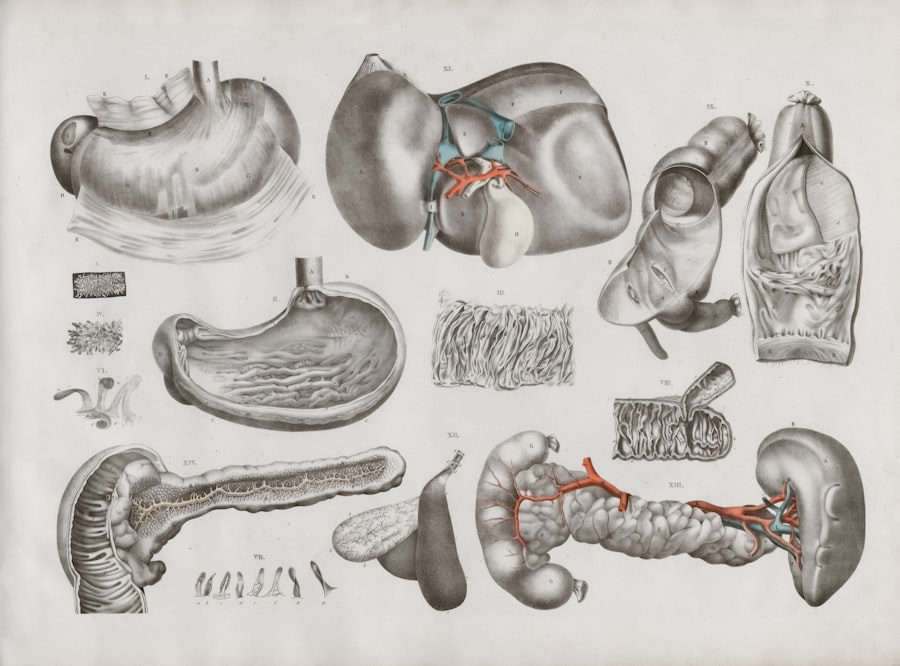
This is arguably the most important part of your digestive system, responsible for the vast majority of nutrient absorption. It’s a long, coiled tube, about 20 feet in length, with a massive surface area packed with features to maximize absorption.
The Three Sections of the Small Intestine
The small intestine is divided into three distinct regions:
Duodenum: The Mixing Bowl
The duodenum is the first and shortest section, receiving chyme from the stomach, as well as digestive juices from the pancreas and liver.
- Pancreatic Enzymes: The pancreas releases a potent cocktail of enzymes into the duodenum, including:
- Amylase: Continues the breakdown of carbohydrates into simpler sugars.
- Lipase: Breaks down fats into fatty acids and glycerol.
- Proteases (like trypsin and chymotrypsin): Further break down proteins into smaller peptides and amino acids.
- Bile from the Liver: The liver produces bile, which is stored in the gallbladder and released into the duodenum. Bile doesn’t contain digestive enzymes itself, but it plays a crucial role in fat digestion.
Jejunum: The Primary Absorption Zone
The jejunum is the middle section and is where most of the nutrient absorption takes place. The inner lining of the jejunum is covered in millions of tiny, finger-like projections called villi.
Ileum: The Final Frontier of Absorption
The ileum is the longest section and is responsible for absorbing any remaining nutrients, particularly vitamin B12 and bile salts, which are recycled back to the liver.
Maximizing Absorption: Villi and Microvilli
The structure of the small intestine is ingeniously designed for efficient absorption.
The Power of Surface Area
Imagine a smooth tube versus a tube covered in folds, finger-like projections, and even smaller projections on those projections. The latter has a vastly larger surface area. That’s exactly what you have in the small intestine:
- Circular Folds (Plicae Circulares): These are large folds in the intestinal lining that slow down the passage of food and increase the surface area.
- Villi: These are the finger-like projections that cover the circular folds. Each villus contains a network of blood capillaries and a lymphatic vessel called a lacteal.
- Microvilli: These are microscopic projections on the surface of the cells lining the villi. They are so small they are often referred to as a “brush border.”
This hierarchical folding and projection system increases the surface area of the small intestine by an estimated 600 times compared to a smooth tube of the same length. This massive surface area is crucial for absorbing the vast quantities of nutrients from your food into your bloodstream and lymphatic system.
Nutrient Transport: Getting Nutrients into Your Body
Once food particles are broken down into their smallest components (e.g., glucose from carbohydrates, amino acids from proteins, fatty acids and glycerol from fats), they are absorbed through the cells of the villi.
- Water-Soluble Nutrients: Glucose, amino acids, water-soluble vitamins, and minerals are absorbed directly into the blood capillaries within the villi. This nutrient-rich blood then travels to the liver via the portal vein for processing.
- Fat-Soluble Nutrients: Fatty acids and glycerol are reassembled into triglycerides within the cells lining the villi. These triglycerides are then packaged into larger molecules called chylomicrons, which are absorbed into the lacteals (lymphatic vessels). The lymph system then transports these fats to the bloodstream, bypassing the liver initially.
Understanding how the digestive system works is essential for maintaining overall health and well-being. The process begins in the mouth, where food is broken down by chewing and mixed with saliva, before moving through the esophagus to the stomach. Here, it is further digested by gastric juices. For a more in-depth exploration of this fascinating process, you can read a related article that delves into the intricacies of digestion and its impact on our health. Check it out here to learn more about the various stages and functions of the digestive system.
The Large Intestine: Water Absorption and Waste Management
| Organ/Component | Function |
|---|---|
| Mouth | Chewing and mixing food with saliva to begin the process of digestion |
| Esophagus | Transporting food from the mouth to the stomach through peristalsis |
| Stomach | Breaking down food with acid and enzymes, and mixing it into a liquid called chyme |
| Small Intestine | Further digestion and absorption of nutrients into the bloodstream |
| Large Intestine | Reabsorbing water and electrolytes, and forming and storing feces |
| Liver | Producing bile to aid in digestion and detoxifying harmful substances |
| Pancreas | Producing digestive enzymes and hormones to regulate blood sugar levels |
After the small intestine has extracted most of the nutrients, the remaining indigestible material, along with water and electrolytes, moves into the large intestine. This organ’s primary role is to absorb water and electrolytes, compact the waste, and prepare it for elimination.
The Sections of the Large Intestine
The large intestine is shorter and wider than the small intestine and is divided into several parts:
Cecum: The Beginning of the Line
The cecum is a pouch-like structure where the small intestine connects to the large intestine. It also contains the appendix, a small, finger-like pouch with a variety of theories about its function, including a potential role in the immune system and as a reservoir for beneficial gut bacteria.
Colon: The Water Absorber
The colon is the main part of the large intestine and is responsible for absorbing most of the remaining water from the indigestible food matter. It’s further divided into:
- Ascending Colon: Travels upward on the right side of the abdomen.
- Transverse Colon: Runs across the abdomen horizontally.
- Descending Colon: Travels downward on the left side of the abdomen.
- Sigmoid Colon: An S-shaped section connecting the descending colon to the rectum.
Rectum and Anus: The Exit Route
The rectum is the final section of the large intestine, where feces are stored before being eliminated from the body through the anus.
The Role of Gut Bacteria: Your Inner Ecosystem
A crucial, though often overlooked, aspect of the large intestine’s function is the presence of trillions of bacteria, collectively known as the gut microbiota or gut flora.
A Symbiotic Relationship
These bacteria are not mere passengers; they form a complex symbiotic relationship with you. They are essential for:
- Further Breakdown of Indigestible Material: Some bacteria can break down certain carbohydrates that your body cannot digest on its own, producing short-chain fatty acids (SCFAs) which can be absorbed and used for energy.
- Synthesis of Vitamins: Gut bacteria synthesize certain vitamins, particularly vitamin K and some B vitamins, which are then absorbed by your body.
- Protection Against Pathogens: A healthy gut microbiome helps to crowd out and inhibit the growth of harmful bacteria, contributing to your immune system.
- Mood and Immunity: Emerging research suggests a significant link between gut health and mental well-being, as well as immune function.
Peristalsis and Mass Movements: Moving the Waste Along
Similar to the esophagus, the large intestine uses peristaltic contractions to move its contents along. However, the movements are slower and less frequent.
Mass Movements
Periodically, especially after a meal, powerful contractions called mass movements propel large amounts of waste material from one section of the colon to the next, pushing it towards the rectum.
The End of the Line: Elimination
Once the waste material has been compacted and has passed through the large intestine, it is stored in the rectum.
The Defecation Reflex: A Coordinated Effort
When the rectum becomes distended with feces, it triggers the defecation reflex. This involves the relaxation of the internal anal sphincter and the voluntary relaxation of the external anal sphincter, allowing for the elimination of feces from the body.
A Necessary Process
This final stage is essential for removing waste products and toxins from your body, preventing them from building up and causing harm.
Your digestive system is a remarkable testament to nature’s ingenuity. From the initial breakdown in your mouth to the intricate nutrient absorption in your small intestine and the water reclamation and waste management of your large intestine, each part plays a vital role in keeping you alive and well. By understanding this incredible process, you can better appreciate the importance of a balanced diet, mindful eating, and the overall health of your digestive tract. Your body will thank you for it.

The Hidden Sense Inside Your Gut
FAQs
What is the digestive system?
The digestive system is a group of organs that work together to break down food into nutrients that the body can use for energy, growth, and repair. It includes the mouth, esophagus, stomach, small intestine, large intestine, liver, gallbladder, and pancreas.
How does the digestive system work?
The digestive process begins in the mouth, where food is chewed and mixed with saliva. It then travels down the esophagus to the stomach, where it is further broken down by stomach acid and enzymes. From the stomach, the partially digested food moves to the small intestine, where nutrients are absorbed into the bloodstream. The remaining waste then moves to the large intestine, where water is absorbed and the waste is eventually eliminated from the body.
What role do enzymes play in the digestive system?
Enzymes are proteins that help break down food into smaller molecules that can be absorbed by the body. They are produced by various organs in the digestive system, such as the salivary glands, stomach, and pancreas. Each enzyme is specific to a certain type of food molecule, such as carbohydrates, proteins, or fats.
How does the liver and gallbladder contribute to the digestive process?
The liver produces bile, which is stored in the gallbladder. Bile helps to break down fats in the small intestine, making it easier for the body to absorb them. The liver also plays a role in processing nutrients and detoxifying harmful substances in the blood.
What are some common digestive system disorders?
Common digestive system disorders include acid reflux, irritable bowel syndrome, inflammatory bowel disease, and gallstones. These conditions can cause symptoms such as abdominal pain, bloating, diarrhea, constipation, and nausea. It is important to seek medical attention if you experience persistent digestive issues.