
The documentary “How Science Works: A Fascinating Documentary Exploration” embarks on an ambitious journey to demystify the very essence of scientific inquiry. It doesn’t just present scientific discoveries; rather, it delves into the intricate, often messy, and universally applicable processes that underpin all scientific endeavors. From the initial spark of curiosity to the rigorous testing and eventual dissemination of findings, the film meticulously unpacks the methodology, the mindset, and the societal impact of science. It’s a visual and intellectual feast, designed to illuminate for a broad audience the power and beauty of the scientific method in action. The exploration is far-reaching, touching upon diverse fields and historical turning points, all unified by the common thread of systematic investigation and evidence-based reasoning.
The Genesis of Discovery: From Observation to Hypothesis
The initial foray into the world of scientific exploration, as depicted in the documentary, begins with the foundational act of observation. It underscores that science doesn’t emerge from a vacuum; it is born from an engagement with the observable world, a keen eye for anomalies, and a persistent sense of wonder. The film illustrates this through compelling examples, showcasing how ancient astronomers meticulously tracked celestial movements, or how early naturalists painstakingly cataloged the diversity of life. These acts, seemingly simple, are the bedrock upon which all scientific understanding is built. Without careful and objective observation, there would be no phenomena to question, no patterns to discern, and ultimately, no science to be done.
The Role of Curiosity and Questioning
At the heart of every scientific breakthrough lies an insatiable curiosity. The documentary emphasizes that genuine scientific progress is driven by individuals who dare to ask “why?” and “how?”. It highlights that the most profound questions often arise from seemingly mundane observations. For instance, a stray observation about the behavior of a particular insect might lead to a cascade of questions about its evolutionary adaptations, its ecological niche, or even its neurobiology. This unquenchable thirst for knowledge, the relentless pursuit of answers to the unknown, is presented as the primary engine of scientific advancement. The film skillfully portrays scientists not as stoic figures in laboratories, but as inquisitive minds grappling with the mysteries of the universe.
Formulating Testable Hypotheses
Following observation and questioning, the documentary pivots to the crucial step of hypothesis formulation. It defines a hypothesis not as a wild guess, but as a proposed explanation for a phenomenon that can be empirically tested. The film provides a clear distinction between a mere idea and a scientific hypothesis, emphasizing the latter’s falsifiability. This concept, the ability for a hypothesis to be proven wrong, is presented as a cornerstone of scientific rigor. Examples are given where preliminary observations lead to tentative explanations, which are then refined into precise, testable statements. This iterative process of observing, questioning, and hypothesizing is shown to be a dynamic and essential precursor to experimentation. The documentary argues that the clarity and specificity of a hypothesis directly influence the design of experiments and the interpretation of results, making it a critical stage in the scientific process.
The documentary “How Science Works” provides an insightful exploration of the scientific method and the processes that underpin scientific discovery. For those interested in delving deeper into the principles of scientific inquiry, a related article can be found at Freaky Science, which discusses various aspects of scientific research and its impact on society. This resource complements the documentary by offering additional perspectives on how scientific knowledge is generated and validated.
The Crucible of Evidence: Experimentation and Data Analysis
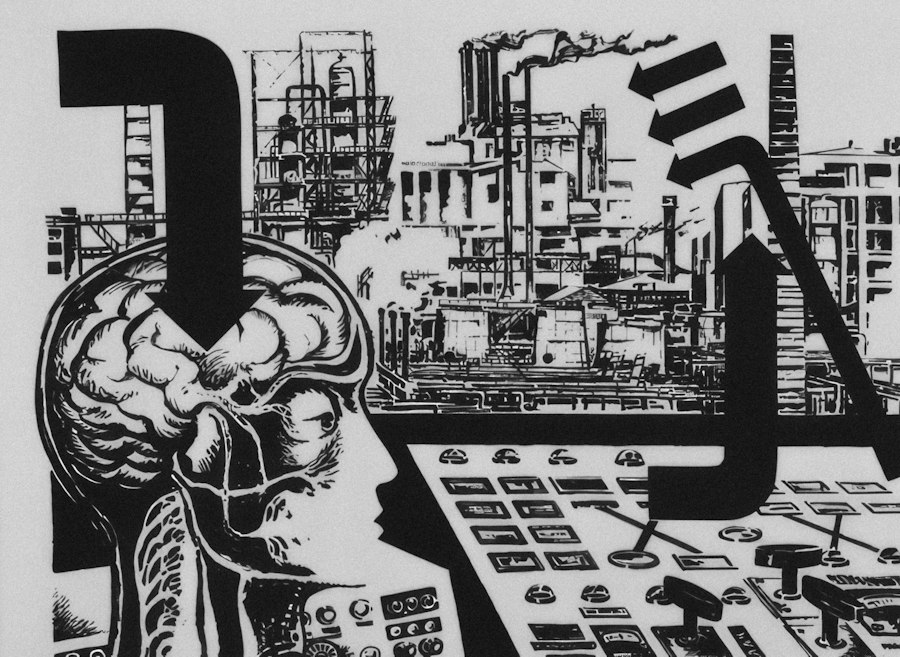
Once a hypothesis has been formulated, the documentary guides viewers through the rigorous process of testing its validity through experimentation. This section is dedicated to showcasing the meticulous design, execution, and interpretation of scientific experiments, underscoring the commitment to objectivity and reproducibility that defines scientific integrity. The film demonstrates that experiments are not random trials but carefully orchestrated investigations designed to isolate variables and measure their impact. It emphasizes the importance of controls, the meticulous collection of data, and the statistical analysis required to draw meaningful conclusions.
Designing Robust Experiments
The documentary dedicates significant attention to the art and science of experimental design. It illustrates that a well-designed experiment is one that can unequivocally answer the question posed by the hypothesis, while minimizing the influence of confounding factors. Viewers are shown how scientists control variables, ensuring that only the factor being tested is changed, while all others remain constant. This principle is explained through practical examples, from simple laboratory setups to complex field studies. The film highlights the importance of sample size, randomization, and the use of appropriate methodologies to ensure the reliability and validity of the experimental outcomes. It conveys that a poorly designed experiment can lead to misleading results, underscoring the meticulous planning and foresight required in scientific research.
The Significance of Data and Measurement
Data, in its raw form, is the lifeblood of scientific inquiry. The documentary emphasizes that the accurate and precise collection of data is paramount. It explores various methods of measurement, from the sophisticated instruments used in particle physics to the observational techniques employed in ecology. The film underscores the importance of units, calibration, and the understanding of measurement error. Beyond mere collection, it delves into the critical phase of data analysis. Viewers witness how raw numbers are transformed into meaningful insights through statistical methods, graphical representations, and pattern recognition. The documentary stresses that data analysis is not about finding numbers that fit preconceived notions, but about objectively interpreting what the evidence reveals.
Reproducibility and Peer Review
A hallmark of scientific robustness, as highlighted by the documentary, is the principle of reproducibility. The film explains that for a scientific finding to be accepted, it must be independently verifiable. This means that other scientists, using the same methods and data, should be able to arrive at the same conclusions. This concept is inextricably linked to the process of peer review. The documentary elucidates how scientific research is subjected to scrutiny by other experts in the field before it is published. This critical evaluation, while sometimes challenging, serves as a vital quality control mechanism, ensuring that research is sound, methodologically rigorous, and that conclusions are supported by the evidence. The film presents peer review not as an impediment, but as a collaborative effort to refine and validate scientific knowledge.
The Shifting Landscape of Scientific Understanding

Science is not a static body of knowledge; it is a dynamic and evolving process. The documentary effectively communicates that scientific understanding is constantly being refined, challenged, and sometimes overturned by new evidence and innovative thinking. This section explores how scientific paradigms shift, how established theories are sometimes replaced by more comprehensive ones, and the inherent resilience of the scientific enterprise in adapting to new information.
Paradigm Shifts and Scientific Revolutions
The documentary delves into the concept of paradigm shifts, famously articulated by Thomas Kuhn. It explains how periods of normal science, characterized by incremental progress within an established framework, can be disrupted by anomalies that resist explanation. These anomalies can accumulate, leading to a crisis in the existing paradigm and eventually paving the way for a scientific revolution. The film uses historical examples, such as the Copernican revolution or the development of quantum mechanics, to illustrate how fundamental shifts in understanding can reshape our view of the universe. These revolutions, while often met with initial resistance, ultimately lead to more powerful and accurate explanations of natural phenomena.
The Evolution of Theories
The documentary illustrates that scientific theories are not dogma but rather the best explanations we have at a given time, based on the available evidence. It shows how theories evolve over time, becoming more precise and comprehensive as new data emerges and as our understanding deepens. It highlights that even well-established theories are open to revision and refinement. The film avoids presenting science as a collection of immutable facts, instead emphasizing its iterative and self-correcting nature. This dynamic aspect of science, the willingness to adapt and evolve, is presented as one of its greatest strengths, ensuring its continued relevance and accuracy.
The Role of Serendipity and Unexpected Discoveries
While scientific inquiry is often driven by deliberate investigation, the documentary also acknowledges the role of serendipity – fortunate accidents and unexpected discoveries. It presents compelling stories of scientific breakthroughs that occurred while researchers were pursuing different goals or observing unforeseen phenomena. The film emphasizes that while luck plays a part, it is the prepared mind, the scientist with a deep understanding and a curious disposition, who is best positioned to recognize and capitalize on these serendipitous moments. This highlights the importance of open-mindedness and the ability to adapt one’s research focus when confronted with surprising observations.
The Interconnectedness of Scientific Disciplines
“How Science Works” masterfully illustrates that the pursuit of knowledge is rarely confined to isolated silos. The documentary emphasizes the profound interconnectedness of scientific disciplines, showcasing how advancements in one field can catalyze progress in others, leading to a richer and more holistic understanding of the universe. It argues that collaboration and interdisciplinary approaches are increasingly vital for tackling complex challenges.
Cross-Disciplinary Collaboration
The film provides numerous examples of how collaboration between scientists from different fields has led to groundbreaking discoveries. It shows how physicists collaborate with biologists to develop advanced imaging techniques, how chemists work with materials scientists to create new substances, or how computer scientists team up with geologists to model climate change. This interdisciplinary approach, the documentary argues, allows for the pooling of diverse expertise, the application of different methodologies, and the generation of novel insights that would be impossible within a single discipline. It highlights that the most pressing scientific questions often transcend traditional disciplinary boundaries.
The Flow of Knowledge Between Fields
The documentary emphasizes that scientific knowledge is not a linear progression but a complex web of interconnected ideas. Advancements in one area of science can have far-reaching implications for others, often in unexpected ways. For instance, the development of the microscope revolutionized biology, while the understanding of genetics has transformed medicine and agriculture. The film illustrates this flow of knowledge, demonstrating how a discovery in fundamental physics might eventually lead to practical applications in engineering or medicine years or even decades later. This interconnectedness underscores the cumulative nature of scientific progress.
Unifying Principles and Universal Laws
Despite the vast diversity of scientific disciplines, the documentary also highlights the existence of unifying principles and universal laws that govern the natural world. It shows how concepts like thermodynamics, evolution, or electromagnetism can be applied across a wide range of phenomena, from the smallest subatomic particles to the largest cosmic structures. This search for overarching principles, the documentary suggests, is a key driver of scientific understanding, revealing the elegant simplicity and underlying order of the universe. The exploration of these unifying themes provides a sense of awe and wonder at the fundamental nature of reality.
The documentary “How Science Works” provides an insightful exploration of the scientific method and the processes that underpin scientific discovery. For those interested in delving deeper into the fascinating world of scientific inquiry, a related article can be found at Freaky Science, which discusses various experiments and innovations that illustrate the principles of science in action. This resource complements the documentary by offering real-world examples that highlight the importance of critical thinking and experimentation in advancing our understanding of the universe.
The Societal Impact and Future of Scientific Endeavor
| Metric | Value | Description |
|---|---|---|
| Title | How Science Works | Name of the documentary |
| Duration | 45 minutes | Length of the documentary |
| Release Year | 2010 | Year the documentary was released |
| Viewership | 1.2 million | Number of viewers worldwide |
| IMDB Rating | 7.8/10 | Average user rating on IMDB |
| Scientific Topics Covered | 10 | Number of key scientific concepts explained |
| Languages Available | 5 | Number of languages the documentary is available in |
| Educational Use | High | Frequency of use in educational settings |
The final segments of the documentary turn towards the profound and multifaceted impact of science on society, as well as its ever-evolving future. It underscores that science is not just an academic pursuit but a powerful force that shapes our world, influences our lives, and holds the key to addressing humanity’s most pressing challenges. The film looks forward, exploring emerging frontiers and the ethical considerations that accompany scientific progress.
Science as a Catalyst for Innovation and Progress
The documentary powerfully illustrates how scientific discovery serves as a direct catalyst for technological innovation and societal progress. It showcases how fundamental research, seemingly abstract at its inception, has led to transformative technologies that have revolutionized communication, transportation, healthcare, and countless other aspects of modern life. From the development of antibiotics that have saved millions of lives to the digital revolution that has reshaped global interaction, the film provides tangible evidence of science’s role in improving human well-being and driving economic growth.
Addressing Global Challenges with Scientific Solutions
In an era marked by complex global challenges, the documentary highlights science’s crucial role in finding solutions. It delves into how scientific research is essential for understanding and mitigating climate change, developing sustainable energy sources, combating infectious diseases, ensuring food security, and exploring the vast potential of space. The film underscores the urgency and importance of continued investment in scientific research as a means of safeguarding our planet and ensuring a prosperous future for humanity. It presents a hopeful outlook, emphasizing that through scientific endeavor, many of the most daunting problems can be overcome.
The Ethical Dimensions of Scientific Advancement
The documentary does not shy away from the ethical considerations that accompany scientific progress. It explores the responsibilities that scientists and society have in navigating the potential risks and benefits of new technologies. Topics such as genetic engineering, artificial intelligence, and the responsible use of scientific knowledge are discussed, prompting viewers to consider the moral implications of scientific power. The film advocates for open dialogue, thoughtful deliberation, and robust regulatory frameworks to ensure that scientific advancements are used for the betterment of humanity and the planet, emphasizing that scientific progress must be guided by ethical principles.
The Ever-Expanding Frontiers of Knowledge
Looking towards the future, the documentary touches upon the ever-expanding frontiers of scientific knowledge. It hints at ongoing research in areas such as quantum computing, neuroscience, astrobiology, and the quest for a unified theory of everything. The film inspires viewers by suggesting that despite the vastness of what we already know, the universe remains replete with mysteries waiting to be unraveled. It leaves the audience with a sense of anticipation for the discoveries yet to come, reinforcing the enduring spirit of exploration and the boundless potential of human curiosity in the ongoing scientific journey.

Why Hot Water Freezes Faster Than Cold (The Mpemba Effect)
FAQs
What is the purpose of the documentary “How Science Works”?
The purpose of the documentary “How Science Works” is to provide an in-depth look at the scientific process, including how research is conducted, how theories are developed, and how scientific discoveries are made.
Who are the experts featured in the documentary?
The documentary features interviews with leading scientists, researchers, and experts in various fields of science, providing insights into their work and the challenges they face in their respective fields.
How does the documentary explain the importance of peer review in science?
The documentary explains the critical role of peer review in science by showing how it helps to ensure the quality and validity of research findings before they are published, as well as how it promotes transparency and accountability in the scientific community.
What are some examples of scientific breakthroughs discussed in the documentary?
The documentary highlights several significant scientific breakthroughs, such as the discovery of new species, advancements in medical research, and breakthroughs in technology, showcasing the impact of these discoveries on society and the world.
How does the documentary address the issue of scientific ethics?
The documentary addresses the importance of scientific ethics by exploring topics such as research integrity, conflicts of interest, and the responsible conduct of research, emphasizing the need for scientists to adhere to ethical standards in their work.