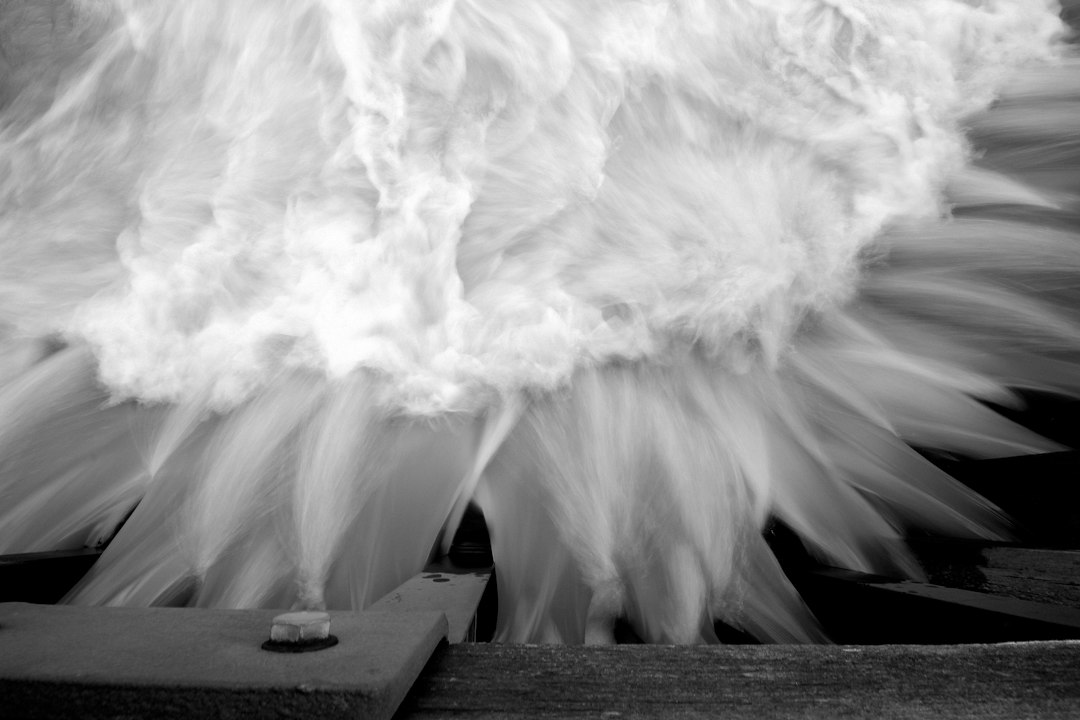
The Phenomenon of Flash Boiling
Flash boiling is a dramatic and often counter-intuitive thermodynamic phenomenon that occurs when a liquid is subjected to a sudden and significant drop in pressure. Unlike the more gradual process of boiling that we are accustomed to, where heat is applied to raise the liquid’s temperature to its boiling point, flash boiling involves a rapid decrease in the surrounding pressure, causing the liquid to instantly vaporize. This instantaneous and explosive vaporization is what gives flash boiling its name and makes it a captivating subject for scientific exploration. The underlying principle is directly tied to the relationship between pressure and the boiling point of a liquid. As pressure decreases, the boiling point of a liquid also decreases. When this pressure drop is sufficiently rapid and the liquid is already at or near its boiling point at the initial, higher pressure, the lower boiling point at the reduced pressure is immediately met, triggering widespread and rapid bubble formation.
This process is not merely a theoretical curiosity; it has profound implications across various scientific and engineering disciplines. From the controlled atomization of fuels in internal combustion engines to the safety considerations in handling cryogenic liquids, understanding flash boiling is crucial. The explosive nature of the vaporization can generate significant forces and rapid cooling, presenting both challenges and opportunities for technological advancement. The rapid expansion of vapor can lead to effective atomization, breaking down a bulk liquid into extremely fine droplets. This is particularly useful in applications where a large surface area is desired, such as in combustion processes or when spraying liquids for various purposes. Conversely, the rapid vaporization also leads to a significant drop in temperature due to the latent heat of vaporization being drawn from the liquid itself. This cooling effect is exploited in certain refrigeration and cryosurgical applications.
The key to understanding flash boiling lies in the phase diagram of a substance. A phase diagram illustrates the conditions of temperature and pressure under which different phases (solid, liquid, gas) of a substance exist. The boiling curve on a phase diagram represents the equilibrium between the liquid and vapor phases. When a liquid is in a superheated state – meaning it is at a temperature above its normal boiling point at atmospheric pressure but has not yet begun to boil due to the absence of nucleation sites or the presence of sufficient ambient pressure – a sudden pressure drop can push it into the two-phase region of the phase diagram. This region signifies a state where both liquid and vapor can coexist in equilibrium. However, in flash boiling, the transition is so rapid that true equilibrium is not achieved; instead, a violent and almost instantaneous transition to the vapor phase occurs. The rapid removal of dissolved gases, which often act as nucleation sites for boiling, can also contribute to the superheating and subsequent explosive vaporization.
Rapid pressure drops can lead to a phenomenon known as flash boiling, where a liquid rapidly vaporizes due to a sudden decrease in pressure. This process is crucial in various scientific and industrial applications, including the design of reactors and the operation of certain types of engines. For further insights into the mechanics behind this phenomenon, you can explore a related article on the topic at Freaky Science, which delves into the principles of thermodynamics and fluid dynamics that govern flash boiling and its implications in real-world scenarios.
The Physics of Pressure and Boiling Point

The relationship between pressure and the boiling point of a liquid is a fundamental concept in thermodynamics. This relationship is governed by the Clausius-Clapeyron relation, which describes how the saturation pressure of a substance changes with temperature. In simpler terms, for any given liquid, there is a specific temperature at which it will boil and turn into vapor at a particular surrounding pressure. As the ambient pressure increases, the temperature required for a liquid to boil also increases. Conversely, as the ambient pressure decreases, the boiling point of the liquid decreases. This is why water boils at a lower temperature at high altitudes, where atmospheric pressure is lower, compared to sea level.
Saturation Pressure and Vapor Pressure
At any given temperature below its critical point, a liquid will exert a certain vapor pressure. This vapor pressure is the pressure at which the liquid and its vapor are in equilibrium in a closed container. If the surrounding pressure is equal to or greater than the vapor pressure, the liquid will remain in its liquid state. However, if the surrounding pressure drops below the vapor pressure, the liquid will begin to vaporize, or boil. The boiling point is precisely the temperature at which the vapor pressure of the liquid equals the ambient pressure. This fundamental principle is the bedrock upon which flash boiling is built.
Superheating and Metastable States
Under certain conditions, a liquid can be heated above its normal boiling point without boiling. This state is known as superheating, and the liquid is said to be in a metastable state. Superheating typically occurs when a liquid is free of impurities or nucleation sites, which are imperfections or cavities where bubbles can readily form. Without these nucleation sites, the formation of vapor bubbles requires a significantly higher energy input. In flash boiling, a liquid might be in a superheated state at an initial, higher pressure. When the pressure is suddenly reduced, the boiling point drops dramatically. If this new boiling point is below the current temperature of the superheated liquid, the conditions are ripe for immediate and vigorous vaporization. The energy required for vaporization is then rapidly drawn from the internal energy of the liquid, leading to a sharp decrease in temperature as vaporization proceeds. This self-cooling aspect is a hallmark of flash boiling.
The Mechanism of Flash Boiling

Flash boiling is characterized by its speed and the intensity of the vaporization process. It is not a gradual transition from liquid to vapor but rather an almost instantaneous transformation. This rapid change is driven by the rapid reduction in external pressure.
Nucleation and Bubble Growth Dynamics
When the pressure above a liquid drops below its vapor pressure, the conditions are favorable for the formation of vapor bubbles. In flash boiling, this pressure drop is so rapid that it overcomes the liquid’s inertia and surface tension, allowing for widespread nucleation. Nucleation refers to the initial formation of a vapor bubble within the liquid. In a normal boiling scenario, nucleation typically occurs at specific sites, such as microscopic imperfections on the heating surface or dissolved gas bubbles. However, in flash boiling, the drastic pressure reduction creates a condition where spontaneous nucleation can occur throughout the bulk of the liquid. Once a bubble begins to form, it grows rapidly. The liquid surrounding the nascent bubble is at a temperature higher than the saturation temperature corresponding to the reduced pressure. This temperature difference drives a rapid influx of vapor into the bubble, causing it to expand explosively.
Energy Transfer and Latent Heat
The process of vaporization requires energy, known as the latent heat of vaporization. In flash boiling, this energy is not supplied by an external heat source but is drawn from the internal energy of the liquid itself. As vapor bubbles form and expand, they absorb energy from the surrounding liquid, causing the liquid’s temperature to decrease. This rapid withdrawal of thermal energy is what leads to the significant cooling observed during flash boiling. The greater the amount of liquid that flashes into vapor, the more substantial the temperature drop. This self-cooling mechanism is a critical aspect of flash boiling and differentiates it from other boiling phenomena where heat is continuously supplied. The rapid phase change from liquid to gas involves a substantial volume expansion, which can generate significant mechanical work and pressure waves.
Factors Influencing Flash Boiling
Several factors can influence the rate and intensity of flash boiling. These include the properties of the liquid itself, the rate of pressure drop, and the initial temperature of the liquid.
Liquid Properties: Molecular Structure and Surface Tension
The inherent properties of a liquid play a significant role in how it behaves during flash boiling. Liquids with weaker intermolecular forces, such as hydrocarbons, tend to have lower latent heats of vaporization and lower surface tension. Lower surface tension makes it easier for bubbles to form and grow, as less energy is required to overcome the surface forces. Conversely, liquids with strong intermolecular forces, like water, have higher latent heats and surface tensions, which can somewhat dampen the intensity of flash boiling compared to less polar liquids, although it still occurs vigorously. The molecular structure influences the critical temperature and pressure of the substance, which in turn dictate the range of conditions under which flash boiling can occur. The ease with which molecules can escape the liquid phase and transition into the gaseous phase is a key determinant.
Pressure Drop Rate and Initial Temperature
The speed at which the pressure is reduced is paramount. A more rapid pressure drop will lead to a more instantaneous and violent flash boiling event. If the pressure drop is too slow, the liquid may have time to reach a new equilibrium at the lower pressure without a dramatic vaporization. The initial temperature of the liquid is also crucial. If the liquid is already at or near its boiling point at the initial pressure, a subsequent pressure drop will be much more likely to induce flash boiling. If the liquid is significantly subcooled (well below its boiling point), a pressure drop might simply reduce the boiling point without triggering immediate vaporization. The degree of superheat, as discussed earlier, is also a critical factor. A more superheated liquid will flash more readily and with greater intensity upon a pressure reduction.
Rapid pressure drops can lead to flash boiling, a phenomenon where a liquid rapidly vaporizes due to a sudden decrease in pressure. This process is particularly relevant in various industrial applications and can significantly impact system efficiency and safety. For a deeper understanding of the underlying principles and implications of flash boiling, you can explore a related article that discusses the science behind this intriguing phenomenon. Check out the article here for more insights into how pressure changes affect phase transitions in liquids.
Applications and Implications of Flash Boiling
| Parameter | Value/Description | Effect on Flash Boiling |
|---|---|---|
| Initial Pressure | High (e.g., 5 MPa) | Maintains liquid phase before pressure drop |
| Final Pressure | Low (e.g., 0.1 MPa) | Below vapor pressure, causing rapid vaporization |
| Pressure Drop Rate | Rapid (e.g., within milliseconds) | Prevents equilibrium, leading to flash boiling |
| Temperature | Near saturation temperature at initial pressure | Liquid is superheated relative to new pressure |
| Vapor Quality | Increases rapidly | Indicates phase change from liquid to vapor |
| Volume Expansion | Significant increase | Due to vapor formation during flash boiling |
| Heat Transfer | Minimal external heat input | Flash boiling driven by pressure drop, not heat addition |
The unique characteristics of flash boiling have led to its application in a variety of fields, offering solutions to specific engineering challenges.
Fuel Atomization in Engines
One of the most significant applications of flash boiling is in the atomization of fuels in internal combustion engines, particularly in diesel and gasoline direct injection systems. When fuel is injected into the combustion chamber at high pressure, the sudden drop in pressure upon exiting the injector nozzle can cause flash boiling. This process breaks down the liquid fuel into very fine droplets, creating a larger surface area. A finer spray enhances the mixing of fuel with air, leading to more efficient combustion, reduced emissions, and improved fuel economy. The rapid vaporization also aids in the evaporation of the fuel, which is essential for a complete burn. This atomization process is critical for achieving the optimal air-fuel mixture within the combustion cylinder, a key factor in engine performance and efficiency.
Cryogenic Fluid Handling and Safety
Flash boiling is also a critical consideration in the handling and storage of cryogenic fluids, such as liquid nitrogen and liquid oxygen. These substances are stored at extremely low temperatures, and any sudden increase in temperature or decrease in pressure can lead to rapid vaporization. This can cause a dangerous buildup of pressure in confined spaces, potentially leading to explosions. Understanding the conditions that trigger flash boiling is essential for designing safe storage vessels, transfer lines, and emergency relief systems for cryogenic applications. For instance, the accidental release of a small amount of liquid nitrogen into an unventilated area can lead to a significant volume of nitrogen gas, displacing oxygen and creating an asphyxiation hazard. The rapid cooling effect of flash vaporization is also utilized in some specialized cooling and preservation techniques.
Other Emerging Applications
Beyond fuel injection and cryogenics, flash boiling is being explored for a range of other applications. In spray drying, controlled flash boiling can be used to efficiently remove moisture from liquids, producing powders. In certain medical procedures, the rapid cooling associated with flash boiling might be leveraged for targeted tissue ablation. Researchers are also investigating its potential in advanced manufacturing processes and in the design of novel cooling systems. The ability to generate extremely fine droplets and rapid cooling makes flash boiling a versatile phenomenon with the potential for innovation across diverse scientific and technological domains. The controlled generation of micro- or nano-droplets through flash boiling could also have applications in printing technologies and in the delivery of pharmaceuticals.
Visualizing the Flash Boiling Event
Observing flash boiling in action provides a deeper appreciation for its dramatic nature. While it can be challenging to capture the extreme speed of the phenomenon, various techniques allow for visualization.
High-Speed Imaging and Schlieren Photography
High-speed cameras, capable of capturing thousands or even millions of frames per second, are instrumental in visualizing the rapid bubble formation and expansion characteristic of flash boiling. These cameras allow scientists to slow down the event and analyze the dynamics of vapor bubble growth and collapse. Schlieren photography is another powerful technique that can reveal density gradients within transparent fluids. Since vapor is less dense than liquid, flash boiling events create distinct density changes that can be visualized using Schlieren techniques, providing a visual representation of the vapor cloud formation. The shockwaves generated by the rapid expansion can also be observed, offering insights into the forces at play.
Experimental Setups and Measurement Techniques
Experimental setups designed to induce controlled flash boiling often involve a high-pressure chamber from which a liquid can be rapidly expelled through a nozzle or valve. Pressure transducers measure the rate of pressure drop, while thermocouples and infrared cameras monitor temperature changes within the liquid and the resulting vapor cloud. Laser Doppler velocimetry can be used to measure the velocity of droplets and vapor. These measurement techniques, combined with advanced imaging, provide a comprehensive understanding of the physical processes involved in flash boiling, allowing for the development of more accurate theoretical models and improved engineering designs. The precise control over the initial conditions, such as liquid temperature and pressure, and the rate of pressure release, are critical for obtaining reproducible and interpretable experimental results.
Why This Water Doesn’t Boil at 100°C
FAQs
What is flash boiling?
Flash boiling is the rapid vaporization of a liquid when it is subjected to a sudden drop in pressure.
How does rapid pressure drop cause flash boiling?
When the pressure drops suddenly, the liquid’s boiling point decreases, causing it to vaporize quickly, leading to flash boiling.
What are some common examples of rapid pressure drop causing flash boiling?
Examples include opening a carbonated beverage bottle, releasing pressure from a pressure cooker, or sudden decompression in a scuba diving ascent.
What are the potential dangers of flash boiling?
Flash boiling can lead to splattering of hot liquid, causing burns, or even explosions in closed containers due to the rapid expansion of vapor.
How can flash boiling be prevented or controlled?
Flash boiling can be prevented by releasing pressure slowly, using appropriate safety measures, or by controlling the temperature and pressure of the system to avoid sudden drops.