
The boiling point of a liquid is a fundamental physical property, a familiar concept often encountered in everyday life, from cooking to industrial processes. It represents the temperature at which a liquid transforms into a gas. However, this seemingly straightforward temperature is not as fixed as it might appear. A crucial factor that significantly influences the boiling point of any liquid is the surrounding pressure. Understanding this relationship is key to comprehending various phenomena in chemistry, physics, and engineering. This article delves into the intricate ways in which external pressure affects the boiling point of liquids, exploring the underlying molecular mechanisms and the practical implications of this principle.
The Molecular Dance: Why Liquids Boil
Before dissecting the influence of pressure, it is essential to grasp the molecular underpinnings of boiling. Liquids are composed of molecules in constant, random motion. These molecules possess kinetic energy, which allows them to overcome the intermolecular forces that hold them together in the liquid state. As a liquid is heated, its molecules absorb energy, increasing their kinetic energy and their tendency to escape from the liquid surface.
Vapor Pressure: The Liquid’s Internal Push
At any given temperature, some molecules at the surface of a liquid will have enough kinetic energy to overcome the attractive forces of their neighbors and escape into the gaseous phase above the liquid. This phenomenon creates a pressure exerted by the vapor above the liquid, known as vapor pressure. The vapor pressure of a liquid is an intrinsic property that increases with temperature. As temperature rises, more molecules possess the energy to transition into the vapor phase, thus increasing the vapor pressure.
The Equilibrium of Boiling
Boiling occurs when the vapor pressure of the liquid becomes equal to the external pressure exerted on the liquid’s surface. At this point, vapor bubbles can form not just at the surface but also within the bulk of the liquid. These bubbles, filled with vapor, rise to the surface and escape. If the vapor pressure is less than the external pressure, the bubbles will collapse before reaching the surface, and the liquid will not boil. Therefore, the temperature at which this equilibrium is reached is the boiling point.
Understanding how pressure affects boiling point is crucial in various scientific and culinary applications. For a deeper exploration of this topic, you can refer to a related article that discusses the principles of boiling point elevation and the impact of atmospheric pressure on different liquids. This article provides valuable insights into how changes in pressure can alter the boiling point, which is essential for processes such as cooking at high altitudes or in pressure cookers. To read more, visit this article.
Pressure’s Reign: How External Forces Shape Boiling
The external pressure acting on a liquid’s surface plays a direct and significant role in determining its boiling point. This pressure can originate from the atmosphere, from other gases in a sealed container, or even from the weight of the liquid itself in very deep bodies. The fundamental principle is that the vapor pressure of the liquid must match this external pressure for boiling to occur.
Atmospheric Pressure and Altitude: A Familiar Correlation
The most common example of pressure influencing boiling point is the effect of atmospheric pressure, which varies with altitude. At sea level, the atmospheric pressure is approximately one atmosphere (atm) or 101.3 kilopascals (kPa). As altitude increases, the column of air above decreases, leading to lower atmospheric pressure. Consequently, water boils at progressively lower temperatures as one ascends. For instance, at the summit of Mount Everest, where atmospheric pressure is considerably lower than at sea level, water boils at around 70°C instead of the familiar 100°C. This phenomenon has practical implications for cooking and various industrial processes that rely on boiling at high altitudes.
Pressurized Systems: Elevating the Boiling Point
Conversely, increasing the external pressure on a liquid will raise its boiling point. This principle is exploited in numerous technologies, most notably in pressure cookers and industrial boilers. In a pressure cooker, the lid is sealed, trapping steam and increasing the pressure inside the pot. This elevated pressure forces the boiling point of water to rise significantly above 100°C, allowing food to cook much faster. Similarly, steam boilers in power plants operate under immense pressure to achieve much higher temperatures, which are crucial for efficient steam turbine operation.
The Underlying Physics: Molecular Energy and Intermolecular Forces
The influence of pressure on boiling point can be understood by considering the interplay between the kinetic energy of molecules and the intermolecular forces holding them together. At a given temperature, molecules in a liquid possess a distribution of kinetic energies. For boiling to occur, some molecules must acquire enough kinetic energy to overcome the attractive forces exerted by their neighbors and escape into the gas phase.
Overcoming the Walls: Pressure as a Barrier
The external pressure acts as a physical barrier, essentially pushing down on the liquid surface and hindering the escape of molecules. When the external pressure is high, molecules need to possess even greater kinetic energy to overcome this resistance and transition into the vapor phase. This translates to a higher temperature being required to achieve the necessary molecular motion for boiling.
Intermolecular Forces: The Glue that Holds Liquids Together
The strength of intermolecular forces within a liquid also plays a role in its boiling point. Liquids with strong intermolecular forces, such as hydrogen bonding, require more energy to break these attractions and vaporize. However, the primary influence of pressure is on the energy required to overcome both the intermolecular forces and the external pressure. Even for liquids with weak intermolecular forces, a high external pressure will necessitate a higher temperature to reach the boiling point.
Real-World Applications: Where Pressure Meets Boiling Point
The relationship between pressure and boiling point is not merely an academic curiosity; it has profound and widespread practical applications across various fields. Understanding this principle allows for the optimization and control of numerous processes.
Culinary Delights and High-Altitude Cooking
As mentioned, altitude significantly affects the boiling point of water, impacting cooking times. In high-altitude regions, recipes often need to be adjusted, or specialized equipment like pressure cookers employed, to compensate for the lower boiling point. Conversely, in lower altitudes, achieving higher cooking temperatures might require specialized ovens or cooking techniques.
Industrial Processes: From Power Generation to Chemical Synthesis
In the power generation industry, boilers operate under high pressure to generate superheated steam, which drives turbines for electricity production. The efficiency of these plants is directly linked to the ability to control and manipulate the boiling point of water through pressure regulation. In the chemical industry, various separation and purification processes, such as distillation, rely on differences in boiling points. By controlling the pressure, chemists can fine-tune these processes to achieve desired outcomes. For example, vacuum distillation, where the pressure is reduced below atmospheric pressure, allows for the distillation of heat-sensitive compounds that would decompose at their normal boiling points.
Refrigeration and Air Conditioning: The Cycle of Phase Change
The principles of boiling and condensation are fundamental to refrigeration and air conditioning systems. Refrigerants, which are specialized fluids, undergo cycles of evaporation (boiling) and condensation. The pressure within the system dictates the temperatures at which these phase changes occur. In the evaporator coil, the refrigerant boils at a low pressure, absorbing heat from the surrounding environment. In the condenser coil, the refrigerant is compressed, increasing its pressure and causing it to condense, releasing heat.
Understanding how pressure affects boiling point is crucial in various scientific and culinary applications. For a deeper exploration of this topic, you might find the article on the science of pressure and its impact on cooking methods particularly enlightening. It discusses how different cooking techniques, such as pressure cooking, utilize changes in pressure to alter boiling points and enhance flavor. To read more about this fascinating relationship, check out the article here.
Beyond Water: The Universality of Pressure’s Influence
| Pressure (atm) | Boiling Point of Water (°C) | Explanation |
|---|---|---|
| 0.5 | 81.3 | Lower pressure reduces boiling point |
| 1 (Standard Pressure) | 100 | Normal boiling point at sea level |
| 2 | 120.2 | Increased pressure raises boiling point |
| 5 | 151.8 | Higher pressure significantly increases boiling point |
| 10 | 179.9 | Boiling point rises with pressure |
While water serves as a common and illustrative example, the principle that pressure influences boiling point is universal, applying to all liquids. The specific relationship between pressure and boiling point is unique to each substance, characterized by its vapor pressure curve. This curve graphically depicts how the vapor pressure of a liquid changes with temperature.
Diverse Liquids, Consistent Principles
Different liquids have varying strengths of intermolecular forces and molecular weights, leading to different vapor pressure curves. For example, ethanol has weaker intermolecular forces than water, so its vapor pressure is higher at any given temperature, and its normal boiling point (at 1 atm) is lower (approximately 78.37°C). However, the fundamental principle remains the same: increasing external pressure will increase the boiling point of ethanol, and decreasing external pressure will lower it.
The Critical Point: A Limit to Boiling
For every liquid, there exists a critical temperature and a critical pressure. Above the critical temperature, a substance cannot exist as a liquid, no matter how high the pressure. It exists as a supercritical fluid, possessing properties of both liquids and gases. The critical pressure is the pressure required for liquefaction at the critical temperature. Understanding the critical point is crucial in many chemical engineering applications, especially when dealing with substances under extreme conditions.
In conclusion, the boiling point of a liquid is a dynamic property intrinsically linked to the external pressure it experiences. This relationship, rooted in the molecular behavior of liquids and the interplay of kinetic energy, intermolecular forces, and external barriers, has far-reaching implications. From the everyday act of cooking at high altitudes to the sophisticated operations of power plants and chemical refineries, understanding and manipulating pressure is essential for controlling the boiling point of liquids and harnessing their properties effectively. The universal nature of this phenomenon underscores its importance in the scientific and technological landscape, making it a cornerstone of our understanding of the physical world.
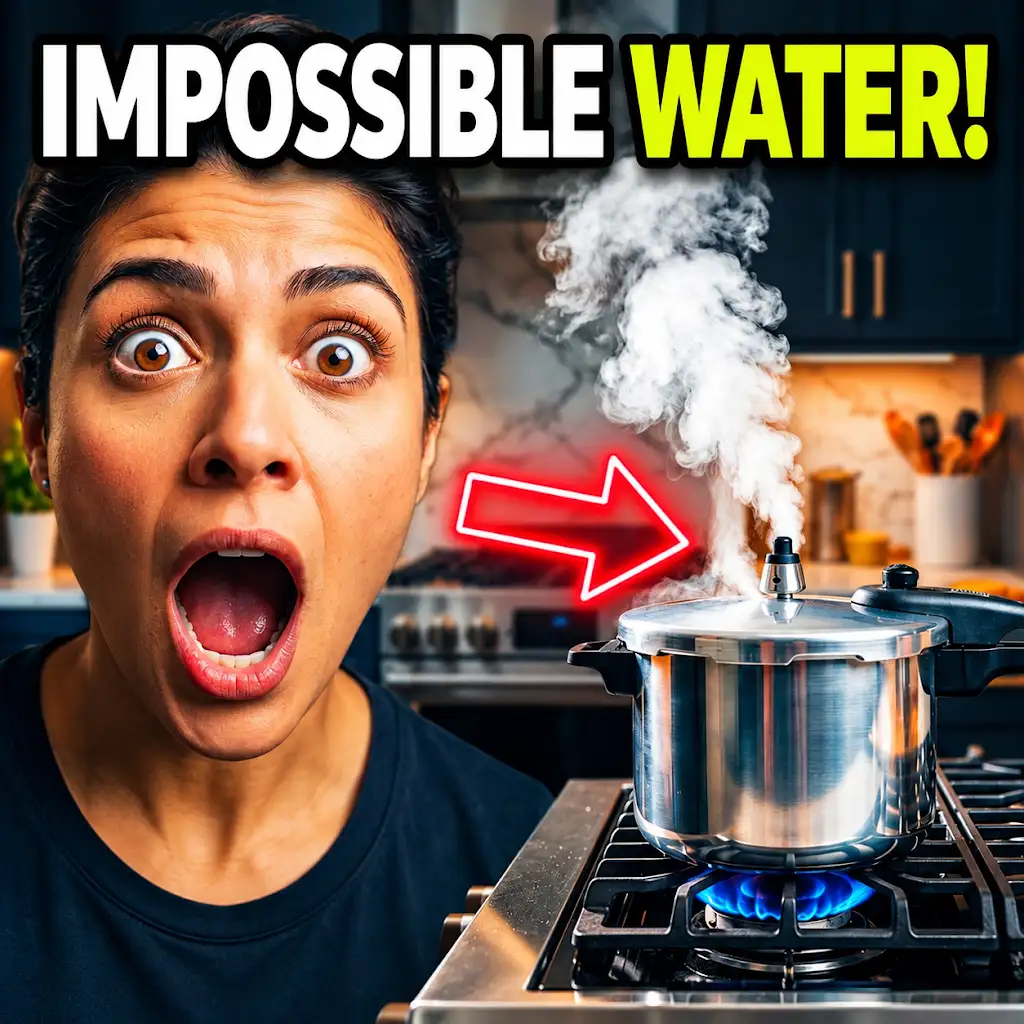
Why This Water Doesn’t Boil at 100°C
FAQs
How does pressure affect the boiling point of a substance?
Increasing pressure raises the boiling point of a substance, as it requires more energy to overcome the higher pressure and change from a liquid to a gas state.
Why does water boil at a lower temperature at higher altitudes?
At higher altitudes, the atmospheric pressure is lower, causing water to boil at a lower temperature because less energy is needed to overcome the reduced pressure.
What is the relationship between pressure and boiling point in a closed system?
In a closed system, increasing pressure will raise the boiling point of a substance, while decreasing pressure will lower the boiling point, as the pressure directly affects the energy required for the substance to change state.
How does pressure cooker work in relation to boiling point?
A pressure cooker increases the pressure inside the pot, which in turn raises the boiling point of water. This allows food to cook faster as the higher temperature inside the pressure cooker speeds up the cooking process.
Can pressure affect the boiling point of different substances differently?
Yes, different substances have varying boiling points under different pressures. Some substances may experience a more significant change in boiling point with pressure variations compared to others, depending on their molecular structure and intermolecular forces.