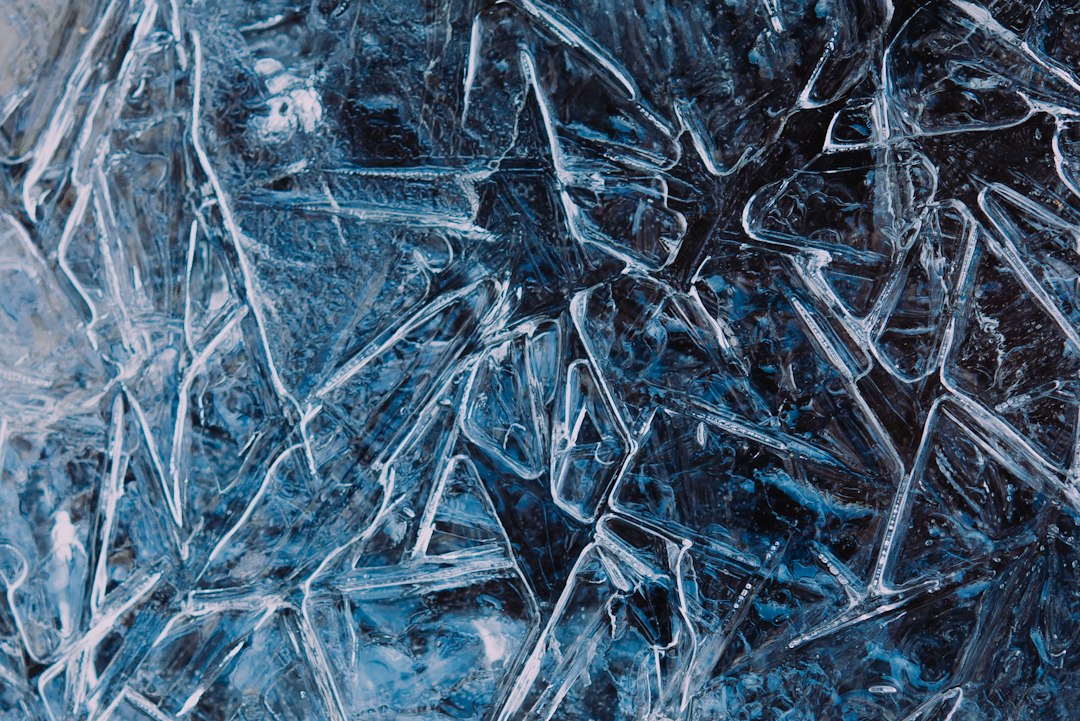
The formation of ice is a common phenomenon, often observed in the familiar chill of a freezer or the frosty breath on a cold morning. However, the process becomes far more enigmatic when observed in the stark environment of a vacuum. In the absence of atmospheric pressure, the familiar cues of condensation and freezing are altered, leading to a counterintuitive and scientifically fascinating process: layered ice formation in a vacuum. This article delves into the intricate scientific principles that govern this unique phenomenon, exploring the interplay of molecular behavior, phase transitions, and the absence of external pressures.
The Paradox of Freezing in Empty Space
The common understanding of ice formation relies heavily on the presence of an atmosphere. Water molecules, energized by heat, move freely. As temperature decreases, their kinetic energy diminishes, and they begin to bond with each other, transitioning from a gaseous state (vapor) to a liquid (water) and eventually to a solid (ice). Atmospheric pressure plays a crucial role in this process. It provides a confining force that encourages molecules to aggregate and facilitates the formation of stable liquid water before solid ice. In a vacuum, however, this familiar support system is absent. The concept of “freezing” in a vacuum needs to be re-examined, as it deviates significantly from terrestrial observations. The initial assumption might be that in a vacuum, water would simply sublimate – transition directly from solid ice to vapor – due to the lack of pressure to hold it in a liquid state. Yet, observed phenomena demonstrate a more complex reality, where layered ice structures can indeed form.
Vapor Pressure and the Boiling Point Anomaly
Understanding ice formation in a vacuum begins with grasping the concept of vapor pressure and its relationship to boiling point. Vapor pressure is the pressure exerted by a vapor in thermodynamic equilibrium with its condensed phases (solid or liquid) at a given temperature in a closed system. For water, this means that even below its standard boiling point (100°C at 1 atmosphere), individual water molecules possess enough kinetic energy to escape the liquid surface and become vapor. The rate of this escape is influenced by temperature and, crucially, by the surrounding pressure.
In a vacuum, the ambient pressure is extremely low, approaching zero. This drastically reduces the external force pushing water molecules back into the liquid or solid phase. Consequently, the boiling point of water drops significantly. At very low pressures, the boiling point can be at or even below the freezing point of water. This creates a paradoxical situation where water can appear to boil and freeze simultaneously. The rapid evaporation of surface molecules, driven by the lack of external pressure, removes kinetic energy from the remaining liquid. This cooling effect can then lead to the freezing of the bulk liquid, even while other molecules are escaping into the vacuum.
Sublimation vs. Condensation in Extreme Conditions
The familiar phase diagram of water, which maps the stable phases (solid, liquid, gas) under different temperature and pressure conditions, is essential for comprehending vacuum ice formation. At atmospheric pressure, water transitions from ice to liquid at 0°C and from liquid to vapor at 100°C. However, as pressure decreases, the triple point of water – the unique temperature and pressure at which all three phases coexist in equilibrium – becomes significant. The triple point of water occurs at 0.01°C (273.16 K) and a pressure of 611.657 Pascals (about 0.006 atmospheres). Below this pressure, liquid water is not a stable phase. Any ice introduced into a vacuum below its triple point pressure will tend to sublimate directly into water vapor.
However, the scenario described here is not one of introducing pre-existing ice into a vacuum. Instead, it often begins with water vapor or liquid water that is then subjected to vacuum conditions. When water vapor is present in a vacuum chamber, and the temperature drops below its freezing point, condensation can still occur. The absence of significant atmospheric pressure means that the condensation process is driven primarily by the statistical collision of water molecules with a cold surface or with existing ice nuclei. Instead of forming large, amorphous ice masses, the low pressure can favor the formation of more ordered, layered structures, as molecules deposit one by one onto a growing surface.
Layered ice formation in a vacuum is a fascinating phenomenon that highlights the unique behaviors of water molecules under specific conditions. For a deeper understanding of this process, you can explore the article titled “The Science Behind Layered Ice Formation” available at Freaky Science. This article delves into the intricate mechanisms that lead to the development of layered ice, shedding light on the implications for both scientific research and practical applications in various fields.
The Role of Molecular Dynamics
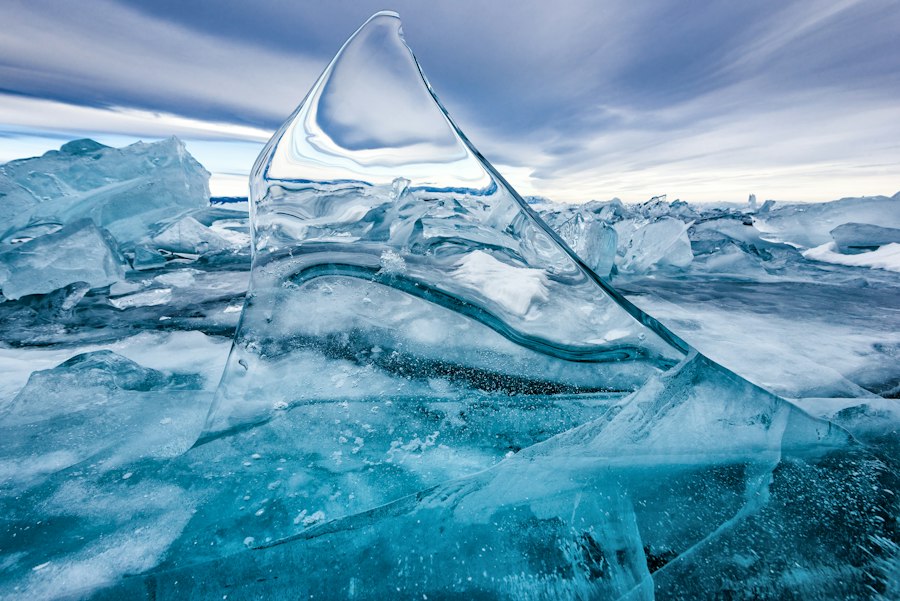
The formation of layered ice in a vacuum is fundamentally a story of molecular behavior under extreme conditions. Without the bulk influence of atmospheric pressure, individual water molecules play a more dominant role in determining the structure and kinetics of ice formation. This involves understanding how molecules interact, how they lose energy, and how they arrange themselves into a solid lattice.
Nucleation and Crystal Growth in a Low-Pressure Environment
Nucleation is the initial step in the formation of a new thermodynamic phase. For ice, this means the formation of tiny, stable ice crystals (nuclei) from water vapor or supercooled liquid. In a vacuum, nucleation can occur on any available surface, whether it’s the wall of the vacuum chamber, a seed crystal, or even random fluctuations in the vapor. The absence of atmospheric pressure alters the energy landscape for nucleation. Surface energies and molecular interactions become more critical in determining whether a stable nucleus will form.
Once a nucleus has formed, crystal growth begins. In a vacuum, this growth is often dominated by deposition from the vapor phase. Water molecules from the surrounding vacuum collide with the surface of the growing ice crystal. If they have sufficient energy to be captured and if their trajectory allows them to fit into the existing crystal lattice, they will become incorporated into the ice structure. The low pressure environment can lead to a more ordered deposition process, as molecules have more time to orient themselves before bonding, potentially favoring the formation of specific crystallographic planes and leading to layered structures.
Energy Transfer and Thermal Management
The removal of energy from water molecules is critical for them to transition into the solid phase. In a vacuum, there are fewer mechanisms for efficient energy transfer compared to an atmosphere. Convection, a significant heat transfer mechanism in air, is absent. Heat transfer primarily occurs through radiation and conduction. When water molecules condense or freeze onto a surface in a vacuum, the latent heat of fusion (the energy released during freezing) must be dissipated. If this heat cannot be efficiently removed, it can raise the local temperature, hindering further freezing or even causing melting.
This is where the layered structure can become important. As a layer of ice forms, it can act as an insulator, slowing down the conduction of heat from deeper layers or the underlying surface. The ongoing sublimation of some surface molecules also acts as a cooling mechanism, creating a dynamic equilibrium where freezing and evaporation are both occurring. The controlled removal of heat, perhaps by actively cooling the surface upon which the ice is forming, is essential for achieving the desired layered ice structures rather than a chaotic frozen mass.
The Phenomenon of Layered Ice Formation
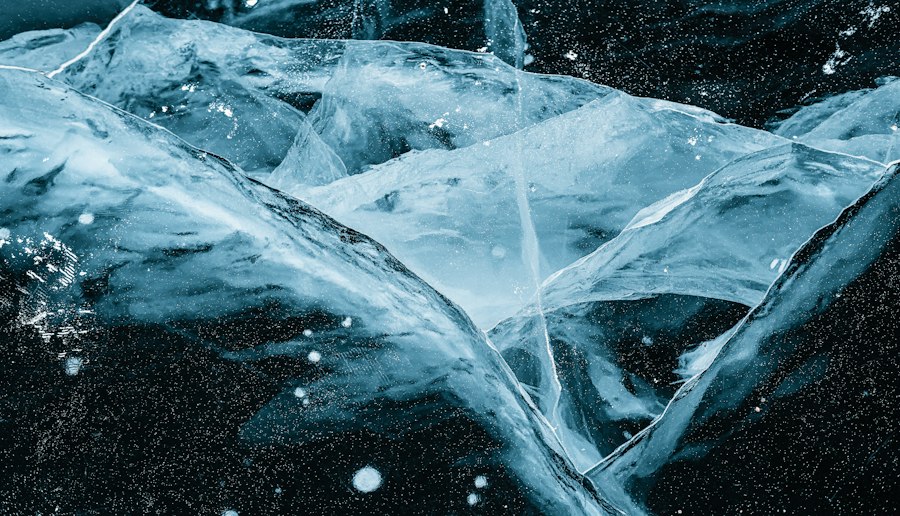
The term “layered ice” suggests an ordered structure, a stark contrast to the typically amorphous or dendritic (branch-like) forms of ice seen in everyday conditions. In a vacuum, these layers can be strikingly distinct, often appearing as thin, planar sheets stacked one upon another. This morphology is not accidental but arises from the specific conditions of its formation.
Monolayer Deposition and Surface Energy Minimization
The formation of distinct layers in a vacuum is often attributed to a process akin to monolayer deposition. This means that ice molecules are added to the growing surface one molecular layer at a time. For this to occur, the rate of molecular arrival from the vapor must be balanced by the rate at which molecules can attach and arrange themselves into the crystal lattice. If molecules arrive too quickly, they can form multiple layers before the lower layers have fully solidified, leading to less ordered structures.
Surface energy plays a crucial role in this process. Ice crystals have different surface energies depending on the crystallographic plane exposed. Certain planes are more energetically favorable to form, and the system will tend to expose these planes to minimize the overall surface energy. In a vacuum, where external influences are minimal, the intrinsic properties of the water molecule and its interactions can dictate which planes are favored. This can lead to the growth of flat, planar surfaces that, when stacked, form the characteristic layers.
Influence of Adsorbed Species and Surface Defects
While ideal vacuum conditions might be sought, real-world vacuum environments are rarely perfectly pure. The presence of even trace amounts of other gases or impurities can significantly influence ice formation. These adsorbed species can act as nucleation sites, altering the growth kinetics, or even becoming incorporated into the ice lattice, potentially disrupting its perfect layering.
Surface defects on the substrate upon which the ice is forming also play a role. Imperfections, steps, or kinks on a surface can provide preferential sites for nucleation and growth. These can influence the orientation of the initial ice crystals and, consequently, the direction of subsequent layer growth. Understanding and controlling these subtle influences is key to reproducible layered ice formation.
Applications and Scientific Significance
The ability to create and study layered ice in a vacuum opens up avenues for both practical applications and fundamental scientific research. The unique properties of such ice, born from its ordered structure and formation environment, make it a subject of considerable interest.
Studying Phase Transitions and Surface Science
Layered ice formed in a vacuum provides a model system for studying fundamental phase transitions at surfaces. It allows scientists to observe and manipulate the nucleation and growth processes in a highly controlled environment, free from the confounding effects of bulk atmospheric pressure. This is invaluable for understanding the thermodynamics and kinetics of freezing and sublimation at a molecular level.
Furthermore, it serves as a testbed for surface science techniques. By analyzing the structure and properties of the formed ice layers using methods like atomic force microscopy (AFM), scanning electron microscopy (SEM), and spectroscopy, researchers can gain insights into the interactions between water molecules and various surfaces. This is crucial for fields ranging from materials science to astrobiology.
Implications for Astrobiology and Space Exploration
The formation of ice in vacuum conditions is not just an Earth-bound laboratory curiosity; it is a phenomenon directly relevant to extraterrestrial environments. Many moons and planets in our solar system, such as Mars and the icy moons of Jupiter and Saturn, possess very thin atmospheres or near-vacuum conditions. Understanding how water ice forms and persists in these environments is critical for astrobiological research.
If life exists or has existed on these celestial bodies, its formation and evolution would have been influenced by the way water exists and transitions between its solid and gaseous states. The study of layered ice formation in vacuum can provide clues about potential habitability, the transport of water (and thus potential life) across planetary surfaces, and the interpretation of observational data from space missions. For instance, the observation of frost or ice on Martian surfaces can be better understood by studying vacuum-driven ice formation processes. Moreover, understanding how water ice behaves under vacuum is crucial for the design of spacecraft and equipment that will operate in space, ensuring they do not prematurely lose vital water resources or experience detrimental ice buildup.
Layered ice formation in a vacuum is a fascinating process that has intrigued scientists for years. This phenomenon occurs when water vapor sublimates directly into ice without passing through a liquid phase, leading to the development of unique crystalline structures. For a deeper understanding of this topic, you can explore a related article that delves into the science behind ice formation in various environments. This resource provides valuable insights into the conditions that facilitate layered ice growth and its implications for our understanding of planetary atmospheres. To read more about it, visit this article.
Controlling and Characterizing Layered Ice
| Parameter | Description | Typical Values | Effect on Layered Ice Formation |
|---|---|---|---|
| Vacuum Pressure | Ambient pressure in the vacuum chamber | 10-6 to 10-9 Torr | Lower pressure reduces contamination and allows controlled ice layering |
| Substrate Temperature | Temperature of the surface where ice forms | 10 K to 150 K | Lower temperatures favor ice nucleation and stable layered growth |
| Water Vapor Flux | Rate of water molecules arriving at the substrate | 1012 to 1015 molecules/cm²/s | Higher flux increases growth rate and layer thickness |
| Deposition Time | Duration of water vapor exposure | Seconds to hours | Longer times produce thicker ice layers |
| Layer Thickness | Thickness of each ice layer formed | 1 nm to 100 nm per layer | Determines optical and physical properties of the ice |
| Ice Morphology | Structure of the ice layers (amorphous or crystalline) | Amorphous below ~130 K; crystalline above | Temperature-dependent; affects layering and stability |
| Residual Gas Composition | Types of gases present in vacuum chamber | Mostly H2, N2, CO, CO2 traces | Impurities can incorporate into ice layers, affecting purity |
The precise formation and characterization of layered ice in a vacuum are not trivial tasks. They require careful control over environmental parameters and sophisticated analytical tools to verify the resulting structure.
Vacuum Chamber Design and Environmental Control
The successful formation of layered ice necessitates a well-designed vacuum chamber capable of achieving and maintaining very low pressures. This involves using appropriate vacuum pumps (e.g., turbomolecular pumps, cryopumps) and ensuring the integrity of the chamber through seals and material choices that minimize outgassing. Precise temperature control is also paramount. This can be achieved using cryostats, thermoelectric coolers, or liquid nitrogen cooling systems to create the desired sub-zero temperatures.
The introduction of water vapor or liquid water into the chamber must also be controlled. This can be done using evaporators, capillaries, or by carefully controlled leaks. The rate of
Water Boiled While Ice Formed. Could a Lander Sink Into It?
FAQs
1. How does layered ice form in a vacuum?
In a vacuum, water molecules evaporate rapidly, leaving behind a thin layer of ice on the surface. This process continues as more water molecules evaporate and freeze, creating multiple layers of ice.
2. What factors influence the formation of layered ice in a vacuum?
The temperature, pressure, and humidity levels in the vacuum chamber can all affect how layered ice forms. Lower temperatures and pressures typically result in faster ice formation, while higher humidity levels can impact the thickness and structure of the ice layers.
3. Why does ice form in layers rather than a solid block in a vacuum?
Due to the rapid evaporation of water molecules in a vacuum, the ice forms in thin layers as each layer freezes before the next one can fully develop. This process of continuous freezing and evaporating leads to the formation of distinct layers of ice.
4. Can the thickness of the ice layers be controlled in a vacuum environment?
Yes, the thickness of the ice layers can be controlled by adjusting the temperature, pressure, and humidity levels in the vacuum chamber. By manipulating these factors, researchers can create ice layers of varying thickness and structure for different experimental purposes.
5. What applications does the study of layered ice formation in a vacuum have?
Understanding how layered ice forms in a vacuum can have implications for various scientific fields, such as materials science, cryogenics, and space exploration. Researchers can use this knowledge to develop new materials, study phase transitions, and simulate conditions in outer space.