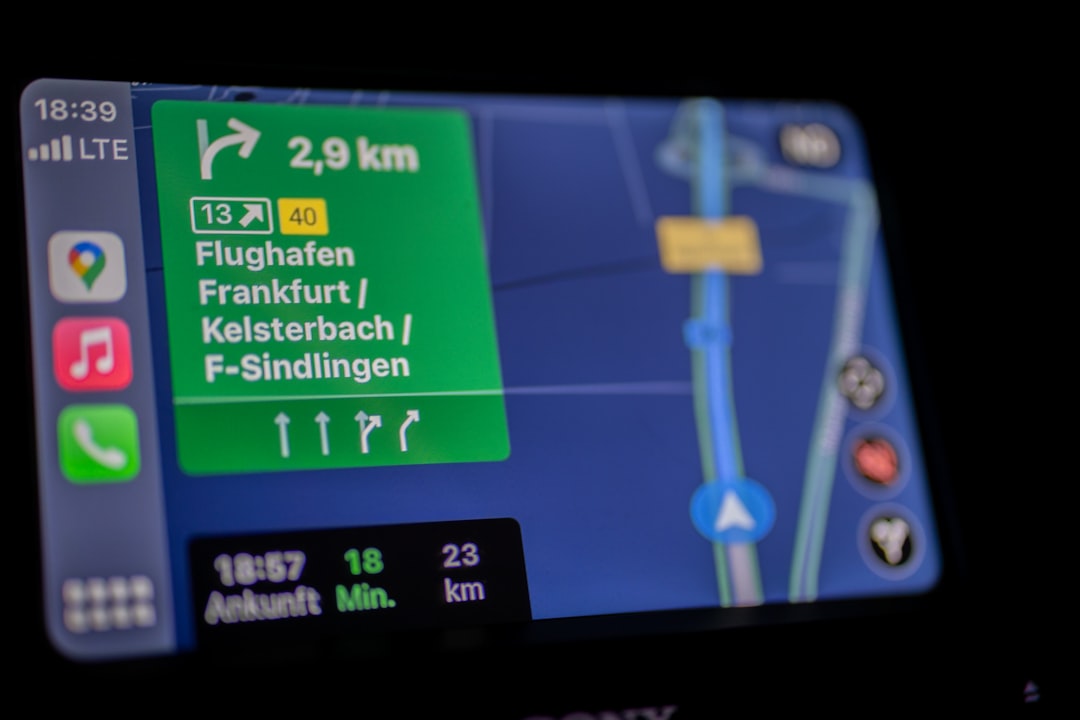
You might think of GPS as a magical invisible force that guides your car or helps you find that hidden hiking trail. You tap on your phone, and suddenly, a blue dot appears, perfectly placed on a map, telling you exactly where you are in the world. But how does that little blue dot get there? The answer, surprisingly, isn’t about GPS transmitting to satellites. It’s quite the opposite, and understanding that shift in perspective is the first step to appreciating the intricate ballet of signals happening above your head.
You see, your GPS receiver – that device in your car, phone, or watch – doesn’t send any signals up to the satellites. Instead, it’s the satellites that are broadcasting signals down to you. Your receiver is a passive listener, a sophisticated listener, but a listener nonetheless. This fundamental concept is crucial because it explains why your GPS works even in areas with no cellular service or Wi-Fi. It’s not relying on terrestrial networks to relay information to space; it’s tapping directly into a system that’s been meticulously designed to reach you from orbit.
So, instead of asking how you transmit to satellites, let’s delve into the fascinating process of how those satellites transmit their precise location information to you. It’s a journey of electromagnetic waves, atomic clocks, and an incredible feat of engineering that makes global navigation possible.
Before we talk about the signals themselves, you need to understand the infrastructure that makes them possible. The Global Positioning System, or GPS, relies on a network of satellites orbiting the Earth. This constellation isn’t a haphazard collection of space junk; it’s a carefully orchestrated system designed for redundancy and continuous coverage.
The Number of Satellites
You’re probably used to seeing a single GPS icon on your device, but behind that simple representation lies a complex web of satellites. The GPS system officially consists of a minimum of 24 operational satellites. However, to ensure robust coverage and account for potential satellite failures or maintenance, the U.S. Air Force, which operates the system, typically maintains more than 24 active satellites. This redundancy is key. You don’t need to be in direct line-of-sight of a specific satellite; your receiver can pick up signals from multiple satellites simultaneously. The more satellites your receiver can “see,” the more accurate your positioning will be. This is because your receiver needs signals from at least four satellites to calculate your position in three dimensions (latitude, longitude, and altitude) and to correct for clock errors.
Orbital Paths and Coverage
These satellites aren’t just floating randomly. They travel in specific, highly predictable orbits around the Earth. They are positioned in medium Earth orbit (MEO), approximately 20,200 kilometers (12,550 miles) above the Earth’s surface. Each satellite orbits the Earth twice a day. Their orbits are arranged so that at any given point on Earth, at least four to eight satellites are visible at any time. This ensures that your GPS receiver can always acquire signals from enough satellites to provide a location fix. The inclination of their orbits is also carefully chosen to provide coverage over the entire globe, including the poles.
The Role of Ground Control
While the satellites are the broadcasters, they aren’t entirely autonomous. A sophisticated ground control segment monitors and manages the health and performance of the satellites. This segment includes master control stations, monitor stations, and ground antennas. The monitor stations track the satellites and collect data on their orbital positions and clock performance. This information is then sent to the master control station, which can upload corrections and commands to the satellites. This constant oversight ensures that the signals you receive are accurate and reliable.
In exploring the functionalities of GPS technology, it’s important to understand the relationship between GPS receivers and satellites. While GPS does not transmit signals to satellites, it relies on signals sent from satellites to determine location. For a deeper dive into the intricacies of GPS systems and their operations, you can read a related article that provides valuable insights on the subject. Check it out here: Freaky Science.
Decoding the Signal: What Your GPS Receiver Hears
Your GPS receiver is essentially a specialized radio receiver. It’

Your Phone Can Still Know Where You Are in Airplane Mode
FAQs

1. What is GPS and how does it work?
GPS, or Global Positioning System, is a network of satellites that orbit the Earth and transmit signals to GPS receivers. These receivers then use the signals to calculate the receiver’s location, speed, and direction.
2. Do GPS devices transmit signals to satellites?
No, GPS devices do not transmit signals to satellites. They only receive signals from the satellites to determine their own location.
3. How do GPS devices communicate with satellites?
GPS devices communicate with satellites by receiving signals from at least four satellites in the GPS network. These signals are used to triangulate the device’s position on Earth.
4. Can GPS devices work without a clear view of the sky?
GPS devices require a clear view of the sky in order to receive signals from satellites. In areas with obstructed views, such as dense urban areas or indoors, GPS signals may be weak or unavailable.
5. What are the limitations of GPS technology?
GPS technology can be affected by factors such as tall buildings, dense foliage, and atmospheric conditions. Additionally, GPS signals can be disrupted by intentional interference or jamming.