The heat of the day can be a welcome embrace, but when that warmth spills into the kitchen, especially around a stovetop, it can become a nuisance. Yet, beneath the simmering surface of a pot of water, a fascinating dance of energy is taking place, one that ultimately leads to cooling. This phenomenon, evaporation, is a fundamental process in physics and chemistry, and understanding how it cools a pot of water reveals elegant principles at play. It’s a testament to the constant motion and energy exchange within matter, a silent force that can bring relief from heat.
The Energetic Dance of Water Molecules
At its core, the cooling effect of evaporation stems from the kinetic energy of water molecules. Water, like all matter, is composed of tiny particles that are in perpetual motion. This motion translates into energy, and the higher the temperature of the water, the faster and more vigorously these molecules are moving. Imagine a bustling city with people moving at various speeds. Some are strolling, others are rushing. The average speed of these people represents the temperature of the city.
From Liquid to Gas: The Phase Transition
Water exists in three common states: solid (ice), liquid (water), and gas (steam or water vapor). The transition from liquid to gas, known as evaporation or vaporization, is a crucial step in this cooling process. For a water molecule to escape the liquid state and become a gas, it needs to overcome the attractive forces that hold it in proximity to its neighboring water molecules. These intermolecular forces, primarily hydrogen bonds, act like tiny magnets, pulling the molecules together.
Escaping the Surface: The Role of Kinetic Energy
Not all water molecules possess the same amount of kinetic energy. Within any volume of liquid water, there’s a distribution of energies. Some molecules are moving more slowly, while others are moving with considerable speed. It is the molecules at the surface of the water that have the best chance of escaping. These surface molecules are less constrained by their neighbors compared to those in the bulk of the liquid. When a surface molecule gains enough kinetic energy, it can break free from the intermolecular forces and ascend into the surrounding air as water vapor. This process can occur at any temperature, but it happens much faster at higher temperatures when more molecules have sufficient energy to escape.
The Energy Cost of Freedom
The act of breaking free from the liquid phase is not an energy-neutral event. It requires energy input. Where does this energy come from? It’s drawn from the internal energy of the liquid water itself. Consider the analogy of a runner needing energy to clear a hurdle. The runner expends energy, and in doing so, their overall energy level decreases. Similarly, the water molecules that escape the liquid surface take a portion of the liquid’s internal energy with them. This loss of energy from the remaining liquid is precisely what leads to a decrease in its temperature. The molecules left behind are, on average, the ones with lower kinetic energy, hence the cooling effect.
Evaporation is a fascinating process that not only cools a pot of water but also plays a crucial role in various natural phenomena. For a deeper understanding of this concept, you can explore the article on Freaky Science, which delves into the science behind evaporation and its effects on temperature regulation. To read more, visit Freaky Science.
Factors Influencing Evaporative Cooling
While the fundamental principle of evaporation cooling is consistent, several environmental factors can significantly influence its rate and, consequently, its cooling effectiveness. These factors dictate how readily water molecules can escape the liquid surface and become airborne. Understanding these influences can help optimize evaporative cooling in various scenarios, from a simple pot of water on a stove to large-scale industrial cooling systems.
Air Movement: The Wind’s Contribution
The presence of air movement, or wind, plays a pivotal role in accelerating evaporation. When water evaporates, it leaves behind a thin layer of humid air directly above the water surface. This humid air has a higher concentration of water vapor molecules and can impede further evaporation by making it harder for new molecules to escape into an already saturated environment. Wind acts to sweep away this layer of humid air, replacing it with drier air. This continuous removal of saturated air maintains a steeper concentration gradient between the water surface and the surrounding atmosphere, allowing evaporation to proceed at a faster pace. In the context of a pot of water, a gentle breeze across the stovetop, or even the movement of air from cooking activities, can enhance the evaporative cooling.
Humidity Levels: The Saturation Point
Humidity refers to the amount of water vapor present in the air. When the air is highly humid, it is already close to its saturation point – meaning it cannot hold much more water vapor. In such conditions, the rate of evaporation slows down considerably. This is because the concentration of water vapor in the air is already high, reducing the net difference in water vapor concentration between the liquid surface and the air. Conversely, in dry air, there is a significant capacity for the air to absorb more water vapor, leading to a much more rapid evaporation rate. For a pot of water, this means that on a hot, dry day, the evaporative cooling will be more pronounced than on a hot, humid day.
Surface Area: Maximizing Contact
The surface area of the water exposed to the air is a critical factor in the rate of evaporation. A larger surface area means more water molecules are at the interface between the liquid and the gas, and thus more molecules have the opportunity to gain enough energy to escape. Imagine trying to drain a swimming pool versus a teacup; the pool, with its vast surface area, will lose water much faster through evaporation. For a pot of water, the shape of the pot matters. A wider, shallower pot will evaporate water more quickly than a tall, narrow pot, assuming the same volume of water. This is because the wider pot exposes a larger surface area to the air.
Temperature Gradients: The Driving Force
Both the temperature of the water and the temperature of the surrounding air play a role. Higher water temperatures mean more molecules possess the necessary kinetic energy to escape, leading to faster evaporation. A greater temperature difference between the water and the air can also contribute to a higher evaporation rate. The energy needed for evaporation is drawn from the water. If the surrounding air is significantly cooler than the water, this temperature difference can act as an additional driving force for heat transfer from the water to the air, indirectly aiding the escape of molecules. However, the primary driver for evaporation is the internal kinetic energy of the water molecules themselves.
The Thermodynamics of Cooling
The cooling that occurs during evaporation is a direct consequence of the laws of thermodynamics, specifically the conservation of energy. When a liquid evaporates, it absorbs energy from its surroundings. This absorption of energy is what causes the cooling effect. It’s a process of energy redistribution, where the energy required for the phase change is drawn from the liquid itself.
Latent Heat of Vaporization: The Energy Requirement
The energy required to convert a substance from a liquid to a gas at a constant temperature is known as the latent heat of vaporization. For water, this value is quite significant. It represents the amount of energy each gram of water must absorb to transform into water vapor. This energy is used to overcome the intermolecular forces holding the liquid molecules together. When water evaporates from the pot, it absorbs this latent heat from the remaining liquid water. Consequently, the internal energy of the liquid decreases, leading to a drop in its temperature.
Energy Balance and Temperature Drop
The cooling process is a delicate balance of energy exchange. Heat is continuously being transferred into the pot of water from the heat source (e.g., a stovetop burner). Simultaneously, heat is being lost from the water through evaporation. If the rate of heat loss through evaporation is greater than the rate of heat gain from the source, the net effect is a decrease in the water’s temperature. This is why a pot of water that is actively evaporating will feel cooler to the touch if you were to briefly remove it from the heat source. The energy for the vaporization is being drawn from the water’s thermal energy.
Equilibrium and Saturation: The Limits of Cooling
Evaporative cooling is not an infinite process. It is limited by the humidity of the surrounding air. As water evaporates, the air above the water becomes more humid. Eventually, if the air is confined or ventilation is poor, it can become saturated with water vapor. At saturation, the rate of evaporation equals the rate of condensation (water vapor returning to the liquid state). At this point, there is no net loss of water, and therefore no further cooling occurs. This is why open environments with good air circulation lead to more effective evaporative cooling than enclosed spaces.
Practical Applications and Everyday Examples
The principle of evaporative cooling is not confined to the kitchen; it’s a pervasive phenomenon with numerous practical applications that impact our daily lives and industries. From keeping ourselves cool to enabling industrial processes, this simple yet powerful scientific principle is at work.
Personal Cooling: Sweating It Out
The most common and perhaps most vital example of evaporative cooling in action is human perspiration. When our bodies overheat, our sweat glands release a thin layer of sweat onto our skin. As this sweat evaporates, it absorbs heat from our skin, effectively lowering our body temperature. This is why we feel cooler when a breeze blows on us after we’ve been sweating. The effectiveness of this cooling mechanism is heavily influenced by ambient humidity. On a very humid day, sweat evaporates much slower, making it harder for our bodies to regulate temperature, and we feel much hotter.
Desert Coolers: Harnessing the Breeze
Desert coolers, also known as evaporative coolers or swamp coolers, are devices that utilize evaporation to cool air. They work by drawing warm, dry air through a water-saturated pad. As the air passes through the pad, water evaporates, absorbing heat from the air and cooling it down. The cooled, humidified air is then blown into the room. These coolers are most effective in arid climates where humidity is low, allowing for rapid evaporation and significant cooling.
Industrial Cooling: From Power Plants to Data Centers
Evaporative cooling plays a significant role in various industrial processes. Cooling towers in power plants, for example, use evaporation to remove waste heat from the cooling water that circulates through the plant. This cooled water is then recirculated, preventing the plant from overheating. Similarly, data centers, which generate substantial amounts of heat from their servers, often employ evaporative cooling systems to maintain optimal operating temperatures and prevent equipment failure. This method is often more energy-efficient than traditional refrigeration-based cooling systems.
Food Preservation: Keeping It Fresh
Even in our refrigerators, a subtle form of evaporative cooling is at play. The slightly porous nature of some refrigerator walls and the constant, albeit slow, evaporation of moisture from food items can contribute to the overall cooling within the appliance, helping to preserve freshness. While not the primary cooling mechanism, it’s a contributing factor to maintaining a cool environment.
Evaporation is a fascinating process that plays a crucial role in cooling a pot of water, as it allows molecules at the surface to escape into the air, taking heat energy with them. This phenomenon can be further explored in a related article that delves into the science behind various cooling methods and their applications. For those interested in understanding the intricacies of evaporation and its effects, you can read more about it in this insightful piece on Freaky Science.
Beyond the Pot: Broader Implications of Evaporation
| Metric | Value | Unit | Description |
|---|---|---|---|
| Initial Water Temperature | 100 | °C | Boiling point of water before evaporation starts |
| Latent Heat of Vaporization | 2260 | kJ/kg | Energy required to convert 1 kg of water from liquid to vapor |
| Mass of Water Evaporated | 0.05 | kg | Amount of water evaporated during cooling |
| Heat Removed by Evaporation | 113 | kJ | Energy taken away from water due to evaporation (mass × latent heat) |
| Temperature Drop | 5 | °C | Decrease in water temperature due to evaporative cooling |
| Time for Cooling | 10 | minutes | Duration over which evaporation causes cooling |
The principles governing how evaporation cools a pot of water extend far beyond the immediate context of cooking. This fundamental process plays a critical role in Earth’s climate system, influencing weather patterns, water cycles, and even the survival of ecosystems. Understanding evaporation is key to comprehending many large-scale natural phenomena.
The Water Cycle: A Global Cooling Engine
Evaporation is a cornerstone of the Earth’s water cycle. The vast surfaces of oceans, lakes, and rivers are constantly evaporating, transferring enormous amounts of water vapor into the atmosphere. This process has a significant cooling effect on the planet’s surface. The latent heat absorbed during evaporation is carried by the water vapor into the atmosphere. When this water vapor condenses to form clouds and precipitation, this latent heat is released, playing a crucial role in atmospheric circulation and weather patterns. Without evaporation, the Earth’s surface temperatures would be considerably higher.
Soil Moisture and Plant Life: The Foundation of Growth
The moisture content in soil is directly influenced by evaporation. As water evaporates from the soil surface, it can lead to drought conditions, impacting plant growth. However, plants also contribute to water loss through transpiration, a process similar to evaporation that occurs through their leaves. Both processes are essential for regulating soil moisture and supporting plant life. The cooling effect of evaporation from soil and plant surfaces can also influence local microclimates, affecting the types of plants that can thrive in a particular region.
Climate Regulation: A Natural Thermostat
On a global scale, evaporation acts as a natural thermostat, moderating Earth’s temperatures. The continuous transfer of heat from the surface to the atmosphere through evaporation helps prevent extreme temperature fluctuations. In warmer regions, high evaporation rates contribute to significant cooling. Conversely, in drier regions, reduced evaporation can lead to higher surface temperatures. The distribution of water bodies and prevailing winds significantly influences these patterns, shaping regional and global climates. The study of evaporation is therefore integral to understanding climate change and its potential impacts.
Future Applications: Innovations in Cooling
As the need for efficient and sustainable cooling solutions grows, a deeper understanding of evaporation continues to drive innovation. Researchers are exploring advanced materials and designs that enhance evaporative cooling efficiency for everything from personal wearable devices to large-scale architectural applications. The ability to harness and control this natural cooling process holds immense potential for reducing energy consumption and mitigating the environmental impact of artificial cooling systems. The simple act of water turning into vapor, seemingly a minor event, is in fact a profound force with far-reaching consequences, both in a humble kitchen pot and across the vast canvas of our planet.
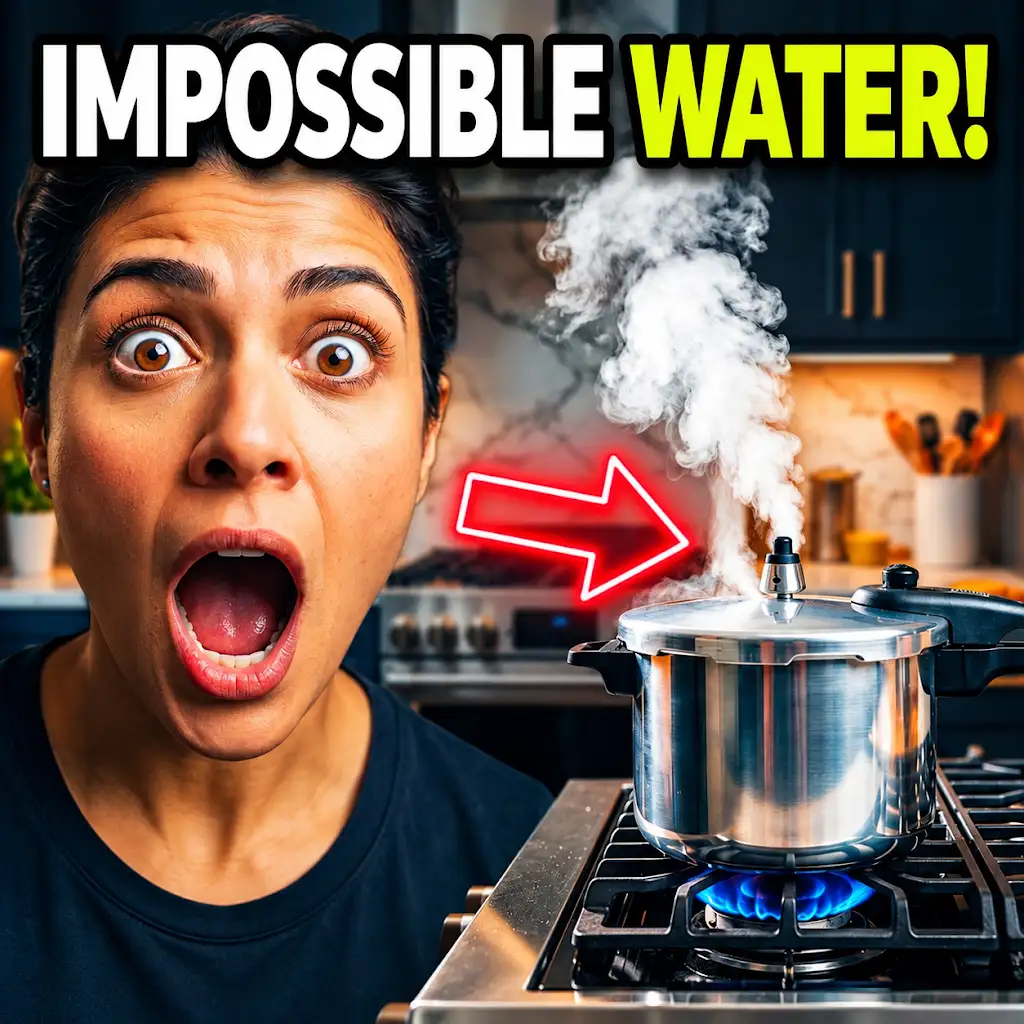
Why This Water Doesn’t Boil at 100°C
FAQs
How does evaporation cool a pot of water?
Evaporation cools a pot of water by converting liquid water into water vapor, which requires energy. This energy is taken from the surrounding water molecules, causing them to lose energy and cool down.
Why does evaporation cause cooling?
Evaporation causes cooling because the molecules with the highest kinetic energy are the most likely to evaporate, leaving behind molecules with lower average kinetic energy, which results in a decrease in temperature.
Does the rate of evaporation affect how quickly a pot of water cools down?
Yes, the rate of evaporation does affect how quickly a pot of water cools down. Faster evaporation leads to quicker cooling, as more water molecules are converted into vapor, taking away more energy from the remaining liquid.
What factors can influence the rate of evaporation and cooling of a pot of water?
Factors that can influence the rate of evaporation and cooling of a pot of water include temperature, humidity, surface area exposed to air, and air movement. Higher temperatures, lower humidity, larger surface area, and increased air circulation can all speed up the process.
Is evaporation the only way a pot of water can cool down?
No, evaporation is not the only way a pot of water can cool down. Conduction and convection can also play a role in transferring heat away from the pot, but evaporation is a significant factor in the cooling process, especially in dry environments.