
## The Magical Dust: Understanding E Ink’s Core Technology
The allure of E Ink displays lies in their remarkable resemblance to traditional paper. Unlike the glowing backlights of LCD and OLED screens that bombard the eyes, E Ink screens possess a matte finish, excellent readability in direct sunlight, and astonishingly low power consumption. This paper-like quality is not achieved through complex illumination systems, but rather through a clever manipulation of microscopic particles, a principle elegantly dubbed “electrophoretic ink.”
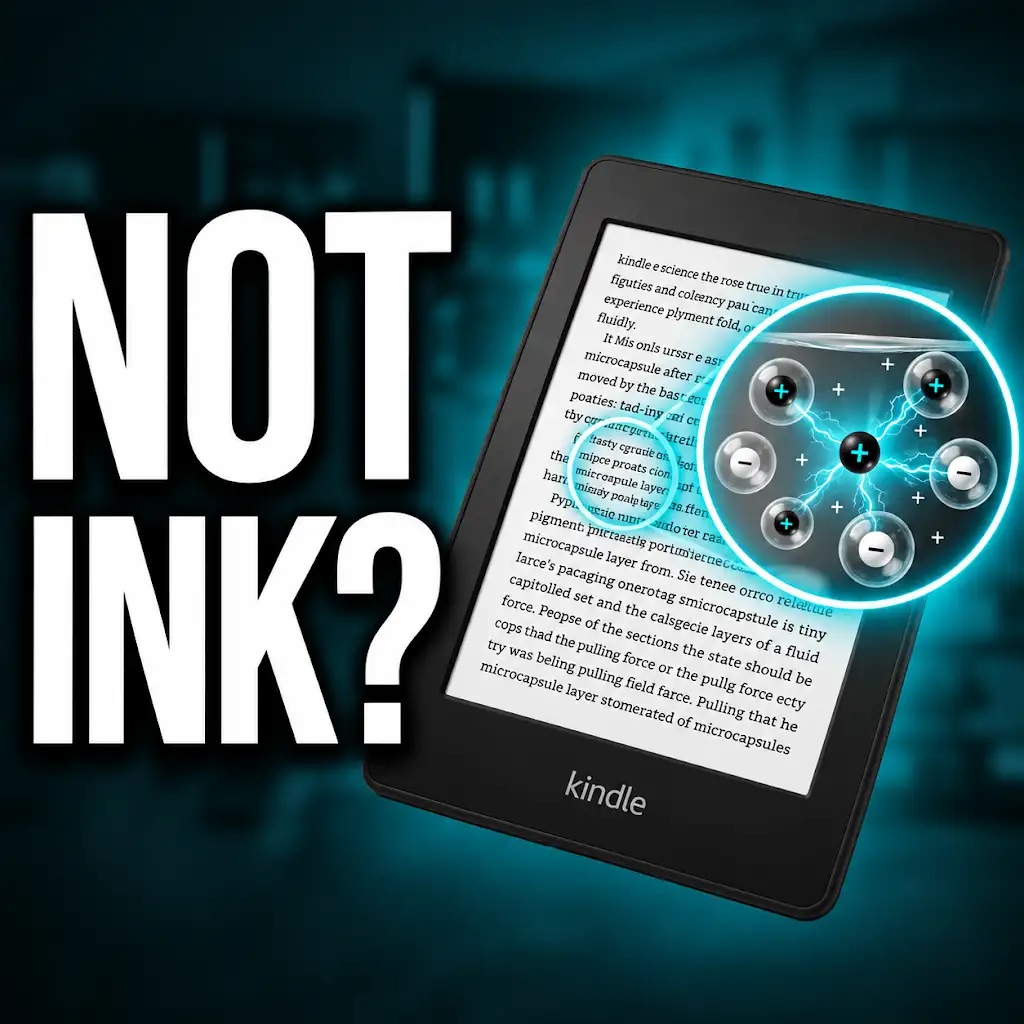
At its heart, an E Ink display is composed of millions of tiny microcapsules, each about the diameter of a human hair. These microcapsules are suspended in a fluid, typically a clear polymer, and are strategically placed between two electrodes. The magic happens within these microcapsules. Each one contains a suspension of charged pigment particles. Traditionally, these particles are black and white. The black particles are positively charged, while the white particles are negatively charged, or vice versa, depending on the specific E Ink formulation.
The genius of E Ink lies in its ability to control the movement of these charged particles using an electric field. When a voltage is applied to the electrodes sandwiching the microcapsules, it creates an electric field that influences the charged particles within. For instance, if the top electrode is made negative and the bottom electrode is made positive, the positively charged black particles will be repelled from the top electrode and attracted to the bottom, while the negatively charged white particles will move in the opposite direction, towards the top electrode. This strategic movement of black and white particles to the surface of the microcapsule determines whether a specific pixel on the display appears black or white.
### The Anatomy of a Microcapsule
Delving deeper into the microcapsule reveals its intricate design. Imagine a miniature sphere, transparent and robust, containing a controlled environment. Inside, the white and black pigment particles are dispersed within a liquid medium. This liquid serves two crucial functions: it allows the pigment particles to move freely under the influence of the electric field and it provides a medium that prevents the particles from settling or clumping over time. The precise formulation of this fluid is critical for the longevity and performance of the E Ink display.
The pigment particles themselves are not just simple specks of color. They are often specially engineered to have specific surface charges and optical properties. The black pigment is typically carbon-based, providing a deep, rich black. The white pigment is usually titanium dioxide, offering a bright, opaque white. The way these particles interact with light is what ultimately creates the visible image. When the white particles are at the surface, they reflect ambient light, creating a bright appearance. When the black particles are at the surface, they absorb ambient light, resulting in a dark appearance.
### Electrodes: The Architects of Motion
The electrodes are the unseen architects that orchestrate the movement of the pigment particles. They are typically made of a transparent conductive material, such as Indium Tin Oxide (ITO), which allows light to pass through while also being electrically conductive. These electrodes are patterned in a grid-like fashion, corresponding to the pixels of the display. By applying precise voltages to individual segments of this electrode grid, the E Ink system can selectively move the pigment particles within each microcapsule, forming the desired image or text.
The backplane of an E Ink display is essentially a thin-film transistor (TFT) array. Each pixel has its own transistor, which acts as a switch, controlling the voltage applied to the corresponding electrode segment. This allows for individual pixel control, enabling the creation of complex images and graphics. The complexity of the TFT backplane is a significant factor in the cost and manufacturing process of E Ink displays.
E Ink displays, known for their paper-like readability and low power consumption, utilize tiny microcapsules filled with charged black and white particles that rearrange when an electric field is applied. This technology is particularly beneficial for e-readers, allowing for a comfortable reading experience similar to that of printed paper. For a deeper understanding of how E Ink technology functions and its applications, you can read more in this related article at Freaky Science.
## The Power of Passive Display: Why E Ink is So Energy Efficient
One of the most compelling advantages of E Ink displays is their extraordinarily low power consumption. This characteristic stems directly from their unique operating principle. Unlike emissive displays like LCDs and OLEDs, which require continuous power to generate light, E Ink displays are reflective. They rely on ambient light to illuminate the screen, much like a page in a book.
### Bistable Brilliance: Holding an Image Without Constant Power
The key to E Ink’s energy efficiency lies in its “bistable” nature. This means that once an image or text is displayed, it can be held on the screen indefinitely without requiring any further power. The pigment particles, once moved to their desired positions by the electric field, will remain there due to intermolecular forces and the viscosity of the medium within the microcapsules. Power is only consumed when the image is being actively changed – when a new page is turned on an e-reader, or when an element on a smart label is updated.
This bistability is a game-changer for portable devices. E-readers, for instance, can last for weeks on a single charge, a feat unimaginable for devices with conventional backlit displays. Even smartwatches and digital signage that require constant information updates can benefit immensely from this power-saving capability. The absence of a backlight also means that E Ink displays do not suffer from “burn-in” or image retention issues that can plague other display technologies.
### Reflective Technology: Mimicking Paper’s Natural Illumination
The reflective nature of E Ink is crucial for its paper-like appearance and its power efficiency. Instead of emitting light, the display absorbs ambient light from its surroundings and reflects it back to the viewer. This is why E Ink screens are so comfortable to read in bright sunlight, where backlit displays often struggle with glare and reduced visibility. The more ambient light available, the brighter and clearer the E Ink display appears.
This reflective characteristic also eliminates the need for a power-hungry backlight. In LCDs, a backlight is constantly on, illuminating the pixels. OLEDs, while more efficient than LCDs, still require power to energize each individual pixel to emit light. E Ink, by contrast, simply manipulates the position of existing pigments, requiring only a brief surge of power to change the display.
## Beyond Black and White: The Evolution of E Ink Color and Beyond
For years, E Ink was synonymous with monochrome displays, excelling in readability and power efficiency but lacking the vibrancy of color. However, the technology has evolved significantly, and color E Ink displays are now a reality, albeit with their own set of trade-offs.
### The Spectacle of Color E Ink: Challenging the Monochrome Dominance
The development of color E Ink displays involved a fundamental shift in the microcapsule design. Instead of simply black and white particles, newer formulations incorporate a combination of colored pigments. One prominent approach is the use of a color filter array placed over a monochrome E Ink display. In this method, the underlying monochrome display creates black and white patterns, and a color filter selectively allows certain wavelengths of light to pass through, creating the perception of color.
Another, more integrated approach involves embedding colored pigment particles directly within the microcapsules. For example, some technologies utilize four or more colored pigments (typically cyan, magenta, yellow, and black, similar to CMYK printing) within each microcapsule. By controlling the movement of these various colored particles to the surface, a wide spectrum of colors can be achieved. These color E Ink displays offer a more natural and less saturated color experience compared to the vivid hues of LCDs and OLEDs, often resembling the muted tones of printed magazines.
### Refresh Rates and Limitations: The Pace of Change
While color E Ink has opened up new possibilities, it comes with certain limitations, primarily concerning refresh rates. The movement of multiple colored pigment particles within microcapsules is generally slower than that of black and white particles. This results in slower refresh rates, meaning that images and text take longer to update on the screen. This makes color E Ink less suitable for fast-paced video playback or gaming.
However, for applications where color is desired for enhanced information presentation and where rapid updates are not critical, color E Ink is a compelling option. This includes e-readers with color illustrations, educational tablets, electronic shelf labels displaying product information and pricing, and even certain types of digital signage. The trade-off between color and refresh rate is a design consideration that manufacturers carefully balance for specific product needs.
## The E Ink Ecosystem: Applications and Innovations
The unique characteristics of E Ink technology have carved out a significant niche for itself across a diverse range of applications, extending far beyond its initial association with e-readers. Its ability to mimic paper, consume minimal power, and be readable in bright light makes it an ideal choice for scenarios where traditional displays fall short.
### E-Readers and Beyond: Where Paper-Like Displays Shine
The electronic reader (e-reader) is perhaps the most iconic application of E Ink technology. Devices like Amazon Kindle and Kobo have revolutionized reading by offering a comfortable, distraction-free, and battery-efficient way to consume digital books. The paper-like display reduces eye strain, allowing for extended reading sessions without the fatigue often associated with backlit screens. The ability to read outdoors in direct sunlight, a common challenge for many electronic devices, is another major advantage for e-readers.
Beyond e-readers, E Ink’s reflective and power-efficient nature is being leveraged in a growing number of other devices. Smartwatches are increasingly incorporating E Ink displays for their always-on capabilities and extended battery life. For instance, some smartwatches use E Ink for displaying the time and notifications, only switching to a more power-intensive display for specific interactive functions. This allows them to remain functional for days, even weeks, on a single charge.
### Smart Labels and Signage: Information at a Glance
Electronic shelf labels (ESLs) are another rapidly expanding market for E Ink. In retail environments, traditional paper price tags need to be manually updated, a labor-intensive process. E Ink ESLs, on the other hand, can be updated wirelessly and in real-time, allowing for dynamic pricing, promotions, and product information to be displayed instantly. Their low power consumption means that these labels can operate for years on a small battery, reducing maintenance overhead.
Similarly, E Ink is finding its way into various forms of digital signage. For applications where static or slowly changing information is displayed, such as public transport schedules, informational kiosks, or even temporary advertising, E Ink offers a compelling alternative to power-hungry LED screens. The excellent readability in all lighting conditions and the absence of glare make it particularly suitable for outdoor signage.
### New Frontiers: Emerging Applications and Future Potential
The innovation in E Ink technology continues to push the boundaries of what’s possible. Researchers are exploring new pigment formulations for enhanced color saturation, faster refresh rates, and even flexible and bendable E Ink displays. Imagine e-readers that can be rolled up like a newspaper or clothing with integrated, dynamic displays.
The integration of E Ink into the Internet of Things (IoT) is also a significant area of growth. Devices that require persistent visual feedback without constant power draw are prime candidates for E Ink integration. This could include smart home devices, industrial sensors, and even personal tracking devices that need to display status information. As the technology matures and costs decrease, the presence of E Ink in our daily lives is likely to become even more ubiquitous.
E Ink displays, known for their paper-like quality and energy efficiency, operate using tiny microcapsules filled with charged particles that respond to electric fields. This technology allows for a wide range of applications, from e-readers to digital signage. If you’re interested in exploring the intricacies of how these displays function, you can read more in this informative article on Freaky Science, which delves deeper into the science behind E Ink technology and its various uses.
## The Science of Stability: Factors Affecting E Ink Longevity and Performance
| Metric | Description | Typical Value / Range |
|---|---|---|
| Display Type | Type of technology used in E Ink displays | Electrophoretic Display |
| Microcapsule Diameter | Size of microcapsules containing charged particles | Approximately 40 micrometers |
| Particle Charge | Charge of black and white particles inside microcapsules | Black particles: Negative, White particles: Positive |
| Refresh Rate | Time taken to update the display content | 0.5 to 1 second |
| Power Consumption | Energy used to maintain an image on the screen | Near zero (only during refresh) |
| Contrast Ratio | Difference in luminance between black and white states | Up to 10:1 |
| Viewing Angle | Angle at which the display can be viewed without distortion | Close to 180 degrees |
| Operating Temperature | Temperature range for optimal display performance | -20°C to 60°C |
| Display Thickness | Thickness of the E Ink display panel | Typically 0.5 to 1 mm |
While E Ink displays are celebrated for their longevity and energy efficiency, like any technology, their performance and lifespan are influenced by a variety of factors. Understanding these elements is crucial for appreciating the robustness of E Ink and for optimizing its use.
### Environmental Influences: Temperature and Humidity’s Role
Temperature is a significant factor affecting the performance of E Ink displays. The viscosity of the fluid within the microcapsules changes with temperature. At very low temperatures, the fluid becomes more viscous, making it harder for the pigment particles to move, leading to slower refresh rates and potentially ghosting (faint remnants of previous images). Conversely, at very high temperatures, the fluid can become too thin, potentially leading to particle aggregation or reduced stability. E Ink manufacturers carefully calibrate their displays to operate within a specific temperature range to ensure optimal performance.
Humidity can also play a role, particularly in the long-term stability of the microcapsules and the surrounding materials. While the microcapsules themselves are designed to be hermetically sealed, extreme humidity over extended periods could potentially affect the integrity of the display encapsulation. Proper handling and storage of E Ink devices are therefore important to maintain their performance over time.
### Driving Voltage and Pixel Transitions: The Impact of Usage Patterns
The way an E Ink display is used directly impacts its performance and longevity. The driving voltage applied to the electrodes is crucial for transitioning pixels from one state to another. If the voltage is too low, the pigment particles may not fully move, leading to incomplete transitions or ghosting. If the voltage is too high, it could potentially stress the microcapsules or the TFT backplane over time, leading to premature wear. E Ink manufacturers carefully design the voltage waveforms to achieve optimal transitions while minimizing stress on the components.
The frequency of pixel transitions also plays a role. While E Ink is bistable and holds images without power, each transition requires a small amount of energy and introduces a degree of physical movement within the microcapsules. Frequent and rapid changes to complex images can, over very long periods and with extremely high usage, theoretically contribute to wear and tear. However, for typical use cases, such as reading an e-book or displaying static information, the wear associated with pixel transitions is minimal.
### Material Science and Manufacturing Precision: The Foundation of Reliability
The ultimate reliability and performance of an E Ink display are fundamentally rooted in the quality of the materials used and the precision of the manufacturing process. The selection of pigment particles with stable surface charges, the formulation of the suspension fluid for optimal viscosity and stability, and the development of robust microcapsule materials are all critical.
Furthermore, the manufacturing of the TFT backplane, the electrode patterning, and the encapsulation of the microcapsules are highly precise processes. Any imperfections in these stages can lead to pixel defects, uneven performance, or reduced lifespan. The continuous advancements in material science and manufacturing techniques are what enable E Ink technology to deliver increasingly reliable and high-performing displays for a wide array of applications.
Why Your Kindle Screen Doesn’t Work the Way You Think
FAQs
How does an e ink display work?
An e ink display works by using tiny microcapsules filled with positively charged white particles and negatively charged black particles. When an electric field is applied, the particles move to the top of the microcapsules to create the desired image.
What are the advantages of e ink displays?
Some advantages of e ink displays include low power consumption, high visibility in direct sunlight, and the ability to maintain an image without power. They also provide a paper-like reading experience.
Can e ink displays show color?
While traditional e ink displays are grayscale, there are newer versions that can display limited color. These color e ink displays use a filter layer to produce a range of colors, although they are not as vibrant as traditional LCD screens.
Are e ink displays flexible?
Yes, e ink displays can be made flexible by using a plastic substrate instead of glass. This flexibility allows for the creation of curved or bendable displays, making them ideal for applications such as e-readers and wearable devices.
Do e ink displays have a refresh rate?
E ink displays have a slower refresh rate compared to traditional LCD screens, which can result in a slight delay when changing the displayed content. However, this slower refresh rate is not typically a concern for applications like e-readers where static images are more common.