The Electrifying Canvas: How E Ink Displays Preserve Images
The magic behind the paper-like appearance of E Ink displays lies in a fascinating application of physics and chemistry, a technology that has revolutionized digital reading and opened new avenues for visual information. Unlike traditional LCD or OLED screens that rely on backlighting or self-emissive pixels, E Ink achieves its static images through a process that mimics the behavior of ink on paper, but with an electronic twist. This unique approach is made possible by the ingenious use of microscopic capsules, each acting as a tiny digital pigment. Understanding how these microcapsules function is key to appreciating the longevity and efficiency of E Ink technology.
E-ink displays, known for their ability to hold images without consuming power, have revolutionized the way we interact with digital content. This technology, which mimics the appearance of ink on paper, allows for a more comfortable reading experience and is particularly beneficial for devices like e-readers. For a deeper understanding of how e-ink displays work and their advantages over traditional screens, you can read a related article at Freaky Science.
The Microscopic World of Electrophoretic Displays
At the heart of every E Ink display is a layer containing millions of these specially engineered microcapsules. These are not just inert containers; they are the fundamental building blocks that enable the display to show images. Each microcapsule is a tiny sphere, typically smaller than the diameter of a human hair, filled with a clear fluid. Suspended within this fluid are even smaller particles, positively and negatively charged, which are dyed black and white. The precise composition and arrangement of these charged particles are critical to the technology’s success, allowing for controlled movement and the creation of distinct visual patterns.
The Charged Particles: Black and White Pigments in Motion
The key to E Ink’s display capability rests on the electrophoretic principle. Imagine millions of miniature cells, each containing two types of particles: one positively charged and the other negatively charged. These particles are often described as “toner particles” or “pigment particles.” Typically, the black particles carry a positive charge, while the white particles carry a negative charge, or vice versa, depending on the specific E Ink formulation. These charged particles are suspended in a clear liquid, such as oil or silicone. The precise size and density of these particles are carefully controlled to ensure they respond effectively to electric fields and remain stable within the microcapsule. The clarity of the suspending fluid is also paramount, as it needs to allow for unobstructed visibility of the colored particles when they move to the surface of the microcapsule. The interaction between the charged particles and the electric field is the driving force behind image formation.
The Microcapsule Structure: A Sealed Environment for Pigment Control
Each microcapsule acts as a self-contained unit, isolating the charged particles and the suspending fluid from their surroundings. This encapsulation is crucial for several reasons. Firstly, it prevents the particles from clumping together or settling out, ensuring consistent performance over time. Secondly, it maintains the integrity of the electrophoretic process by keeping the fluid clear and allowing for precise control over particle movement. The microcapsule walls are typically made of a thin polymer film that is flexible enough to withstand the forces exerted by the electric field but strong enough to contain the internal components. The development of robust and scalable microencapsulation techniques has been a significant challenge and achievement in the evolution of E Ink technology. These techniques often involve processes like coacervation or interfacial polymerization, where a thin layer of polymer is formed around droplets of the internal fluid containing the charged particles. The uniformity of these microcapsules is essential for consistent pixel performance across the entire display.
The Electrophoretic Mechanism: Steering the Pigments with Electricity
The visual representation on an E Ink display is achieved by precisely manipulating the movement of these charged particles within each microcapsule. This is accomplished by applying specific electrical signals to tiny electrodes that are positioned beneath each microcapsule or group of microcapsules. The electrical field generated by these electrodes acts like an invisible hand, guiding the positively and negatively charged particles to the front or back of the microcapsule, thereby changing the color of the pixel. This controlled movement is the essence of how E Ink creates images, offering a stark contrast to the continuous illumination of other display technologies.
Applying Electric Fields: The Driving Force for Image Formation
The control over the E Ink display is achieved through a grid of electrodes that lies directly beneath the layer of microcapsules. These electrodes are typically made of a transparent conductive material, allowing the light to pass through to the viewer. When a voltage is applied to a specific electrode, it creates an electric field that interacts with the charged particles within the microcapsules situated above it. For example, if a positive voltage is applied to an electrode beneath a microcapsule, the negatively charged white particles will be attracted to that electrode (and thus to the front of the microcapsule), while the positively charged black particles will be repelled to the back. Conversely, applying a negative voltage will draw the black particles to the front and push the white particles to the back. By selectively applying positive or negative voltages to these electrodes, the display can create a pattern of black and white pixels, forming the desired image. The speed at which these particles move is dependent on the strength of the electric field and the properties of the particles and suspending fluid.
Pixel States: Defining Black, White, and Shades of Gray
Each microcapsule, and by extension, each pixel, can exist in several distinct states, allowing for the creation of not only black and white but also various shades of gray. When the white particles are brought to the front of the microcapsule, the pixel appears white. When the black particles are brought to the front, the pixel appears black. By partially moving the particles, or by having a mixture of black and white particles visible at the surface, intermediate shades of gray can be achieved. More advanced E Ink technologies also incorporate color filters or even multiple layers of microcapsules with different colored particles to produce full-color displays, although these are generally more complex and less common than the monochrome variants. The ability to hold a specific state without continuous power consumption is a key differentiator.
The Power of Bistability: Images That Linger Without Electricity
One of the most remarkable features of E Ink technology is its bistability. This means that once an image is displayed, it can remain visible for extended periods without any power being supplied to the display. The charged particles, once moved into their desired positions by the electric field, tend to stay there due to electrostatic forces and the viscous nature of the suspending fluid. This inherent stability is the reason why E Ink devices are so incredibly power-efficient, particularly for static content like text and images. The battery life on e-readers, for instance, is often measured in weeks or even months, a testament to this characteristic.
Static Image Persistence: The “Almost Paper” Experience
The bistable nature of E Ink is directly responsible for its paper-like reading experience. Unlike LCD or OLED screens that constantly refresh and emit light, E Ink only requires power to change the image. Once the image is set, the particles remain in place, reflecting ambient light just like ink on paper. This eliminates the flickering and the backlight glare that can cause eye strain with traditional displays. This persistence allows users to read for longer periods without fatigue, making E Ink the preferred choice for digital books, educational materials, and any application where prolonged viewing of static content is required. The lack of a backlight also means the display is perfectly readable in bright sunlight, further enhancing its similarity to physical paper.
Energy Efficiency: A Boon for Battery Life and Sustainability
The power consumption of an E Ink display is minimal, primarily occurring only during the transition between images. This low power draw translates into exceptional battery life for devices that utilize this technology. For e-readers, this means charging them infrequently, making them ideal for travel and extended use. Beyond consumer electronics, this energy efficiency has significant implications for the deployment of E Ink in public spaces and industrial applications. Digital signage, smart labels, and electronic shelf tags can operate for years on a single battery or even be powered by ambient energy harvesting techniques, reducing the need for constant power infrastructure and contributing to a more sustainable technological landscape. The reduced energy footprint also has environmental benefits, decreasing the demand for electricity generation.
E Ink displays have revolutionized the way we interact with digital content, allowing for a unique reading experience that mimics the appearance of traditional paper. These displays use tiny microcapsules filled with black and white particles that respond to electric fields, enabling them to hold images without consuming power. For a deeper understanding of the technology behind E Ink displays and their applications, you can explore this informative article on Freaky Science, which delves into the science and innovation driving this fascinating technology.
The Nuances of Image Rendering: Refresh Rates, Ghosting, and Display Types
| Metric | Description | Value / Characteristic |
|---|---|---|
| Image Retention | Ability to hold an image without power | Indefinite (static image remains until refreshed) |
| Power Consumption | Energy used to maintain an image | Near zero (only power used during refresh) |
| Refresh Time | Time taken to update or change the image | Typically 0.5 to 2 seconds |
| Contrast Ratio | Difference between black and white levels | Up to 10:1 |
| Viewing Angle | Angle at which the image remains clear | Up to 180 degrees |
| Image Stability | Resistance to ghosting or image artifacts | High, with occasional need for full refresh |
| Temperature Range | Operating temperature for stable image holding | -20°C to 50°C |
While E Ink offers incredible advantages in terms of power efficiency and readability, it’s not without its own set of operational characteristics that distinguish it from other display technologies. The way images are rendered, the speed at which they change, and potential visual artifacts are all part of the E Ink experience. Understanding these nuances is crucial for appreciating the full capabilities and limitations of this technology.
Refresh Rates and Transitions: The “Flashing” Effect
The process of changing an image on an E Ink display involves actively moving the charged particles. This movement takes time, meaning that E Ink displays have significantly slower refresh rates compared to LCD or OLED screens. When an image is updated, the display often undergoes a brief “flashing” or “reversal” effect, where the screen briefly flashes black and white or inverts its colors before settling on the new image. This is a necessary part of the electrophoretic process to clear the previous image and ensure a clean rendering of the new one. While newer generations of E Ink have improved refresh rates, they still lag behind their emissive counterparts, making them less suitable for fast-moving video content. The purpose of the flashing is to reset the state of the microcapsules, ensuring that any residual charges or particle positions from the previous image are cleared before the new image is drawn. This is particularly important for monochrome displays where the contrast needs to be maximized.
Ghosting and Image Retention: Lingering Traces
Occasionally, especially with older E Ink models or when displaying content with high contrast over extended periods, a phenomenon known as “ghosting” or “image retention” can occur. This happens when faint traces of a previous image remain visible on the screen, even after a new image has been displayed. This is due to residual electrostatic charges on the particles or within the microcapsules, or simply particles not fully returning to their default positions. While software algorithms and newer E Ink formulations have significantly mitigated this issue, it’s a characteristic that users might encounter. Manufacturers often implement periodic full screen refreshes or “clearing” functions to combat ghosting and maintain optimal display quality.
Types of E Ink Displays: From Monochrome to Color
E Ink technology is not monolithic; it encompasses a range of display types designed for different applications. The most common are monochrome displays, offering black and white or grayscale images, ideal for e-readers and simple signage. More advanced iterations include color E Ink displays, which utilize various methods to achieve color. Some use a layer of color filters placed over a monochrome E Ink display, while others employ multiple layers of microcapsules with different colored particles or even advanced technologies like ACeP (Advanced Color ePaper) which uses a multi-layer substrate to achieve a wider color gamut and better color saturation. While color E Ink has made significant strides, it generally comes with trade-offs in terms of refresh rate, color vibrancy, and cost compared to traditional color displays.
The Future of E Ink: Beyond Reading and Towards Dynamic Surfaces
The continued innovation in E Ink technology suggests a future where its unique properties extend far beyond the traditional e-reader. Researchers and engineers are constantly pushing the boundaries, exploring new materials, improving performance, and finding novel applications for this versatile display technology. From dynamic signage that can change content instantly to interactive surfaces and even flexible, foldable displays, the potential of E Ink continues to expand, promising a more paper-like, power-efficient, and visually engaging digital future.
Advancements in Color and Performance
The pursuit of richer and more vibrant colors in E Ink displays remains a key area of research. Technologies like Kaleido™ and Gallery™ are pushing the boundaries of color E Ink, offering more saturated colors and faster refresh rates than ever before. These advancements are paving the way for E Ink to be used in a wider range of devices, including color e-readers, digital notebooks, and even point-of-sale displays where color is essential for branding and product information. Furthermore, ongoing improvements in microcapsule design and driving electronics are leading to faster refresh rates, reduced ghosting, and increased durability, making E Ink more competitive in applications that previously required more traditional display technologies.
Emerging Applications and Form Factors
Beyond consumer electronics, E Ink is finding its way into an ever-growing array of applications. Smart labels for retail shelves, public transport information displays, digital name badges, and even reusable packaging are all benefiting from E Ink’s low power consumption and excellent readability. The development of flexible and stretchable E Ink displays opens up possibilities for wearable technology, curved displays, and interactive textiles. Imagine clothing that can change its pattern on demand or a smart watch with a display that looks and feels like paper. The inherent bistability and the ability to integrate with various sensor technologies also make E Ink an attractive option for the Internet of Things (IoT), enabling devices to provide visual feedback without a constant drain on power. The adaptability of the microcapsule technology suggests that it can be molded into virtually any shape, further expanding its potential.
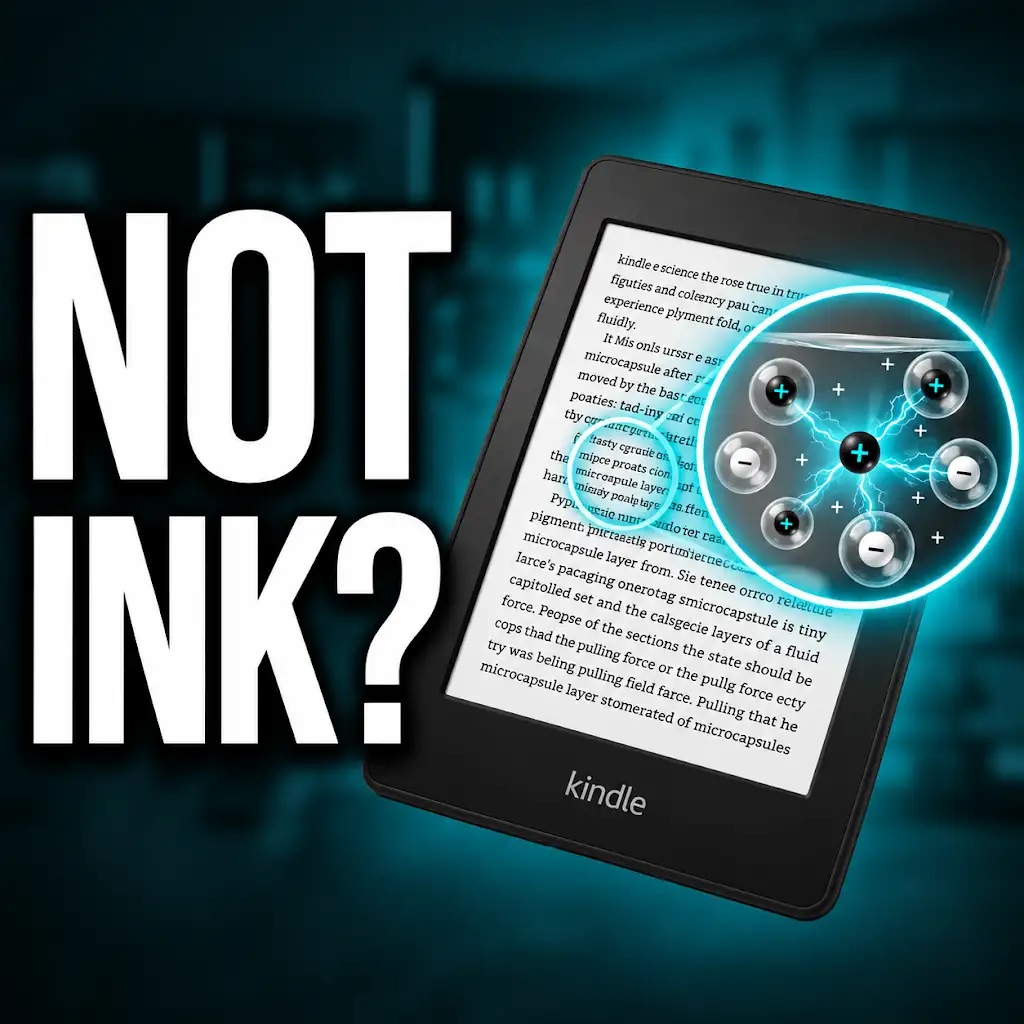
Why Your Kindle Screen Doesn’t Work the Way You Think
FAQs
How do e ink displays hold images?
E ink displays hold images by using tiny microcapsules filled with positively charged white particles and negatively charged black particles. When an electric field is applied, the particles move to the top of the microcapsules to form the desired image.
Are e ink displays energy efficient?
Yes, e ink displays are energy efficient because they only require power when the image on the screen changes. Once the image is displayed, no power is needed to maintain it, unlike traditional LCD screens that require constant power to show an image.
Can e ink displays be read in direct sunlight?
Yes, e ink displays can be read in direct sunlight. In fact, they are easier to read in bright light conditions compared to traditional LCD screens because they reflect light like paper rather than emitting light like a typical screen.
Do e ink displays have a slow refresh rate?
Yes, e ink displays have a slower refresh rate compared to traditional LCD screens. This is because the particles need time to move within the microcapsules to form a new image. However, for reading purposes, the refresh rate is sufficient and does not affect the user experience.
Are e ink displays suitable for e-readers?
Yes, e ink displays are commonly used in e-readers due to their paper-like appearance, energy efficiency, and readability in various lighting conditions. The technology is well-suited for displaying text and simple images, making it ideal for devices designed primarily for reading purposes.