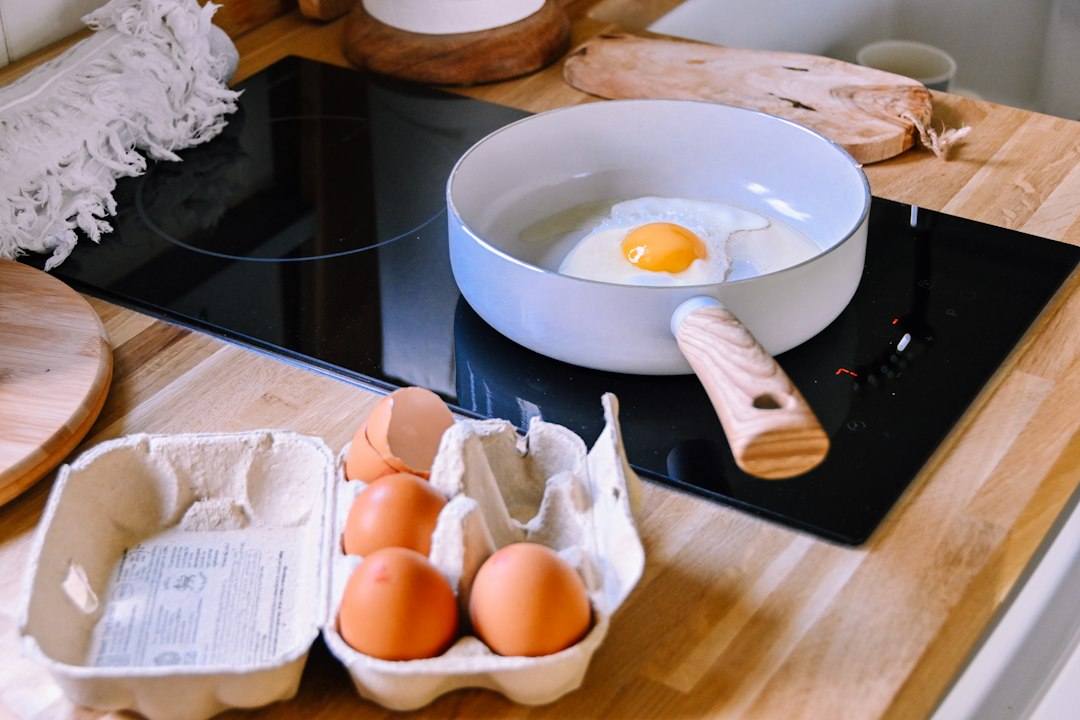
You’ve likely seen them in sleek, modern kitchens, perhaps even in those dazzling cooking shows. Induction stoves, with their smooth, glass-ceramic surfaces and seemingly magical ability to heat cookware directly, are becoming increasingly popular. But how do they actually work? Forget the mystery; understanding the science behind induction cooking is simpler than you might think, and it’s a journey that will demystify this efficient and responsive way of cooking.
This guide will walk you through the fundamental principles of induction, explaining the components, the electromagnetic magic, and why this technology offers a superior cooking experience. By the end, you’ll not only understand the “how” but also appreciate the “why” behind choosing an induction stove for your own culinary adventures.
At its core, an induction stove operates on a principle called electromagnetic induction. This is the same phenomenon that powers many electrical transformers and generators. It involves the creation of an electrical current in a conductor when it’s exposed to a changing magnetic field. For your stove, this means that the heat isn’t generated by the stove itself in the traditional sense, but rather within your cookware.
The Genesis of the Magnetic Field: Coils of Copper
Beneath the smooth, ceramic-glass surface of your induction hob are specialized coils made of copper. These aren’t just any wires; they are precisely engineered to carry an alternating electrical current. When you turn on an induction burner and place a compatible pot or pan on it, electricity flows through these copper coils.
The Alternating Current’s Role
The electricity powering these coils doesn’t flow in a single direction. Instead, it’s an alternating current (AC), meaning it rapidly reverses its direction. This constant switching is crucial. As the current flows back and forth through the copper coil, it generates a rapidly changing magnetic field that extends upwards from the surface of the hob. Think of it like an invisible force field, oscillating at a very high frequency. This frequency is typically in the range of 20 to 100 kilohertz (kHz), far beyond the frequencies of your home’s electrical outlets.
The Induction Process: Where the Magic Happens
The real magic of induction cooking happens when this generated magnetic field interacts with your cookware. However, this interaction isn’t universal; it requires a specific type of material to initiate the heating process.
The Need for Ferrous Materials
For induction to work, your cookware must be made of ferrous materials. This means materials that contain iron. Cast iron, enameled cast iron, and many stainless steel pots and pans are excellent candidates. The iron content is what allows the cookware to respond to the magnetic field.
Eddy Currents: The Engine of Heat
When the fluctuating magnetic field from the copper coil passes through the ferrous base of your pot or pan, it induces eddy currents within the metal. These eddy currents are essentially small, circular electrical currents that are generated within the conductor (your cookware). They flow within the metal of the pot itself.
Resistance: Turning Electricity into Heat
Now, here’s where the heat generation truly takes place. Like any electrical current flowing through a resistive material, these eddy currents encounter resistance as they move through the metal of your cookware. This resistance is a fundamental property of all materials. When the electrical energy of the eddy currents is forced to overcome this resistance, it’s converted into heat.
Joule Heating: The Science of Friction
This process of converting electrical energy into heat due to resistance is known as Joule heating or resistive heating. The more resistance the eddy currents encounter, the more heat is generated. This is why certain materials heat up more effectively on an induction cooktop. The faster and more intense the eddy currents, and the higher the electrical resistance of the cookware’s base, the hotter your pan will become.
Direct Heating: The Key Difference
Unlike traditional electric resistance stoves or gas stoves, where heat is generated by a heating element or open flame and then transferred to the cookware, induction stoves heat the cookware directly. The magnetic field directly causes the eddy currents within the pan, and those currents produce the heat. This is a fundamental and critical distinction that explains the speed and efficiency of induction cooking.
Induction stoves operate on the principle of electromagnetic induction, which allows for efficient cooking by directly heating the cookware. For a deeper understanding of this technology and its advantages over traditional cooking methods, you can read a related article that explores the science behind induction cooking and its benefits. Check it out here: Freaky Science.
Components of an Induction Stove: Beyond the Smooth Surface
While the ceramic-glass surface is the most visible part of an induction stove, several key internal components work in concert to orchestrate the cooking process. Understanding these parts sheds further light on the technology.
The Electronic Control System: The Brains of the Operation
At the heart of your induction stove’s intelligence lies the electronic control system. This sophisticated circuitry manages everything from user input to the precise delivery of power to the induction coils.
User Interface and Touch Controls
When you interact with your induction stove, you’re engaging with its user interface, typically comprised of touch-sensitive buttons or a digital display. These controls allow you to select burners, adjust heat levels, set timers, and activate various cooking modes. The electronic control system receives these signals and translates them into specific instructions for the rest of the stove’s components.
Power Management and Regulation
The electronic control system is responsible for managing and regulating the power delivered to the induction coils. It ensures that the correct frequency and amperage are supplied to generate the desired magnetic field strength for each burner and heat setting. This precise control is what allows for such nuanced temperature adjustments.
The Induction Coil(s): The Magnetic Field Generators
As mentioned earlier, the induction coils are the engine of the electromagnetic process. They are typically made of flat, coiled copper wire.
Number and Placement of Coils
Each cooking zone on an induction hob has at least one induction coil beneath it. Some higher-end models may have multiple coils within a single zone to allow for more even heating or to accommodate larger cookware. The placement and design of these coils are crucial for maximizing the efficiency of magnetic field generation and energy transfer to the cookware.
Coil Size and Shape
The size and shape of the induction coil are designed to correspond with the cooking zones. Larger coils are used for larger cooking areas to ensure that the magnetic field covers the base of the pot or pan effectively.
The Inverter Module: Directing the Electrical Flow
The inverter module is a critical component that converts the alternating current from your home’s power supply into the specific high-frequency AC current needed to drive the induction coils.
Converting Household AC to High-Frequency AC
Your home’s electrical outlets provide AC power at a frequency of around 50 or 60 Hz. This is far too slow to generate the rapidly changing magnetic field required for induction. The inverter module takes this low-frequency AC and “chops” it up, using electronic switches (like transistors) to create a much higher frequency AC signal.
Power Output Control
The inverter module also plays a role in controlling the power output to the induction coils. By adjusting the duty cycle or voltage of the high-frequency AC, it dictates the strength of the magnetic field and, consequently, the amount of heat generated.
Cooling Systems: Keeping Things from Overheating
All this electrical activity generates a significant amount of heat, not just in the cookware but also within the stove’s components themselves. Therefore, effective cooling systems are essential.
Fans for Air Circulation
Most induction stoves incorporate internal fans that circulate air to dissipate heat from the electronic components, the inverter module, and the induction coils. You’ll often hear these fans running, especially during and after cooking.
Heat Sinks
Heat sinks, often made of aluminum or copper, are also used to draw heat away from critical electronic components. These finned structures increase the surface area, allowing heat to be radiated into the air more effectively.
The Induction Cooking Process in Action: A Step-by-Step Breakdown
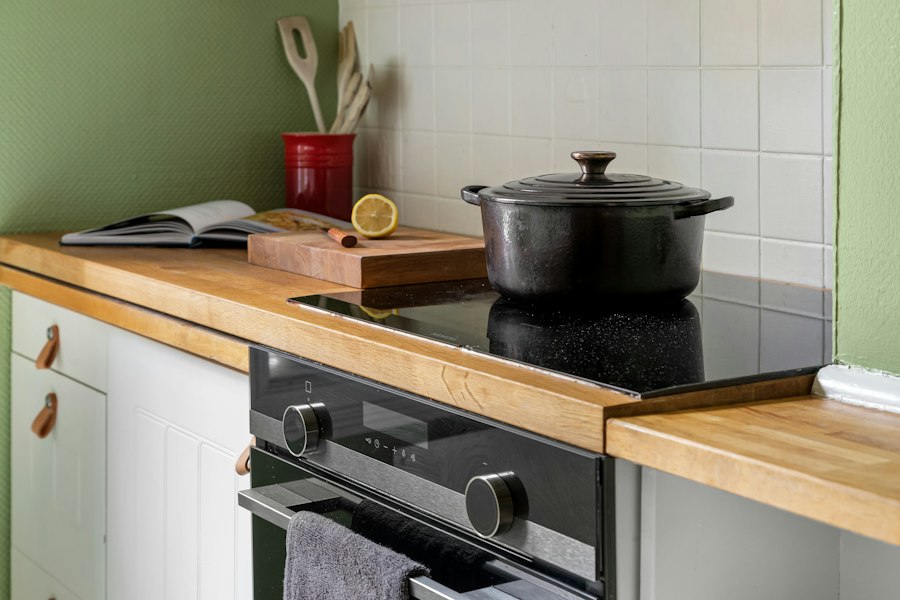
To truly grasp how an induction stove works, let’s walk through the process from the moment you place a pot on the hob to the moment your food is perfectly cooked.
Step 1: Detection and Engagement
The moment you place a compatible pot or pan onto a specific cooking zone, the induction stove’s sensors detect its presence. This detection is often based on the magnetic properties of the cookware. If the cookware is not induction-compatible (e.g., made of aluminum or copper without a ferrous base), the stove will not activate that zone or will display an error message.
The “Are You Compatible?” Test
The stove essentially performs an instant compatibility test. The magnetic field generated by the coil attempts to induce eddy currents in the cookware. If it can’t, the heating process won’t begin.
Step 2: Magnetic Field Generation
Once compatibility is confirmed, the electronic control system sends a signal to the inverter module. The inverter then begins to supply high-frequency AC power to the induction coil beneath that cooking zone.
Powering the Coil
The copper coil starts to oscillate rapidly, creating a strong, fluctuating magnetic field that extends upwards. This field penetrates the base of your ferrous cookware.
Step 3: Induction of Eddy Currents
As the magnetic field oscillates, it induces electrical currents within the conductive base of your pot or pan. These are the eddy currents. They flow in circular paths within the metal.
The Fleeting Nature of the Field
The speed at which the magnetic field changes is crucial. It’s this rapid change that forces the electrons in the cookware to move, creating the eddy currents.
Step 4: Resistive Heating and Heat Generation
The eddy currents encounter resistance as they flow through the metal of the cookware. This resistance causes the kinetic energy of the electrons to be converted into thermal energy, generating heat.
Friction of Electrons
Think of it like a crowd of people trying to move through a narrow hallway – there’s friction and bumping, which generates heat. The more resistance, the more heat.
Step 5: Conduction to Food
The heat generated is directly within the base of the cookware. This heat then travels upwards through the walls of the pot or pan via conduction, transferring to the food you are cooking.
Direct Transfer
Unlike other stovetops, there’s no intermediary heat source radiating outwards. The heat is where it needs to be: right in contact with your food.
Step 6: Precise Temperature Control
The electronic control system continuously monitors the power output to the induction coil and adjusts it based on your selected heat setting. This allows for incredibly precise temperature control.
Feedback Loop
Some advanced induction stoves may even incorporate temperature sensors in the cookware or on the hob surface to provide a feedback loop for even more accurate regulation, though this is less common than relying on the direct control of power.
Why Induction Cooking is Different and Superior

The principles of induction cooking lead to several distinct advantages over traditional cooking methods, making it a compelling choice for modern kitchens.
Speed and Responsiveness: The “Boil in Minutes” Phenomenon
One of the most noticeable benefits of induction is its incredible speed. Because the heat is generated directly within the cookware, there’s no time wasted heating up a burner or waiting for a flame.
Rapid Heating
Water can boil significantly faster on an induction hob compared to other electric stovetops. This means less waiting for your pasta water or that morning cup of tea.
Instantaneous Adjustments
When you adjust the heat setting on an induction stove, the change in power delivered to the coil is almost immediate. This translates to instant responsiveness in your cooking. If you need to reduce the heat quickly to prevent scorching, an induction stove will react far more swiftly than a radiant electric or even a gas stove.
Energy Efficiency: Less Waste, More Heat
Induction cooking is remarkably energy-efficient. This is due to the direct heating mechanism.
Minimal Heat Loss
With gas or radiant electric stoves, a considerable amount of heat escapes into the surrounding air, lost to the environment. Induction cooking, by contrast, directs almost all of its energy directly into the cookware. Estimates suggest that induction cooktops can be 85-90% efficient, compared to around 40-55% for gas and 70-75% for radiant electric.
Targeted Heating
The magnetic field is confined to the area directly above the induction coil, meaning only the cookware placed on that zone is heated. This targeted approach further minimizes energy waste.
Safety Features: A Cooler Surface
The safety of an induction stove is a major selling point, particularly for families with children or for those who are concerned about kitchen accidents.
No Open Flame or Hot Surface
Unlike gas stoves, there’s no open flame, eliminating the risk of fires. Induction cooktops also don’t have a red-hot radiant element that stays hot for extended periods after use. The ceramic-glass surface itself doesn’t get as hot as a traditional electric hob because it’s not the primary heat source; it’s only heated by the residual heat from the cookware.
Automatic Shut-off
Many induction stoves have automatic shut-off features. If the cookware is removed from the hob, the magnetic field collapses, and the heating stops almost immediately. This prevents accidental burns from a still-hot burner.
Indicator Lights
Indicator lights typically show when a cooking zone is still warm, providing an additional safety warning.
Ease of Cleaning: A Seamless Surface
The smooth, flat ceramic-glass surface of an induction stove makes cleaning remarkably easy.
No Grates or Burner Caps
Unlike gas stoves with their grates and burner caps, or older electric stoves with exposed coils, induction hobs have a completely smooth surface. Spills and splatters can be wiped away with a damp cloth.
Less Baked-On Mess
Because the surface itself doesn’t get as intensely hot as a radiant electric burner, food spills are less likely to burn on and become difficult to remove.
Induction stoves operate using electromagnetic fields to directly heat pots and pans, making them an efficient choice for modern kitchens. For those interested in exploring the science behind this technology, a related article can provide deeper insights into the principles of electromagnetic induction and its applications in cooking. You can read more about it in this fascinating article that delves into the mechanics of induction heating and its benefits compared to traditional cooking methods.
What Makes Cookware Induction-Compatible? The Ferrous Factor
| Metric | Description | Typical Value / Range | Unit |
|---|---|---|---|
| Operating Frequency | Frequency of the alternating current used to generate the magnetic field | 20,000 – 50,000 | Hz (Hertz) |
| Power Output | Maximum power delivered to the cookware | 1000 – 3500 | Watts |
| Efficiency | Percentage of electrical energy converted to heat in the cookware | 80 – 90 | % |
| Cookware Material | Type of material required for induction heating to work | Ferromagnetic metals (e.g., cast iron, stainless steel) | — |
| Heating Mechanism | How heat is generated in the cookware | Induced eddy currents and magnetic hysteresis losses | — |
| Response Time | Time taken to heat cookware compared to traditional stoves | Seconds to a few minutes | Seconds |
| Safety Feature | Surface temperature when stove is on but no cookware present | Relatively low (cool to touch) | °C |
You can’t just use any pot or pan on an induction stove. The requirement for ferrous materials is fundamental to how the technology works.
The Magnetic Test: A Simple Check
The easiest way to determine if your cookware is induction-compatible is to perform a simple magnetic test.
The Refrigerator Magnet Rule
Take a standard refrigerator magnet. If it sticks firmly to the bottom of your pot or pan, it’s likely induction-compatible. If it doesn’t stick, or only weakly adheres, it’s probably not.
Materials That Work Well
Several common cookware materials, or combinations of materials, are ideal for induction.
Cast Iron
Pure cast iron cookware is inherently ferrous and heats up beautifully on induction stoves. It’s durable and provides excellent heat retention.
Enameled Cast Iron
This is also a fantastic choice. The cast iron core ensures magnetic compatibility, while the enamel coating provides a non-stick surface and makes it easier to clean.
Stainless Steel (with a Ferrous Core)
Not all stainless steel is created equal when it comes to induction. You need stainless steel cookware that has a magnetic layer in its base. Many high-quality stainless steel pots and pans are designed with a core of aluminum or copper sandwiched between layers of stainless steel, but the outer layers must contain iron. Look for cookware explicitly stating it’s “induction-compatible” or that passes the magnet test.
Carbon Steel
Similar to cast iron, carbon steel is a ferrous metal and works very well on induction cooktops.
Materials That Don’t Work (Typically)
Certain cookware materials lack the ferrous properties necessary for induction to function.
Aluminum
Pure aluminum cookware does not contain iron and therefore does not respond to magnetic fields. It will not heat up on an induction stove.
Copper
Like aluminum, pure copper is not ferrous and will not work on induction cooktops.
Glass, Ceramic, and Non-Magnetic Stainless Steel
These materials lack the iron content required to generate eddy currents and will not heat up.
The Importance of a Flat Base
Beyond the material composition, the flatness of the cookware’s base is also important for optimal performance.
Even Heat Distribution
A flat, uniform base ensures that the magnetic field interacts evenly with the cookware, leading to consistent and efficient heat distribution. Warped or uneven bases can lead to hot spots and less effective heating.
By understanding these principles, you can confidently navigate the world of induction cooking, choosing the right cookware and appreciating the sophisticated technology that makes your kitchen more efficient, safer, and responsive. The seemingly magical heating of your induction stove is, in fact, a brilliant application of physics, designed to enhance your culinary experience.
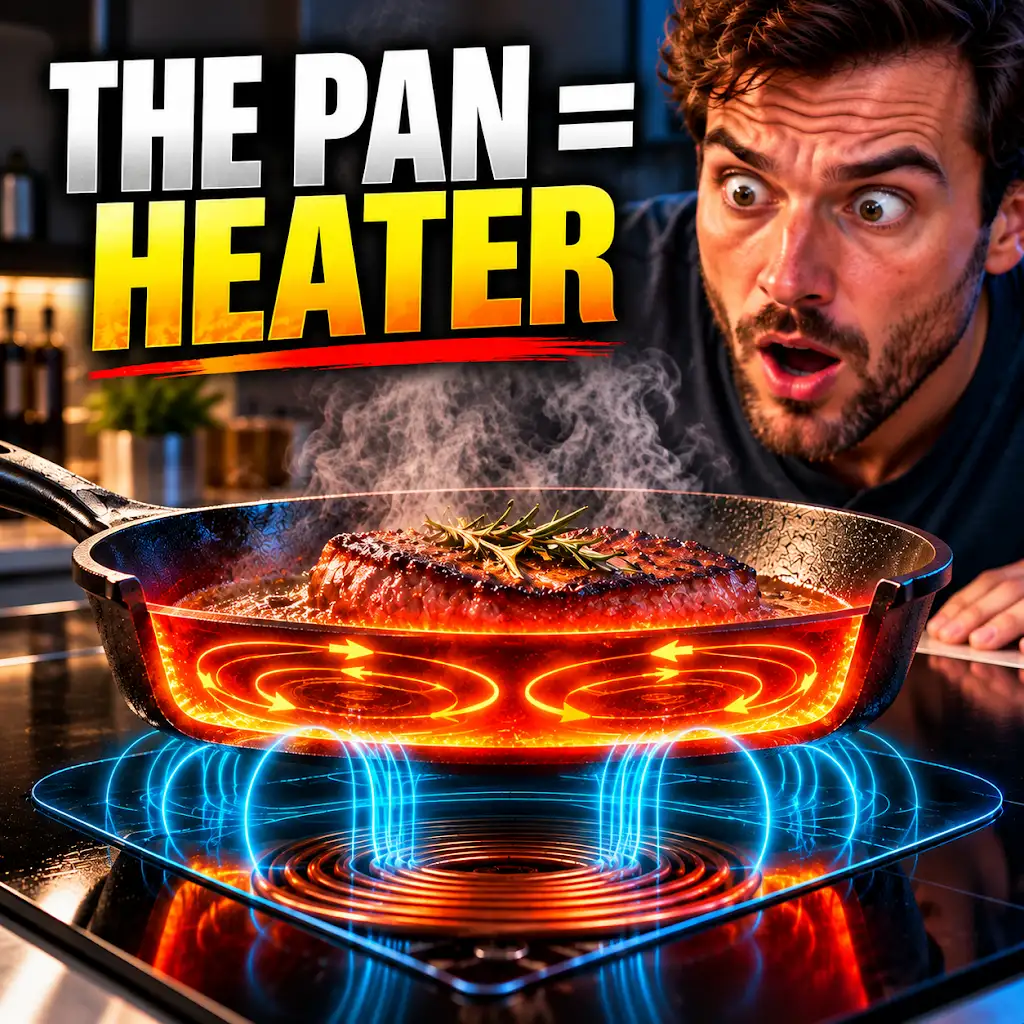
The Pan Is the Heater: How Induction Cooking Really Works
FAQs
1. What is an induction stove?
An induction stove is a type of cooktop that uses electromagnetic energy to heat pots and pans directly, without heating the surface of the stove itself.
2. How does an induction stove work?
An induction stove works by generating an electromagnetic field under the glass cooktop. When a compatible pot or pan is placed on the cooktop, the magnetic field induces electrical currents in the metal, which generates heat to cook food.
3. What are the advantages of using an induction stove?
Some advantages of using an induction stove include faster heating times, precise temperature control, energy efficiency, and safety features such as automatic shut-off when a pot is removed.
4. Are there any limitations to using an induction stove?
One limitation of using an induction stove is that it requires cookware with a magnetic bottom, such as cast iron or stainless steel. Additionally, induction stoves may produce a slight humming sound during operation.
5. How do you clean and maintain an induction stove?
To clean an induction stove, simply wipe down the smooth glass surface with a damp cloth after each use. Avoid using abrasive cleaners or scrubbing pads that could damage the cooktop. Regular maintenance includes checking for any spills or debris that may have fallen into the induction coils beneath the cooktop.