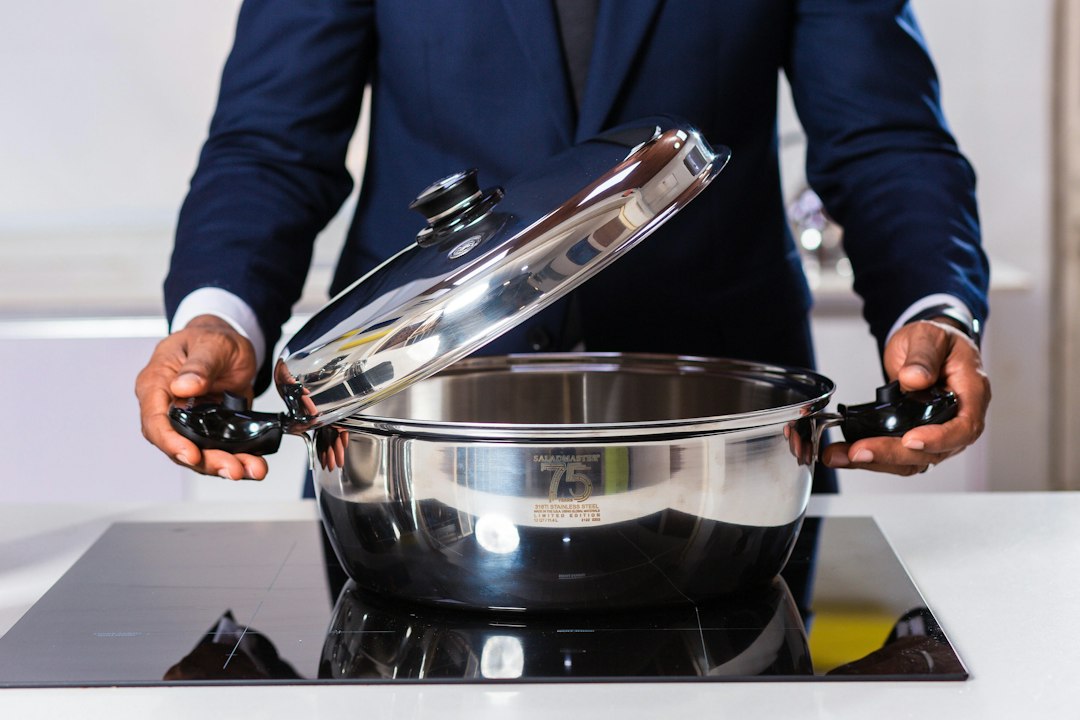
You’ve probably seen them in sleek, modern kitchens, or maybe you’ve heard whispers about their efficiency and speed. Induction cooktops are the future, or at least a very present and exciting part of it. But how exactly do they conjure heat from a smooth, flat surface without any visible flames or glowing elements? It’s not magic, though it might feel like it. It’s a fascinating interplay of electromagnetism, a concept that’s both simple to grasp and incredibly effective in practice. This article will demystify the induction cooktop, guiding you through the science behind its speedy and precise cooking capabilities.
At its heart, an induction cooktop operates on the principles of electromagnetism. You’re likely familiar with magnets and electricity being related, but the specific way this relationship manifests in your kitchen is what makes induction so special. Forget traditional heating elements that get red-hot, or gas flames that lick at your cookware. Induction takes a more direct approach, generating heat within your pots and pans themselves.
The Core Components of an Induction Cooktop
Before diving into the process, let’s identify the key players. Understanding these components will make the subsequent explanation much clearer.
The Ceramic Glass Surface
This is the part you see and interact with. It’s a durable, heat-resistant glass-ceramic material. Crucially, this surface doesn’t get hot directly from the induction process. It only heats up due to contact with the hot cookware. This is a significant safety advantage and makes cleaning a breeze.
The Induction Coil
Beneath the ceramic glass lies a copper coil. This is the engine of the induction process. When electricity flows through it, it generates a rapidly changing magnetic field. Think of it like a very fast-spinning electromagnet.
The Control Panel and Electronics
This is where you select your cooking zones, adjust the heat levels, and set timers. The electronics translate your selections into precise electrical signals that are sent to the induction coil.
The Magnetic Field Generator
This is essentially the induction coil combined with the associated electronics that control the alternating current and thus the magnetic field. It’s the brain and brawn of the heating mechanism.
The Principle of Electromagnetic Induction
Now, let’s connect the dots. Electromagnetic induction is a phenomenon where a changing magnetic field can induce an electric current in a conductor. This was famously discovered by Michael Faraday. In the case of your induction cooktop, the changing magnetic field generated by the copper coil passes through the base of your cookware.
Faraday’s Law of Induction
Faraday’s Law states that the magnitude of the induced electromotive force (and thus the induced current) is proportional to the rate of change of the magnetic flux. In simpler terms, the faster the magnetic field changes, the stronger the electrical current it can induce. Your induction cooktop leverages this by sending an alternating current (AC) through the coil, causing the magnetic field to fluctuate thousands of times per second.
Eddy Currents: The Hidden Heat Generators
When this rapidly changing magnetic field interacts with a ferromagnetic (magnetic) material like the base of your induction-compatible cookware, it forces electrons within the metal to move. These moving electrons create what are known as “eddy currents.” These are essentially small, circular currents of electricity that are generated within the metal of your pot or pan.
If you’re curious about the mechanics behind an induction cooktop and how it efficiently heats your cookware, you might find this related article insightful. It delves into the principles of electromagnetic induction and explains how this technology differs from traditional cooking methods. For more information, you can read the article here: How Does an Induction Cooktop Work?.
The Heating Mechanism: From Magnetism to Molecular Friction
The eddy currents generated within your cookware are the key to the heating process. While they are electrical currents, they don’t travel to an external circuit. Instead, they are confined within the metal itself.
Resistance and Heat Generation
Metals, even good conductors like those used in cookware, have some electrical resistance. When these eddy currents flow through the metal, they encounter this resistance. According to Joule’s Law of Heating (also known as the resistive heating or Joule heating), the flow of electrical current through a resistor generates heat. The amount of heat generated is proportional to the resistance of the material and the square of the current flowing through it.
Joule’s Law Explained
So, the eddy currents, forced to flow by the magnetic field, are effectively fighting against the resistance of the cookware material. This struggle, this friction at a molecular level, is what produces the heat. The faster the eddy currents flow and the higher the resistance, the more heat is generated. This is why the cookware itself becomes hot, not the surface beneath it.
Hysteresis Loss: Another Contributor to Heat
Besides resistive heating, there’s another phenomenon at play, particularly in materials that are easily magnetized and demagnetized. This is called hysteresis loss.
Magnetic Hysteresis in Cookware
When the magnetic field from the induction coil rapidly reverses its direction, it forces the magnetic domains within the cookware’s base material to align and then realign themselves. This continuous process of magnetization and demagnetization requires energy, and this energy is dissipated as heat. Think of it like repeatedly bending a piece of metal – it gets warm from the internal friction.
The Combined Effect
Both eddy current heating and hysteresis loss contribute to the overall heat generated within the cookware. The efficiency of this heating depends heavily on the material properties of the cookware base, which is why not all pots and pans work on an induction cooktop.
The Importance of Cookware: Why Not Everything Works
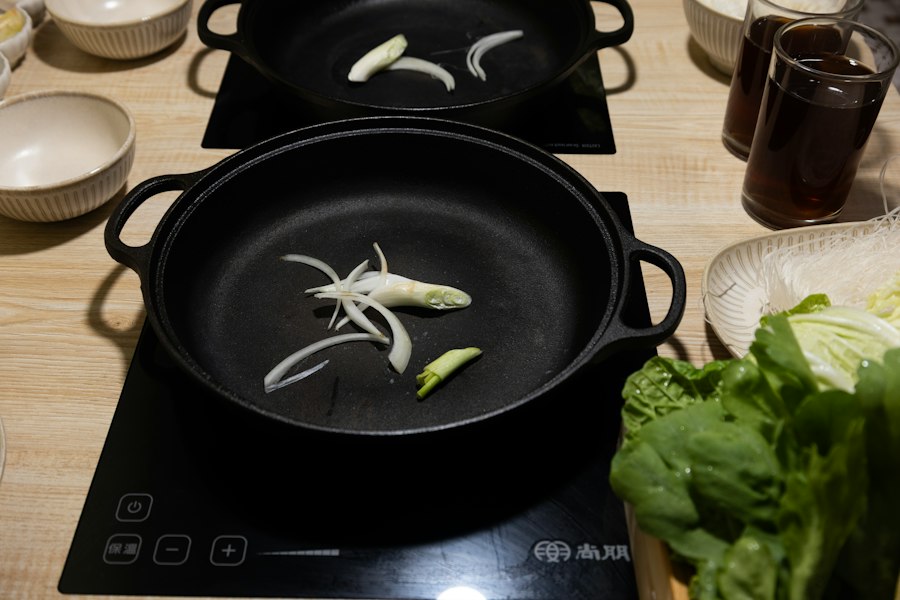
This is a crucial point for anyone considering or using an induction cooktop. The entire system relies on a specific interaction between the magnetic field and the cookware. If your cookware isn’t compatible, you won’t get any heat.
Ferromagnetic Materials: The Key Requirement
The fundamental requirement for induction cookware is that it must be made of a ferromagnetic material. This means the material must be able to be strongly attracted by a magnet. Common ferromagnetic materials include:
Cast Iron
This is a classic example. Cast iron pots and pans are inherently magnetic and therefore work perfectly on induction cooktops.
Enameled Cast Iron
Similar to plain cast iron, the enamel coating doesn’t hinder the magnetic properties of the iron base.
Stainless Steel (Magnetic Varieties)
Not all stainless steel is magnetic. You need to look for stainless steel that contains iron and has a sufficient magnetic attraction. Many modern “induction-ready” stainless steel pots and pans are specifically designed with a magnetic base.
Carbon Steel
Another excellent choice, carbon steel is magnetic and heats very efficiently on induction.
Materials That Don’t Work (and Why)
Conversely, certain common cookware materials are not ferromagnetic and therefore will not work with induction.
Aluminum
Pure aluminum is not magnetic. While some aluminum cookware might have a magnetic steel disc attached to the base to make it induction-compatible, a solid aluminum pot or pan will not heat up.
Copper
Copper is a non-ferromagnetic metal. While it’s an excellent conductor of heat and a favorite of many chefs, it won’t work directly on an induction cooktop. Again, some copper cookware may have a magnetic base added.
Glass and Ceramic
These materials are inherently non-magnetic and do not conduct electricity in a way that would allow for induction heating.
How to Test Your Cookware
It’s simple! Grab a magnet (like one from your refrigerator). If the magnet sticks firmly to the bottom of your pot or pan, it’s likely induction-compatible. If it barely sticks or doesn’t stick at all, it probably won’t work.
The Benefits: Why Induction is Gaining Popularity

The unique way induction cooktops work leads to a host of advantages that are making them increasingly popular in both home and professional kitchens.
Speed and Responsiveness
Because the heat is generated directly within the cookware, induction cooktops are incredibly fast. Water boils significantly quicker than on a gas or radiant electric cooktop. Furthermore, the heat response is almost instantaneous when you adjust the power setting. This means you can go from a rolling boil to a gentle simmer in seconds, offering unparalleled control.
Boiling Water in Record Time
Imagine needing to boil water for pasta or a quick cup of tea. With induction, you’ll be amazed at how quickly you get there. This time-saving aspect is a major draw for busy individuals and families.
Precise Temperature Control
The ability to make rapid adjustments to heat levels means you have exquisite control over your cooking. This is invaluable for delicate tasks like tempering chocolate, simmering sauces, or searing proteins without burning.
Energy Efficiency
Induction cooktops are remarkably energy-efficient. Unlike traditional electric cooktops where a significant amount of heat is lost to the surrounding air, or gas cooktops where flames can spread beyond the cookware, induction directs almost all of its energy directly into the pot.
Minimal Heat Loss
The ceramic glass surface only gets hot from the cookware, not from the heating element itself, so there’s very little wasted energy warming up the cooktop. This translates to lower energy bills and a more environmentally friendly cooking experience.
Targeted Heating
The magnetic field is concentrated directly under the cookware, ensuring that only the pot or pan is heated, minimizing ambient heat in your kitchen.
Safety Features
The fact that the cooktop surface itself doesn’t get intensely hot is a major safety advantage, especially in households with children or pets.
Cool-to-Touch Surface
While the ceramic glass will get warm from contact with hot cookware, it doesn’t reach the scorching temperatures of a radiant electric element. This significantly reduces the risk of accidental burns.
Automatic Shut-off
Most induction cooktops have features that detect when cookware is removed. The heating will stop automatically, preventing energy waste and reducing the risk of leaving a burner on accidentally.
No Open Flames
Unlike gas cooktops, there are no open flames, eliminating the risk of gas leaks or fires.
Ease of Cleaning
The smooth, flat ceramic glass surface is incredibly easy to clean. Because food spills don’t get baked onto a hot element, most messes can be wiped away with a damp cloth.
Seamless Surface
The lack of grates or raised elements means there are no nooks and crannies for food to get trapped in. A quick wipe-down is usually all that’s needed.
Induction cooktops are fascinating appliances that use electromagnetic fields to heat pots and pans directly, providing efficient and precise cooking. If you’re interested in learning more about the science behind this technology, you might find the article on Freaky Science particularly enlightening, as it delves into the principles of electromagnetism and how they apply to modern cooking methods. Understanding these concepts can enhance your cooking experience and help you appreciate the innovation behind induction cooking.
How You Control the Heat: The User Experience
| Metric | Description | Typical Value / Range | Unit |
|---|---|---|---|
| Operating Frequency | Frequency of the alternating current used to generate the magnetic field | 20,000 – 50,000 | Hz (Hertz) |
| Power Output | Maximum power delivered to the cookware | 1000 – 3700 | Watts |
| Heating Efficiency | Percentage of electrical energy converted to heat in the cookware | 80 – 90 | % |
| Cookware Material | Type of material compatible with induction heating | Ferromagnetic metals (e.g., cast iron, stainless steel) | N/A |
| Induced Current | Electric current generated in the cookware by the magnetic field | Varies with cookware size and power | Amperes (A) |
| Magnetic Field Strength | Intensity of the magnetic field produced by the induction coil | Up to 10 | mT (millitesla) |
| Response Time | Time taken for the cooktop to adjust power output | Less than 1 | Second |
While the underlying science is complex, using an induction cooktop is remarkably intuitive. The control panel, typically featuring touch-sensitive buttons or sliders, allows you to manage the heat with precision.
Power Levels vs. Temperature Settings
Induction cooktops often offer a range of power levels, usually numbered from 1 to 10 or even higher. These power levels directly correspond to the energy output from the induction coil. Higher numbers mean more power and faster heating. Some models also offer specific temperature settings, which are more sophisticated and aim to maintain a precise temperature.
Understanding Power Levels
When you select a power level, you are essentially telling the induction coil how much energy to deliver. This translates to faster or slower heating, or more or less intense simmering. It’s important to experiment with different power levels to get a feel for how they affect your cooking.
The “Boil” Setting
Many induction cooktops feature a “boost” or “power boil” setting. This temporarily overcharges the induction coil to deliver maximum power for rapid boiling. Use this sparingly as it can be quite intense and may not be suitable for all cookware.
The Role of the Cooktop’s Electronics
The electronics within the cooktop play a vital role in translating your commands into action. They manage the frequency and strength of the alternating current supplied to the induction coil, ensuring that the magnetic field is precisely controlled.
Feedback Loops and Sensors
More advanced induction cooktops may incorporate sensors that monitor the temperature of the cookware or the food within it. These sensors can provide feedback to the electronics, allowing for even more precise temperature regulation.
Cooking Programs and Presets
Some models come with pre-programmed cooking functions for specific tasks, such as simmering, searing, or even melting chocolate. These programs are designed to optimize the power output and timing for the best results.
Recognizing the Signs of Induction Cooking
You’ll often hear a faint buzzing or humming sound when an induction cooktop is in operation. This is normal and is caused by the vibration of the cookware in the magnetic field. You might also notice a slight clicking sound as the cooktop cycles its power to maintain a specific heat level. These are all indicators that the induction process is working correctly.
In conclusion, your induction cooktop is a testament to the power of applied physics. By harnessing the principles of electromagnetism, it creates heat directly within your cookware, offering you speed, efficiency, control, and safety. The next time you whip up a meal on your induction hob, take a moment to appreciate the invisible forces at play, transforming electrical currents into delicious culinary creations.
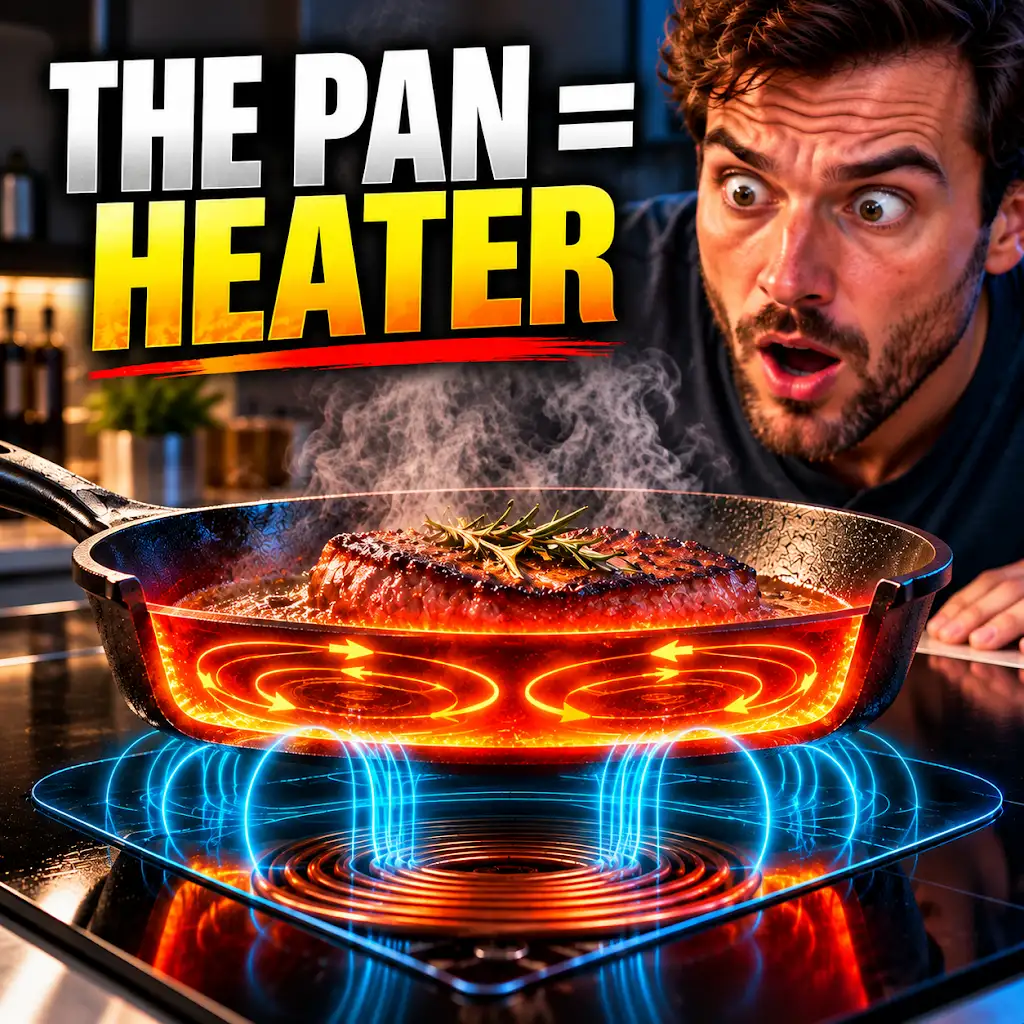
The Pan Is the Heater: How Induction Cooking Really Works
FAQs
What is an induction cooktop?
An induction cooktop is a type of stove that uses electromagnetic energy to heat cookware directly, without the need for a traditional heating element like gas or electric coils.
How does an induction cooktop work?
An induction cooktop generates an electromagnetic field that creates heat directly in the cookware placed on top of it. The cookware must be made of a magnetic material, such as cast iron or magnetic stainless steel, in order to work with an induction cooktop.
What are the advantages of using an induction cooktop?
Some advantages of using an induction cooktop include faster heating times, precise temperature control, energy efficiency, and safety features like automatic shut-off when cookware is removed.
Are there any limitations to using an induction cooktop?
One limitation of using an induction cooktop is that not all cookware is compatible with induction technology. Additionally, induction cooktops may be more expensive upfront compared to traditional stoves.
How do I clean and maintain an induction cooktop?
To clean an induction cooktop, it is recommended to use a non-abrasive cleaner and a soft cloth. Avoid using harsh chemicals or abrasive materials that could damage the glass surface. Regularly cleaning spills and residue can help maintain the efficiency and appearance of an induction cooktop.