You might have popped your leftovers in the microwave a thousand times, marveling at how quickly your food goes from chilled to steaming. But have you ever stopped to wonder what’s actually happening inside that humming box? It’s not magic, though it can certainly feel like it. Microwaves employ a fascinating scientific principle to heat your food, and it’s a process that’s surprisingly different from the conventional oven you might also have in your kitchen. Let’s dive deep into the inner workings of your microwave and unravel the mystery of how it heats your food, focusing on the often-misunderstood “inside-out” heating.
Before we can understand how your microwave heats food, we first need to understand what microwaves are. You can’t see them, you can’t feel them, but they are a form of electromagnetic radiation, just like visible light, radio waves, and X-rays. They reside within a specific range of the electromagnetic spectrum, typically between 300 megahertz (MHz) and 300 gigahertz (GHz). Your kitchen microwave oven specifically operates at a frequency of 2.45 GHz, which is a crucial detail that allows it to interact with certain molecules in your food.
What is Electromagnetic Radiation?
Electromagnetic radiation travels in waves, much like ripples on a pond, but instead of water, it’s energy propagating through space. These waves have two components: an electric field and a magnetic field, which are perpendicular to each other and to the direction of travel. The speed at which these waves travel is the speed of light. The energy carried by these waves varies depending on their frequency and wavelength. Higher frequency means shorter wavelength and more energy.
The Microwave Spectrum
The electromagnetic spectrum is a vast and continuous range of radiation. Visible light, the part we can see, is a very small sliver of this spectrum. Radio waves, used for broadcasting and communication, have much lower frequencies than microwaves. On the other end of the spectrum, X-rays and gamma rays have very high frequencies and are highly energetic, which is why they can be harmful. Microwaves sit in a sweet spot, energetic enough to interact with certain molecules but not so energetic as to cause ionization or significant structural damage to food molecules themselves, which is why they are considered safe for cooking.
How Microwaves are Generated in Your Oven
Inside your microwave oven, a component called a magnetron is responsible for generating the microwaves. The magnetron is a vacuum tube that uses a combination of magnetic and electric fields to accelerate electrons. As these electrons move, they emit electromagnetic radiation in the form of microwaves. These microwaves are then directed into the cooking cavity of the oven.
The Path to Your Plate: Waveguides and Stirrers
Once generated, the microwaves are channeled through a metal tube called a waveguide. This waveguide acts like a tunnel, directing the microwaves into the main cooking chamber. To ensure that the microwaves are distributed as evenly as possible throughout the cavity, most microwave ovens have a rotating turntable or a stirrer fan. The turntable rotates the food, exposing different parts of it to the microwave field, while a stirrer fan, usually located at the top of the cavity, reflects the microwaves around, creating a more uniform distribution. This is critical because if the microwaves were to hit the food from a single, static direction, you would end up with hot spots and cold spots.
Microwaves are known for their ability to heat food quickly, but many people wonder how they actually work to heat food from the inside out. An insightful article that delves into this topic is available at Freaky Science, where you can learn about the science behind microwave cooking and the role of electromagnetic waves in heating food. Understanding these principles can enhance your cooking techniques and help you make the most of your microwave.
The Secret Ingredient: Water Molecules
The reason why microwaves can heat food so effectively boils down to one simple, yet incredibly important, molecule: water. Most foods, especially those we commonly heat in a microwave like leftovers, vegetables, and soups, contain a significant amount of water. In fact, it’s the water molecules within your food that are the primary targets of the microwave radiation.
The Polarity of Water
Water molecules (H₂O) are not symmetrical. The oxygen atom, being more electronegative, pulls the electrons closer to itself, giving it a slightly negative charge. The two hydrogen atoms, on the other hand, have a slightly positive charge. This uneven distribution of charge makes water a polar molecule, meaning it has a positive end and a negative end, like a tiny bar magnet.
How Microwaves Excite Water Molecules
When the microwaves produced by the magnetron enter the cooking cavity and interact with your food, they create rapidly oscillating electric fields. Because water molecules are polar, they try to align themselves with this oscillating electric field. Imagine a tiny compass needle spinning back and forth as an external magnetic field rapidly changes direction. The water molecules in your food are doing something similar. They are constantly flipping and rotating, trying to keep up with the rapidly changing electric field of the microwaves.
Friction Creates Heat
This rapid rotation and vibration of water molecules is what generates heat. As the water molecules jostle and bump into each other, they create friction. This friction, much like rubbing your hands together vigorously, converts the energy of the microwaves into thermal energy – the kind of energy that makes things hot. The faster the water molecules vibrate and collide, the hotter the food becomes.
Why Other Molecules Matter (But Less So)
While water is the main player, other polar molecules in your food, such as fats and sugars, can also absorb microwave energy and contribute to heating. However, they generally absorb microwave energy less efficiently than water. This is why very dry foods often don’t heat well in a microwave, as they lack the necessary water molecules to effectively absorb the microwave energy and convert it into heat.
The “Inside-Out” Myth Debunked: A Misconception Explained
The idea of “inside-out” heating in a microwave is a popular but often inaccurate way to describe the process. While microwaves do penetrate food to a certain depth, they don’t magically start heating from the absolute center and work their way outwards exclusively. The reality is more nuanced and depends on several factors.
Depth of Penetration
Microwaves penetrate food to a depth of about 1 to 1.5 inches, depending on the food’s composition. This means that the microwaves are actively heating the outer layers of your food simultaneously as they penetrate deeper. The energy isn’t solely concentrated on the surface and then slowly diffused inwards. Instead, it’s absorbed at various depths as the waves travel through the food.
Variable Absorption
The rate at which microwaves are absorbed varies throughout the food. Denser, wetter parts of the food will absorb more microwave energy than drier, less dense parts. This can lead to some areas heating up faster than others. For instance, a piece of chicken with a thicker, wetter breast might heat more evenly than a leaner, drier thigh.
Heat Conduction Still Plays a Role
While microwaves directly heat the water molecules, heat also needs to transfer from the areas that are being directly heated by microwaves to cooler areas. This is where conventional heat conduction comes into play. Once the water molecules are excited and generate heat, that heat then spreads throughout the food via conduction, similar to how heat moves through a pan on a stovetop. So, even though the microwaves are doing the initial work of generating heat, conduction is essential for achieving an evenly heated meal.
The Illusion of “Inside-Out”
The perception of “inside-out” heating often comes from the fact that the outer layers of the food are being bombarded by microwaves, and as those waves penetrate, they are also heating the interior layers to some extent. However, the heat then needs to distribute. If you were to take a very thick piece of food, the very center might not receive as much direct microwave energy as the layers closer to the surface. This is why sometimes the center can be cooler than the edges, leading to the misconception that it wasn’t heated at all.
Standing Time: The Unsung Hero
This is where “standing time” becomes crucial. After you take your food out of the microwave, the heat generated by the excited water molecules continues to distribute throughout the food via conduction. This allows any cooler spots, including the very center of thicker items, to catch up to the temperature of the outer layers. So, while microwaves initiate the heating, standing time allows for that heat to equalize and complete the cooking process, making the food evenly hot.
Factors Influencing Microwave Heating Efficiency
Several elements influence how effectively and evenly your microwave heats your food. Understanding these factors can help you achieve better results and avoid those frustrating cold spots in your otherwise hot meal.
Food Composition: Water Content is Key
As we’ve established, water is the primary absorber of microwave energy. Foods with higher water content will generally heat faster and more efficiently. This is why a bowl of soup heats up much quicker than a slice of dry bread. Conversely, foods with very low water content, like a piece of jerky, will barely heat up in a microwave.
Food Density and Thickness
The density and thickness of your food play a significant role in how deeply microwaves can penetrate and how evenly the heat can distribute. Thicker and denser foods present a greater challenge for microwaves. The outer layers will absorb most of the energy, and as the microwaves try to penetrate deeper, their intensity diminishes. This can lead to the outer parts of a thick food item being overcooked while the center remains undercooked.
Shape of the Food
The shape of your food can also influence heating. Irregularly shaped items or those with sharp edges can lead to uneven heating. Areas with more surface area exposed to the microwaves will tend to heat up faster. This is why it’s often recommended to arrange food in a circular pattern on the turntable, with thicker parts towards the outside edge, to promote more even cooking.
Microwave Power Settings
Your microwave’s power setting is essentially controlling how much microwave energy is being produced at any given time. A higher power setting means the magnetron is working at full capacity, delivering more microwave energy per second. A lower power setting reduces the output of the magnetron. This doesn’t necessarily mean the microwaves penetrate less; rather, they are delivered in pulses or at a lower intensity, allowing more time for heat to conduct through the food between microwave bursts. This is why “defrost” settings often use lower power.
The Role of Stirring and Covering
Stirring your food midway through the cooking process is a highly effective way to redistribute heat and ensure more even cooking. This is especially important for thicker dishes or those with varying densities. Covering your food, especially with microwave-safe plastic wrap or a lid, can help trap steam. This steam adds moisture to the food and helps to promote more even heating and prevent drying out. It also aids in retaining heat.
Microwaves are often misunderstood when it comes to how they heat food, as many believe they cook from the inside out. In reality, microwaves heat food by exciting water molecules, which then transfer heat to the surrounding areas. For a deeper understanding of this fascinating process, you can read a related article that explains the science behind microwave cooking. This informative piece can be found at Freaky Science, where you can explore more about the technology that makes our cooking faster and more efficient.
Beyond the Basic: Advanced Microwave Heating Concepts
| Aspect | Information |
|---|---|
| Heating Method | Microwaves heat food by causing water molecules to vibrate, generating heat throughout the food. |
| Inside-Out Heating | Microwaves heat food from the inside out, as the water molecules inside the food are the first to absorb the microwave energy. |
| Uniform Heating | While microwaves do heat food from the inside out, they also cause the food to heat uniformly, ensuring even cooking. |
| Food Composition | The composition and density of the food can affect how evenly it heats in the microwave. |
While the core principle of exciting water molecules is fundamental, there are some more advanced concepts that contribute to how your microwave works and how you can optimize its use.
Microwave Cavity Design and Wave Distribution
The interior design of a microwave oven is engineered to create a more uniform distribution of microwaves. The reflective walls of the metal cavity bounce the microwaves around, creating a complex pattern of waves. The stirrer fan or turntable further enhances this by moving the food or the microwaves, respectively, to minimize standing waves. Standing waves are areas where the microwave energy is particularly intense, leading to hot spots. By minimizing these, the oven aims for a more even energy distribution.
Dielectric Properties of Food
The dielectric properties of a food refer to how well it absorbs and stores electromagnetic energy. Water has excellent dielectric properties in the microwave frequency range, which is why it’s such an effective absorber. Other components in food, like fats and sugars, also have dielectric properties, but to a lesser extent. Understanding these properties helps explain why different foods heat at different rates.
Resonance Effects
At very specific conditions, food molecules can enter into a state of resonance with the microwaves. This means that the frequency of the microwaves perfectly matches the natural vibrational frequency of the molecules, leading to a highly efficient transfer of energy. While not the primary mechanism for all heating, resonance can contribute to rapid heating in certain scenarios.
The Impact of Material
The material of your cookware is also critical. Metal cookware should never be used in a microwave because it reflects microwaves, potentially causing arcing and damage to the oven. Certain plastics can also leach chemicals into food when heated. Always use microwave-safe dishes made of glass, ceramic, or approved plastics. These materials allow microwaves to pass through them without significant absorption, so the energy is directed primarily to your food.
Optimizing Your Microwave Experience: Tips for Even Heating
Now that you have a better understanding of how microwaves heat food, you can apply this knowledge to get the best results from your appliance. Here are some practical tips:
Arrange Food Strategically
- Circular Arrangement: For items like rice, pasta, or casseroles, arrange the food in a ring on the turntable, leaving a gap in the center. This allows microwaves to reach the denser outer edges more effectively.
- Thicker Parts Outward: When heating items with uneven thickness, such as a chicken breast or a piece of fish, position the thicker parts towards the outside of the dish. This ensures they receive more direct microwave energy.
Stir and Rotate
- Mid-Cooking Stir: For dishes that require longer cooking times, stop the microwave halfway through and stir the food thoroughly. This helps to move the hotter parts to the cooler areas and vice versa, promoting even cooking.
- Manual Rotation: If your microwave doesn’t have a turntable, you’ll need to manually rotate the dish every minute or so to ensure even exposure to the microwaves.
Cover Your Food
- Trapping Steam: Use a microwave-safe lid, plastic wrap (vented to allow steam to escape), or a damp paper towel to cover your food. This traps steam, which helps to humidify the food and promotes more even heating. It also prevents splattering.
- Ventilation is Key: If using plastic wrap, poke a few small holes in it to allow steam to escape. Otherwise, the build-up of steam can cause the wrap to burst.
Utilize Standing Time
- Allow for Equalization: After the microwave finishes, let your food stand for a minute or two before serving. During this time, heat continues to conduct from hotter areas to cooler areas, allowing the food to reach a more uniform temperature. This is especially important for thicker items.
Adjust Power Levels Appropriately
- Defrosting: For defrosting, use the lowest power setting. This allows the food to thaw gradually without the outer edges cooking before the center is defrosted.
- Delicate Foods: For delicate foods like fish or reheating sauces, consider using a medium power setting to prevent overcooking or scorching.
- Higher Power for Quicker Heating: For reheating or cooking foods with high water content, you can generally use the higher power settings.
Be Mindful of Food Composition
- Dry Foods: If you’re trying to heat something that’s relatively dry, consider adding a tablespoon or two of water or broth to help it heat more effectively.
- Fatty Foods: Foods high in fat can heat very quickly and become extremely hot, sometimes even to the point of scorching. Be cautious and monitor them closely.
By understanding the science behind how microwaves heat your food, you can move beyond the simple “nuke it” mentality and become a more informed and effective user of this incredibly convenient kitchen appliance. The next time you pop in your leftovers, you’ll know exactly what invisible force is at play, turning those cold meals into steaming delights.
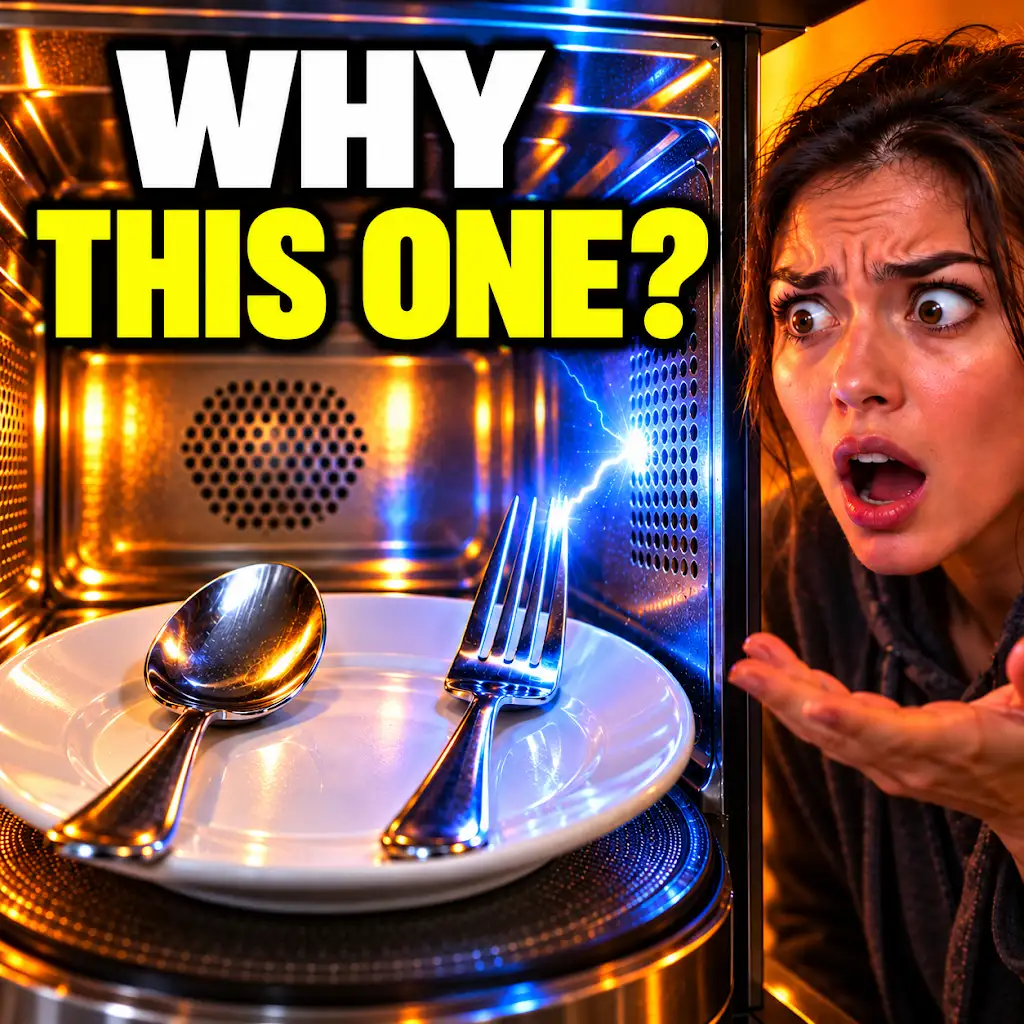
A Fork and a Spoon React Differently in a Microwave. Why?
FAQs
1. How do microwaves heat food?
Microwaves heat food by causing water molecules within the food to vibrate, generating heat. This heat then spreads throughout the food, heating it from the inside out.
2. Do microwaves heat food from the inside out?
Contrary to popular belief, microwaves actually heat food from the outside in. The microwaves penetrate the food and cause the water molecules to vibrate, which then heats the surrounding molecules and continues to spread throughout the food.
3. Can microwaves cook food evenly?
Microwaves can cook food evenly if the food is arranged properly in the microwave-safe container and if it is rotated or stirred during the cooking process. Uneven cooking can occur if the food is not arranged or rotated properly.
4. Are microwaves safe for heating food?
When used according to the manufacturer’s instructions, microwaves are safe for heating food. It is important to use microwave-safe containers and to follow recommended cooking times and power levels to ensure safety.
5. Can microwaves change the nutritional value of food?
Microwaves can alter the nutritional value of food, but so can other cooking methods. Overcooking or cooking at high temperatures can lead to nutrient loss, but microwaving food for short periods of time and with minimal added water can help preserve nutrients.