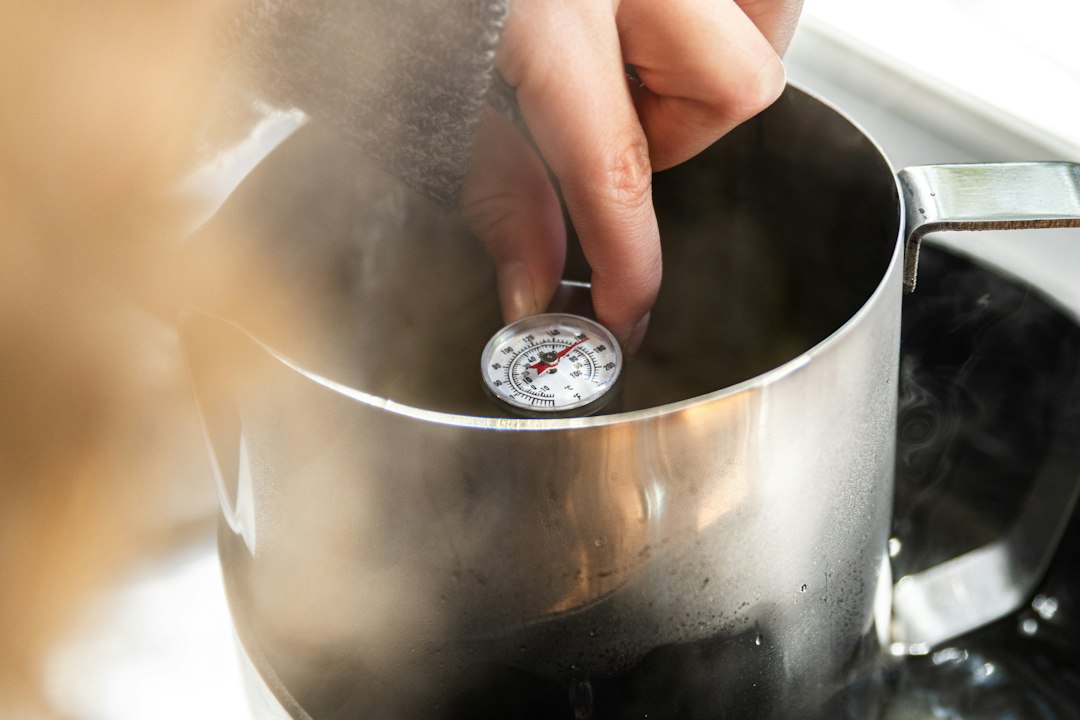
The familiar concept of boiling water often conjures images of a stovetop kettle screaming, steam billowing, and bubbles vigorously rising to the surface. This is the boiling point, a fundamental physical property of liquids. However, this everyday experience is intrinsically linked to a crucial factor that often goes unnoticed: atmospheric pressure. The boiling point, that precise temperature at which a liquid transitions into a gas, is not a fixed constant for any given substance. Instead, it is a dynamic property, intimately and inversely related to the pressure exerted upon the liquid. Understanding this relationship unlocks a deeper appreciation for the behavior of liquids in various environments, from the heights of mountains to the depths of industrial processes.
The Fundamentals of Boiling: A Molecular Dance
To truly grasp how pressure influences boiling, one must first understand the underlying molecular mechanics of the process. Boiling is not simply a matter of heat being applied. It is a phase transition driven by the kinetic energy of molecules within a liquid.
What Happens When a Liquid Boils?
At its core, boiling is the transformation of a liquid into a gas. This transformation occurs when the liquid’s molecules gain enough energy to overcome the intermolecular forces holding them together in the liquid state. These intermolecular forces, such as hydrogen bonds and van der Waals forces, act like invisible tethers, keeping the molecules in close proximity and relatively ordered. When heat is supplied to a liquid, it increases the kinetic energy of these molecules, causing them to move faster and collide more frequently.
As the temperature rises, more and more molecules acquire sufficient energy to break free from these intermolecular attractions. These energetic molecules then escape from the liquid surface, forming vapor. However, boiling is distinct from simple evaporation. Evaporation occurs only at the surface of the liquid, where molecules with sufficient energy can escape into the surrounding atmosphere. Boiling, on the other hand, is a bulk phenomenon. It occurs throughout the entire volume of the liquid when the vapor pressure of the liquid equals the external pressure acting upon it.
Vapor Pressure: The Liquid’s Silent Plea for Freedom
Every liquid possesses a characteristic property called vapor pressure. This is the pressure exerted by the vapor of a liquid in a closed system at a given temperature. Imagine a sealed container partially filled with a liquid. As the liquid molecules gain kinetic energy, some will escape into the space above the liquid, forming vapor. These vapor molecules, in turn, collide with the walls of the container and the surface of the liquid, exerting a pressure. Eventually, the rate at which molecules escape into the vapor phase equals the rate at which vapor molecules condense back into the liquid phase. At this point, a state of dynamic equilibrium is reached, and the pressure exerted by the vapor is its vapor pressure.
Vapor pressure is directly related to temperature. As the temperature of the liquid increases, the kinetic energy of its molecules increases, leading to a greater number of molecules escaping into the vapor phase. Consequently, the vapor pressure of the liquid rises. Think of it as the liquid “pushing back” against its surroundings with increasing force as it gets hotter. This internal “push” is a crucial player in the boiling phenomenon.
Intermolecular Forces: The Molecular Glue
The strength of the intermolecular forces within a liquid plays a significant role in its boiling behavior. Substances with strong intermolecular forces, such as water with its hydrogen bonds, require more energy to overcome these attractions and transition into the gaseous state. This translates to a higher boiling point. Conversely, liquids with weaker intermolecular forces, like diethyl ether, will boil at lower temperatures because their molecules are more easily separated. The strength of these forces determines how much “glue” holds the molecules together, and thus, how much energy is needed to break them apart.
Understanding how boiling point depends on pressure is crucial in various scientific and industrial applications. For a deeper exploration of this topic, you can refer to a related article that discusses the principles of boiling points and their variations under different atmospheric conditions. This article can be found at Freaky Science, where you will find valuable insights into the relationship between pressure and boiling point, along with practical examples and experiments.
The Influence of External Pressure: A Constant Battle
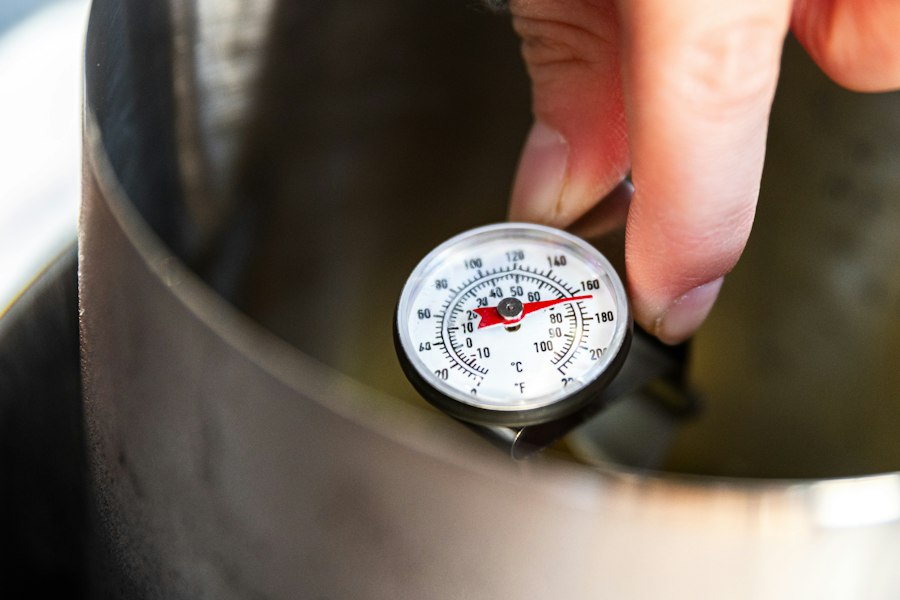
The process of boiling is a delicate balance between the internal pressure exerted by the liquid’s vapor (vapor pressure) and the external pressure pushing down on the liquid’s surface. It is this external pressure that dictates the temperature at which this balance is achieved.
Understanding Atmospheric Pressure
Atmospheric pressure is the force exerted by the weight of the Earth’s atmosphere on everything at the surface. It’s a constant, albeit variable, force that surrounds us. At sea level, standard atmospheric pressure is approximately 1 atmosphere (atm), which is equivalent to about 101,325 Pascals or 760 millimeters of mercury. This pressure acts on the surface of any liquid exposed to the air, effectively pressing down on it. This external pressure resists the tendency of the liquid’s molecules to escape into the gaseous phase.
Pressure and Boiling Point: An Inverse Relationship
The relationship between pressure and boiling point is fundamentally inverse. When the external pressure on a liquid increases, its boiling point also increases. Conversely, when the external pressure decreases, the boiling point of the liquid decreases. This occurs because boiling happens when the liquid’s vapor pressure equals the external pressure.
To boil, the liquid’s vapor pressure must rise to meet the external pressure. If the external pressure is high, the vapor pressure needs to reach a higher value to equal it. Since vapor pressure increases with temperature, a higher external pressure necessitates a higher temperature to achieve boiling. Imagine trying to push open a heavy door. If the door is already partially open (low external pressure), you don’t need to push very hard (low temperature). But if the door is firmly shut (high external pressure), you need to exert a much greater force (higher temperature) to overcome the resistance and open it.
In simpler terms, a higher external pressure “squeezes” the liquid, making it harder for molecules to escape into the vapor phase. Therefore, more energy, and thus a higher temperature, is required to overcome this increased resistance and achieve boiling.
The Role of Vapor Pressure Equality
The critical condition for boiling is when the vapor pressure of the liquid becomes equal to the external pressure. At this point, bubbles of vapor can form not only at the surface but also within the bulk of the liquid, as the internal pressure of the vapor within these bubbles is sufficient to overcome the surrounding liquid pressure and the external pressure. These vapor bubbles rise to the surface and burst, releasing the gaseous substance. If the external pressure is greater than the vapor pressure, any nascent vapor bubbles within the liquid will collapse, as the external pressure will crush them. This prevents boiling from occurring.
Boiling at Different Altitudes: A Mountainous Challenge
The impact of pressure on boiling point is dramatically illustrated when considering different altitudes. As one ascends to higher elevations, the atmospheric pressure decreases significantly.
The Thinning Air at High Altitudes
The air pressure we experience is a result of the weight of the column of air above us. At sea level, this column is at its longest and densest, resulting in the highest atmospheric pressure. As you climb a mountain, the column of air above you becomes shorter and less dense, meaning there are fewer air molecules pressing down. Consequently, atmospheric pressure decreases with increasing altitude. For instance, at the summit of Mount Everest, the atmospheric pressure is roughly one-third of that at sea level.
Water Boils Sooner on a Mountain Top
This reduction in atmospheric pressure at higher altitudes has a direct effect on the boiling point of water. At sea level, water boils at 100° Celsius (212° Fahrenheit) because at this temperature, its vapor pressure reaches standard atmospheric pressure. However, on a mountaintop, where the atmospheric pressure is lower, water will reach its boiling point at a significantly lower temperature.
For example, in Denver, Colorado, which is about a mile above sea level, water boils at approximately 95° Celsius (203° Fahrenheit). At higher altitudes, this boiling point can drop even further. This phenomenon is crucial for cooking at high altitudes. Because water boils at a lower temperature, food will take longer to cook thoroughly, as it is being cooked at a less intense heat. Chefs at high altitudes often need to adjust cooking times and methods, and sometimes use pressure cookers to artificially increase the pressure and thus the boiling point of water, allowing for more efficient cooking.
Implications for Scientific Experiments and Industrial Processes
The effect of altitude on boiling point is not just a culinary curiosity. It has significant implications for scientific experiments and industrial processes that rely on precise temperature control or phase transitions. Many scientific procedures are calibrated at standard atmospheric pressure. If these procedures are carried out at higher altitudes, the lower boiling points can introduce errors or affect the outcomes. Similarly, in industrial settings, where liquids are often heated or vaporized, variations in atmospheric pressure can necessitate adjustments to equipment and operating parameters to maintain consistent results and safety.
Beyond Water: Boiling Points of Other Substances
The principles governing the boiling point of water are universal and apply to all liquids. The specific boiling point at any given pressure is an inherent property of the substance itself, determined by its molecular structure and intermolecular forces.
Different Liquids, Different Boiling Points
Every pure substance has a unique set of intermolecular forces. These forces dictate how much energy is required to transition from a liquid to a gas. For example, ethanol, commonly known as alcohol, has weaker intermolecular forces than water and therefore boils at a lower temperature, around 78.4° Celsius (173.1° Fahrenheit) at standard atmospheric pressure. Acetone, the primary component of nail polish remover, has even weaker intermolecular forces and boils at a mere 56° Celsius (132.8° Fahrenheit). Conversely, substances with very strong intermolecular forces, like mercury, have much higher boiling points, with mercury boiling at 356.7° Celsius (674.1° Fahrenheit).
Pressure Cookers: Manipulating Boiling Points for Efficiency
A prime example of intentionally manipulating boiling points is the use of a pressure cooker. A pressure cooker is a sealed cooking pot that traps steam, increasing the pressure inside. As the pressure inside rises above atmospheric pressure, the boiling point of water within the pot also increases. For instance, a typical pressure cooker can increase the internal pressure to about 2 atmospheres, raising the boiling point of water to around 121° Celsius (250° Fahrenheit). This higher cooking temperature allows food to cook significantly faster, saving time and energy. The steam pressure builds until a safety valve releases excess pressure, preventing the pot from exploding.
Industrial Applications: Distillation and Refining
The relationship between pressure and boiling point is fundamental to many industrial processes, most notably distillation. Distillation is a technique used to separate components of a liquid mixture based on their different boiling points. In fractional distillation, crude oil is heated and vaporized, and the vapors are then passed through a fractionating column. Different hydrocarbons condense at different temperatures within the column, allowing for their separation into various products like gasoline, kerosene, and diesel fuel. The efficiency of this separation is directly influenced by the pressure at which the distillation is carried out. By carefully controlling pressure, refineries can optimize the yield and purity of desired products. This also applies to the production of purified water, solvents, and other chemicals where precise separation is paramount.
The boiling point of a liquid is significantly influenced by the surrounding pressure, a concept that is crucial in various scientific and industrial applications. For a deeper understanding of this relationship, you can explore a related article that discusses how changes in atmospheric pressure affect boiling points. This insightful piece can be found here, where you will discover the implications of pressure variations on boiling liquids and their practical applications in everyday life.
Harnessing the Pressure-Boiling Point Relationship
| Pressure (atm) | Boiling Point of Water (°C) | Explanation |
|---|---|---|
| 0.1 | 45.8 | Lower pressure reduces boiling point |
| 0.5 | 81.3 | Boiling point increases with pressure |
| 1 (Standard Pressure) | 100 | Normal boiling point at sea level |
| 2 | 120.2 | Higher pressure raises boiling point |
| 5 | 151.8 | Significantly higher boiling point |
| 10 | 179.9 | Boiling point increases with pressure |
The inverse relationship between pressure and boiling point is not merely an academic curiosity; it is a principle that is actively harnessed and manipulated in numerous technological and scientific applications. Understanding and controlling this relationship allows for enhanced efficiency, improved safety, and the creation of entirely new processes.
High-Altitude Cooking: Adapting to Lower Pressures
As previously discussed, the reduced atmospheric pressure at high altitudes leads to a lower boiling point for water. This has practical implications for anyone cooking at these elevations. To compensate for the lower boiling temperature, cooks need to adjust their methods. This might involve using longer cooking times for foods like beans or tough cuts of meat. Alternatively, using a pressure cooker can artificially increase the pressure inside the vessel, raising the boiling point of water and allowing food to cook more quickly and effectively, similar to cooking at sea level. Even simple tasks like making pasta require awareness of this phenomenon; pasta might take slightly longer to cook to the desired al dente texture at high altitudes if boiled in an open pot.
Industrial Sterilization: Ensuring Safety Through Pressure
Many industrial processes require the sterilization of equipment or materials using high-temperature steam. Autoclaves, used in medical settings and laboratories, are essentially sophisticated pressure cookers designed for sterilization. By raising the pressure within the autoclave, the boiling point of water is increased, allowing for higher steam temperatures (typically 121°C or 134°C). These high temperatures, combined with the pressure, are highly effective at killing bacteria, viruses, and spores, ensuring the sterility of medical instruments or laboratory cultures. The controlled release of pressure after the sterilization cycle is also a critical safety consideration.
Vacuum Distillation: Lowering Boiling Points for Sensitive Compounds
In some cases, it is desirable to lower the boiling point of a substance rather than raise it. This is particularly true for compounds that are heat-sensitive and can decompose or degrade at their normal boiling points. Vacuum distillation employs this principle. By reducing the pressure within the distillation apparatus, the boiling point of the liquid is significantly lowered. This allows for the distillation and purification of delicate organic compounds, pharmaceuticals, and natural products that would otherwise be destroyed by high temperatures. The creation of a vacuum, whether through vacuum pumps or other methods, is central to achieving these lower boiling points, enabling the separation and purification of a wide range of valuable substances without compromising their integrity. This technique is vital in the pharmaceutical and fine chemical industries.
Water Boiled While Ice Formed. Could a Lander Sink Into It?
FAQs
How does pressure affect the boiling point of a substance?
Increasing pressure raises the boiling point of a substance, as it requires more energy to overcome the higher pressure and change from a liquid to a gas state.
Why does water boil at a lower temperature at higher altitudes?
At higher altitudes, the atmospheric pressure is lower, causing water to boil at a lower temperature because less energy is needed to overcome the reduced pressure.
What is the relationship between boiling point and pressure?
The boiling point of a substance increases with higher pressure and decreases with lower pressure. This relationship is known as the Clausius-Clapeyron equation.
How does the boiling point change when pressure is decreased?
When pressure is decreased, the boiling point of a substance also decreases because less energy is required to convert the substance from a liquid to a gas due to the lower pressure.
Can pressure be used to control the boiling point of a liquid?
Yes, pressure can be used to control the boiling point of a liquid. By adjusting the pressure, the boiling point of a substance can be raised or lowered accordingly.