The Invisible Magic of Staying Cool
You’re probably reading this because you’ve just experienced a sweltering summer day, or perhaps you’re planning for one. The relief that washes over you when you step inside a cool, air-conditioned room is nothing short of magical. But have you ever stopped to wonder, what exactly is this invisible force that tames the heat and transforms your home or office into a sanctuary? It’s not simply blowing cold air; it’s a complex, elegant process orchestrated by a machine that manipulates fundamental principles of thermodynamics. Let’s pull back the curtain and reveal the ingenious science behind how your air conditioner keeps you comfortable when the mercury soars.
Air conditioning systems are essential for maintaining comfort during hot days, as they effectively remove heat and humidity from indoor spaces. For a deeper understanding of the science behind how air conditioning works, you can explore a related article that delves into the principles of thermodynamics and heat transfer. This article provides valuable insights into the mechanisms that allow air conditioning units to cool down our environments efficiently. To read more, visit this article.
The Fundamental Principle: Evaporative Cooling

At its core, air conditioning is all about evaporation. Think about when you step out of a swimming pool on a hot day. The water on your skin feels cool, even if the air temperature is quite high. This is because as the water evaporates, it absorbs heat from your body, a process that cools you down. Air conditioners utilize this same principle, but in a much more controlled and efficient manner, to remove heat from your indoor environment.
Understanding the Refrigerant Cycle
The unsung hero of your air conditioner is a special fluid called a refrigerant. Unlike water, refrigerants are designed to change state from liquid to gas and back again at specific temperatures and pressures. This ability to absorb and release heat during these phase changes is what makes them perfect for cooling. The entire process is a closed loop, meaning the refrigerant continuously circulates through the system, undergoing a series of transformations that ultimately transfer heat from inside your home to the outside.
The Compressor: The Heart of the System
Imagine a pump that compresses a gas. That’s essentially what the compressor does. It’s the powerful engine that drives the entire refrigerant cycle. When the refrigerant arrives at the compressor as a low-pressure, cool gas, the compressor squeezes it. This compression dramatically increases the refrigerant’s pressure and, consequently, its temperature. It becomes a superheated gas, ready to release its absorbed heat. Think of it like squeezing a sponge – you can get more out of it when it’s compressed.
The Condenser: Releasing the Heat Outdoors
The hot, high-pressure refrigerant gas then travels to the outdoor unit of your air conditioner, where the condenser coils are located. These coils are like a radiator for your AC. As the hot refrigerant flows through them, it encounters the cooler outside air, which is blown over the coils by a fan. This temperature difference allows heat to transfer from the refrigerant to the outside air. As the refrigerant loses heat, it begins to cool down and condense back into a high-pressure liquid. This is why you often see warm air blowing out of the outdoor unit – it’s the heat that has been removed from your home.
The Expansion Valve: Preparing for the Chill
Once the refrigerant has condensed into a high-pressure liquid, it flows through an expansion valve (or capillary tube). This is a crucial step. The expansion valve restricts the flow of the liquid refrigerant, causing a sudden drop in its pressure. This pressure drop is what makes the refrigerant extremely cold. Think about how a spray can gets cold when you use it – that’s the refrigerant rapidly expanding and cooling. Now, this very cold, low-pressure liquid refrigerant is ready to absorb heat.
The Evaporator: Absorbing Indoor Heat
The cold, low-pressure liquid refrigerant then enters the indoor unit of your air conditioner, circulating through the evaporator coils. These coils are positioned in the path of the warm air from your home, which is drawn into the AC system by an indoor fan. As this warm air passes over the cold evaporator coils, heat is transferred from the air to the refrigerant. This is where the actual cooling of your indoor space happens. The refrigerant absorbs the heat from the air and begins to evaporate, turning back into a cool, low-pressure gas. The now-cooled air is then blown back into your room, lowering its temperature.
The Role of Air Movement and Filtration

While the refrigerant cycle is the engine that drives the cooling process, air conditioners are also masters of moving and cleaning the air within your home. Without efficient air circulation and filtration, the cooling wouldn’t be as effective, and the air quality would suffer.
The Fans: Circulating the Air
Two sets of fans play critical roles in your air conditioner’s operation. The outdoor fan works in conjunction with the condenser coils to dissipate heat into the outside environment. The indoor fan, often called the blower, is responsible for drawing warm air from your home into the unit, passing it over the cold evaporator coils, and then pushing the cooled air back into your living spaces. The speed and efficiency of these fans directly impact how quickly and evenly your home is cooled. A well-functioning fan ensures that the cooled air reaches all corners of the room, preventing hot spots.
Air Filters: The Guardians of Clean Air
Integrated within the indoor unit are air filters. Their primary purpose is to trap airborne particles such as dust, pollen, pet dander, and other allergens before they are circulated back into your home. As warm air is drawn into the AC, it passes through these filters. This not only helps to keep the evaporator coils clean, ensuring efficient heat transfer, but also significantly improves your indoor air quality. Regular cleaning or replacement of these filters is vital for both the performance of your AC and the health of your family. A clogged filter restricts airflow, making your AC work harder and less effectively, while also allowing more dust and allergens to circulate.
Dehumidification: A Crucial Byproduct of Cooling
One of the often-overlooked benefits of air conditioning is its ability to dehumidify the air. On a hot day, high humidity can make the temperature feel even more oppressive. Air conditioners, through the very process of cooling, inadvertently remove moisture from the air, making you feel more comfortable.
Moisture Condensation on Cold Coils
Remember those cold evaporator coils we discussed? As warm, humid air from your home passes over them, the temperature of the coils drops below the dew point of the air. This causes the moisture in the air to condense on the surface of the coils, much like water droplets forming on a cold glass of iced tea. This condensed water then drips into a collection pan and is typically drained away through a condensate line, either outside your home or into a plumbing drain.
The Impact on Comfort
This removal of moisture has a significant impact on your perceived comfort. High humidity prevents sweat from evaporating efficiently, which is your body’s natural cooling mechanism. By reducing the humidity, your air conditioner allows your sweat to evaporate more readily, making you feel cooler even if the actual temperature hasn’t dropped dramatically. This is why an air-conditioned room often feels “crisp” and refreshing, not just cool.
On hot days, air conditioning systems play a crucial role in maintaining comfort by removing heat and humidity from indoor spaces. This process relies on the principles of thermodynamics and the refrigeration cycle, which effectively cools the air. For a deeper understanding of how these systems function and their impact on our daily lives, you can explore a related article that delves into the science behind air conditioning at Freaky Science.
Beyond Basic Cooling: Advanced Features
| Metric | Description | Relevance to Air Conditioning on Hot Days |
|---|---|---|
| Temperature Difference | Difference between indoor and outdoor temperature | Air conditioners create a cooler indoor environment by removing heat from inside and releasing it outside, making the indoor temperature lower than the hot outdoor temperature. |
| Heat Transfer | Process of moving heat from one place to another | Air conditioners use refrigerants to absorb heat from indoor air and transfer it outside, effectively cooling the indoor space. |
| Refrigerant Cycle | Cycle of evaporation and condensation of refrigerant | The refrigerant evaporates inside the evaporator coil absorbing heat, then condenses outside releasing heat, enabling cooling on hot days. |
| Humidity Control | Reduction of indoor humidity levels | Air conditioners remove moisture from the air, making the indoor environment feel cooler and more comfortable during hot and humid days. |
| Energy Consumption | Amount of electrical energy used by the AC unit | Energy is required to power the compressor and fans that facilitate heat transfer and air circulation, enabling cooling on hot days. |
Modern air conditioners are far more sophisticated than their predecessors. Manufacturers have incorporated a range of advanced features designed to enhance efficiency, improve comfort, and provide greater control over your indoor environment.
Smart Thermostats and Energy Efficiency
The advent of smart thermostats has revolutionized how we interact with our air conditioning systems. These devices learn your habits and preferences, automatically adjusting the temperature to optimize comfort and energy savings. You can control them remotely via your smartphone, allowing you to turn on the AC before you arrive home or adjust the settings while you’re away. This not only saves you money on your energy bills but also reduces your environmental impact. Many smart thermostats also provide detailed energy usage reports, giving you insights into how you can further optimize your cooling.
Variable Speed Compressors and Inverter Technology
One of the most significant advancements in AC efficiency is the introduction of variable speed compressors and inverter technology. Traditional air conditioners operate on an on-off cycle, running at full blast and then shutting off completely. This start-stop process is energy-intensive. Variable speed compressors, on the other hand, can adjust their speed to precisely match the cooling demand. Inverter technology allows the compressor to run continuously at varying speeds, maintaining a more consistent temperature and consuming significantly less energy. This leads to quieter operation, more stable temperatures, and substantial energy savings.
Zoned Cooling for Personalized Comfort
For larger homes or offices, zoned cooling systems offer a way to customize the temperature in different areas independently. Instead of cooling the entire building to the same temperature, you can set specific temperature zones. For example, you might want your bedroom to be cooler at night than your living room during the day. Zoned systems use dampers in the ductwork to control airflow to different areas, allowing you to personalize comfort and further improve energy efficiency by only cooling occupied spaces.
The Environmental Context: A Double-Edged Sword
While air conditioning provides undeniable comfort, it’s important to acknowledge its environmental implications. The energy required to power these systems is substantial, and the refrigerants used, if released into the atmosphere, can have a significant impact on climate change.
Energy Consumption and Carbon Footprint
The widespread use of air conditioning contributes to a significant portion of global electricity consumption. This demand, particularly during peak summer months, can strain power grids and lead to increased reliance on fossil fuels, thereby contributing to greenhouse gas emissions and climate change. As we continue to rely on AC for comfort, finding ways to reduce its energy footprint becomes increasingly important. This includes investing in energy-efficient units, proper insulation for our homes, and considering alternative cooling methods.
Refrigerant Evolution and Environmental Concerns
Historically, older air conditioning systems used refrigerants like chlorofluorocarbons (CFCs) and hydrochlorofluorocarbons (HCFCs), which were found to be harmful to the ozone layer. International agreements like the Montreal Protocol have led to the phasing out of these substances. Modern air conditioners use more environmentally friendly refrigerants, such as hydrofluorocarbons (HFCs) and newer, even lower global warming potential (GWP) options. However, these newer refrigerants still have some impact on climate change if they escape into the atmosphere. Responsible handling, proper maintenance, and prompt repair of leaks are crucial to minimize their environmental impact. The ongoing research and development in refrigerant technology aim to find even more sustainable solutions for cooling our homes.
In conclusion, the seemingly simple act of stepping into a cool room on a hot day is the result of a sophisticated interplay of physics and engineering. From the tireless work of the compressor and the phase changes of the refrigerant to the gentle caress of circulated air and the unseen work of dehumidification, your air conditioner is a marvel of modern technology. As you enjoy the comfort it provides, understanding the science behind it can foster a greater appreciation for its ingenuity and inspire a more mindful approach to its use and its impact on our world.
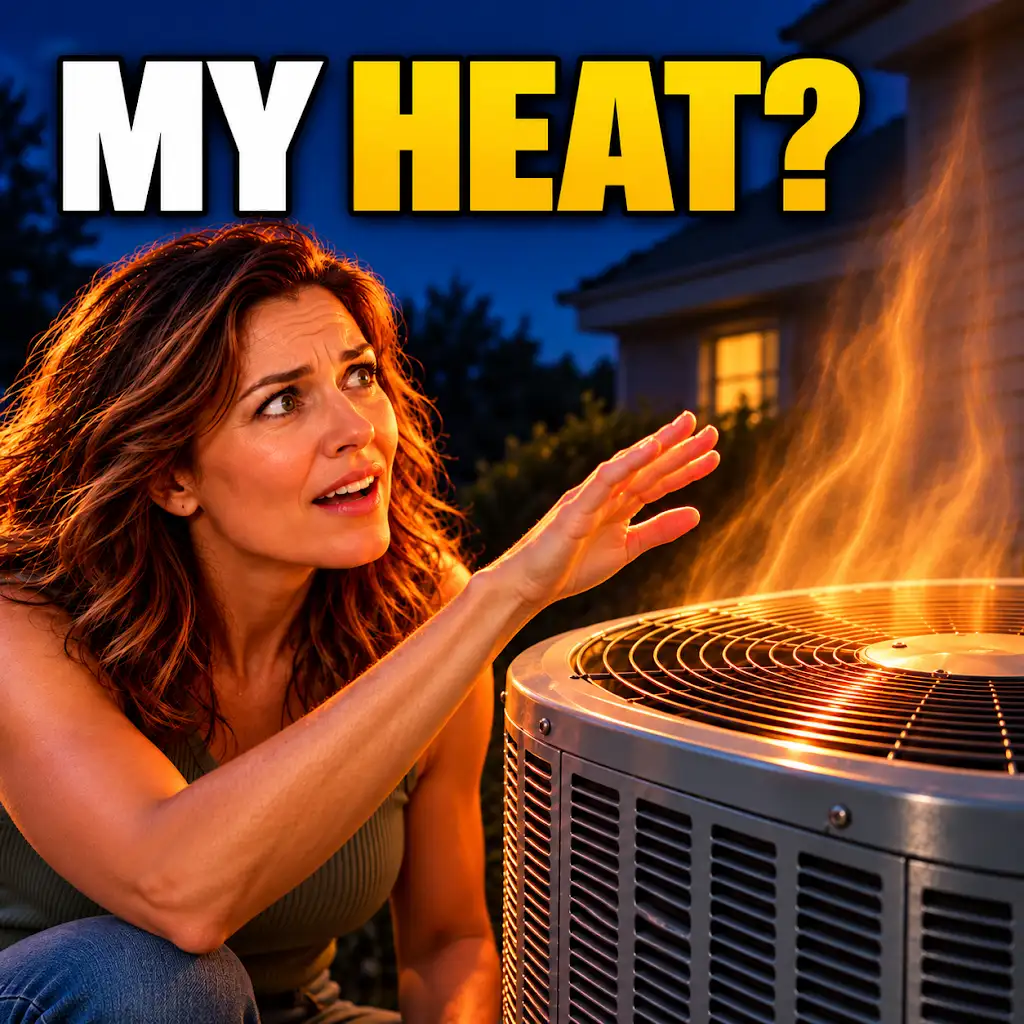
Your AC Blows Hot Air Outside. Is That Heat From Your Room?
FAQs
1. How does air conditioning work on hot days?
Air conditioning works by removing heat and humidity from the air inside a building, cooling it down and circulating it back into the space.
2. What is the role of refrigerant in air conditioning systems on hot days?
Refrigerant is a key component in air conditioning systems as it absorbs and releases heat to cool the air. It circulates through the system, changing from a liquid to a gas and back again to facilitate the cooling process.
3. Why does air conditioning work more efficiently on hot days?
Air conditioning systems work more efficiently on hot days because the temperature difference between the hot outdoor air and the cool air inside the building is greater, allowing the system to cool the air more effectively.
4. How does the thermostat in an air conditioning system help regulate temperature on hot days?
The thermostat in an air conditioning system helps regulate temperature by sensing the temperature of the air inside the building. When the temperature rises above the set point, the thermostat signals the system to turn on and cool the air.
5. What are some tips for maximizing the efficiency of air conditioning on hot days?
To maximize the efficiency of air conditioning on hot days, it is recommended to keep doors and windows closed, use ceiling fans to circulate cool air, set the thermostat to a moderate temperature, and schedule regular maintenance to ensure the system is running smoothly.