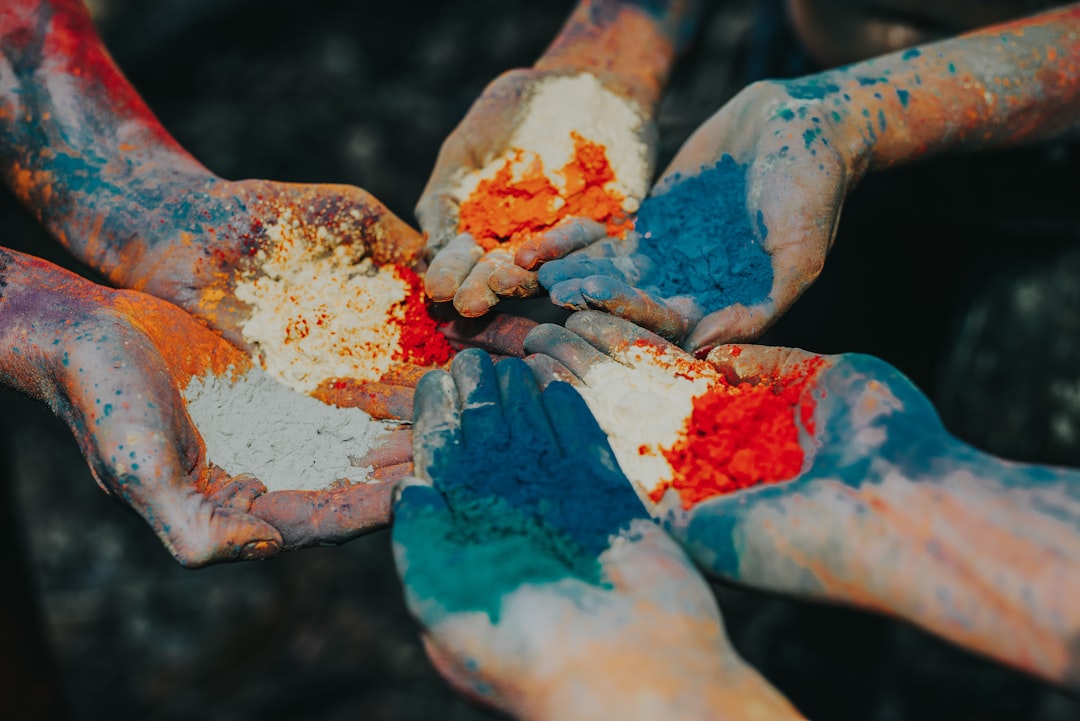
You’re probably familiar with the idea of mixing colors. You might have even played with paints as a child, discovering that blue and yellow create green, or red and yellow make orange. This is what we call subtractive color mixing, and it’s how pigments work. But have you ever wondered how those vibrant, glowing screens of your phone, tablet, or computer produce such a dazzling array of hues? The answer lies in a different, fascinating process: additive color mixing. This is the realm of light, where colors are created not by absorbing wavelengths, but by combining them.
Understanding the Basics: Light as Waves and Particles
Before diving into the specifics of how additive color mixing works, it’s crucial to grasp the fundamental nature of light. You’ve likely learned about light as both a wave and a particle, and both perspectives are relevant here.
Light as an Electromagnetic Wave
From a wave perspective, light is part of the electromagnetic spectrum, characterized by its wavelength. Different wavelengths correspond to different colors.
Visible Light Spectrum: The Rainbow Revealed
The portion of the electromagnetic spectrum that our eyes can perceive is known as visible light. This spectrum ranges from violet, with its shortest wavelengths, to red, with its longest. When white light, which is essentially a mixture of all visible wavelengths, passes through a prism, it refracts and separates into the familiar colors of the rainbow: red, orange, yellow, green, blue, indigo, and violet.
Wavelengths and Perception: Why We See What We See
Your eyes have specialized cells called cones that are sensitive to different ranges of wavelengths. Typically, humans have three types of cones, each most sensitive to red, green, or blue light. Your brain interprets the signals from these cones to perceive a vast spectrum of colors. When you see yellow, for instance, it’s because both your red-sensitive and green-sensitive cones are stimulated.
Light as Photons: Discrete Packets of Energy
As particles, light is composed of tiny packets of energy called photons. Each photon carries a specific amount of energy, which is directly related to its wavelength. This particle nature is less directly involved in the mixing of colors themselves, but it underpins the physical reality of how light interacts with your eyes and displays.
Additive color mixing is a fascinating process that occurs when different colors of light are combined, resulting in the creation of new colors. This principle is fundamental in various applications, including digital screens and stage lighting. For a deeper understanding of how additive color mixing works, you can explore a related article that delves into the science behind this phenomenon. Check it out here: Freaky Science.
The Primaries of Light: Red, Green, and Blue (RGB)
Unlike subtractive color mixing, where the primaries are typically cyan, magenta, and yellow, additive color mixing uses a different set of fundamental colors. These are the primary colors of light: red, green, and blue.
Why Red, Green, and Blue? Your Eyes’ Sensitivity
The choice of red, green, and blue as additive primaries is directly linked to the sensitivity of your eyes. As mentioned earlier, the three types of cones in your retinas are most sensitive to these three color ranges. By manipulating the intensity of red, green, and blue light, you can stimulate these cones in various combinations to create virtually any color you can perceive.
The Power of Three: Building the Spectrum
When you combine these three primary colors of light in different proportions and intensities, you can generate a vast spectrum of secondary and tertiary colors.
Secondary Colors: The First Level of Combination
When you mix two primary colors of light in equal, maximum intensity, you create the secondary colors of additive mixing:
- Red + Green = Yellow: This is why yellow light appears to your eyes when both red and green receptors are stimulated.
- Red + Blue = Magenta: Combining red and blue light stimulates both red and blue cones, resulting in the perception of magenta.
- Green + Blue = Cyan: When green and blue light combine, they activate your green and blue cone cells, leading to the perception of cyan.
Tertiary Colors and Beyond: A World of Hues
By varying the intensity of each primary color, you can create an infinite number of colors. Imagine dimming the red light in a red and green mix; you’d get a less vibrant yellow, perhaps an orangey-yellow. Similarly, mixing all three primaries at maximum intensity results in white light.
The Magic of White: When All Lights Converge
One of the most striking aspects of additive color mixing is how it produces white. This is in stark contrast to subtractive mixing, where mixing all pigments would result in black or a muddy brown.
Illuminating the Concept: Adding Light Creates Brightness
In additive mixing, you are essentially adding photons of different wavelengths together. When you combine red, green, and blue light at their full intensity, you are delivering a broad spectrum of light to your eyes that your brain interprets as white. Think of it as a symphony of light, where each primary color plays its part, and when all play at their peak, the result is pure brilliance.
The CIE Chromaticity Diagram: Mapping the Visible Spectrum
Scientists use tools like the CIE chromaticity diagram to visually represent the entire range of human color perception. Within this diagram, white light sits at the center, and the areas surrounding it represent the colors that can be produced by mixing. The RGB primaries form a triangle within this diagram, and any color within that triangle can theoretically be generated by mixing the RGB primaries.
Illuminating Devices: How Screens Work
This principle is fundamental to how almost all modern electronic displays work.
Pixels: The Tiny Color Creators
Your phone, TV, and computer screens are made up of millions of tiny elements called pixels. Each pixel is typically composed of three smaller sub-pixels: one red, one green, and one blue. By controlling the intensity of the light emitted by each of these sub-pixels, the display can create a specific color for that pixel.
Controlling Brightness: From Dark to Dazzling
The intensity of each sub-pixel is controlled by an electrical signal. A higher signal means more light is emitted, and a lower signal means less light. By precisely modulating these signals, your device can generate millions of different colors on your screen, creating the vibrant images you see.
####### Analog vs. Digital Control: The Nuances of Intensity
Historically, displays used analog control for sub-pixel intensity, offering a continuous range. Modern displays predominantly use digital control, employing techniques like Pulse Width Modulation (PWM) to simulate varying intensities by rapidly switching the sub-pixels on and off. While this is highly effective, some individuals can perceive the rapid flickering, particularly in lower-end displays.
The Black Hole Effect: Achieving True Black
Achieving a perfect black on an emissive display like an OLED screen is a fascinating aspect of additive color mixing. When a pixel needs to display black, all of its R, G, and B sub-pixels are turned off, meaning they emit no light. This results in an absence of light, which our eyes perceive as black. In contrast, on LCD screens, which use a backlight that is always on, “black” is achieved by blocking as much of the backlight as possible, which can still allow some light to pass through, resulting in a darker shade of gray rather than true black.
The Absence of Color: Black in the Realm of Light
In additive color mixing, black is not a color you mix. Instead, it’s the absence of light.
The Void of Photons: No Light, No Color
When you are in complete darkness, there are no photons of light reaching your eyes, and therefore you perceive nothing – blackness.
The “Off” State: Where Black Truly Lives
On a screen employing additive color mixing, black is achieved by turning off all the light-emitting elements (the R, G, and B sub-pixels). This is why OLED screens, which have individual pixel control, can achieve incredibly deep blacks, as each pixel can be completely turned off.
Additive color mixing is a fascinating process that occurs when different colors of light are combined, resulting in a new color. This principle is fundamental in various fields, including photography, television, and digital displays. For a deeper understanding of how this process works, you can explore a related article that delves into the science behind color mixing and its applications in everyday life. To learn more, check out this insightful piece on Freaky Science.
Beyond the Primaries: Exploring the Color Wheel of Light
The relationships between the primary and secondary colors in additive mixing can be visualized on a color wheel, similar to the one you might have seen for pigments, but with different arrangements and outcomes.
The Additive Color Wheel: A Luminous Harmony
On an additive color wheel, the primary colors (red, green, blue) are typically placed equidistant from each other. The secondary colors (cyan, magenta, yellow) are then located between their constituent primaries.
Understanding Complementary Colors: Creating Neutrality
In additive color mixing, complementary colors are pairs of colors that, when combined at equal intensity, produce white light. These are different from subtractive complementary colors.
- Red and Cyan: Red light is the complement of cyan light. If you shine red light and cyan light onto the same surface, the result will be white.
- Green and Magenta: Green light is the complement of magenta light. Combining them produces white.
- Blue and Yellow: Blue light is the complement of yellow light. Their combination results in white.
The “Cancellation” Effect: Neutralizing Light
The concept of complementary colors in additive mixing is about creating a neutral or white light. It’s not about “canceling” each other out in the way pigments might muddy each other, but rather about providing all the wavelengths necessary for white perception.
Practical Applications: Where You Encounter Additive Color
Additive color mixing is not just a theoretical concept; it’s all around you, powering the visual experiences of your daily life.
Display Technologies: The Pillars of Modern Visuals
As we’ve discussed, the screens you interact with are the most prominent examples of additive color mixing in action.
Cathode Ray Tubes (CRTs): The Ancestors of Modern Displays
Even older CRT televisions and monitors utilized additive color principles. They used electron beams to excite phosphors coated on the screen, which glowed in red, green, or blue when struck. By varying the intensity of these electron beams, different colors were produced.
Liquid Crystal Displays (LCDs): Backlit Brilliance
LCDs, while employing a backlight that is always on, still rely on additive color principles for their color generation. Each pixel in an LCD is comprised of red, green, and blue filters. The backlight’s white light passes through these filters, and the intensity of the light transmitted through each color filter is controlled by liquid crystals, effectively mixing the colors additively.
Light-Emitting Diodes (LEDs) and OLEDs: The Future of Light
LED and OLED displays are prime examples of true additive color mixing. Each sub-pixel is a tiny light source that can be individually controlled for both color and intensity, leading to vibrant colors and deep blacks.
Quantum Dots: Enhancing Color Purity
Quantum dot technology, often found in high-end LED and OLED displays, further refines additive color mixing by using semiconductor nanocrystals that emit very pure, specific wavelengths of light when excited. This leads to a wider color gamut and more accurate color reproduction.
Stage Lighting and Theatrical Effects: Painting with Light
The world of theater and live performances relies heavily on additive color mixing to create mood, atmosphere, and visual storytelling.
Lighting Consoles: Orchestrating Color
Stage lighting designers use sophisticated lighting consoles to control a multitude of intelligent lights. These lights often have dichroic filters or LEDs that can produce red, green, and blue light. By mixing these colors, designers can wash a stage in any conceivable hue.
Color Temperature and Mood: The Psychology of Light
Beyond specific colors, the ability to adjust the “temperature” of light (from warm, reddish hues to cool, bluish ones) is also a form of additive color manipulation, influencing the emotional response of the audience.
Digital Photography and Image Editing: Manipulating Pixels of Light
When you edit photos on your computer or phone, you are often working with the fundamental principles of additive color.
Adjusting RGB Values: Fine-Tuning Your Vision
Image editing software allows you to directly adjust the red, green, and blue values of pixels. This gives you precise control over the color balance, saturation, and brightness of your images, all based on the additive color model.
Color Spaces: Standardizing Color Representation
Various color spaces, such as sRGB and Adobe RGB, are used in digital imaging to standardize how colors are represented and displayed. These color spaces are all based on the RGB additive color model, ensuring that what you see on your screen is as close as possible to the intended colors.
Distinguishing Additive from Subtractive Color: A Crucial Difference
It’s vital to keep the principles of additive and subtractive color mixing distinct, as they are fundamentally different processes with opposing outcomes.
Mixing Light vs. Mixing Pigments: The Core Distinction
In additive mixing, you are combining sources of light, and the resulting color is brighter than the individual components. In subtractive mixing, you are combining pigments that absorb certain wavelengths of light, and the resulting color is darker as more wavelengths are absorbed.
The “How” and the “Why”: Understanding the Mechanisms
Additive mixing works by stimulating your cone cells with different wavelengths of light. Subtractive mixing works by pigments reflecting specific wavelengths of light and absorbing others.
The Opposite Ends of the Spectrum: White vs. Black
The most striking difference is how white and black are achieved. Additive mixing results in white when all primary lights are combined, and black is the absence of light. Subtractive mixing results in black when all primary pigments are combined (ideally), and white is typically represented by the absence of pigment or the color of the substrate.
You’ve now explored the fascinating world of additive color mixing, understanding how combining red, green, and blue light can create the vibrant spectrum of colors that illuminates your digital life and beyond. From the smallest pixel on your screen to the grandest stage lighting, the principles of light combinations are at play, shaping the way you perceive and interact with the world around you.

Why Your Brain Had to Invent Magenta
FAQs

What is additive color mixing?
Additive color mixing is the process of creating new colors by combining different wavelengths of light. This is commonly used in electronic displays such as televisions, computer monitors, and LED screens.
How does additive color mixing work?
Additive color mixing works by combining different colors of light in varying intensities. The primary colors used in additive color mixing are red, green, and blue. When these colors are combined at different intensities, they create a wide range of colors.
What are the primary colors used in additive color mixing?
The primary colors used in additive color mixing are red, green, and blue. These colors are used because they correspond to the three types of cone cells in the human eye, allowing for a wide range of color perception.
What are some examples of additive color mixing in everyday life?
Additive color mixing is commonly seen in electronic displays such as televisions, computer monitors, and LED screens. Additionally, stage lighting and color-changing LED lights also utilize additive color mixing to create a wide range of colors.
How is additive color mixing different from subtractive color mixing?
Additive color mixing involves combining different colors of light to create new colors, while subtractive color mixing involves combining different pigments or dyes to absorb certain wavelengths of light and reflect others. Subtractive color mixing is commonly used in printing and painting.