
The hum of electricity powering modern life is a constant companion, often taken for granted. However, this intricate web of energy delivery, a marvel of human engineering, is not impervious to the whims of the cosmos. Solar storms, once primarily a concern for astronauts and satellite operators, are increasingly recognized as a potent threat to the terrestrial infrastructure that underpins our society, particularly its high voltage power lines. The very forces that paint mesmerizing auroras across the night sky possess the potential to unleash chaos upon our electrical grids.
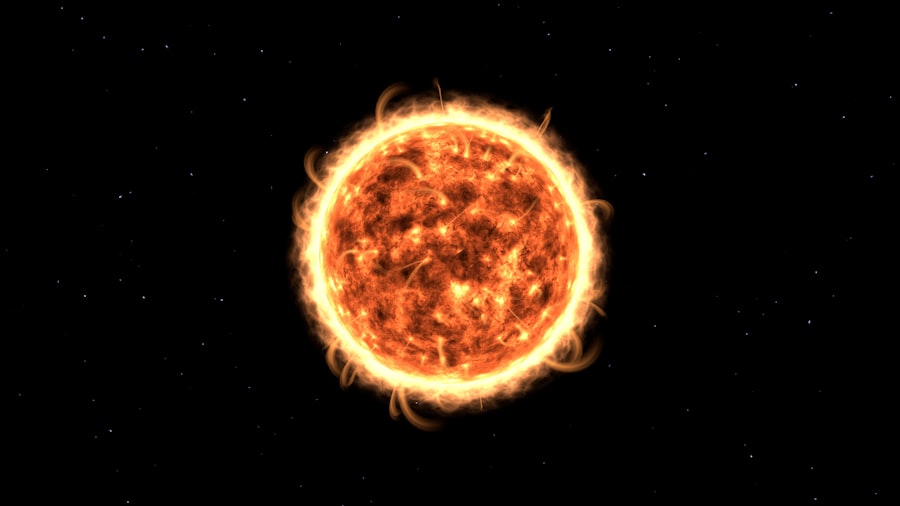
The Sun, our life-giving star, is not a static ball of light. It is a dynamic entity, constantly engaged in a complex dance of magnetic activity. This activity can manifest in powerful bursts of energy and charged particles that are ejected into space. Understanding these phenomena is the first step in appreciating their potential impact on Earth’s intricate electrical network. Think of the Sun as a cauldron, simmering with immense energy, and solar storms as the explosive eruptions that can occur when the lid is not held perfectly in place.
Coronal Mass Ejections (CMEs)
Among the most significant threats posed by solar storms are Coronal Mass Ejections (CMEs). These are massive expulsions of plasma and magnetic field from the Sun’s corona. CMEs can travel at speeds of hundreds or even thousands of kilometers per second, carrying with them billions of tons of solar material. When a CME is directed towards Earth, it becomes a significant driver of geomagnetism. Its passage through interplanetary space is like a colossal wave of plasma, carrying with it a powerful magnetic field that can interact with Earth’s own magnetic shield.
Solar Flares
Solar flares are sudden, intense bursts of radiation from the Sun’s surface. While often occurring in conjunction with CMEs, they are distinct phenomena. Solar flares release electromagnetic radiation across the spectrum, from radio waves to X-rays and gamma rays. The radiation travels at the speed of light, reaching Earth in about eight minutes. While the immediate impact of solar flares is primarily on radio communication and satellite operations, the energetic particles they sometimes produce can also contribute to the overall threat to electrical grids when combined with other solar storm components.
Solar Energetic Particles (SEPs)
Solar Energetic Particles (SEPs) are high-energy subatomic particles, primarily protons and electrons, that are accelerated to near-light speeds during solar flares and CMEs. These particles are a direct hazard to astronauts and can penetrate spacecraft shielding. When SEPs bombard Earth’s atmosphere, they can ionize atmospheric gases, affecting radio propagation and creating secondary particles that can reach the ground. Their arrival can be like a hail of invisible bullets, bombarding our atmosphere.
Recent studies have highlighted the potential risks that solar storms pose to high voltage power lines, emphasizing the need for improved infrastructure resilience. For a deeper understanding of this topic, you can read a related article that discusses the implications of solar activity on electrical grids and the measures being taken to mitigate these risks. To learn more, visit Freaky Science.
The Invisible Threat: Geomagnetically Induced Currents (GICs)
When a solar storm’s charged particles and magnetic fields interact with Earth’s magnetosphere, they can trigger a cascade of effects that ultimately endanger our power lines. The primary mechanism of concern for ground-based infrastructure is the generation of Geomagnetically Induced Currents (GICs). These are not currents generated by the solar storm directly flowing through the wires, but rather currents induced within conductive pathways on Earth’s surface by the rapidly varying magnetic fields associated with the storm. Imagine Earth’s magnetic field as a giant, invisible conductor. When this conductor is suddenly and violently disturbed by a solar storm, it can induce currents in other nearby conductive paths, such as long stretches of power lines.
The Earth’s Magnetic Field as a Conductor
Earth’s magnetic field acts as a protective shield, deflecting most of the harmful solar particles. However, during a powerful solar storm, this shield can be intensely buffeted. The rapid fluctuations in the geomagnetic field create an oscillating magnetic environment. According to Faraday’s law of induction, a changing magnetic field passing through a conductor will induce an electromotive force, and thus a current, within that conductor. Long, linear conductors like high voltage power lines, especially those that span vast distances, are particularly susceptible to this phenomenon. They effectively become antennas, picking up the induced currents.
Power Lines as Accidental Antennas
The immense lengths of high voltage power transmission lines, often stretching for hundreds or even thousands of kilometers, make them ideal conduits for GICs. These lines are essentially giant, unintentional antennas resonating with the Earth’s disturbed magnetic field. The induced currents flow along these lines, seeking the path of least resistance and often congregating at substations, where they can interact with electrical equipment. The sheer scale of the power grid means it becomes a vast network of potential GIC pathways, susceptible to disruption.
The Role of Earth’s Conductivity
The conductivity of the Earth’s crust also plays a role in the magnitude of GICs. In regions with high ground conductivity, the induced currents can be more readily dissipated, potentially reducing their impact on power lines. Conversely, in areas with lower ground conductivity, the induced currents may be channeled more directly into the metallic conductors of the power grid. The composition of the soil and subsurface geology essentially dictates how efficiently the induced currents can “leak” into the ground, leaving the power lines to bear the brunt of the charge.
Cascading Failures: The Impact on the Grid
The arrival of GICs into the power grid is not a simple, localized event. It can set off a chain reaction of problems that can lead to widespread and prolonged outages, posing a significant risk to the stability of the entire electrical system. The complex interconnectedness of the grid means that a problem in one area can quickly ripple outwards, affecting others. Think of a single domino falling and triggering a cascade of its brethren to topple in sequence, each impacting the next.
Transformer Saturation and Damage
The primary vulnerability of the power grid to GICs lies in its transformers. These are the workhorses that step voltage up and down to efficiently transmit electricity over long distances and deliver it to consumers. When GICs flow through a transformer, they introduce a direct current (DC) component to the alternating current (AC) waveform. This DC bias can push the transformer’s magnetic core into saturation, meaning it becomes unable to efficiently carry the magnetic flux. This saturation leads to several detrimental effects.
Overheating and Insulation Breakdown
Transformer saturation causes increased heating due to higher core losses. This excess heat can degrade the insulation within the transformer, a critical component that prevents short circuits. Over time, this insulation breakdown can lead to catastrophic failure, rendering the transformer inoperable. It’s akin to pushing a car’s engine beyond its limits for an extended period; the sustained strain eventually leads to mechanical failure.
Protective Relay Malfunctions
The introduction of DC current can also interfere with the sensitive protective relays that are designed to detect faults and isolate problematic sections of the grid. These relays may misinterpret the GIC-induced conditions as actual faults, leading them to trip circuit breakers unnecessarily and disconnect healthy parts of the grid. This can exacerbate the problem by reducing the grid’s resilience and ability to reroute power.
Voltage Instability and Blackouts
The cumulative effect of transformer damage and relay malfunctions can lead to widespread voltage instability across the grid. As transformers struggle to operate under these conditions, their ability to maintain stable voltage levels diminishes. This voltage sag can affect the operation of other electrical equipment, leading to cascading failures. If the voltage drops below critical thresholds, the grid can become unstable and collapse, resulting in a widespread blackout, leaving millions without power. The interconnectedness is such that a failure to maintain voltage in one region can affect the entire system’s balance.
Mitigating the Cosmic Threat: Strategies for Resilience
The recognition of the threat posed by solar storms to high voltage power lines has spurred efforts to develop strategies for mitigating these risks and enhancing the resilience of our electrical infrastructure. These efforts involve a multi-pronged approach, encompassing monitoring, protection, and operational adjustments. Preparing for these events is akin to a nation preparing for a natural disaster; it requires forecasting, preventative measures, and response plans.
Geomagnetic Storm Forecasting and Early Warning Systems
Accurate forecasting of solar activity is crucial for effective mitigation. Space weather agencies around the world monitor the Sun for signs of impending solar storms, such as flares and CMEs. Advanced satellite-based instruments and ground-based observatories provide real-time data on solar activity.
Real-time Solar Activity Monitoring
Continuous observation of the Sun’s surface and corona allows scientists to identify and track active regions that are prone to producing flares and CMEs. This monitoring is like having a comprehensive weather forecast for space, allowing grid operators to anticipate potential disturbances.
Geomagnetic Field Prediction Models
Sophisticated computer models are used to predict how solar storm energy and magnetic fields will interact with Earth’s magnetosphere and how these disturbances will translate into GICs on the ground. These models help estimate the intensity and duration of potential GIC events.
Grid Hardening and Equipment Upgrades
Beyond monitoring and prediction, significant efforts are being made to “harden” the electrical grid against the effects of GICs. This involves upgrading existing equipment and implementing new technologies to make the grid more resistant to these electrical surges.
Installation of GIC Blocking Devices
Capacitor banks and series capacitors can be installed at strategic points within the grid to block or mitigate the flow of DC current associated with GICs. These devices act as filters, preventing the damaging DC bias from reaching sensitive components.
Transformer Design Improvements
Transformer manufacturers are developing designs that are more resistant to the effects of GICs. This includes using higher-grade materials, optimizing core designs to increase saturation thresholds, and incorporating improved cooling systems to dissipate excess heat.
Operational Procedures and Load Shedding
In addition to physical hardening, grid operators can implement specific operational procedures to manage the risks associated with solar storms. These procedures aim to minimize the impact of GICs and prevent cascading failures.
Controlled Load Shedding
During a predicted or ongoing geomagnetic storm, grid operators may implement controlled load shedding, deliberately disconnecting power to non-essential customers. This reduces the overall electrical load on the grid, making it less susceptible to voltage collapse and allowing operators to maintain power to critical infrastructure.
Real-time Grid Management and Power Rerouting
Advanced grid management systems allow operators to monitor the flow of GICs in real-time and make instantaneous adjustments. This includes rerouting power to avoid areas experiencing high GIC levels or to bypass potentially overloaded equipment.
Recent studies have highlighted the potential risks that solar storms pose to high voltage power lines, emphasizing the need for improved infrastructure resilience. A related article discusses the implications of these solar events on electrical grids and offers insights into protective measures that can be implemented. For more information, you can read the full article here. Understanding these risks is crucial for ensuring the stability of our power systems in the face of natural phenomena.
The Future of Grid Resilience: Space Weather and Beyond
| Metric | Description | Typical Range | Impact on High Voltage Power Lines |
|---|---|---|---|
| Geomagnetic Induced Current (GIC) (Amps) | Electric currents induced in power lines due to geomagnetic storms | 0 – 1000 A | High GIC can cause transformer saturation and damage |
| Geomagnetic Storm Intensity (Kp Index) | Scale measuring geomagnetic activity from 0 (quiet) to 9 (extreme) | 0 – 9 | Kp ≥ 7 indicates strong storms that increase risk to power grids |
| Transformer Heating (°C increase) | Temperature rise in transformers due to GIC-induced losses | 0 – 50°C | Excessive heating can reduce transformer lifespan or cause failure |
| Voltage Fluctuation (%) | Variation in voltage levels caused by geomagnetic disturbances | 0 – 20% | Voltage instability can lead to equipment malfunction or outages |
| Frequency of Solar Storms (per year) | Number of significant solar storms impacting Earth annually | 5 – 20 | Higher frequency increases cumulative risk to power infrastructure |
| Recovery Time (hours) | Time required to restore normal operation after a solar storm event | 1 – 72 hours | Longer recovery times indicate more severe grid impact |
The increasing awareness of the threat posed by solar storms to high voltage power lines is driving innovation and a greater focus on space weather resilience. As our reliance on electricity grows and our energy infrastructure becomes more complex, understanding and preparing for these cosmic events is paramount. The ongoing research and development in this field are not just about protecting the lights from flickering; they are about safeguarding the very foundations of our modern society in an increasingly interconnected world.
Interdisciplinary Research and Collaboration
Addressing the challenge of space weather impacts requires collaboration between space physicists, electrical engineers, geologists, and meteorologists. This interdisciplinary approach is essential for developing comprehensive solutions that consider the entire chain of events from solar activity to grid response.
Investment in Research and Development
Continued investment in research and development is crucial for advancing our understanding of solar storms and their effects on terrestrial infrastructure. This includes developing more accurate space weather models, improving GIC prediction techniques, and creating more robust and resilient grid technologies.
International Cooperation and Information Sharing
Space weather is a global phenomenon, and its impacts transcend national borders. International cooperation and the sharing of data and best practices are essential for developing effective global strategies to mitigate the risks of solar storms. This collective effort ensures that lessons learned in one part of the world can benefit others.
In conclusion, the majestic dance of particles and magnetic fields emanating from our Sun, while responsible for celestial beauty, also presents a tangible and growing threat to the very arteries of our civilization: the high voltage power lines. The subtle yet powerful force of geomagnetically induced currents has the potential to unravel the intricate tapestry of our electrical grid, leading to widespread disruption. However, through a combination of vigilant monitoring, technological innovation, and strategic operational planning, humanity is increasingly capable of building a more resilient grid, one that can weather the cosmic storms and continue to illuminate our world.
FAQs
What is a solar storm and how does it affect high voltage power lines?
A solar storm, also known as a geomagnetic storm, is a disturbance in Earth’s magnetosphere caused by solar wind and solar flares from the sun. These storms can induce strong electric currents in high voltage power lines, potentially damaging transformers and other electrical infrastructure.
Why are high voltage power lines particularly vulnerable to solar storms?
High voltage power lines cover long distances and are exposed to Earth’s magnetic field. During a solar storm, geomagnetically induced currents (GICs) can flow through these lines, causing overheating, equipment failure, and voltage instability in the power grid.
What are the potential consequences of solar storm damage to power grids?
Damage from solar storms can lead to widespread power outages, equipment damage, costly repairs, and disruptions to critical services. In severe cases, recovery can take days to weeks, affecting millions of people and essential infrastructure.
How can power companies mitigate the risks posed by solar storms?
Power companies can implement monitoring systems to detect geomagnetic activity, install protective devices like neutral ground resistors, improve transformer design, and develop operational procedures to reduce load or temporarily shut down vulnerable equipment during solar storms.
Are solar storms predictable, and can power grids be prepared in advance?
Solar storms can be partially predicted using space weather forecasting tools that monitor solar activity. While exact timing and intensity are difficult to forecast, early warnings allow grid operators to take precautionary measures to minimize damage and maintain grid stability.