Geoelectric fields, naturally occurring electrical currents within the Earth, have long been a subject of scientific inquiry, particularly concerning their interaction with technological infrastructures. While historically viewed as a potential disruptor for power grids, their intrinsic characteristics offer a less explored, yet promising, avenue for optimizing electrical transmission. This article delves into the potential of harnessing geoelectric fields to enhance the efficiency and resilience of power lines, moving beyond traditional perspectives to consider these natural phenomena as a resource rather than solely a hazard.
Geoelectric fields, often referred to as telluric currents, are electric fields present in the Earth’s subsurface. These currents are a fundamental aspect of terrestrial electromagnetism, generated by a confluence of natural processes. Understanding their origins and behavior is paramount to developing strategies for their beneficial integration into power transmission.
Sources of Geoelectric Activity
The primary drivers of geoelectric fields are external to Earth’s internal processes, though internal geological structures significantly modulate their propagation.
- Solar Wind and Geomagnetic Activity: The most potent and dynamic source of geoelectric fields originates from interactions between the solar wind and Earth’s magnetosphere. Solar flares and coronal mass ejections (CMEs) propagate high-energy particles towards Earth. Upon encountering the magnetosphere, these particles induce rapid fluctuations in the geomagnetic field. These fluctuations, in turn, induce telluric currents within the Earth’s conductive subsurface. This phenomenon is particularly pronounced during geomagnetic storms, leading to what are known as geomagnetically induced currents (GICs).
- Lightning Strikes: While localized, intense lightning strikes can generate transient geoelectric fields through ground conduction. These events are short-lived but can induce significant localized current surges.
- Oceanic Dynamo Effects: The movement of large volumes of electrically conductive seawater through Earth’s magnetic field also generates weak geoelectric fields. These are typically less energetic and more spatially diffused than those induced by solar activity.
- Geothermal and Hydrothermal Activity: In regions with active geothermal or hydrothermal systems, the movement of heated, mineralized fluids can create localized electric potential differences, contributing to the ambient geoelectric field.
Characteristics and Variability
Geoelectric fields exhibit significant variability across spatial and temporal scales, a crucial factor in their potential utilization.
- Spatial Distribution: The magnitude and direction of geoelectric fields vary considerably depending on underlying geological conductivity. Sedimentary basins, with their higher conductivity, tend to exhibit stronger induced currents compared to resistive crystalline bedrock. Geological discontinuities, such as faults and tectonic plate boundaries, can also locally concentrate or distort electric fields.
- Temporal Dynamics: Geoelectric fields fluctuate continuously. Diurnal variations are observed due to solar radiation patterns and ionospheric currents. Longer-period variations correlate with the solar cycle, with increased activity during solar maxima. Geomagnetic storms represent transient, high-amplitude events that can persist for hours or days.
- Frequency Spectrum: The induced geoelectric fields span a wide frequency range, from extremely low frequencies (ELF) associated with long-period geomagnetic pulsations to higher frequencies linked to short-period events. This spectral diversity influences their interaction with different components of the electrical grid.
Geoelectric field induction in transmission lines is a critical topic in understanding how natural electric fields can influence the performance and safety of power systems. For a deeper exploration of this subject, you can refer to a related article that discusses the implications of geoelectric phenomena on transmission infrastructure. This article provides insights into the challenges faced by engineers and the methods employed to mitigate potential risks. To read more, visit this link.
The Challenge of Geomagnetically Induced Currents (GICs)
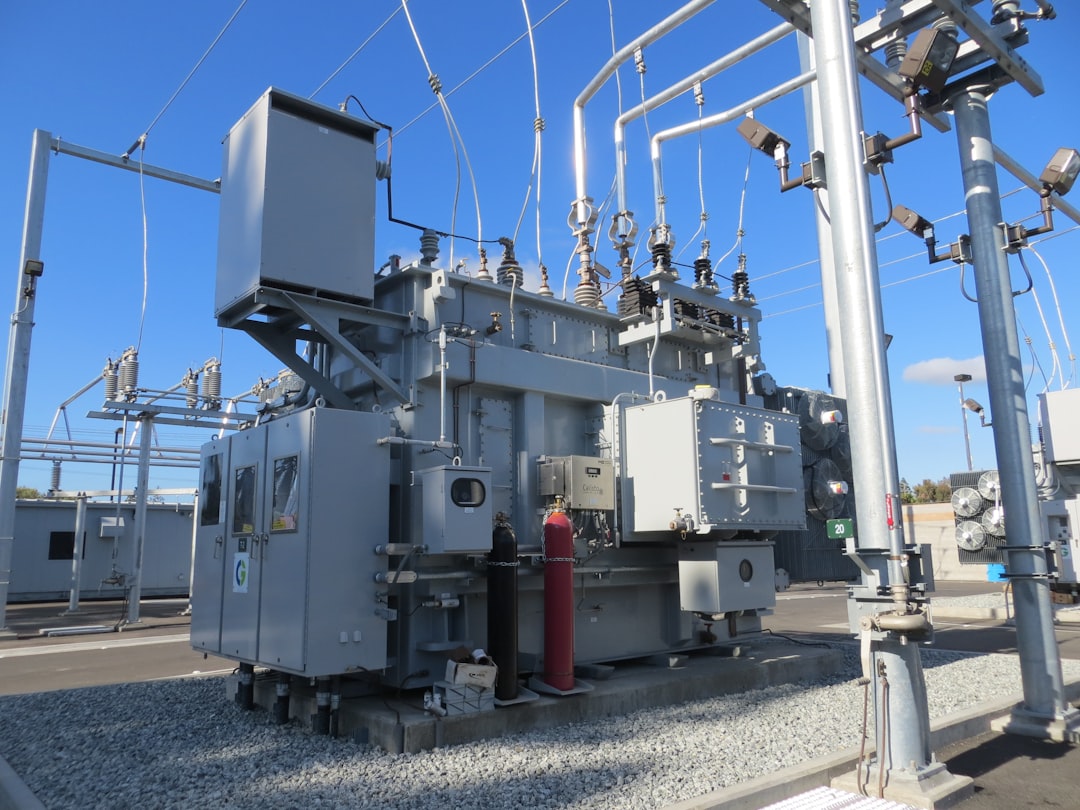
Historically, interest in geoelectric fields from the power industry has largely focused on mitigating the adverse effects of GICs. These induced currents, flowing through grounded neutral points of transformers, can lead to widespread power outages and equipment damage. Understanding the mechanisms of GIC inductance is a prerequisite for any proposal to leverage geoelectric phenomena.
Mechanism of GIC Induction
When geomagnetic field variations induce geoelectric fields at the Earth’s surface, these fields drive electric currents through the Earth. Power transformers, with their hundreds of kilometers of transmission lines acting as extended conductors, provide a low-resistance path for these currents to enter the grid.
- Electric Field Interaction with Transmission Lines: The geoelectric field exerts a force on free charges within the transmission lines. Since transmission lines are grounded at substations, a potential difference can develop between different grounding points. This potential difference drives GICs.
- Transformer Saturation: GICs, being quasi-DC currents, can saturate the magnetic cores of transformers. This saturation leads to increased reactive power consumption, harmonic distortion, and localized heating, potentially causing equipment damage or complete failure.
- Cascading Failures: During severe geomagnetic storms, widespread transformer saturation can lead to voltage instability across the grid, potentially triggering protective relays and causing cascading power blackouts, as witnessed during the 1989 Quebec power outage.
Shifting Perspective: From Hazard to Resource
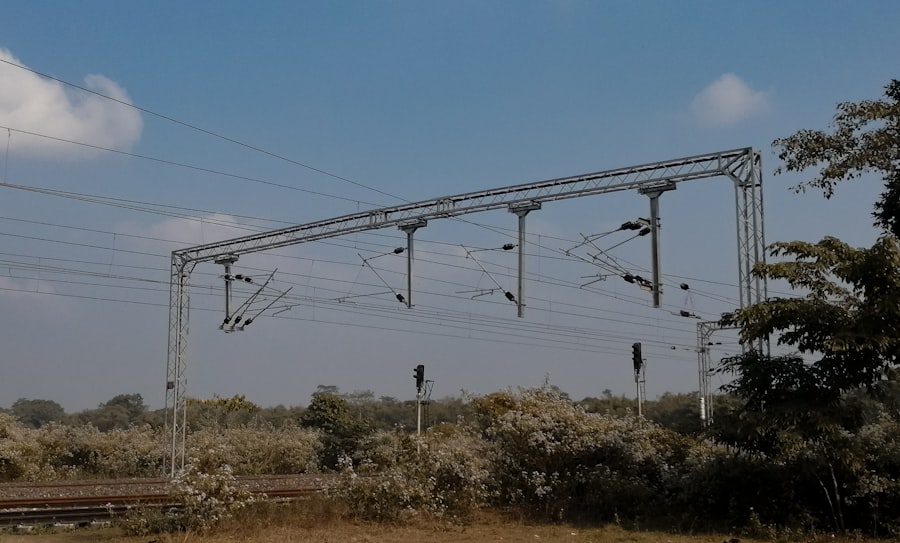
The conventional approach views geoelectric fields as a solely disruptive force to be guarded against. However, a re-evaluation suggests that their inherent electrical energy, if strategically managed, could be harnessed or integrated into grid operations. This paradigm shift requires innovative engineering solutions and a deeper understanding of geoelectric-grid interactions.
The Analogy of the Sailboat
Consider a sailboat navigating against a strong current. This current represents the potential impedance of geoelectric fields. Traditionally, the focus has been on designing a hull that minimizes drag, effectively resisting the current. However, if the sailboat could deploy a “hydro-foil” that strategically interacts with the current, it might convert a portion of that resistance into forward propulsion. Similarly, rather than simply resisting GICs, the opportunity exists to design grid components that can “surf” or “channel” these natural currents for benefit.
Historical Precedents and Natural Energy Harvesting
The concept of harnessing ambient electromagnetic energy is not entirely novel. Radio frequency (RF) energy harvesting, for instance, captures stray electromagnetic waves to power low-power devices. While GICs are orders of magnitude more powerful, the underlying principle of converting ambient energy into usable electricity remains relevant. The Earth itself acts as a massive, albeit diffuse, battery, constantly being charged and discharged by solar activity.
Conceptual Frameworks for Geoelectric Energy Integration
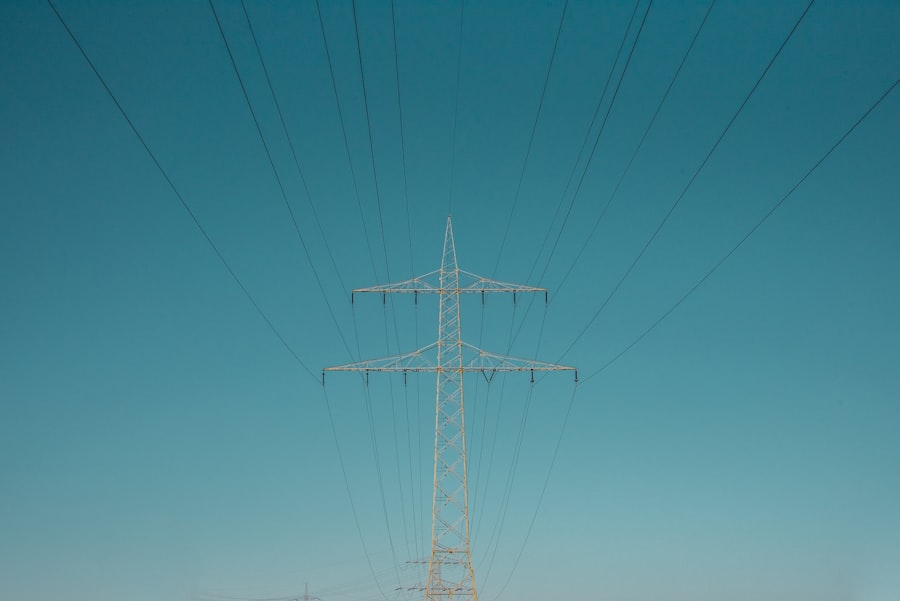
Integrating geoelectric fields for grid efficiency presents a multifaceted engineering challenge. It necessitates advanced sensing, predictive modeling, and innovative materials science. Several conceptual frameworks can guide this exploration.
Intelligent Geoelectric Routing (IGR)
One approach involves actively monitoring and predicting geoelectric field patterns to dynamically route power more efficiently.
- Real-time Geoelectric Mapping: Deploying a network of magnetotelluric sensors across critical transmission corridors could provide real-time, high-resolution maps of geoelectric field magnitude and direction.
- Predictive Modeling of GICs: Advances in space weather forecasting and geomagnetic field modeling can predict GIC magnitudes and locations hours or even days in advance. This foresight allows for proactive grid management.
- Dynamic Grid Reconfiguration: With real-time data and predictive models, grid operators could dynamically adjust power flows, leverage alternative transmission paths, or temporarily reduce load on segments experiencing adverse GIC effects (resistance-heavy areas) while simultaneously optimizing routes that might align with beneficial current flows (inductance-light areas). This is akin to a river navigator choosing the path of least resistance or even a current-assisted route.
Geoelectric-Assisted Power Flow (GAPF)
This concept moves beyond passive mitigation to active utilization, envisioning transmission lines explicitly designed to interact with and potentially utilize geoelectric fields.
- Inductive Coupling Enhancement: Research could explore materials and geometries that enhance the inductive coupling between geoelectric fields and transmission lines, but in a controlled and beneficial manner. This is not about directly injecting GICs into the main power flow, but rather using the induced electric potential to reduce the effective impedance for forward power transmission.
- Geoelectric “Diode” Technologies: Imagine a device that allows GICs to pass through in one direction (for external grounding/dissipation) but harnesses the potential difference created by the geoelectric field to reduce the voltage drop along a parallel transmission line. This would require highly novel semiconductor or superconducting materials capable of discriminating between the induced quasi-DC and the AC power frequency.
- Distributed Geoelectric Batteries: In regions with consistently strong, albeit fluctuating, geoelectric fields, localized, robust battery storage systems could be strategically placed near grounded points. These batteries could “absorb” a portion of the induced geoelectric potential during strong events and then discharge this stored energy back into the local grid at a controlled rate, essentially buffering the system.
Geoelectric field induction in transmission lines is a fascinating topic that explores how natural electric fields can influence the operation of power systems. For those interested in a deeper understanding of this phenomenon, a related article can be found at Freaky Science, which discusses the implications of geoelectric fields on electrical infrastructure and the measures that can be taken to mitigate potential issues. This resource provides valuable insights into the intersection of geology and electrical engineering, making it a worthwhile read for professionals and enthusiasts alike.
Technological Enablers and Research Directions
| Parameter | Unit | Description | Typical Range / Value |
|---|---|---|---|
| Geoelectric Field Strength | V/km | Electric field induced on the Earth’s surface during geomagnetic disturbances | 0.1 – 10 |
| Induced Voltage on Transmission Line | kV | Voltage induced along the transmission line due to geoelectric field | 0 – 100 |
| Transmission Line Length | km | Length of the power transmission line affected by induction | 50 – 1000 |
| Ground Resistivity | Ohm-m | Electrical resistivity of the ground beneath the transmission line | 10 – 1000 |
| Geomagnetic Disturbance Frequency | Hz | Frequency range of geomagnetic variations causing induction | 0.001 – 1 |
| Induced Current | A | Current induced in the transmission line due to geoelectric field | 0 – 500 |
| Line Configuration | N/A | Physical arrangement of conductors affecting induction magnitude | Single-circuit, Double-circuit |
| Earth Return Path Resistance | Ohm | Resistance of the earth return path for induced currents | 1 – 50 |
Realizing the potential of geoelectric fields requires advancements across several scientific and engineering disciplines.
Advanced Sensor Technologies
- Miniaturized Magnetotelluric Arrays: Developing more compact, cost-effective, and robust magnetotelluric (MT) sensors for widespread deployment would be crucial for dense geoelectric mapping. These sensors need to operate reliably in diverse environmental conditions.
- Integrated Sensing and Communication: Low-latency communication networks capable of transmitting vast amounts of geoelectric data to central processing units for real-time analysis and grid command and control are essential.
Smart Grid Integration
- Artificial Intelligence and Machine Learning: AI algorithms can analyze complex geoelectric data in conjunction with grid operational parameters to identify optimal strategies for routing, load balancing, and potential energy harvesting. Machine learning can also refine predictive models for geomagnetic storms.
- Adaptive Protection Schemes: Current grid protection systems are often designed with static thresholds. Future systems could incorporate adaptive protection schemes that dynamically adjust their sensitivity based on real-time geoelectric field conditions, preventing false trips while ensuring equipment safety.
Materials Science Innovations
- High-Temperature Superconductors (HTS): HTS wires offer near-zero resistance for AC power transmission, which is beneficial. Furthermore, their superconducting properties could be exploited in novel ways to interact with quasi-DC geoelectric fields, perhaps by creating “magnetic shields” that redirect or focus induced potentials.
- Novel Semiconductor Devices: Research into specialized semiconductors that can efficiently convert or channel low-frequency, high-voltage induced potentials from geoelectric fields into usable grid power would be transformative. This is akin to designing a rectifier specifically for the unique characteristics of telluric currents.
Challenges and Considerations for Implementation
While the concept holds promise, numerous challenges must be addressed before geoelectric field harnessing becomes a viable grid solution.
Economic Viability
The capital expenditure for deploying the necessary sensing networks, advanced control systems, and potentially new transmission line technologies would be substantial. A clear economic case, demonstrating significant returns on investment through enhanced efficiency, reduced maintenance costs, and improved resilience, would be essential.
System Complexity and Reliability
Integrating a new, highly variable energy source (or influence) into an already complex power grid introduces additional layers of complexity. Rigorous testing and validation would be required to ensure the proposed solutions do not introduce new vulnerabilities or reduce overall grid reliability.
Environmental and Geological Diversity
The effectiveness of geoelectric harnessing strategies will vary significantly based on local geology and susceptibility to geomagnetic storms. Solutions must be adaptable to a wide range of environmental and geological conditions. A “one-size-fits-all” approach is unlikely to be effective.
Regulatory and Policy Frameworks
Integrating geoelectric fields into power grid operations would likely require new regulatory frameworks and policy incentives to encourage research, development, and deployment of these innovative technologies. International collaboration would also be beneficial given the global nature of space weather.
Conclusion
The Earth’s geoelectric fields, far from being solely a nuisance, represent a vast, often overlooked, natural energy phenomenon. By shifting our perspective from one of pure mitigation to one of strategic utilization, the power industry could unlock novel pathways to enhance transmission efficiency and grid resilience. This necessitates a concerted global effort in research and development, bridging the disciplines of space physics, geology, electrical engineering, and materials science. While significant challenges lie ahead, the prospect of transforming the Earth’s subtle electrical pulse into a harnessed resource for our power grids is a compelling vision for a more sustainable and resilient energy future. The journey from resisting the current to strategically sailing with it has the potential to redefine our relationship with the planet’s fundamental electromagnetic forces.
FAQs
What is a geoelectric field?
A geoelectric field is an electric field induced in the Earth’s surface due to natural phenomena such as geomagnetic storms caused by solar activity. These fields can vary in strength and duration depending on the intensity of the geomagnetic disturbance.
How do geoelectric fields affect transmission lines?
Geoelectric fields can induce currents, known as geomagnetically induced currents (GICs), in long conductive structures like transmission lines. These currents can cause transformer saturation, overheating, and potential damage to electrical grid components.
What causes geoelectric field induction in transmission lines?
The primary cause is the interaction between the Earth’s magnetic field and solar wind during geomagnetic storms. Rapid changes in the geomagnetic field induce electric fields on the Earth’s surface, which in turn induce currents in conductive infrastructure such as transmission lines.
How can the impact of geoelectric fields on transmission lines be mitigated?
Mitigation strategies include installing monitoring systems to detect GICs, using transformer designs resistant to saturation, implementing operational procedures during geomagnetic storms, and designing grid infrastructure to minimize the flow of induced currents.
Why is it important to study geoelectric field induction in transmission lines?
Understanding geoelectric field induction is crucial for maintaining the reliability and safety of power grids. It helps prevent equipment damage, power outages, and ensures the stability of electrical supply during geomagnetic disturbances.