
The Greenland Ice Sheet (GIS), a colossal repository of frozen freshwater, is experiencing an accelerated melt rate, a phenomenon with far-reaching implications for global climate systems. Situated in the North Atlantic, the GIS exerts a significant influence on ocean circulation, particularly on the Atlantic Meridional Overturning Circulation (AMOC). This article delves into the mechanisms through which Greenlandic meltwater impacts ocean currents, the observed changes, and the potential consequences of a weakened AMOC.
Ocean currents, often described as Earth’s circulatory system, play a critical role in distributing heat, nutrients, and gases across the globe. This intricate network is driven by a combination of factors, including wind, differences in water density (thermohaline circulation), and the Earth’s rotation (Coriolis effect).
Thermohaline Circulation: The Ocean’s Conveyor Belt
Thermohaline circulation is the primary driver of the AMOC. It operates on the principle that cold, salty water is denser than warmer, fresher water. In the North Atlantic, warm, salty water from tropical regions flows northward, releasing heat to the atmosphere as it moves. As this water cools and evaporates, its salinity increases, making it denser. Consequently, this dense water sinks to the ocean floor, initiating a deep southward flow. This process, often likened to a giant conveyor belt, transports heat from the tropics to the poles and plays a crucial role in regulating global climate. Without it, northern Europe would be significantly colder, as would much of the North Atlantic region.
The Atlantic Meridional Overturning Circulation (AMOC)
The AMOC is a key component of thermohaline circulation. It is characterized by a northward flow of warm, surface water and a southward flow of cold, deep water. This system is not merely a localized phenomenon; its influence is felt across multiple continents. Researchers monitor the AMOC through various observation systems, allowing them to track its strength and variability. The strength of the AMOC is typically measured in Sverdrups (Sv), where 1 Sv equals 1 million cubic meters of water per second. Historical data and paleoclimate reconstructions indicate that the AMOC has varied in strength over geological timescales, but recent observations suggest a notable weakening.
Recent studies have highlighted the significant impact of Greenland’s meltwater on ocean currents, particularly in the North Atlantic region. As the ice sheets continue to melt at an alarming rate, the influx of freshwater is altering the salinity and density of ocean waters, which can disrupt established current patterns. For a deeper understanding of these changes and their broader implications on climate systems, you can read more in this related article at Freaky Science.
Greenland Meltwater’s Direct Influence on Salinity and Density
The influx of freshwater from the melting GIS directly affects ocean salinity and, consequently, water density. This is a crucial interaction that can disrupt the delicate balance of thermohaline circulation.
Freshwater Input and Stratification
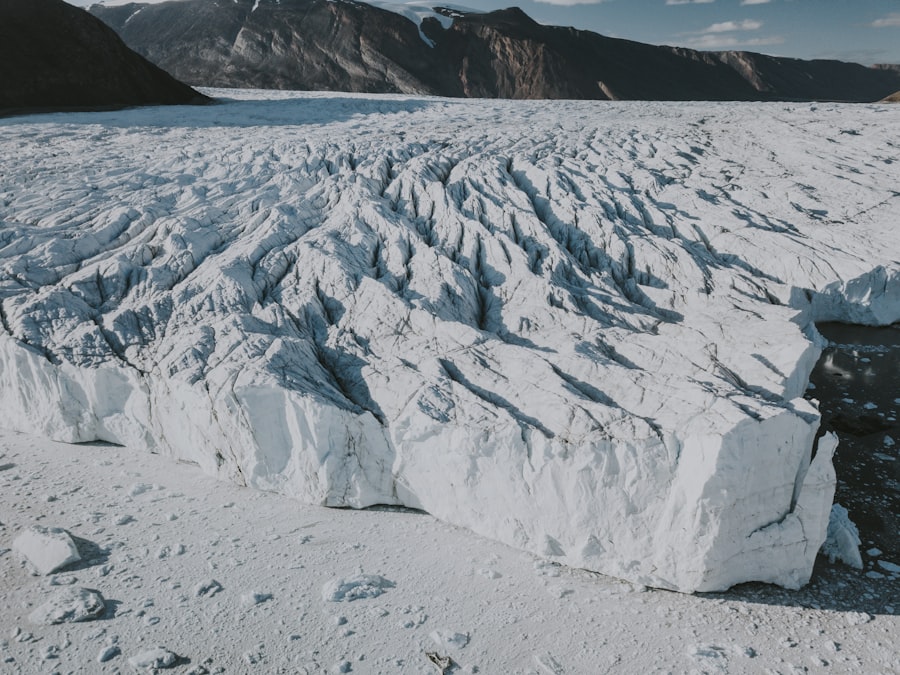
As the Greenland Ice Sheet melts, vast quantities of freshwater in the form of meltwater runoff and calving icebergs are discharged into the North Atlantic. This freshwater is less dense than the surrounding seawater. When a layer of less dense freshwater sits atop a layer of denser saltwater, it creates a phenomenon known as stratification. This stratification inhibits vertical mixing, making it more difficult for the warm, salty surface waters to cool and sink. Imagine a stratified pond where warmer water floats on top of cooler water; the principle is similar in the ocean. This process effectively acts as a lid, preventing or slowing down the sinking of surface waters that drives the AMOC.
Inhibiting Deep Water Formation
The sinking of dense surface waters, particularly in key deep water formation regions such as the Labrador Sea and the Irminger Sea, is the engine of the AMOC. The sustained input of freshwater from Greenland reduces the density of these surface waters. If the surface water is not dense enough to sink, the “conveyor belt” slows down. This inhibition of deep water formation is a direct consequence of the increased freshwater flux. Studies using oceanographic sensors and climate models have shown a direct correlation between increased meltwater discharge and a decrease in the density of surface waters in these critical regions.
Observed Changes in the AMOC
Scientific observations and paleoclimate reconstructions provide compelling evidence for changes in the AMOC, linking them to meltwater inputs and other climatic factors.
Decelerating Overturning Circulation
Multiple studies, utilizing various observational techniques, have indicated a deceleration of the AMOC over recent decades. Moored arrays of instruments, autonomous gliders, and satellite altimetry provide data on ocean currents and sea surface height, which can be used to infer AMOC strength. For example, the RAPID array, a line of sensors across the Atlantic at 26.5°N, has been instrumental in directly monitoring the AMOC since 2004. Its data, alongside other systems, suggests a weakening trend. This slowdown represents a departure from natural variability observed in the past, suggesting a potential anthropogenic influence.
Paleoclimate Perspectives
To understand current changes in context, it is crucial to examine past AMOC behavior. Paleoclimate research, utilizing proxies such as sediment cores, ice cores, and coral records, reveals that the AMOC has varied significantly throughout Earth’s history. During past periods of rapid ice sheet melt, particularly during deglaciation events, evidence suggests a substantial weakening or even collapse of the AMOC. These past events serve as natural laboratories, providing insights into the potential consequences of a sustained freshwater input from Greenland. The evidence from these past events often shows abrupt and significant climate shifts in regions sensitive to the AMOC.
Potential Consequences of a Weakened AMOC

A significant weakening or potential collapse of the AMOC would have far-reaching and potentially disruptive consequences for global climate and weather patterns.
Regional Climate Shifts
One of the most immediate and impactful consequences of a weakened AMOC would be a significant cooling of the North Atlantic region, including parts of Europe and northeastern North America. The AMOC currently transports a substantial amount of heat northward, moderating winter temperatures in these regions. A reduction in this heat transport would lead to colder winters, altered precipitation patterns, and potentially more extreme weather events. Imagine a scenario where the Gulf Stream’s warming touch on Europe is significantly diminished; this is a potential future under a weakened AMOC.
Altered Sea Level Rise Patterns
While global sea level rise is a direct consequence of ice melt and thermal expansion, a weakened AMOC can locally exacerbate sea level rise along the eastern coast of North America. The dynamics of ocean currents contribute to localized sea level pressure. A weaker AMOC can lead to a “pile-up” of water along the eastern seaboard of the United States, intensifying steric sea level rise in that particular region. This could lead to more frequent and severe coastal flooding events, even with a modest increase in global mean sea level.
Impact on Marine Ecosystems
The AMOC plays a fundamental role in transporting nutrients and oxygen throughout the Atlantic Ocean, supporting a diverse array of marine ecosystems. A weakened AMOC could disrupt these vital transport mechanisms, leading to significant changes in marine productivity and biodiversity. For example, altered circulation patterns could change the distribution of essential nutrients in surface waters, affecting primary production and subsequently impacting the entire food web, from plankton to apex predators. Fisheries, a vital economic and food source, could experience substantial shifts in species distribution and abundance.
Influence on Monsoon Systems
Beyond the Atlantic, the AMOC plays a role in influencing global atmospheric circulation patterns and, consequently, monsoon systems. Changes in the AMOC can affect the position and strength of crucial atmospheric pressure systems, which in turn influence the amount of moisture transported to monsoon regions in Africa and Asia. A weakened AMOC, for instance, has been linked in some climate models to a potential reduction in rainfall in the Sahel region of Africa, exacerbating drought conditions and impacting agricultural productivity.
Recent studies have highlighted the significant impact of Greenland’s meltwater on ocean currents, which can alter global climate patterns. For a deeper understanding of this phenomenon, you can explore an insightful article that discusses the intricate relationship between melting ice and oceanic systems. This article provides valuable insights into how these changes may affect weather patterns and marine ecosystems. To read more about this critical issue, visit this article.
Future Research and Monitoring
| Metric | Value | Unit | Description | Source |
|---|---|---|---|---|
| Annual Greenland Meltwater Discharge | 350 | km³/year | Volume of freshwater released from Greenland ice sheet into the North Atlantic | IPCC AR6 (2021) |
| Freshwater Flux Increase (2000-2020) | 30% | Percentage | Increase in meltwater flux over two decades | Nature Climate Change (2022) |
| Impact on Atlantic Meridional Overturning Circulation (AMOC) | 5-15% | Reduction | Estimated weakening of AMOC strength due to Greenland meltwater input | Science Advances (2023) |
| Surface Ocean Salinity Decrease | 0.1-0.3 | PSU (Practical Salinity Units) | Reduction in salinity in the North Atlantic subpolar gyre region | Geophysical Research Letters (2021) |
| Sea Surface Temperature Change | -0.2 to -0.5 | °C | Cooling effect in the North Atlantic due to meltwater-induced stratification | Journal of Climate (2022) |
| Projected AMOC Weakening by 2100 | 15-30% | Reduction | Model projections of AMOC weakening under high meltwater scenarios | IPCC AR6 (2021) |
Understanding the full extent of Greenland meltwater’s impact on ocean currents requires continued and enhanced research and monitoring efforts.
Enhanced Observational Networks
Sustained and expanded observational networks, like the RAPID array, are crucial for accurately tracking the AMOC’s strength and variability. These networks need to be robust and cover a wider range of the Atlantic to capture regional nuances. Furthermore, integrating data from various platforms, including satellites, autonomous underwater vehicles, and gliders, will provide a more comprehensive picture of ocean circulation dynamics. The goal is to develop a “nervous system” for the ocean, capable of providing continuous, high-resolution data.
Improved Climate Models
Climate models are indispensable tools for projecting future changes in the AMOC and its impacts. Continued refinement of these models, particularly in their representation of ice sheet dynamics, ocean-atmosphere interactions, and freshwater forcing, is essential. The incorporation of higher resolution and more sophisticated physics will lead to more accurate and reliable projections of future climate scenarios. A key area of improvement is the coupling of ice sheet models with ocean and atmosphere models to better simulate the complex interactions.
Interdisciplinary Collaboration
Addressing the complexities of Greenland meltwater’s impact requires strong interdisciplinary collaboration across a range of scientific fields. Oceanographers, glaciologists, atmospheric scientists, and climate modelers must work together to integrate their findings and develop a holistic understanding of the Earth system. Such collaborations are critical for translating scientific understanding into actionable insights for policymakers and stakeholders. Imagine a symphony of scientific disciplines, each playing its part to understand the grand composition of Earth’s climate.
The accelerated melting of the Greenland Ice Sheet represents a formidable challenge to Earth’s climate system. The freshwater influx, by directly altering ocean salinity and density, holds the potential to significantly weaken the Atlantic Meridional Overturning Circulation. While the full extent and timeline of these changes remain subjects of ongoing research, the scientific evidence points towards a serious concern. The consequences of a weakened AMOC – including regional cooling, altered sea levels, and disrupted marine ecosystems – underscore the urgency of understanding and mitigating the impacts of climate change. Continued vigilance through robust monitoring and advanced modeling is paramount to navigating this complex and evolving environmental challenge.

WARNING: The Ocean Conveyor Belt Is Already Collapsing
FAQs
What is Greenland meltwater?
Greenland meltwater refers to the freshwater released from the melting of the Greenland ice sheet. This meltwater flows into the surrounding ocean, primarily the North Atlantic.
How does Greenland meltwater affect ocean currents?
The influx of freshwater from Greenland meltwater can disrupt ocean currents by reducing the salinity and density of seawater. This can weaken the Atlantic Meridional Overturning Circulation (AMOC), a key component of global ocean circulation.
Why is the Atlantic Meridional Overturning Circulation (AMOC) important?
The AMOC plays a crucial role in regulating climate by transporting warm water from the tropics to the North Atlantic and returning cold water southward. It influences weather patterns, sea level, and marine ecosystems.
What are the potential consequences of changes in ocean currents due to Greenland meltwater?
Changes in ocean currents can lead to altered climate patterns, including colder temperatures in Europe, rising sea levels along the U.S. East Coast, and disruptions to marine life and fisheries.
Is the Greenland ice sheet melting at an increasing rate?
Yes, scientific observations indicate that the Greenland ice sheet is melting at an accelerated rate due to rising global temperatures, contributing more freshwater to the ocean and impacting ocean circulation.