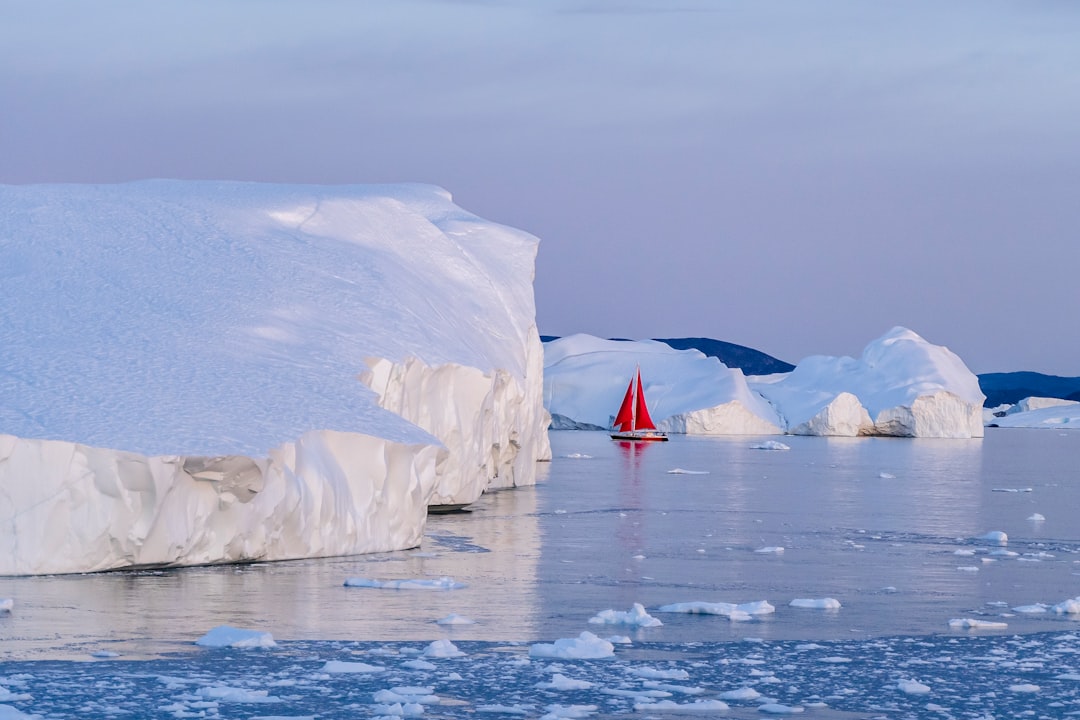
The Greenland Ice Sheet, a colossal frozen expanse covering over 80% of the island, is not merely a static repository of ice. It is a dynamic system, intricately linked to global oceanographic and atmospheric processes. One of the most significant, yet often understated, impacts of its melting is the introduction of freshwater into the North Atlantic. This influx, often referred to as “freshwater forcing,” acts as a powerful disruptor, capable of altering ocean circulation patterns and, by extension, global climate. Understanding this phenomenon is paramount to grasping the full ramifications of Arctic amplification and the future trajectory of our planet’s climate.
The Greenland Ice Sheet is a vast reservoir of frozen precipitation accumulated over millennia. However, rising global temperatures are accelerating its melt rate, transforming this icy titan into an increasingly potent source of freshwater. Gigatons of meltwater, once locked away in ice, are now being discharged into the surrounding ocean, a process that can be likened to opening a massive spigot, albeit one that has been slowly and steadily increasing its flow.
The Cryosphere’s Contribution: Beyond Simple Melting
While surface melting is a primary driver of freshwater input, it is crucial to acknowledge the multifaceted nature of ice sheet mass loss. This includes not only the direct thaw of glacial ice but also the increased calving of icebergs from outlet glaciers.
Surface Meltwater Runoff: The Dripping Roof
The most visible aspect of freshwater forcing is the surface meltwater runoff. As Arctic air temperatures rise, the Greenland Ice Sheet experiences increased melt across its surface. This meltwater percolates downwards through the ice, eventually reaching the bedrock and flowing towards the ocean. Imagine a vast, ancient stone building with an ever-expanding network of cracks and channels allowing rainwater to seep through; this is a simplified analogy for the journey of meltwater from the ice sheet’s surface to the sea.
Calving and Iceberg Production: Breaking Chunks from the Whole
Beyond surface melt, the Greenland Ice Sheet sheds significant mass through the calving of icebergs. Outlet glaciers, the fast-flowing rivers of ice connecting the interior of the ice sheet to the coast, terminate in the ocean. Here, the forces of buoyancy and tidal action, combined with oceanic warming at their grounding lines, can cause large sections of ice to break off and drift away as icebergs. Each iceberg, a frozen testament to the ice sheet’s former glory, is a massive chunk of freshwater released into the marine environment.
Subglacial Meltwater: The Hidden Undercut
A less visible, but equally important, component of freshwater forcing is the meltwater generated beneath the ice sheet. Geothermal heat from the Earth’s interior and frictional heating from the ice’s movement contribute to melting at the ice-bed interface. This subglacial meltwater can form vast subglacial lakes and rivers, eventually finding pathways to the ocean. This hidden drainage system acts like a subterranean engine, pumping freshwater from beneath the ice, further contributing to the overall meltwater discharge.
Recent studies have highlighted the significant impact of the Greenland Ice Sheet’s freshwater forcing on global sea levels and ocean circulation patterns. For a deeper understanding of this critical issue, you can explore the article titled “The Role of Greenland’s Melting Ice in Climate Change” available at this link. This article delves into the mechanisms by which the melting ice contributes to changes in ocean salinity and temperature, ultimately influencing climate systems worldwide.
The Oceanographic Arena: A Delicate Equilibrium Disrupted
The North Atlantic Ocean is a finely tuned system, particularly sensitive to changes in salinity and temperature. The influx of massive quantities of freshwater, which is less dense and saltier than seawater, acts like a wedge, disrupting the established patterns of oceanic circulation. This disruption has far-reaching consequences for heat distribution and nutrient cycling.
The Atlantic Meridional Overturning Circulation (AMOC): The Global Conveyor Belt
At the heart of North Atlantic oceanography lies the Atlantic Meridional Overturning Circulation (AMOC). This vast system of currents acts as a global conveyor belt, transporting warm, salty water from the tropics northward and cold, dense water southward. Crucially, the “engine” of this circulation is found in the high latitudes of the North Atlantic, where cold, salty surface waters become dense enough to sink to the ocean floor. This sinking process draws more warm water northward, perpetuating the cycle. The AMOC plays a pivotal role in regulating global climate by distributing heat; imagine it as a gigantic, naturally occurring radiator for the Northern Hemisphere.
Salinity Reduction and Stratification: Diluting the Driving Force
The influx of Greenland’s meltwater directly impacts the salinity of the North Atlantic. Freshwater, being less dense than saltwater, effectively dilutes the surface waters. This reduction in salinity makes the surface water less likely to become dense enough to sink. Think of it like diluting a potent syrup with water; the diluted solution will not reach the same level of viscosity and therefore may not flow as readily. This “stratification” of the water column, with a less dense layer of freshwater sitting atop saltier, deeper water, inhibits vertical mixing, a crucial process for the AMOC’s functioning.
Temperature Influences: A Double-Edged Sword
While the freshwater influx itself is the primary driver of salinity change, temperature also plays a role. While the meltwater is generally at or near freezing point, the ocean itself is warmed by incoming solar radiation. However, the density-driven sinking of surface water is predominantly controlled by salinity in these high latitudes. The chilling effect of the meltwater, while present, is secondary to its salinity-reducing impact on the density of surface waters.
Impact on Ocean Currents: Slowing the Flow
The diminished density of surface waters in the North Atlantic has a direct consequence: it weakens or even slows down the AMOC. When the driving force for sinking is reduced, the entire conveyor belt’s pace slackens. This is akin to a pump with a reduced water pressure; the flow through the pipes will inevitably slow.
Regional Cooling and Weather Pattern Shifts: A Ripple Effect
A slowdown in the AMOC has significant regional implications. The northward transport of warm water is a key factor in moderating temperatures in Western Europe. A weakened AMOC can lead to colder winters and altered precipitation patterns in this region. Furthermore, changes in ocean circulation can influence atmospheric jet streams and weather systems across the Northern Hemisphere, leading to more extreme weather events in various locations. These changes are not isolated; the interconnectedness of Earth’s systems means that a perturbation in one area can send ripples of influence across vast distances.
Climate System Ramifications: More Than Just a Wetter Arctic
The freshwater forcing from Greenland is not merely a localized oceanographic phenomenon. It has cascading effects that touch upon various components of the Earth’s climate system, influencing atmospheric composition, sea ice extent, and even long-term geological processes.
Global Temperature Regulation: A Fine-Tuned Thermostat
The AMOC plays a critical role in global heat distribution. Its weakening due to Greenland’s meltwater can lead to a net redistribution of heat, potentially causing cooling in some regions (like parts of Europe) while exacerbating warming in others. This disruption of the Earth’s natural thermostat can have unpredictable consequences for agricultural productivity, ecosystems, and human infrastructure.
Sea Ice Dynamics: Shifting Margins and Thinner Shields
Changes in ocean circulation and temperature driven by freshwater forcing can also influence sea ice extent and thickness, particularly in the Arctic and sub-Arctic regions. A weaker AMOC might lead to less heat being transported northwards into the Arctic Ocean, potentially contributing to a modest increase in sea ice in some areas, at least temporarily. However, the overarching trend of global warming and its direct impact on atmospheric temperatures are still the dominant factors driving overall sea ice decline. Nevertheless, the interplay between oceanographic changes and sea ice is complex and warrants continued investigation. Imagine the sea ice as a delicate shield protecting the Arctic; changes in the ocean that cools or warms its waters can affect the integrity and extent of this shield.
Permafrost Thaw and Carbon Release: A Dangerous Feedback Loop
The altered temperature regimes and oceanographic conditions associated with increased meltwater can indirectly contribute to permafrost thaw in coastal Arctic regions. As permafrost thaws, it releases vast quantities of stored organic carbon, which can then be emitted into the atmosphere as greenhouse gases (carbon dioxide and methane). This creates a dangerous positive feedback loop: melting ice leads to warming, which leads to more permafrost thaw, releasing more greenhouse gases, which further exacerbates warming and melting.
Future Projections and Uncertainties: Navigating the Uncharted Waters
Predicting the precise future trajectory of freshwater forcing and its impacts is a complex endeavor, rife with scientific uncertainties. Climate models are constantly being refined, but the intricate feedbacks within the Earth system make precise forecasting challenging.
Model Intercomparison and Limitations: Different Maps of the Same Territory
A significant challenge lies in the differences between various climate models. While most models agree on the general trend of increased meltwater input and a potential weakening of the AMOC, the magnitude and timing of these changes can vary considerably. This is akin to different cartographers drawing maps of the same unexplored territory; they may agree on the major landmasses but differ on the details of the terrain and the precise routes between them. Scientists are continuously working to improve these models through further research and validation against observational data.
Tipping Points and Irreversible Changes: Crossing the Rubicon
A key concern for scientists is the possibility of reaching “tipping points” – thresholds beyond which the Earth system undergoes irreversible, abrupt, and potentially catastrophic changes. The weakening or complete shutdown of the AMOC is considered a potential tipping point. If such an event were to occur, the consequences for global climate could be profound and long-lasting, making it a crucial area of ongoing research and concern. The concept of a tipping point is like crossing a critical threshold where a small push can send a fragile structure tumbling down beyond repair.
The Importance of Continued Monitoring and Research: Charting the Unknown
Given the uncertainties and the potential for significant consequences, continued and enhanced monitoring of the Greenland Ice Sheet, oceanographic conditions in the North Atlantic, and associated climate feedbacks is paramount. Investing in scientific research is not simply an academic pursuit; it is an essential step in understanding the risks we face and developing strategies to mitigate them. This ongoing effort is akin to a ship navigating treacherous waters, where constant observation and understanding of the currents and weather are vital for a safe journey.
Recent studies have highlighted the significant impact of the Greenland Ice Sheet on global sea levels, particularly through its freshwater forcing mechanisms. A related article discusses how the melting ice contributes to changes in ocean circulation and climate patterns, emphasizing the urgency of understanding these dynamics. For more insights on this topic, you can read the article on the effects of ice melt on ocean systems at Freaky Science.
Implications for Human Systems: Adapting to a Changing Planet
| Metric | Value | Unit | Description |
|---|---|---|---|
| Annual Freshwater Discharge | 500 | km³/year | Estimated volume of freshwater released from the Greenland Ice Sheet into surrounding oceans annually |
| Surface Melt Rate | 300 | km³/year | Amount of ice melted on the surface contributing to freshwater forcing |
| Subglacial Discharge | 150 | km³/year | Freshwater released from beneath the ice sheet through subglacial channels |
| Sea Surface Salinity Reduction | 0.2 | PSU | Decrease in ocean salinity near Greenland due to freshwater input |
| Impact on Atlantic Meridional Overturning Circulation (AMOC) | 5-15 | % reduction | Estimated reduction in AMOC strength linked to freshwater forcing from Greenland |
| Freshwater Forcing Equivalent | 0.1-0.3 | Sv (Sverdrup) | Freshwater flux equivalent impacting ocean circulation (1 Sv = 1 million m³/s) |
The freshwater forcing from the Greenland Ice Sheet is not an abstract scientific concept; it has tangible implications for human societies and infrastructure worldwide. Understanding these impacts is crucial for effective adaptation and mitigation strategies.
Coastal Vulnerability and Sea Level Rise: The Relentless Tide
While the direct contribution of Greenland’s meltwater to global sea level rise is significant, the associated changes in ocean circulation can also influence regional sea level patterns. Furthermore, the overall increase in global sea levels, exacerbated by melting ice sheets, poses a direct threat to coastal communities, increasing the risk of flooding, erosion, and saltwater intrusion into freshwater resources. The encroaching sea is a constant reminder of the Earth’s dynamic nature and the challenges of living in harmony with it.
Food Security and Agricultural Stability: Shifting Seasons and Unpredictable Yields
Altered weather patterns, including changes in temperature, precipitation, and the frequency of extreme events, can significantly impact agricultural productivity and, consequently, global food security. Regions that have historically relied on predictable growing seasons may face new challenges, demanding adaptation in farming practices and crop selection. The delicate balance of nature that sustains our food supply is intricately linked to climate stability.
Geopolitical and Economic Ramifications: A World in Flux
The uneven impacts of climate change, including those stemming from freshwater forcing, can exacerbate existing geopolitical tensions and create new economic challenges. Resource scarcity, mass migrations, and the need for significant investments in adaptation infrastructure can all contribute to global instability. Addressing these complex challenges requires international cooperation and a shared commitment to sustainable practices. The interconnectedness of our globalized world means that the consequences of environmental change are felt far beyond the immediate source.
FAQs
What is the Greenland Ice Sheet freshwater forcing?
Greenland Ice Sheet freshwater forcing refers to the process by which melting ice from the Greenland Ice Sheet releases large amounts of freshwater into the surrounding ocean. This influx of freshwater can affect ocean circulation and climate patterns.
How does freshwater forcing from Greenland impact ocean circulation?
The freshwater from the melting Greenland Ice Sheet can reduce the salinity and density of seawater, potentially disrupting the Atlantic Meridional Overturning Circulation (AMOC). This circulation is important for regulating climate by transporting heat across the Atlantic Ocean.
What causes the Greenland Ice Sheet to melt and contribute to freshwater forcing?
The primary causes of Greenland Ice Sheet melting include rising atmospheric temperatures due to global warming, increased surface melting during summer, and warmer ocean waters that erode the ice sheet from below.
Why is the freshwater forcing from Greenland Ice Sheet important for global climate?
Freshwater forcing can alter ocean currents and weather patterns, potentially leading to changes in temperature and precipitation in regions around the North Atlantic and beyond. It may also contribute to sea level rise, affecting coastal communities worldwide.
How is freshwater forcing from the Greenland Ice Sheet monitored?
Scientists monitor freshwater forcing using satellite observations, ocean buoys, climate models, and field measurements of ice melt rates, ocean salinity, and temperature to understand the volume and impact of freshwater entering the ocean.