The universe, a canvas painted with stars and galaxies, is governed by fundamental forces, one of the most pervasive being gravity. While we commonly perceive gravity as the force that keeps our feet on the ground and planets in orbit, its influence extends far beyond the mundane. Einstein’s revolutionary theory of general relativity unveiled a profound truth: gravity is not merely a force, but a curvature of spacetime itself, and this curvature has a dramatic effect on light. Light, the messenger of the cosmos, travels in straight lines through empty space, yet when it encounters the gravitational pull of massive objects, its path is not so straightforward. Instead, it bends, warps, and can even be distorted, offering us a unique window into the very fabric of the universe and the profound nature of gravity.
The Foundation: Gravity and Spacetime
To understand how gravity influences light, one must first grasp the revolutionary concept of spacetime as described by Albert Einstein’s theory of general relativity. Before Einstein, gravity was understood through Newton’s law of universal gravitation, which posited gravity as an instantaneous force acting between objects with mass. This view, while remarkably successful in explaining many celestial phenomena, presented certain paradoxes, particularly when attempting to reconcile it with the speed of light limit established by special relativity. Einstein, however, proposed a radical departure from this classical understanding. He suggested that gravity is not a force in the traditional sense, but rather a manifestation of the curvature of spacetime. Spacetime, a four-dimensional continuum weaving together the three dimensions of space and the dimension of time, is not a static, unchanging backdrop. Instead, it is a dynamic entity that can be distorted and warped by the presence of mass and energy.
The Equivalence Principle: A Crucial Insight
A pivotal concept in the development of general relativity, and consequently our understanding of gravity’s effect on light, is the equivalence principle. Einstein reasoned that the effects of gravity are indistinguishable from the effects of acceleration. Imagine an observer in a sealed elevator. If the elevator is at rest on Earth, the observer feels a familiar downward pull due to gravity. If, however, the elevator is in deep space, far from any gravitational influence, and is accelerating upwards at a constant rate, the observer would experience an identical sensation of being pushed downwards against the elevator floor. This equivalence implies that gravity itself is not a force that “pulls” objects, but rather a consequence of an object following the straightest possible path (a geodesic) through curved spacetime. The greater the mass or energy of an object, the more it warps the surrounding spacetime, and consequently, the stronger the gravitational effect it exerts.
Mass as a Spacetime Warper
The core tenet of general relativity is that mass and energy warp spacetime. Think of spacetime as a stretched rubber sheet. Placing a heavy ball, representing a massive object like a star, onto this sheet will cause it to dip and curve. Objects that then roll across the sheet will not travel in a straight line; instead, their paths will be deflected by the curvature created by the heavy ball. Similarly, celestial bodies, including light, follow geodesics – the paths of least resistance – through this warped spacetime. The greater the mass of the object creating the curvature, the more pronounced the warping of spacetime, and the more significant the deviation of light’s path. This concept is fundamental to understanding why light bends around massive objects.
Gravity has a profound impact on light, bending its path as it travels through the curvature of spacetime, a phenomenon predicted by Einstein’s theory of general relativity. This intriguing relationship between gravity and light is explored in greater detail in the article found at Freaky Science, where the implications of gravitational lensing and the behavior of light near massive objects are discussed. Understanding how gravity influences light not only deepens our knowledge of the universe but also has practical applications in astrophysics and cosmology.
Light’s Journey: Following the Curves

Light, in its purest form, travels at an unyielding constant speed, the speed of light, in a vacuum. However, this straight-line trajectory is only maintained in the absence of gravitational influence. When light encounters the gravitational field of a massive object, such as a star or a galaxy, its path is no longer a straight line in the Euclidean sense. Instead, light follows the curvature of spacetime created by that mass. This phenomenon is not about light being “pulled” by gravity, but rather about light traversing the bent fabric of reality. The light ray itself remains a straight line within its local region of spacetime, but the spacetime itself is curved, leading to an observable bending of the light’s path from the perspective of an observer in a flatter region of spacetime.
Gravitational Lensing: A Cosmic Magnifying Glass
One of the most dramatic and observable consequences of gravity’s influence on light is gravitational lensing. This phenomenon occurs when the gravitational field of a massive object, such as a galaxy or a cluster of galaxies, acts like a lens, bending the light from more distant objects behind it. The Einstein Ring, an example of gravitational lensing, is formed when a foreground galaxy aligns perfectly with a background source of light. The gravitational field of the foreground galaxy warps spacetime, causing the light from the background source to be bent around it, creating a ring-like or arc-like image. This bending of light can magnify, distort, and even create multiple images of the distant object, offering astronomers invaluable insights into the distribution of mass in the universe. The amount of bending depends on the mass of the lensing object and the distance between the source, the lens, and the observer.
Multiple Images and Einstein Crosses
In cases where the alignment is not perfect, gravitational lensing can produce multiple images of the same distant object. This can manifest as two or more distinct points of light, or even arcs, surrounding the lensing mass. The Einstein Cross, a famous example, showcases four images of a distant quasar arranged around a foreground galaxy. The light from the quasar, traveling across vast cosmic distances, is bent by the gravity of the intervening galaxy. Depending on the precise geometry, this bending can result in the light from the quasar converging at different points from the perspective of an Earth-bound observer, creating the illusion of multiple quasars. Studying the positions and properties of these multiple images allows astronomers to map the distribution of mass in the lensing galaxy, including the invisible dark matter that often constitutes a significant portion of its mass.
Distortion and Magnification: Revealing the Invisible
Beyond creating multiple images, gravitational lensing also distorts and magnifies the light from background sources. This distortion can stretch and warp the shapes of galaxies, creating elongated arcs. The magnification effect is particularly crucial for observing faint and distant objects that would otherwise be too dim to detect. Gravitational lensing acts as a natural telescope, amplifying the light from these cosmic wonders. This magnification is not uniform across the lensed image; regions of higher magnification can reveal finer details of distant galaxies. This makes gravitational lensing an indispensable tool for studying the early universe, galaxy evolution, and the nature of dark matter and dark energy. By analyzing the distortions and magnifications, astronomers can infer the mass distribution of the lensing object, providing vital clues about the composition and structure of the universe.
Observing the Warped Universe: Experimental Evidence

The theoretical predictions of general relativity regarding the bending of light by gravity have not remained confined to the realm of abstract mathematics. Numerous observations and experiments have provided compelling evidence for this phenomenon, solidifying our understanding of gravity’s profound impact on the cosmos. These observations, ranging from the precise measurements of starlight deflection during solar eclipses to the intricate patterns observed in distant galaxies, paint a consistent picture of a universe where spacetime itself is molded by mass.
The Eddington Expedition: A Landmark Confirmation
One of the earliest and most significant confirmations of Einstein’s theory came from the observations made during the solar eclipse of May 29, 1919. Sir Arthur Eddington led expeditions to Sobral in Brazil and the island of Príncipe off the coast of West Africa, with the aim of measuring the deflection of starlight as it passed close to the Sun. According to Newtonian physics, a small deflection was expected, but Einstein’s theory predicted a much larger one – double the Newtonian value. During the eclipse, the Sun’s immense gravitational pull warped the spacetime around it, causing the light from distant stars, which appeared to be near the Sun in the sky, to bend. The measurements taken by Eddington’s teams, despite the challenging conditions, showed a deflection consistent with Einstein’s predictions, thus providing the first strong observational evidence for general relativity and the bending of light by gravity. This event catapulted Einstein to international fame.
Quasar Microlensing: Detecting Faint Objects
Gravitational microlensing, a more subtle form of gravitational lensing, occurs when a smaller object, such as a star or even a planet, passes in front of a more distant light source, such as a quasar or a background star. The gravitational field of the foreground object causes a temporary brightening and distortion of the background light. By monitoring the light curves of millions of stars, astronomers can detect these microlensing events. This technique has proven invaluable for discovering exoplanets, even those that are very small and do not emit their own light, by observing the subtle gravitational tugs they exert on their host stars, which are then amplified by the microlensing effect. It also helps us understand the distribution of stellar remnants like white dwarfs, neutron stars, and black holes in our galaxy.
Galaxy Clusters as Gravitational Lenses
As mentioned earlier, galaxy clusters are massive collections of galaxies, dark matter, and hot gas, bound together by gravity. Their immense mass makes them powerful gravitational lenses, capable of bending the light from even more distant galaxies located behind them. Observations of these clusters reveal intricate arcs, multiple images, and distorted shapes of background galaxies, providing a wealth of information about the distribution of matter within the cluster. By studying these lensing effects, astronomers can map the distribution of dark matter, which is invisible to us directly, and understand how these colossal structures formed and evolved over cosmic time. The study of these clusters is crucial for testing cosmological models and understanding the large-scale structure of the universe.
The Warping of Time: A Related Consequence
The curvature of spacetime, which manifests as the bending of light, also has a profound impact on the passage of time. General relativity postulates that time is not absolute but is relative and can be affected by gravity. Just as massive objects warp the spatial dimensions of spacetime, they also warp the temporal dimension. This means that time passes more slowly in regions of stronger gravitational potential. While this effect is minuscule in our everyday lives, it is measurable and has practical implications, particularly in precise timing systems.
Gravitational Time Dilation: Clocks in Different Fields
Gravitational time dilation is the phenomenon where time passes at different rates for observers located in different gravitational potentials. An observer closer to a massive object, where gravity is stronger, will experience time passing more slowly than an observer farther away, where gravity is weaker. This effect has been experimentally verified. For instance, atomic clocks placed at different altitudes on Earth exhibit tiny but measurable differences in their ticking rates, with the clock at a lower altitude running slightly slower due to the stronger gravitational field.
GPS and the Necessity of Relativistic Corrections
The Global Positioning System (GPS) provides a compelling real-world example of the necessity of accounting for gravitational time dilation. GPS satellites orbit Earth at an altitude where the gravitational field is weaker than on the surface. According to general relativity, clocks on the satellites run slightly faster than clocks on Earth. Additionally, due to their high speed, special relativity predicts that the satellite clocks run slightly slower. However, the general relativistic effect of weaker gravity causing faster time is dominant. Without accounting for both these relativistic effects, the timing signals from the GPS satellites would quickly become desynchronized with ground-based receivers, leading to significant errors in positioning – rendering GPS practically useless. The precise calculations of these relativistic corrections are essential for the accuracy of the entire GPS system.
Black Holes: Extreme Warping of Spacetime
Black holes represent the most extreme manifestations of gravity’s influence on spacetime. These enigmatic objects possess such immense density that their gravitational pull is inescapable, not even for light. According to general relativity, the spacetime around a black hole is so severely warped that it forms a singularity at its center, a point of infinite density. Time, as experienced by an observer approaching a black hole, slows down drastically relative to a distant observer. At the event horizon, the point of no return, time effectively grinds to a halt from the perspective of an external observer. The warping of light around black holes is so intense that it can trap light completely, giving rise to their name. Gravitational waves, ripples in spacetime predicted by general relativity, are also expected to be generated by the violent interactions of black holes.
The fascinating interplay between gravity and light has been a subject of intrigue in the realm of physics, particularly in the context of Einstein’s theory of general relativity. This theory posits that massive objects can warp the fabric of spacetime, causing light to bend as it passes near them. For those interested in exploring this topic further, you can read a related article that delves into the implications of gravity on light’s behavior and its significance in our understanding of the universe. To learn more, check out this insightful piece on Freaky Science.
Implications for Cosmology and Beyond
| Metric | Description | Value/Effect | Unit |
|---|---|---|---|
| Gravitational Redshift | Shift in light frequency due to gravity | Δλ/λ ≈ GM/(Rc²) | Dimensionless ratio |
| Deflection Angle | Angle by which light bends near a massive object | 1.75 | arcseconds (near Sun) |
| Time Delay (Shapiro Delay) | Extra time taken by light passing near a massive object | ~200 | microseconds (near Sun) |
| Event Horizon Radius | Radius where light cannot escape a black hole | 2GM/c² | meters (depends on mass) |
| Photon Sphere Radius | Radius where light can orbit a black hole | 3GM/c² | meters (depends on mass) |
The bending and warping of light by gravity are not merely academic curiosities; they have profound implications for our understanding of the universe’s structure, evolution, and fundamental laws. By studying how light behaves in the presence of massive objects, astronomers and physicists gain insights that extend from the immediate cosmic neighborhood to the grandest cosmological scales.
Mapping the Universe’s Dark Side
The phenomenon of gravitational lensing has become an indispensable tool for mapping the distribution of dark matter, the enigmatic substance that constitutes about 85% of the matter in the universe but does not interact with light. By observing the way light from distant galaxies is bent by the gravitational fields of intervening galaxy clusters, astronomers can infer the presence and distribution of dark matter. These lensing maps reveal that dark matter is not uniformly distributed but is clumped in halos around galaxies and within clusters, providing crucial evidence for its existence and guiding theories about its nature.
Understanding Galaxy Formation and Evolution
The bending of light plays a critical role in understanding how galaxies form and evolve. Gravitational lensing allows us to observe the faint light from the earliest galaxies, which formed when the universe was much younger. By studying the magnified and distorted images of these primordial galaxies, astronomers can glean information about their size, shape, and stellar populations, helping to piece together the story of cosmic dawn and the assembly of the first stars and galaxies. Furthermore, the way light from background galaxies is lensed by foreground galaxies provides clues about the distribution of mass within these galaxies, including the amount of dark matter they harbor.
Testing the Limits of General Relativity
The study of light bending by gravity also serves as a crucial testbed for general relativity itself. Precise measurements of light deflection around stars, as well as the detailed analysis of gravitational lensing events, allow physicists to probe the validity of Einstein’s theory in various astrophysical environments. Any deviations from the predicted behavior of light could point towards new physics beyond general relativity, potentially hinting at the existence of modifications to gravity or the presence of exotic phenomena not accounted for by current theories. Future observations with advanced telescopes will continue to refine these tests, pushing the boundaries of our understanding of gravity and the universe. The ongoing quest to unify gravity with quantum mechanics, the other fundamental pillar of modern physics, may also find clues in the behavior of light under extreme gravitational conditions.
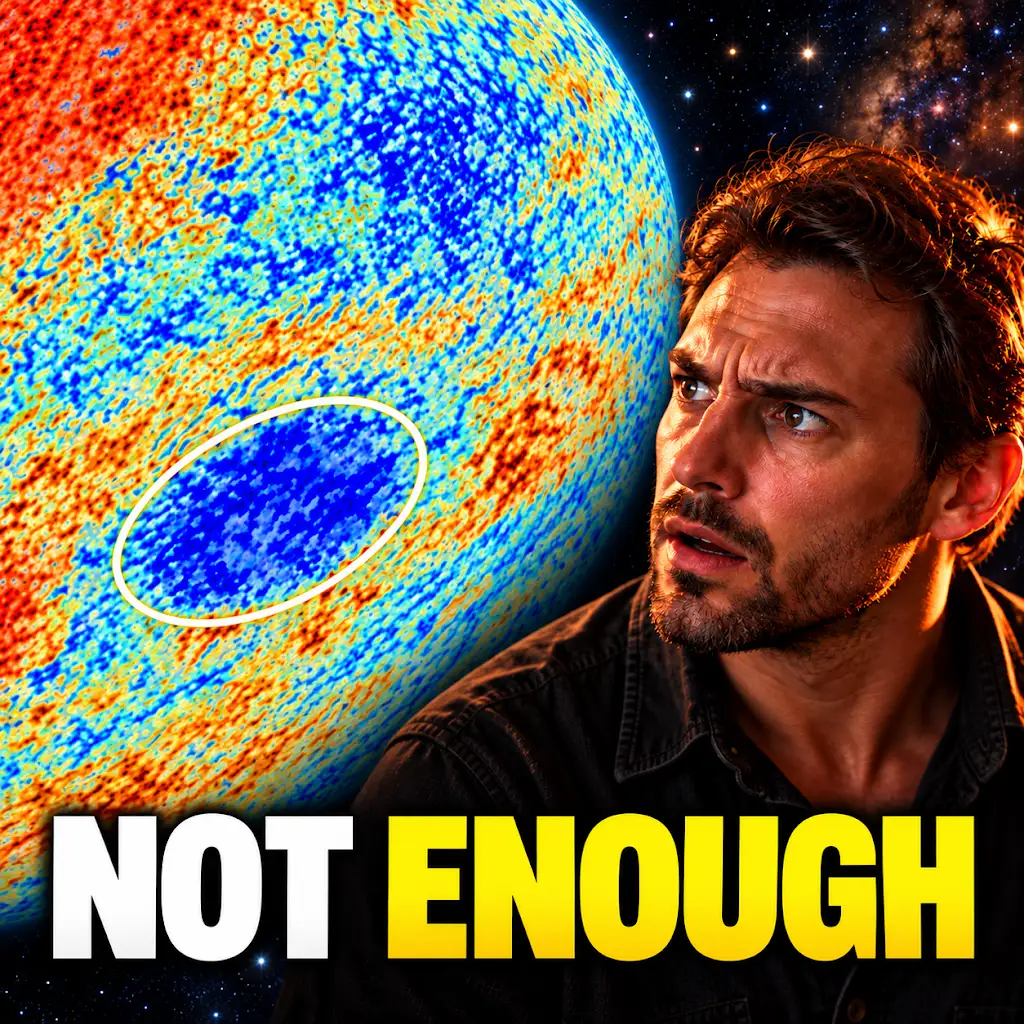
The Universe’s Cold Spot Has an Explanation. It’s Not Enough.
FAQs
1. How does gravity affect light?
Gravity can cause light to bend or curve as it passes through regions of varying gravitational fields. This effect is known as gravitational lensing.
2. Can gravity change the speed of light?
Gravity does not change the speed of light in a vacuum, which is approximately 299,792 kilometers per second. However, gravity can affect the path that light takes, leading to phenomena like gravitational redshift.
3. How does gravity influence the trajectory of light around massive objects?
Massive objects like stars and black holes can bend the path of light due to their gravitational pull. This bending of light can create optical illusions and distort the appearance of objects behind the massive object.
4. What is gravitational redshift and how does it relate to light and gravity?
Gravitational redshift is the phenomenon where light loses energy as it moves away from a massive object, causing its wavelength to lengthen and shift towards the red end of the spectrum. This effect is a result of gravity affecting the frequency of light.
5. How does Einstein’s theory of general relativity explain the interaction between gravity and light?
Einstein’s theory of general relativity describes gravity as the curvature of spacetime caused by mass and energy. According to this theory, light follows the curved paths in spacetime created by massive objects, leading to the observed effects of gravitational lensing and gravitational redshift.