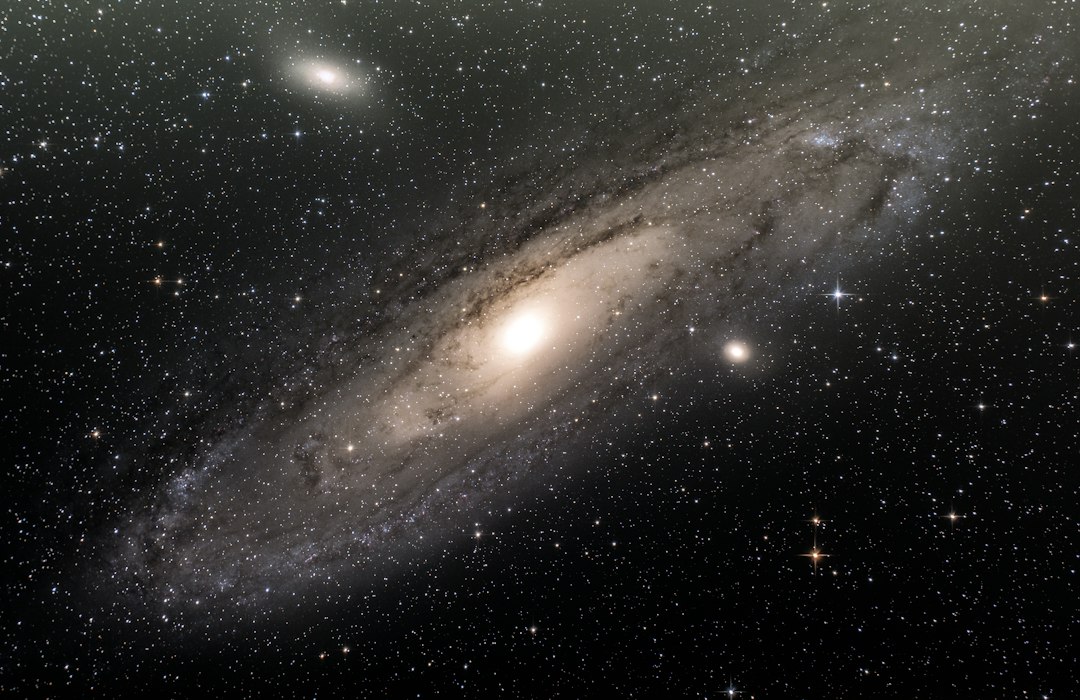
The universe, in its grand tapestry, presents a bewildering spectacle of stars, nebulae, and cosmic dust. Yet, lurking in the shadows, unseen and undetected by our current instruments, is a substance that dwarfs its luminous counterpart. This enigmatic entity, known as dark matter, plays a pivotal role in the formation and evolution of galaxies. Its gravitational influence sculpts the cosmic structures we observe, holding together the celestial cities that populate the cosmos. Understanding dark matter is not merely an academic pursuit; it is a quest to unravel the fundamental architecture of reality.
The Phantom’s Grip: Evidence for the Unseen
The concept of dark matter did not emerge from a sudden revelation but rather from a series of perplexing observations that defied conventional astrophysical explanations. Astronomers, meticulously charting the movements of celestial bodies, began to notice discrepancies that pointed towards the existence of an invisible mass. These discrepancies, initially dismissed as minor observational errors or incomplete understanding of stellar dynamics, gradually accumulated, painting a compelling picture of a universe dominated by something far more pervasive than visible matter.
Galactic Rotation Curves: A Spinning Enigma
One of the earliest and most robust pieces of evidence for dark matter comes from the study of galactic rotation curves. Galaxies, vast collections of stars, gas, and dust, are observed to rotate. According to Newtonian physics, the speed at which stars orbit the galactic center should decrease with increasing distance from that center. This is analogous to our solar system, where the outer planets orbit the Sun at slower speeds than the inner planets. However, observations of spiral galaxies consistently revealed a different story. Stars at the outer edges of galaxies were observed to be orbiting the galactic center much faster than predicted. This unexpected velocity suggested that there must be a significant amount of unseen mass extending far beyond the visible confines of the galaxy, providing the extra gravitational pull needed to keep these fast-moving stars bound to the galaxy. This invisible mass, spread throughout and beyond the visible disk, is what astronomers refer to as the dark matter halo. The flat or even rising nature of these rotation curves, in contrast to the expected decline, is a smoking gun for the presence of dark matter.
Galaxy Clusters: More Than Meets the Eye
Further evidence emerged from the study of galaxy clusters, the largest gravitationally bound structures in the universe. Fritz Zwicky, in the 1930s, observed the Coma Cluster and noted that the individual galaxies within the cluster were moving at extremely high velocities. To keep these galaxies from flying apart, the cluster would need to possess far more mass than could be accounted for by the visible galaxies alone. Zwicky famously coined the term “dark matter” to explain this deficit. His calculations indicated that the cluster contained hundreds of times more mass than could be seen in luminous matter. This finding was initially met with skepticism, but subsequent studies of other galaxy clusters have corroborated Zwicky’s findings. The motions of galaxies within clusters, the temperature of the hot gas that permeates these clusters (observable in X-rays), and the gravitational lensing effects – the bending of light from background objects by the cluster’s mass – all point to a dominant unseen component.
Gravitational Lensing: The Universe’s Magnifying Glass
Gravitational lensing, a phenomenon predicted by Einstein’s theory of general relativity, provides another powerful tool for detecting the presence of dark matter. Massive objects, including galaxies and galaxy clusters, warp the fabric of spacetime around them. This warping causes light from more distant objects to bend as it passes by, acting like a cosmic lens. By studying the distortions in the images of background galaxies, astronomers can map the distribution of mass within foreground objects. These lensing studies have consistently revealed that the mass inferred from the bending of light is significantly greater than the mass of visible matter. This excess mass is attributed to dark matter, and the detailed mapping of lensing effects allows scientists to infer the shape and distribution of dark matter halos around galaxies and clusters. The ability to “see” the gravitational imprint of dark matter through its effect on light is a testament to its pervasive influence.
Recent studies have shown that galaxies serve as vital indicators of the distribution of matter in the universe, helping scientists to understand the underlying structure of cosmic formations. For a deeper exploration of this topic, you can read the article on how galaxies trace matter, which discusses the methodologies and implications of these findings in greater detail. To learn more, visit this article.
The Cosmic Scaffold: Dark Matter’s Role in Structure Formation
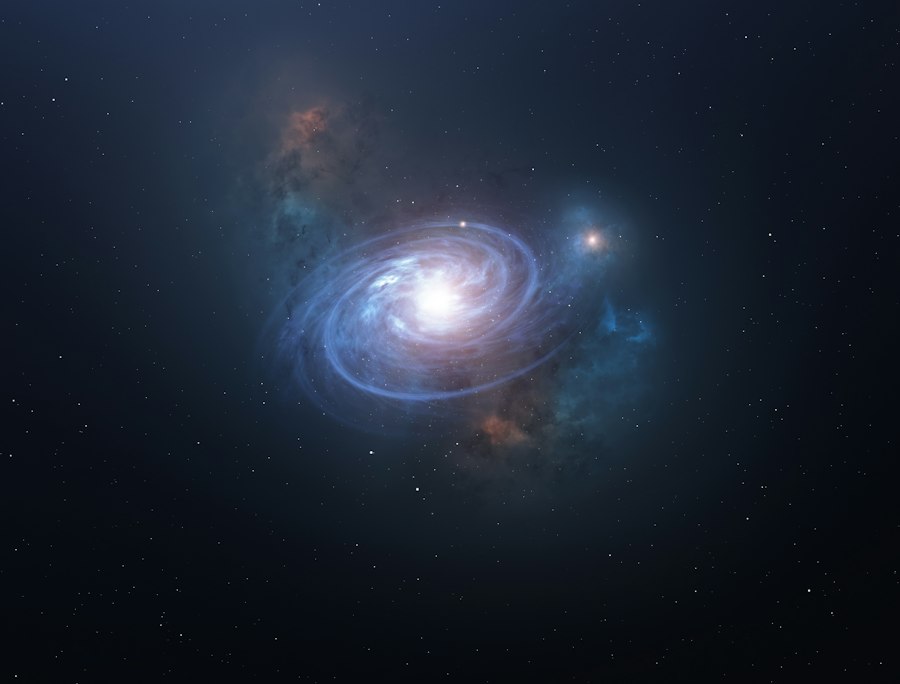
The universe, shortly after the Big Bang, was remarkably uniform. However, over billions of years, it has evolved into the complex cosmic web of galaxies, clusters, and voids we observe today. The prevailing cosmological model, the Lambda-CDM model, posits that dark matter played a crucial role in this grand evolutionary process. Without dark matter, the structures we see today would likely not have formed.
Primordial Fluctuations: Seeds of Galaxies
In the early universe, there were tiny, almost imperceptible, density fluctuations in the distribution of matter. These fluctuations, imprinted on the cosmic microwave background radiation, served as the initial seeds for structure formation. Dark matter, being non-baryonic (meaning it is not made of protons and neutrons) and interacting only weakly with itself and with ordinary matter, began to clump together gravitationally much earlier than ordinary matter. This is because ordinary matter was still interacting strongly with photons, experiencing outward pressure that resisted gravitational collapse. Dark matter, unaffected by this radiation pressure, could begin to form gravitational wells.
The Gravitational Nurturing of Galaxies
As the universe expanded and cooled, these dark matter clumps grew larger. These dense regions of dark matter acted as gravitational attractors, drawing in the surrounding baryonic matter. Ordinary matter, falling into these dark matter potential wells, eventually cooled, condensed, and formed the stars and galaxies we observe. The dark matter thus provided the invisible scaffolding upon which visible structures were built. The hierarchical model of structure formation suggests that smaller dark matter halos merged to form larger ones, and in turn, these larger halos attracted more baryonic matter, leading to the formation of larger galaxies and galaxy clusters. This process, driven by the gravitational dominance of dark matter, explains the observed distribution of galaxies in the universe, which is not random but rather forms a vast, interconnected cosmic web.
The Dark Matter Halo: A Galactic Cocoon
Current understanding suggests that every galaxy is embedded within a much larger, roughly spherical halo of dark matter. This halo is considerably more massive than the visible galactic disk and extends far beyond it. The dark matter halo not only provides the gravitational glue that holds galaxies together but also dictates their formation and evolution. The rotation curves of galaxies, as previously discussed, are a direct consequence of these halos. The dynamics of satellite galaxies orbiting larger galaxies are also influenced by the gravitational pull of the host galaxy’s dark matter halo. Furthermore, the shape and size of these halos can influence the morphology of the galaxies they host, potentially contributing to the formation of spiral versus elliptical galaxies.
The Elusive Nature: What is Dark Matter?
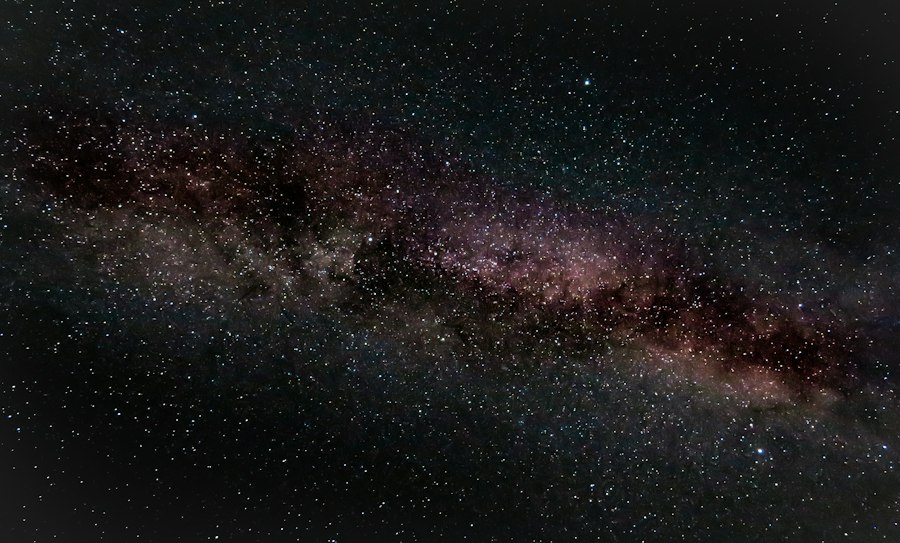
Despite the overwhelming evidence for its existence, the fundamental nature of dark matter remains one of the most profound mysteries in modern physics. Scientists have proposed numerous candidates for dark matter, ranging from exotic particles to modifications of gravity itself, but definitive detection has so far eluded them.
The WIMP Hypothesis: A Leading Contender
One of the most popular candidates for dark matter is the Weakly Interacting Massive Particle, or WIMP. These hypothetical particles are predicted by some extensions to the Standard Model of particle physics, such as supersymmetry. WIMPs would interact only through gravity and the weak nuclear force, making them incredibly difficult to detect directly. Experiments designed to search for WIMPs are located deep underground, shielded from cosmic rays, and employ highly sensitive detectors looking for the faint recoil of atomic nuclei that would occur if a WIMP were to collide with one. Despite decades of searching, no definitive WIMP signal has been observed, leading some researchers to consider alternative explanations or refinements to the WIMP model.
Axions and Sterile Neutrinos: Other Possibilities
Beyond WIMPs, other hypothetical particles are also considered prime candidates for dark matter. Axions, extremely light particles proposed to solve a problem in quantum chromodynamics, could also constitute a significant portion of dark matter. These particles would interact very weakly with ordinary matter and would be produced in abundance in the early universe. Another possibility is the sterile neutrino, a hypothetical type of neutrino that does not interact via the weak force. These particles would interact only gravitationally. Searches for axions and sterile neutrinos are ongoing, employing different experimental techniques tailored to their predicted properties. The diversity of these candidates underscores the ongoing effort to solve the dark matter puzzle.
Modified Gravity: A Radical Alternative
While the particle physics approach is dominant, some scientists entertain the possibility that our understanding of gravity itself might be incomplete on large cosmic scales. Theories of Modified Newtonian Dynamics (MOND) propose that the laws of gravity are different for very low accelerations, such as those experienced by stars at the outer edges of galaxies. In this scenario, the observed phenomena attributed to dark matter could be explained by a revised gravitational law, without the need for any unseen matter. However, MOND faces challenges in explaining certain cosmological observations, such as the properties of galaxy clusters and the cosmic microwave background, which are well-explained by the dark matter paradigm. Nonetheless, the exploration of modified gravity theories continues to push the boundaries of our understanding.
Hunting the Invisible: Detection Efforts and Challenges
The quest to directly detect dark matter particles is a monumental scientific undertaking, characterized by ingenuity, perseverance, and significant technological challenges. Scientists are employing a multifaceted approach, utilizing a variety of experimental strategies to capture even the faintest whisper of interaction from these elusive particles.
Direct Detection Experiments: Listening for Collisions
As mentioned earlier, direct detection experiments aim to observe the rare occasions when a dark matter particle collides with an atomic nucleus in a detector. These experiments are typically housed deep underground to minimize interference from cosmic rays. Examples include the Large Underground Xenon (LUX) experiment and its successor, LZ, which use large tanks of liquid xenon. When a WIMP (or another dark matter particle) interacts with a xenon nucleus, it is expected to produce a small flash of light and ionization, which the detectors are designed to register. The primary challenge is to distinguish these faint signals from background noise caused by radioactive decay or other spurious events. Rigorous shielding, ultra-pure materials, and sophisticated data analysis techniques are employed to achieve this.
Indirect Detection: Looking for Annihilation Signals
Another approach, indirect detection, focuses on observing the byproducts of dark matter interactions. If dark matter particles are their own antiparticles, they could annihilate with each other, producing detectable particles like gamma rays, neutrinos, or antimatter. Telescopes, both ground-based and space-based, are used to search for these annihilation signals emanating from regions where dark matter is expected to be abundant, such as the galactic center or dwarf galaxies. The Fermi Gamma-ray Space Telescope has provided valuable data in this area, and experiments like the IceCube Neutrino Observatory are searching for high-energy neutrinos. The challenge here lies in distinguishing these potential dark matter signals from astrophysical sources that produce similar particles.
Particle Accelerators: Recreating Cosmic Conditions
Particle accelerators, such as the Large Hadron Collider (LHC) at CERN, offer a third avenue for dark matter research. By smashing protons together at extremely high energies, physicists can recreate conditions similar to those in the early universe. If dark matter particles can be produced in these collisions, they might be detected indirectly by observing missing energy and momentum in the collision debris. The absence of certain particles in the aftermath of a collision could indicate that they have carried away energy and momentum without interacting with the detectors – a signature that could be consistent with weakly interacting dark matter particles. While the LHC has not yet yielded definitive evidence for dark matter production, ongoing experiments continue to probe new energy frontiers.
Recent studies have shown that galaxies serve as crucial indicators of the underlying distribution of matter in the universe. By analyzing the light emitted from these galaxies, researchers can infer the presence of dark matter and its influence on cosmic structures. For a deeper understanding of this fascinating relationship, you can explore an insightful article that discusses how galaxies trace matter in greater detail. Check it out here.
The Cosmic Future: Implications of Dark Matter’s Nature
| Metric | Description | Typical Value/Range | Relevance to Galaxy-Matter Tracing |
|---|---|---|---|
| Galaxy Bias (b) | Ratio of galaxy clustering amplitude to matter clustering amplitude | 1 to 3 (varies by galaxy type and redshift) | Indicates how strongly galaxies trace underlying matter distribution |
| Correlation Function (ξ(r)) | Measures excess probability of finding galaxy pairs at separation r | ξ(r) ~ (r/5 Mpc)^-1.8 for galaxies | Used to compare galaxy clustering to matter clustering |
| Power Spectrum (P(k)) | Fourier transform of correlation function, shows clustering strength at scale k | Varies with scale; galaxy P(k) = b² × matter P(k) | Quantifies scale-dependent bias between galaxies and matter |
| Redshift-Space Distortions (β) | Parameter related to growth rate of structure and bias | β ≈ f(Ω)/b, typically 0.3 to 0.6 | Helps disentangle galaxy bias from matter clustering dynamics |
| Weak Lensing Shear | Distortion of background galaxy shapes by foreground matter | Shear amplitude ~ 1% on arcminute scales | Direct probe of matter distribution independent of galaxy bias |
| Halo Occupation Distribution (HOD) | Statistical model of galaxy number per dark matter halo mass | Mean number ranges from 0 to several galaxies per halo | Connects galaxy populations to underlying matter halos |
The ongoing investigation into dark matter is not merely an exercise in academic curiosity; it has profound implications for our understanding of the universe’s past, present, and future. The ultimate discovery of dark matter’s true identity will undoubtedly reshape fundamental physics and cosmology.
Unveiling the Standard Model’s Secrets
If dark matter is indeed composed of new fundamental particles, their discovery would represent a monumental leap beyond the Standard Model of particle physics. The Standard Model, while remarkably successful in describing the known fundamental particles and forces, is known to be incomplete. It does not include gravity, nor does it explain phenomena like dark matter and dark energy. The identification of dark matter particles would provide crucial clues for extending the Standard Model and building a more comprehensive theory of fundamental interactions. This could lead to the discovery of new symmetries, forces, or even extra dimensions.
Shaping the Fate of the Cosmos
The abundance and properties of dark matter are intrinsically linked to the evolution and ultimate fate of the universe. Current cosmological models, which incorporate dark matter, predict a universe that will continue to expand indefinitely, albeit at an accelerating rate due to dark energy. However, the precise nature of dark matter could influence this outcome. If dark matter were to interact more strongly than currently assumed, or if its density were to change over time, it could subtly alter the expansion rate. Understanding dark matter is therefore crucial for refining our cosmological models and making more accurate predictions about the universe’s long-term destiny, whether it be a continued expansion, a eventual collapse, or something entirely unexpected.
A New Era of Astronomy and Discovery
The ongoing exploration of dark matter is not only pushing the boundaries of particle physics but also driving innovation in observational astronomy and experimental techniques. The development of increasingly sensitive detectors, more powerful telescopes, and sophisticated data analysis methods are direct consequences of this quest. The challenges posed by dark matter are spurring scientific creativity, leading to new ways of observing the universe and probing its deepest secrets. The eventual identification of dark matter will undoubtedly usher in a new era of astronomical and cosmological discovery, fundamentally altering our perception of the cosmos and our place within it. The invisible matter that shapes our universe continues to inspire awe and drive humanity’s insatiable thirst for knowledge.

The Universe’s Cold Spot Has an Explanation. It’s Not Enough.
FAQs
What is the relationship between galaxies and matter?
Galaxies are made up of stars, gas, and dust, which are all forms of matter. Therefore, galaxies are a key component in tracing the distribution of matter in the universe.
How do galaxies help scientists trace matter in the universe?
Galaxies act as visible markers for the underlying distribution of dark matter in the universe. By studying the positions and movements of galaxies, scientists can infer the presence and distribution of dark matter.
What is dark matter and why is it important in understanding the universe?
Dark matter is a mysterious, invisible substance that makes up about 27% of the universe. It does not emit, absorb, or reflect light, making it difficult to detect. Understanding dark matter is crucial for explaining the structure and evolution of the universe.
How do scientists use galaxy surveys to map the distribution of matter?
Scientists use galaxy surveys to observe the positions, velocities, and clustering of galaxies in the universe. By analyzing these data, they can create maps that reveal the large-scale structure of matter in the cosmos.
What are some of the key findings from studying how galaxies trace matter?
Studying how galaxies trace matter has led to discoveries such as the existence of dark matter, the presence of cosmic web filaments connecting galaxies, and insights into the formation and evolution of large-scale structures in the universe.