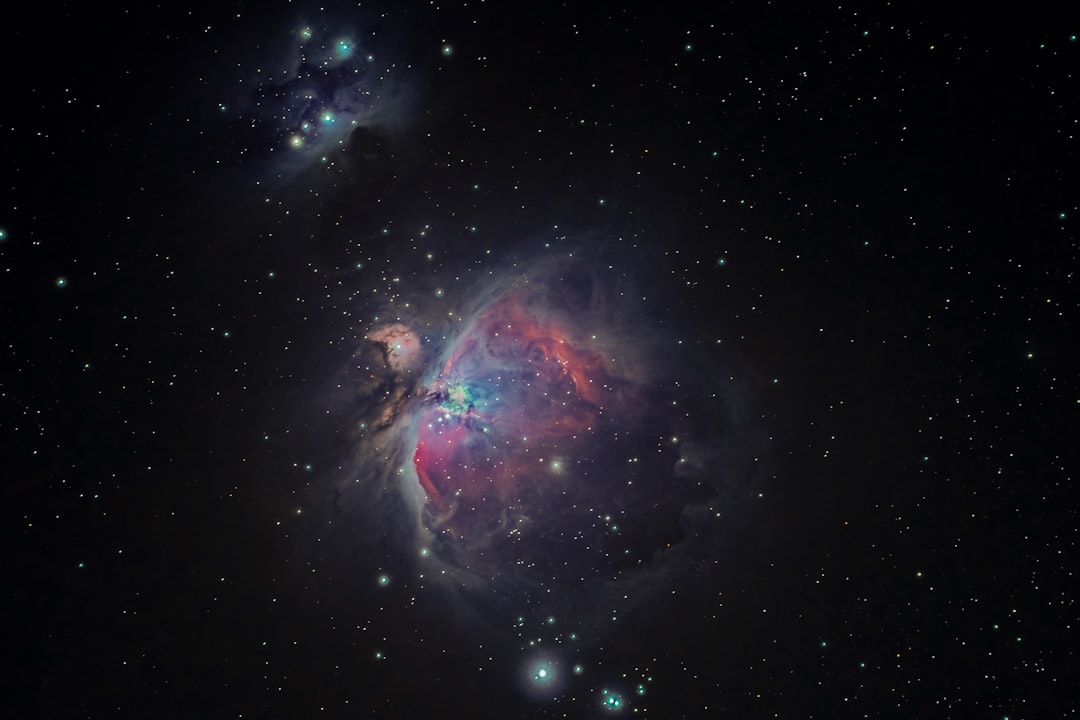
You stand on the precipice of wonder, gazing upwards into the velvet embrace of the night sky. It’s a familiar vista, perhaps, one you’ve encountered countless times. Yet, tonight, you’re not just looking at a scattering of distant lights. You’re peering into the very fabric of time, witnessing the echoes of cosmic history. For when you look at the galaxies, you are, in essence, looking into the past.
The light that reaches your eyes from these celestial behemoths has traveled for unimaginable durations, traversing gulfs of space so vast they defy easy comprehension. Each photon, a tiny messenger, carries with it a snapshot of the universe as it was, not as it is in this very instant. This profound realization transforms your casual stargazing into a journey through eons, a silent dialogue with the universe’s ancient story.
Your journey into the past begins with the fundamental principle of the universe: the speed of light. Imagine it as the ultimate cosmic speed limit, a constant that dictates how quickly information can travel. While incredibly fast by human standards – approximately 299,792 kilometers per second – it’s a glacial pace when measured against the sheer immensity of the cosmos.
The Lagging Universe: Why We See What Was
Consider a star in our own Milky Way galaxy. The closest star to our Sun, Proxima Centauri, is about 4.24 light-years away. This means the light you see from Proxima Centauri tonight left that star over four years ago. You are, in effect, seeing Proxima Centauri as it was more than four years in its past. Now, scale this up to galaxies.
Galaxies are not just star systems; they are colossal congregations of billions, even trillions, of stars, along with gas, dust, and dark matter, all bound together by gravity. The distances to these galaxies are staggering. Our nearest major galactic neighbor, the Andromeda Galaxy, is approximately 2.5 million light-years away. When you observe Andromeda with your naked eye, or even through a powerful telescope, you are not seeing it as it is now. You are witnessing light that began its journey from Andromeda 2.5 million years ago, when Earth was in the midst of its evolutionary journey.
The Scale of Light-Years: Beyond Human Intuition
The concept of a light-year is crucial to understanding this cosmic time lag. It’s not a measure of time, but a measure of distance. It’s the distance that light travels in one Earth year. To put this into perspective, imagine trying to comprehend the distance to the nearest town. Now imagine trying to comprehend the distance to another continent. Galaxies exist on scales so much grander that our everyday intuition completely breaks down.
- The Milky Way’s Neighbors: Even within our local galactic neighborhood, the distances are immense. The Triangulum Galaxy, another neighbor, is about 3 million light-years away. The Large and Small Magellanic Clouds, satellite galaxies of the Milky Way, are much closer at around 160,000 and 200,000 light-years respectively, but still represent journeys of light measured in hundreds of thousands of years.
- Distant Wonders: As you look further out, the numbers become astronomical. The Sombrero Galaxy is about 30 million light-years away. The Virgo Cluster, a vast collection of galaxies, is roughly 50-60 million light-years away. Each of these distances represents a journey of light that predates human civilization, perhaps even the existence of our species.
The Redshift: Unraveling the Expanding Universe
The light you receive from distant galaxies also carries another vital clue about their past and the evolution of the universe itself: redshift. As galaxies recede from us due to the expansion of the universe, the light they emit is stretched to longer, redder wavelengths. This phenomenon, known as redshift, is a direct consequence of the Doppler effect, similar to how the pitch of a siren changes as it moves away from you.
- Hubble’s Discovery: Edwin Hubble’s groundbreaking observations in the late 1920s revealed that almost all galaxies are redshifted, and the further away a galaxy is, the greater its redshift. This provided the first strong evidence for the expansion of the universe.
- Cosmic Spectacles: By analyzing the redshift of light from a galaxy, astronomers can determine how fast it is moving away from us. This information, combined with distance estimates, allows us to construct a history of the universe’s expansion, tracing it back to its earliest moments.
The phenomenon of observing galaxies as they were in the past is a fascinating aspect of astronomy, primarily due to the finite speed of light. When we look at distant galaxies, we are essentially looking back in time, as the light from these galaxies takes millions or even billions of years to reach us. For a deeper understanding of this concept, you can explore the article titled “The Cosmic Time Machine” available at Freaky Science, which delves into the implications of light travel time and how it shapes our understanding of the universe.
Gazing Back to the Dawn of Galaxies: The Early Universe
The further you look into the cosmos, the further back in time you travel, and the more you witness the universe in its nascent stages. The most distant galaxies you can observe are often the oldest, offering unparalleled insights into the era when galaxies were first forming and evolving.
The Cosmic Dark Ages: A Universe Without Stars
Before the first stars and galaxies ignited, the universe was a vastly different place. Following the Big Bang, the universe was a hot, dense plasma. As it expanded and cooled, elementary particles formed, and eventually, atoms. However, for hundreds of millions of years, the universe was essentially dark – a period known as the Cosmic Dark Ages. There were no stars to emit light, and no organized structures like galaxies.
The First Light: The Epoch of Reionization
The end of the Cosmic Dark Ages was marked by the birth of the first stars and galaxies. These early celestial furnaces began to emit ultraviolet radiation, which gradually ionized the neutral hydrogen gas that permeated the universe. This “Epoch of Reionization” was a critical turning point, transforming the universe from a dark, neutral state to the luminous, ionized state we see today.
- Observing the Pioneers: Telescopes like the Hubble Space Telescope and now the James Webb Space Telescope are instrumental in pushing the boundaries of our observation into this early epoch. They are designed to detect the faint, redshifted light from these very first galaxies.
- Unveiling Proto-Galaxies: These proto-galaxies were likely much smaller and less organized than the grand spirals and ellipticals we observe in the present day. They were the seeds from which larger structures would eventually grow.
Stellar Nurseries in the Young Universe
The earliest galaxies were also the birthplaces of the first generations of stars. These stars were likely much more massive and shorter-lived than the stars we see today, composed primarily of hydrogen and helium. Their deaths in spectacular supernova explosions forged heavier elements, the building blocks for future stars and planets.
- The Metallicity Puzzle: By studying the composition of stars in very old galaxies, astronomers can infer the abundance of heavier elements (metals in astronomical terms). The lower the metallicity, the older the stars and the galaxy.
- Seeds of Complexity: The creation of these heavier elements was a crucial step in the evolution of the universe, paving the way for the formation of rocky planets and, ultimately, life as we know it.
Galactic Evolution: A Story Written in Light
Galaxies are not static entities. They are dynamic, evolving systems that have undergone dramatic transformations over cosmic timescales. By observing galaxies at different distances, you are witnessing snapshots of their life cycles, from their chaotic beginnings to their more mature forms.
The Merging Universe: Galaxies Collide and Grow
One of the most significant processes driving galactic evolution is galaxy mergers. Over billions of years, gravitational forces cause galaxies to collide and merge. These dramatic events can reshape galaxies, trigger bursts of star formation, and even fuel the growth of supermassive black holes at their centers.
- Cosmic Cannibalism: Our own Milky Way is on a collision course with the Andromeda Galaxy. In about 4 billion years, these two galaxies will merge to form a larger, elliptical galaxy. You are seeing Andromeda as it was 2.5 million years ago, unaware of its impending cosmic embrace.
- Stellar Chaos and Starbursts: During mergers, the gravitational forces can compress gas and dust clouds, leading to intense episodes of star formation, known as starbursts. These events dramatically alter the stellar populations of galaxies.
The Birth and Death of Stars: A Continuous Cycle
Within every galaxy, stars are constantly being born and dying. This continuous cycle of stellar creation and destruction is fundamental to galactic evolution and the enrichment of the cosmos.
- Stellar Factories: Giant clouds of gas and dust, known as nebulae, are the birthplaces of stars. Gravity pulls these clouds together, and as they collapse, their cores become hot and dense enough to ignite nuclear fusion, marking the birth of a star.
- Supernova Remnants: When massive stars reach the end of their lives, they explode as supernovae, scattering newly synthesized heavy elements back into space. These elements then become incorporated into new generations of stars and planets.
The Role of Supermassive Black Holes
At the heart of most large galaxies lies a supermassive black hole, an object with a gravitational pull so strong that nothing, not even light, can escape. These black holes play a significant role in the evolution of their host galaxies, influencing star formation and the distribution of gas.
- Accretion Disks and Jets: As matter falls towards a supermassive black hole, it forms a superheated disk called an accretion disk. This process can release immense amounts of energy, sometimes in the form of powerful jets of particles that can extend far beyond the galaxy.
- Galactic Feedback: The energy and radiation from active galactic nuclei (galaxies with actively feeding supermassive black holes) can have a profound impact on their host galaxies, sometimes quenching star formation by heating or expelling gas.
The Diversity of Galaxies: A Cosmic Tapestry
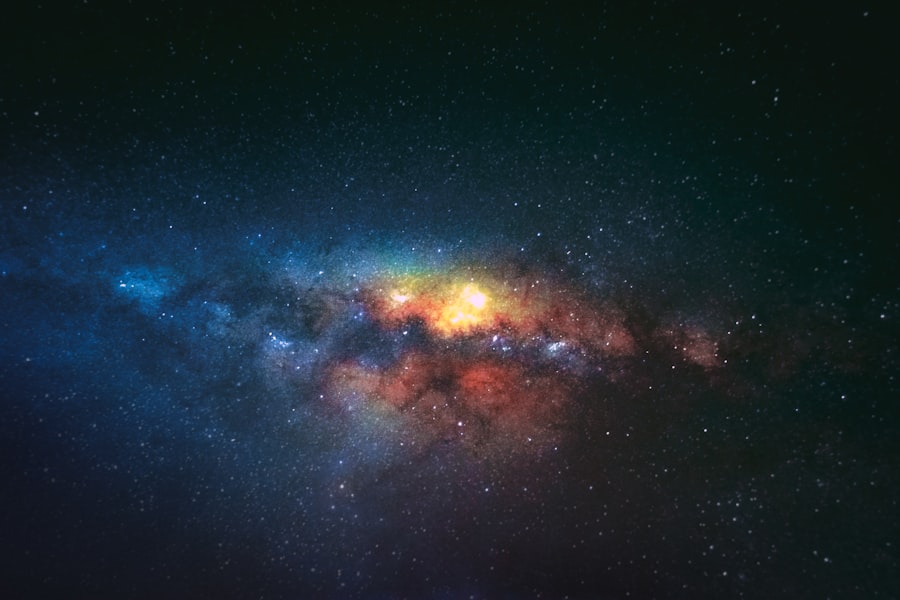
As you gaze across the universe, you’ll notice that galaxies are not all alike. They come in a breathtaking variety of shapes, sizes, and compositions, each telling a unique story about its history and environment.
Spiral Galaxies: The Elegant Whirlpools
Spiral galaxies, like our own Milky Way, are characterized by their flat, rotating disks with prominent spiral arms. These arms are regions of active star formation, often containing young, hot, blue stars.
- The Milky Way and Andromeda: These are classic examples of spiral galaxies, showcasing the familiar pinwheel structure. Their arms are where new stars are continuously being born.
- Formation and Dynamics: The formation of spiral arms is a complex process, thought to be related to density waves within the galactic disk that trigger star formation.
Elliptical Galaxies: The Ancient Ovals
Elliptical galaxies are typically older, more spheroidal in shape, and contain a much older stellar population. They have less gas and dust and therefore less active star formation.
- Giant Ellipticals: These are some of the largest and most massive galaxies in the universe, often found at the centers of galaxy clusters. They are thought to have grown through numerous mergers.
- Red and Dead: The stars in elliptical galaxies are generally older and redder, indicating that most of their star formation occurred in the distant past.
Irregular Galaxies: The Unpredictable Forms
Irregular galaxies lack a distinct, organized shape, often appearing chaotic and distorted. These can be the result of gravitational interactions with other galaxies or represent very young galaxies that haven’t yet settled into a defined structure.
- The Magellanic Clouds: These are prime examples of irregular galaxies, likely shaped by the gravitational influence of the Milky Way.
- Early Universe Clues: Many irregular galaxies observed at large distances are believed to be representative of the less structured galaxies that existed in the early universe.
Peculiar Galaxies: The Cosmic Oddities
Peculiar galaxies are those that don’t fit neatly into the traditional categories. They often exhibit unusual shapes or structures, the result of past gravitational disturbances or collisions.
- Ring Galaxies: These form when a smaller galaxy passes directly through the center of a larger one, creating a wave of star formation that forms a ring.
- Interacting Systems: Many peculiar galaxies are part of interacting systems, where the gravitational pull of nearby galaxies is distorting their shapes.
When we observe distant galaxies, we are essentially looking back in time due to the finite speed of light. This fascinating phenomenon allows astronomers to study the early universe and understand how galaxies have evolved over billions of years. For a deeper exploration of this concept, you can read more about the implications of light travel time in the article found at Freaky Science. By examining the light emitted from these ancient galaxies, scientists can piece together the history of cosmic formation and gain insights into the fundamental processes that shaped our universe.
Studying the Past Through Galactic Light: The Power of Astronomy
| Reason | Explanation |
|---|---|
| Speed of Light | Light from distant galaxies takes time to reach us, so we see them as they were in the past. |
| Expansion of the Universe | The universe is expanding, causing light from distant galaxies to be stretched and appear redder, indicating they are moving away from us. |
| Distance | Galaxies are located at vast distances from us, so the light we see from them has traveled for billions of years before reaching us. |
Your ability to glimpse into the past is not merely an aesthetic experience; it’s a powerful scientific tool. Astronomers dedicate their careers to deciphering the stories held within galactic light, unraveling the mysteries of cosmic origins and evolution.
Telescopes: Your Windows to the Past
Modern telescopes, both ground-based and space-based, are the instruments that allow you to see these distant cosmic wonders. Each technological advancement has pushed the boundaries of our observational capabilities, allowing us to see further back in time.
- The Hubble Space Telescope: For decades, Hubble has provided iconic images of galaxies across the universe, revealing their intricate structures and offering glimpses into their past. Its ability to observe in visible and ultraviolet light has been invaluable.
- The James Webb Space Telescope: The latest generation of space telescope, Webb, is specifically designed to observe in infrared light. This allows it to penetrate the dust that obscures many distant galaxies and to detect the highly redshifted light from the earliest galaxies in the universe, pushing our understanding even further back in time.
- Ground-Based Observatories: Large optical and radio telescopes on Earth continue to play a crucial role in astronomical research, complementing space-based observations with their own unique capabilities.
Spectroscopy: Unlocking the Secrets Within Light
When light from a distant galaxy is passed through a prism or a diffraction grating, it splits into its constituent colors, creating a spectrum. This spectrum is like a cosmic fingerprint, revealing the chemical composition, temperature, motion, and age of the celestial object.
- Composition Analysis: By analyzing the spectral lines, astronomers can identify the elements present in a galaxy, providing clues about its history of star formation and the nucleosynthesis that occurred within its stars.
- Measuring Velocity: The redshift (or blueshift) of spectral lines directly indicates how fast a galaxy is moving towards or away from us, a fundamental piece of information for understanding the expansion of the universe.
Cosmological Simulations: Recreating Cosmic History
While observations provide the raw data, sophisticated computer simulations are used to model the formation and evolution of galaxies and the universe as a whole. These simulations help astronomers interpret their observations and test their theories.
- The N-Body Simulation: These simulations track the gravitational interactions of millions of particles, representing dark matter and visible matter, to model the formation of large-scale structures like galaxies and galaxy clusters.
- Gas Dynamics and Star Formation: More advanced simulations incorporate the physics of gas dynamics, cooling, and star formation, providing a more comprehensive picture of how galaxies evolve over time.
Your gaze into the night sky tonight is more than just an act of observation; it’s an act of time travel. Each twinkling light, each distant smudge of light, is a messenger from the past, carrying with it the secrets of the universe’s grand and ongoing narrative. As you continue to look up, remember that you are not just seeing stars; you are witnessing the echoes of creation, the unfolding story of galaxies, and a profound glimpse into the deep, ancient history of everything.

Einstein Says There Is No Universal “Now” in the Universe
FAQs
1. Why do we see galaxies in the past?
We see galaxies in the past because light takes time to travel through space. When we observe a distant galaxy, we are actually seeing it as it appeared in the past, due to the time it takes for its light to reach us.
2. How far back in time can we see galaxies?
With current technology, astronomers can observe galaxies as they appeared just a few hundred million years after the Big Bang, which occurred approximately 13.8 billion years ago.
3. What can studying distant galaxies tell us about the early universe?
Studying distant galaxies can provide valuable insights into the early universe, including its formation, evolution, and the processes that led to the creation of the first stars and galaxies.
4. How do astronomers determine the distance to a distant galaxy?
Astronomers use various methods to determine the distance to a distant galaxy, including measuring its redshift, using standard candles such as supernovae, and analyzing the galaxy’s apparent brightness and size.
5. What are some of the most distant galaxies ever observed?
Some of the most distant galaxies ever observed include GN-z11, EGSY8p7, and MACS0647-JD, which are located billions of light-years away and provide valuable information about the early universe.