The advent of electronic ink, or E Ink, technology has revolutionized how we interact with digital content, offering a paper-like reading experience that significantly reduces eye strain compared to traditional backlit displays. However, E Ink’s inherent refresh mechanism, while contributing to its unique benefits, has historically presented certain limitations, particularly concerning motion rendering and image clarity during transitions. This is where the concept of a “Full Refresh” E Ink display emerges as a significant advancement, promising to enhance both clarity and performance in ways previously unimagined for this display technology.
Understanding E Ink Refresh Mechanisms
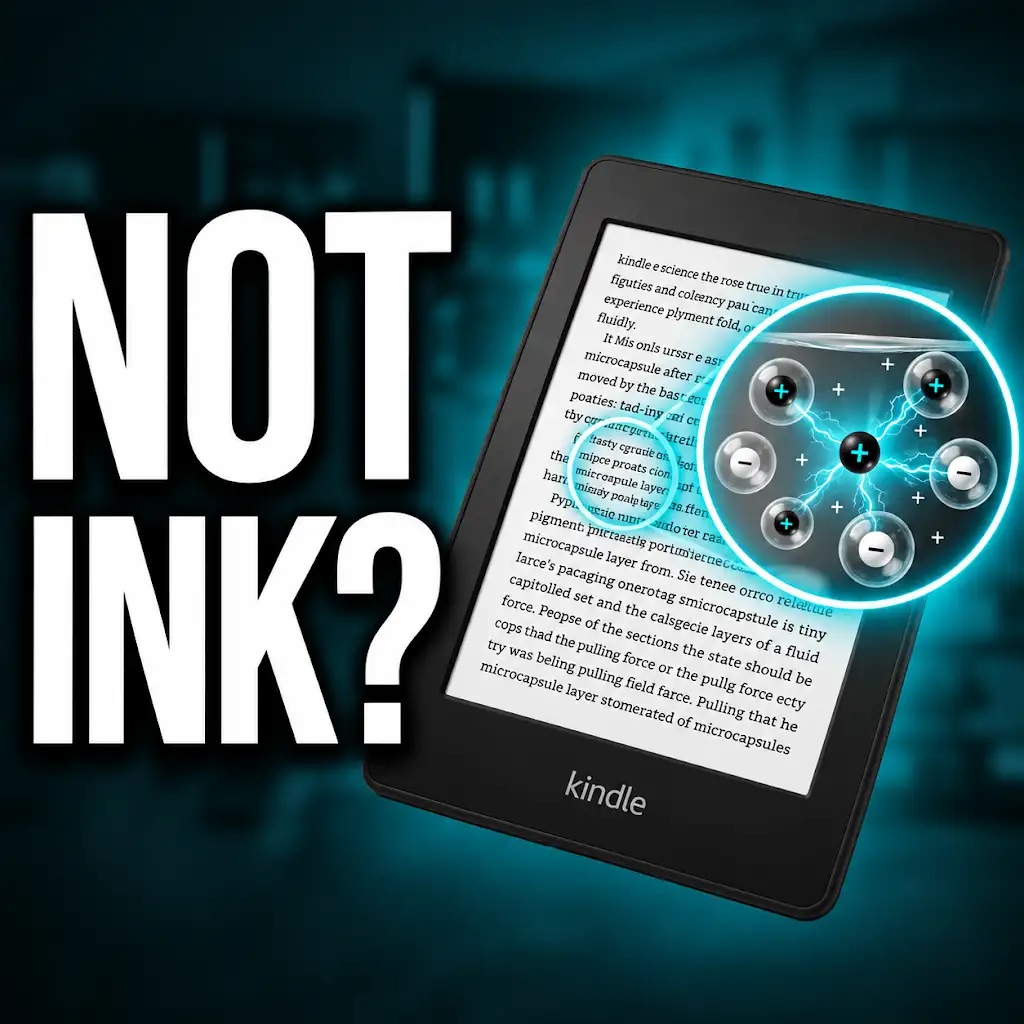
At its core, E Ink technology relies on microcapsules containing positively charged white particles and negatively charged black particles suspended in a clear fluid. Applying an electric field causes these particles to migrate to the surface, forming an image. This electrochromic process is bistable, meaning it retains an image even when power is removed, contributing to its low power consumption. However, the process of changing an image involves moving these particles, which is not instantaneous and requires a specific sequence of electrical pulses.
The Nature of Partial Refreshes
Most E Ink displays employ a “partial refresh” mechanism for most screen updates. This involves selectively changing only the pixels that need to alter their state, thereby speeding up the update process and minimizing ghosting – the faint remnants of previous images that can sometimes linger on the screen. Partial refreshes are ideal for static content or slow-moving elements, such as turning pages in an e-reader or updating a calendar widget. This efficiency is a cornerstone of E Ink’s appeal for battery-powered devices.
The Necessity and Challenges of Full Refreshes
Despite the advantages of partial refreshes, they are not without their drawbacks. Over time, or with rapid image changes, ghosting can become more pronounced, impacting the overall clarity and visual quality of the display. To counteract this, E Ink displays have always incorporated a “full refresh” mode. A full refresh essentially resets the entire display by flashing a black screen, then a white screen, before rendering the new image. This process completely clears all residual charge and particles, ensuring a pristine canvas for the next display. However, the trade-off has historically been a noticeable lag, often referred to as a “flash,” which can be jarring and disruptive to the user experience, particularly for dynamic content.
For those interested in the latest advancements in display technology, a related article on the topic of full refresh E Ink displays can be found at Freaky Science. This article delves into the benefits and applications of E Ink technology, highlighting how full refresh capabilities enhance the user experience by providing sharper images and smoother transitions.
The Evolution Towards Enhanced Full Refresh Performance
The challenges associated with traditional full refresh cycles have spurred considerable innovation within the E Ink ecosystem. Manufacturers and researchers have been diligently working to optimize this process, aiming to deliver the clarity benefits of a full refresh without the prolonged interruption. This has led to the development of more sophisticated control algorithms and hardware designs.
Advanced Driving Schemes and Control Logic
The core of an improved full refresh lies in more intelligent driving schemes. Instead of a simple black-white-image sequence, new algorithms analyze the required image changes more comprehensively. They might pre-charge certain areas of the screen or use more nuanced electrical pulse sequences to guide the electrophoretic particles with greater precision and speed. This involves a deeper understanding of the physical properties of the microcapsules and their response to various electrical stimuli.
Hardware Improvements and Faster Switching
Beyond software, hardware improvements play a crucial role. Newer generations of E Ink displays often feature faster switching transistors and more efficient power delivery systems. These hardware enhancements allow for quicker and more precise application of electrical fields, directly contributing to a faster full refresh cycle. The reduction in the physical time it takes to move the particles is a fundamental gain, even with optimized driving schemes.
Practical Benefits of an Enhanced Full Refresh
The improvements in full refresh technology translate into tangible benefits for users across a wide range of E Ink applications. The enhanced clarity and reduced performance penalties open up new possibilities and refine existing ones.
Superior Image Clarity and Reduced Ghosting
The most immediate and noticeable benefit of a truly optimized full refresh is the drastic reduction, and often elimination, of ghosting. When a full refresh is executed quickly and effectively, the screen is presented as a perfectly clean slate before each new image appears. This means sharper text, more vibrant images, and a consistent visual experience that mimics the clarity of printed paper without the artifacts sometimes associated with partial refreshes that have become slightly degraded. This is particularly important for applications where detail and accuracy are paramount, such as technical manuals, scientific diagrams, or detailed artwork.
Improved Responsiveness for Dynamic Content
Historically, the slow nature of full refreshes limited the types of content that E Ink displays could handle effectively. With faster full refreshes, E Ink displays can now better accommodate more dynamic content. This includes smoother transitions in applications that involve frequent screen changes, such as image viewers, casual gaming, or even certain types of interactive maps. While it may not rival the refresh rates of LCD or OLED for high-speed video, it significantly broadens the scope of what E Ink can achieve, making it a more versatile display technology.
Enhanced User Experience in Diverse Applications
The implications of a superior full refresh extend to a multitude of E Ink-powered devices. For e-readers, it means a cleaner reading experience with fewer visual distractions. For smartwatches and wearables, it enables more visually appealing watch faces and smoother updates of information. In digital signage and electronic shelf labels, it allows for more impactful and up-to-date content delivery without the distracting flashes of older technologies. The overall user experience is elevated by a display that is both sharp and responsive.
Applications Benefiting from Full Refresh Advancements
The refined full refresh capabilities are not just a technical curiosity; they have a direct impact on the practical utility and user appeal of E Ink displays in various real-world scenarios. The ability to deliver a clear, crisp image with minimal delay is a game-changer for specific use cases.
E-Readers and Digital Publishing
The primary domain of E Ink, e-readers, stands to gain immensely. While page turns have always been a strong point, more complex layouts with embedded images, graphs, or interactive elements can now be rendered with greater fidelity. A faster full refresh means that when a user navigates to a section with rich media, the transition will be smoother, and the image will appear crisper without the need to tolerate lingering ghosts from previous text. This enhances the immersion and reading pleasure, making digital books feel even more like their physical counterparts. Furthermore, for educational materials or publications with intricate diagrams and footnotes, the enhanced clarity ensures that all details are perfectly legible.
Wearable Technology and Smart Devices
Smartwatches and other wearable devices often utilize E Ink displays for their power efficiency and always-on capabilities. However, the user interface on these devices requires frequent updates, from displaying notifications to changing watch faces. A slow full refresh would make these updates feel sluggish and unprofessional. With an accelerated full refresh, these devices can present richer, more dynamic watch faces, offer smoother scrolling through menus, and update information like weather or fitness stats more quickly. This makes the user experience on wearables feel more fluid and modern, without significantly impacting battery life due to the inherent low-power nature of E Ink.
Digital Signage and Electronic Shelf Labels
In retail environments and public spaces, E Ink displays are increasingly used for electronic shelf labels (ESLs) and digital signage. ESLs need to update prices and product information frequently and accurately. Traditional full refreshes could be disruptive if they occurred too often. Faster full refreshes allow for more frequent price adjustments or promotional messages to be displayed without the noticeable “flash” that might distract shoppers. For larger digital signage, improved full refresh means that static advertisements or informational displays can be updated with greater ease and visual appeal, offering a crisper and more professional appearance, especially when displaying detailed graphics or text.
For those interested in the latest advancements in display technology, a fascinating article on full refresh e-ink displays can be found at Freaky Science. This piece delves into how these innovative displays are revolutionizing the way we interact with digital content, offering a more dynamic and responsive user experience. As e-ink technology continues to evolve, it opens up new possibilities for applications ranging from e-readers to smart devices, making it a topic worth exploring further.
The Future of E Ink with Enhanced Full Refresh
| Metric | Description | Typical Value | Unit |
|---|---|---|---|
| Refresh Time | Time taken to complete a full screen refresh | 1.0 – 2.5 | seconds |
| Power Consumption (Full Refresh) | Energy used during a full screen refresh | 0.5 – 1.5 | mJ/cm² |
| Contrast Ratio | Ratio of luminance between black and white states after refresh | 10:1 – 15:1 | ratio |
| Refresh Frequency | Number of full refreshes recommended per minute to avoid ghosting | 1 – 2 | refreshes/minute |
| Ghosting Level | Residual image visibility after full refresh | Low to Moderate | qualitative |
| Temperature Range | Operating temperature range for optimal full refresh performance | 0 to 40 | °C |
The ongoing innovation in E Ink display technology, particularly in the realm of full refresh, signals a promising future for this versatile display type. As the technology matures, we can anticipate even greater integration into diverse applications, pushing the boundaries of what was once considered possible for electrophoretic displays.
Towards Smoother Animations and Interactivity
While E Ink will likely never replace high-refresh-rate displays for fast-paced video, the advancements in full refresh are paving the way for smoother animations and more sophisticated interactive experiences. Imagine educational apps with animated diagrams that unfold gradually, or productivity tools that offer more visually intuitive progress indicators. The ability to perform a clean, rapid full refresh is the bedrock upon which these more dynamic E Ink applications will be built. Future developments might even see limited forms of gesture-based interaction become more fluid and responsive.
Broader Adoption and New Use Cases
As the performance and clarity of E Ink displays continue to improve, their adoption across various industries is likely to expand. Beyond the established markets, we could see E Ink emerge in areas like automotive dashboards for its readability in bright sunlight, in architectural displays for their aesthetic appeal and low power consumption, or even in specialized medical equipment where precise, non-emissive displays are crucial. The enhanced full refresh is a key enabler for this broader adoption, addressing a significant historical limitation and opening up new avenues for innovation and market penetration. The continued pursuit of even faster and more seamless refresh cycles will undoubtedly solidify E Ink’s position as a leading technology for a wide array of visual communication needs.
Why Your Kindle Screen Doesn’t Work the Way You Think
FAQs
What is a full refresh e ink display?
A full refresh e ink display is a type of electronic paper display technology that requires the entire screen to be refreshed in order to display new content. This process involves clearing the existing image from the screen before displaying the new content.
How does a full refresh e ink display differ from a partial refresh display?
A full refresh e ink display differs from a partial refresh display in that it requires more time and energy to update the entire screen. Partial refresh displays only update the parts of the screen that have changed, resulting in faster refresh rates and lower power consumption.
What are the advantages of using a full refresh e ink display?
Some advantages of using a full refresh e ink display include better image quality, improved contrast, and the ability to display more complex graphics and text. Full refresh displays are also better suited for applications where the entire screen content needs to be updated simultaneously.
Are there any drawbacks to using a full refresh e ink display?
One drawback of using a full refresh e ink display is the slower refresh rate compared to partial refresh displays. This can result in a delay when updating the screen, which may not be ideal for applications that require real-time information or fast response times.
Where are full refresh e ink displays commonly used?
Full refresh e ink displays are commonly used in e-readers, electronic shelf labels, digital signage, and other applications where low power consumption and high readability are important. These displays are also popular in devices that do not require frequent screen updates or animations.