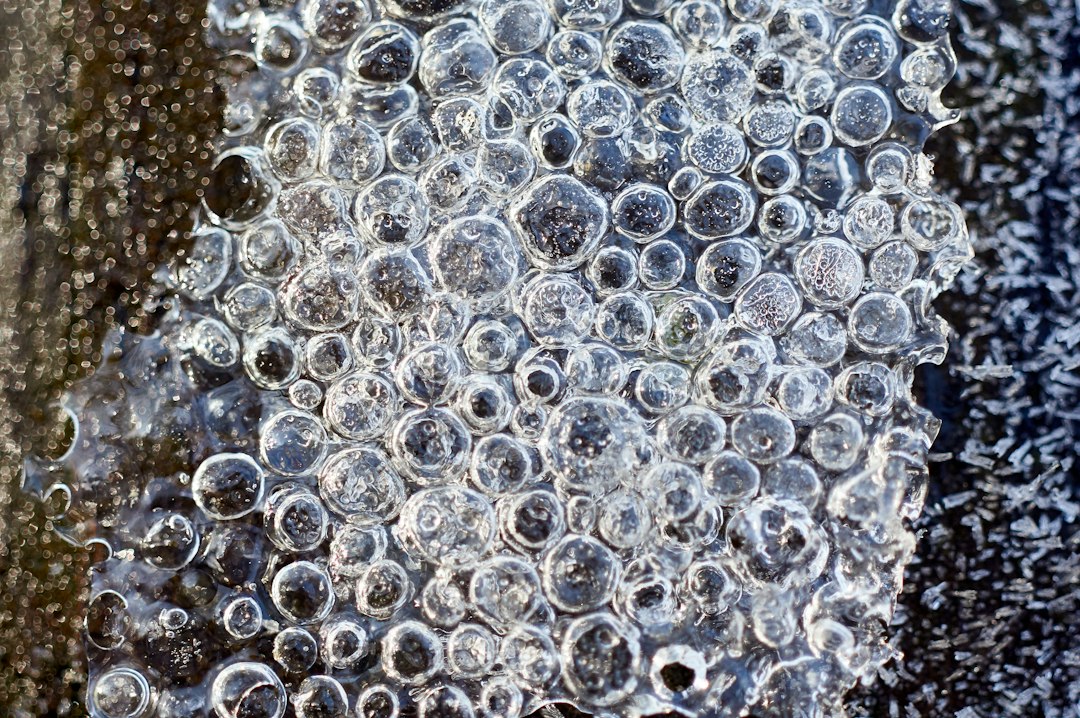
The Wonders of Freezing: A Deep Dive into Ice Formation and Its Properties
Water, the ubiquitous solvent and lifeblood of our planet, possesses a remarkable characteristic: its ability to transform from a liquid to a solid state. This process, known as freezing, is a fundamental concept in science, yet it holds a wealth of fascinating details and opportunities for hands-on exploration. Understanding how water freezes and the unique properties of ice offers a window into the molecular world and the forces that govern matter. This article will delve into the science behind ice formation, guiding readers through a series of simple yet insightful experiments that illuminate the physical and chemical transformations involved. From observing crystal structures to testing the density of ice, the journey into the frozen realm of water promises to be both educational and engaging.
If you’re interested in exploring the fascinating science behind freezing water, you might want to check out a related article on the topic at Freaky Science. This article delves into the principles of freezing and the unique properties of water as it transitions from liquid to solid. You can read more about it by visiting Freaky Science, where you’ll find a variety of engaging experiments and explanations that make learning about science both fun and informative.
Understanding the Molecular Dance of Water Freezing
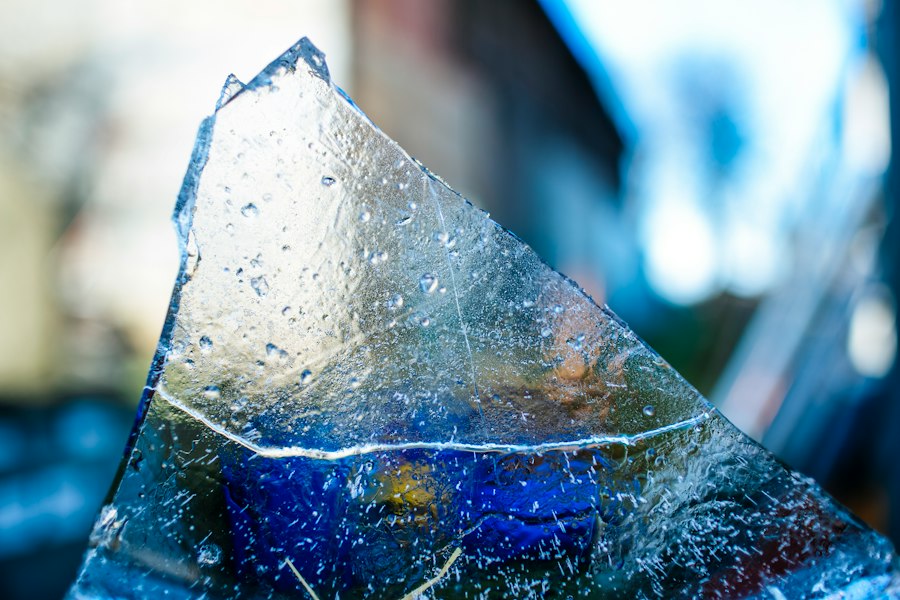
The transformation of liquid water into solid ice is a captivating demonstration of molecular behavior. It’s not merely a passive change of state but a dynamic process driven by temperature and molecular interactions. At a fundamental level, freezing is about energy. Liquid water molecules are in constant motion, vibrating and sliding past one another. As the temperature of the water decreases, the kinetic energy of these molecules diminishes. They slow down, and their attractive forces, primarily hydrogen bonds, begin to exert a more dominant influence.
The Role of Hydrogen Bonds in Ice Formation
Hydrogen bonds are weak, transient electrostatic attractions between a hydrogen atom covalently bonded to a highly electronegative atom (like oxygen in water) and another electronegative atom in a nearby molecule. In liquid water, these bonds are constantly forming and breaking, allowing the molecules to flow freely. As the temperature drops, the molecules have less energy to overcome these attractive forces. At the freezing point, the molecules slow down enough for the hydrogen bonds to become more stable and organized. This leads to the formation of a highly ordered, crystalline lattice structure that defines ice. Each water molecule in the ice lattice is tetrahedrally coordinated, meaning it forms hydrogen bonds with four other water molecules. This tetrahedral arrangement is the key to the unique structure of ice.
Nucleation: The Spark that Starts Freezing
Freezing doesn’t always happen spontaneously as soon as water reaches 0°C (32°F). Often, water can be cooled below its freezing point without solidifying – a phenomenon known as supercooling. This occurs because for ice crystals to form, there needs to be a starting point, a tiny seed around which the ice can grow. This initial formation of a stable solid phase is called nucleation. In nature, nucleation often occurs on impurities present in the water, such as dust particles, dissolved salts, or even the walls of the container. These impurities provide surfaces where water molecules can more easily arrange themselves into the ice crystal structure. Without these nucleation sites, water can remain in a liquid state even at sub-zero temperatures.
Exploring Nucleation: A Simple Experiment
To observe the concept of nucleation and supercooling, a simple experiment can be conducted. Take a clean bottle of distilled water and carefully cool it in a freezer. The goal is to reach a temperature below 0°C without the water freezing. This might take several hours, and it’s important to avoid disturbing the water. Once the water is sufficiently chilled, remove it from the freezer and observe it. It should appear completely liquid. Now, gently tap the bottle or introduce a small ice crystal (from another source) into the water. The impact or the introduction of the seed crystal will provide a nucleation site, and the water will rapidly freeze, often creating beautiful crystal patterns. This experiment vividly demonstrates that freezing requires a trigger, a point of initiation.
The Fascinating Crystal Structure of Ice
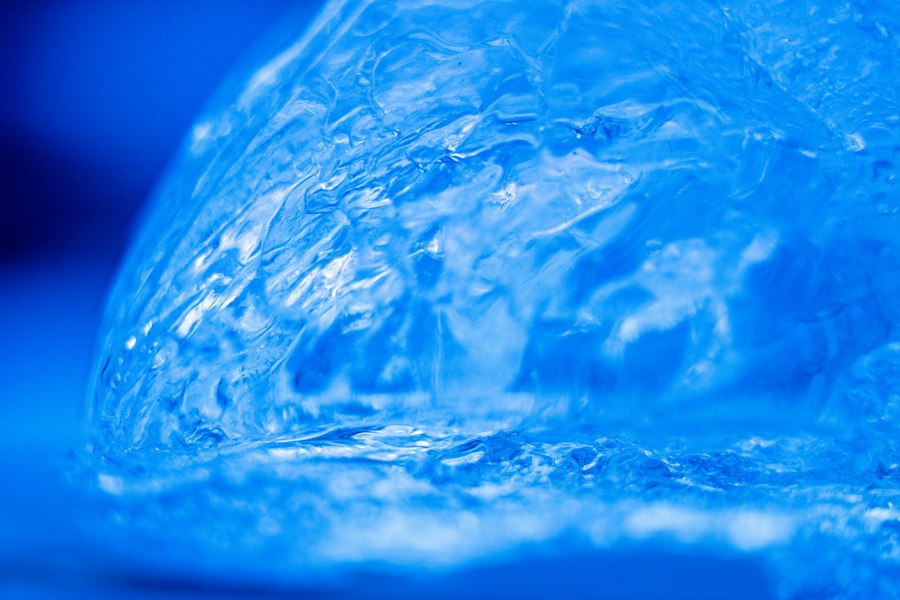
One of the most distinctive features of ice is its crystalline structure. Unlike the disordered arrangement of molecules in liquid water, water molecules in ice are locked into a highly organized, repeating three-dimensional lattice. This specific arrangement is responsible for many of ice’s unique and often counter-intuitive properties. The most common form of ice found on Earth is known as Ice Ih (Ice one h), which has a hexagonal crystalline structure.
Hexagonal Symmetry and Ice Crystal Shapes
The hexagonal symmetry of the Ice Ih lattice dictates the shapes of ice crystals we observe, such as snowflakes. Each water molecule in the ice crystal is bonded to four neighboring molecules via hydrogen bonds. Two of these bonds involve the hydrogen atoms of the water molecule, and the other two involve the lone pairs of electrons on the oxygen atom. This arrangement leads to a tetrahedral geometry around each oxygen atom. As ice crystals grow from water vapor in the atmosphere, this fundamental molecular arrangement influences the macroscopic shape. Factors like temperature and humidity during formation affect the precise growth patterns, leading to the incredible diversity of snowflake designs, all originating from the same underlying hexagonal symmetry.
Density Anomaly: Why Ice Floats
Perhaps the most remarkable property of ice, and one that has profound implications for aquatic life, is its lower density compared to liquid water. Most substances become denser as they solidify, but water is an exception. This anomaly is directly linked to the open, hexagonal crystal structure of ice. In liquid water, molecules are closer together, with more random packing. However, when water freezes into ice, the hydrogen bonds force the molecules into a more spread-out, crystalline arrangement. This creates more empty space within the ice lattice, making it less dense. The density of liquid water is at its maximum at about 4°C (39.2°F). As water cools from 4°C to 0°C, it actually becomes less dense, and ice, forming at 0°C, is even less dense. This is why ice floats on water, providing an insulating layer that prevents lakes and oceans from freezing solid, allowing life to persist in colder climates.
Investigating Density: The Floating Ice Experiment
A simple experiment to demonstrate the density difference between ice and water involves placing ice cubes in a glass of water. The observation is straightforward: the ice cubes float. To further explore this, one can try to push an ice cube completely beneath the surface of the water. It will quickly rise back up. This visual evidence directly illustrates that ice is less dense than the liquid water it displaces. To make it more quantitative, one could measure the volume of water displaced by a known mass of ice. Alternatively, one could observe that a glass filled to the brim with water with an ice cube floating in it will not overflow as the ice melts, because the volume of melted ice is equal to the volume of water it displaced when floating.
Factors Influencing the Freezing Process
While temperature is the primary driver of freezing, several other factors can influence how and when water transitions into its solid state. These factors are crucial for understanding freezing in both everyday scenarios and more specialized scientific applications. From the purity of the water to the pressure exerted upon it, a subtle interplay of forces governs the formation of ice.
The Impact of Purity and Dissolved Solutes
The presence of dissolved substances, such as salts or sugars, significantly affects the freezing point of water. Dissolved solutes interfere with the formation of the ordered ice crystal lattice. They get in the way of the water molecules trying to arrange themselves, making it more difficult for ice to form. Consequently, solutions have a lower freezing point than pure water. This phenomenon is known as freezing point depression. It’s the principle behind salting roads in winter to prevent ice formation. The salt dissolves in any existing moisture, lowering the freezing point and keeping the road surface from icing over.
Conducting a Freezing Point Depression Experiment
To observe freezing point depression, one can conduct a comparative experiment. Prepare two identical containers. Fill one with pure water and the other with a saline solution (e.g., water with a few tablespoons of salt dissolved in it). Place both containers in a freezer. Periodically check their progress. The pure water will begin to freeze at or around 0°C, while the saline solution will remain liquid at this temperature and will freeze at a noticeably lower temperature. This experiment clearly demonstrates how dissolved solutes alter the freezing point of water.
The Influence of Pressure on Freezing
Pressure also plays a role in the freezing point of water, although its effect is less pronounced than that of solutes for everyday temperatures. For most substances, increasing pressure increases the freezing point. However, water is an anomaly again. Due to its unique density anomaly, increasing pressure on ice actually lowers its freezing point. This is because pressure forces the molecules closer together, and since the solid (ice) is less dense than the liquid, pressure favors the denser phase, which is liquid water. This effect is most noticeable at very high pressures. A practical, albeit simplified, demonstration of this can be observed with an ice-skater’s blade. The immense pressure exerted by the skater’s weight on the thin blade can slightly melt the ice beneath it, creating a thin layer of water that allows the skater to glide smoothly.
Exploring Supercooling and Contamination Effects
As mentioned earlier, supercooling is the ability of water to remain liquid below its freezing point. This phenomenon is sensitive to impurities. Clean, pure water is more prone to supercooling than water containing particles. Introducing a nucleation site, such as a speck of dust or even the rough surface of a container, can trigger rapid freezing. Experiments can be designed to show how different containers or the addition of specific substances affect the supercooling of water. For instance, comparing the supercooling of distilled water in a very clean glass versus tap water in a regular glass can reveal differences in their susceptibility to spontaneous freezing. The rapid freezing of supercooled water upon agitation or the introduction of a seed crystal is a dramatic visual to witness.
In exploring the fascinating world of freezing water, you might find it interesting to read about various science experiments that delve into the properties of ice and temperature changes. One such article discusses the intriguing effects of supercooling water and how it can lead to instant freezing upon disturbance. To learn more about this captivating topic, you can check out the article on Freaky Science, where you will discover a range of experiments that can be conducted at home to observe the unique behaviors of water as it transitions to ice.
Properties of Ice: Beyond Just Being Cold
| Parameter | Value | Unit | Notes |
|---|---|---|---|
| Initial Water Temperature | 20 | °C | Room temperature before freezing |
| Freezing Point | 0 | °C | Temperature at which water begins to freeze |
| Time to Start Freezing | 15 | minutes | Time taken for water to reach 0°C in freezer |
| Complete Freezing Time | 45 | minutes | Time taken for water to fully freeze |
| Freezing Rate | 0.44 | °C/min | Average cooling rate until freezing point |
| Volume of Water | 250 | ml | Amount of water used in experiment |
| Freezing Point Depression | 0.5 | °C | Observed with added salt (NaCl) |
| Salt Concentration | 5 | g/L | Salt added to water sample |
Once water freezes, it takes on a new set of properties that are distinct from its liquid state. These properties are not only fascinating from a scientific perspective but also have significant practical implications, influencing everything from weather patterns to the way we use ice in our daily lives. Examining these properties reveals the fundamental changes that occur at the molecular level during the transition to solid.
Strength and Brittleness of Ice
Solid ice, while appearing solid and robust, exhibits characteristics of both strength and brittleness. Its strength refers to its ability to withstand applied forces without deforming. The crystalline structure of ice, with its strong hydrogen bonds, provides a degree of structural integrity. However, this structure also makes ice brittle, meaning it can fracture and break suddenly under stress, especially if the stress is applied rapidly. The exact strength and brittleness of ice can vary depending on its temperature, crystal structure, and the presence of any cracks or impurities. For example, very cold ice tends to be more brittle than ice closer to its melting point. This is why ice can shatter explosively when struck with a sharp force.
Thermal Conductivity of Ice
Ice is a relatively poor conductor of heat compared to metals, but it is a better conductor than liquid water. This means that heat transfers through ice at a moderate rate. The ordered structure of ice allows for vibrations (phonons) to propagate, carrying thermal energy. However, the hydrogen bonds, while strong, are not as efficient at transmitting these vibrations as the metallic bonds in metals. The thermal conductivity of ice is important in many natural phenomena, such as the formation of sea ice and the insulation provided by snow and ice cover. It also influences how quickly ice melts.
Ice as a Lubricant: The Skater’s Secret
The observation that ice acts as a lubricant for ice skaters is a classic example of a property that, until recently, had a somewhat debated explanation. While the pressure-induced melting of ice under the skate blade, as discussed earlier, plays a role, it’s not the sole explanation. Recent research suggests that friction itself generates heat, which melts a thin layer of ice, creating a lubricating film. Furthermore, the surface of ice is not perfectly smooth at a molecular level. There are always a few water molecules that are less tightly bound to the crystal lattice, and these can also contribute to slipperiness. This interplay of pressure, friction, and surface imperfections makes ice a surprisingly effective lubricant.
Practical Applications and Everyday Encounters with Ice
The science of freezing and the properties of ice are not confined to laboratories or academic discussions. They are woven into the fabric of our daily lives and underpin numerous technological and natural processes. From keeping our food cold to shaping landscapes, ice is a constant presence.
Refrigeration and Food Preservation
The most common application of freezing is in refrigeration and freezing food. By lowering the temperature of food below its freezing point, the growth of bacteria and other microorganisms is significantly slowed down, preventing spoilage and extending shelf life. This is because the low temperatures reduce the rate of chemical reactions and enzyme activity, and the scarcity of liquid water makes it difficult for microbes to metabolize and reproduce. The process of freezing food has been instrumental in modern food supply chains, allowing for the storage and transport of perishable goods over long distances and periods.
Weather and Climate: The Role of Ice
Ice plays a critical role in Earth’s climate system. Snow and ice cover large portions of the planet, reflecting solar radiation back into space. This phenomenon, known as the albedo effect, helps to regulate global temperatures. When ice melts, it exposes darker surfaces (land or water) that absorb more solar energy, leading to further warming – a positive feedback loop. The formation and melting of sea ice in the Arctic and Antarctic are major drivers of ocean currents and weather patterns. Glaciers and ice sheets also store vast amounts of freshwater and influence sea levels.
Engineering and Construction with Ice
While not as common as other applications, ice can be used in certain engineering and construction contexts. In polar regions, ice roads are sometimes built to facilitate transportation during winter months. Ice dams can be strategically constructed to control water flow. In art and entertainment, ice sculpting is a popular form of creative expression. Historically, ice was harvested and stored in ice houses for use during warmer months, demonstrating an early understanding of its preservative properties. The development of artificial ice rinks has made ice sports accessible year-round in many locations. The science behind creating and maintaining these rinks involves careful control of temperature and water quality.
The Science of Ice in Sports and Recreation
Beyond ice skating, many sports and recreational activities are directly dependent on the presence and properties of ice. Skiing, snowboarding, hockey, curling, and figure skating all rely on ice or snow for their existence. The performance of athletes in these disciplines is intimately linked to the condition of the ice surface. Factors such as the smoothness, hardness, and temperature of the ice can significantly impact speed, control, and the overall enjoyment of the sport. Maintenance crews for ice arenas and ski resorts employ sophisticated techniques to ensure optimal ice conditions, applying principles of thermodynamics and material science to create the perfect playing surface. The study of friction and the interaction of sports equipment with ice continues to be an active area of research, aiming to improve performance and safety.
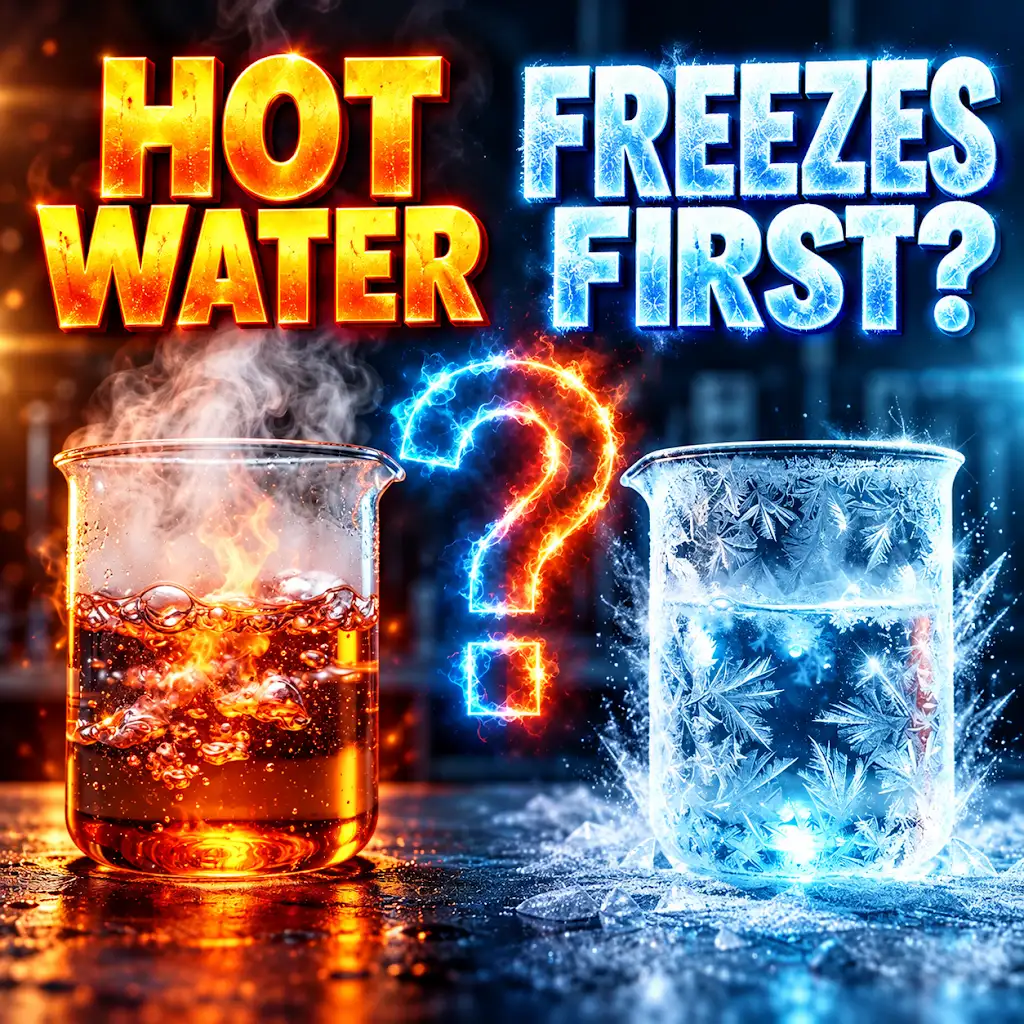
Why Hot Water Freezes Faster Than Cold (The Mpemba Effect)
FAQs
What materials are needed for the freezing water science experiment?
To conduct the freezing water science experiment, you will need water, a container to hold the water, a freezer, a thermometer, and optionally food coloring or other additives for variations.
How does the freezing water science experiment work?
The freezing water science experiment demonstrates the process of water turning from a liquid to a solid state when exposed to freezing temperatures. By placing water in a container and placing it in the freezer, the temperature of the water decreases until it reaches the freezing point, causing it to solidify into ice.
What are some variables that can be tested in the freezing water science experiment?
Some variables that can be tested in the freezing water science experiment include the time it takes for water to freeze at different temperatures, the effect of additives like salt or sugar on the freezing point of water, and the formation of ice crystals with different freezing methods.
What are some real-life applications of the freezing water science experiment?
The freezing water science experiment can help students understand the concept of phase changes and the properties of water. It also has practical applications in industries like food preservation, climate science, and material science where understanding freezing processes is crucial.
Are there any safety precautions to consider when conducting the freezing water science experiment?
When conducting the freezing water science experiment, it is important to handle the container with care to avoid spills or injuries. Additionally, make sure to follow proper freezer safety guidelines and avoid using glass containers that may crack under freezing temperatures.