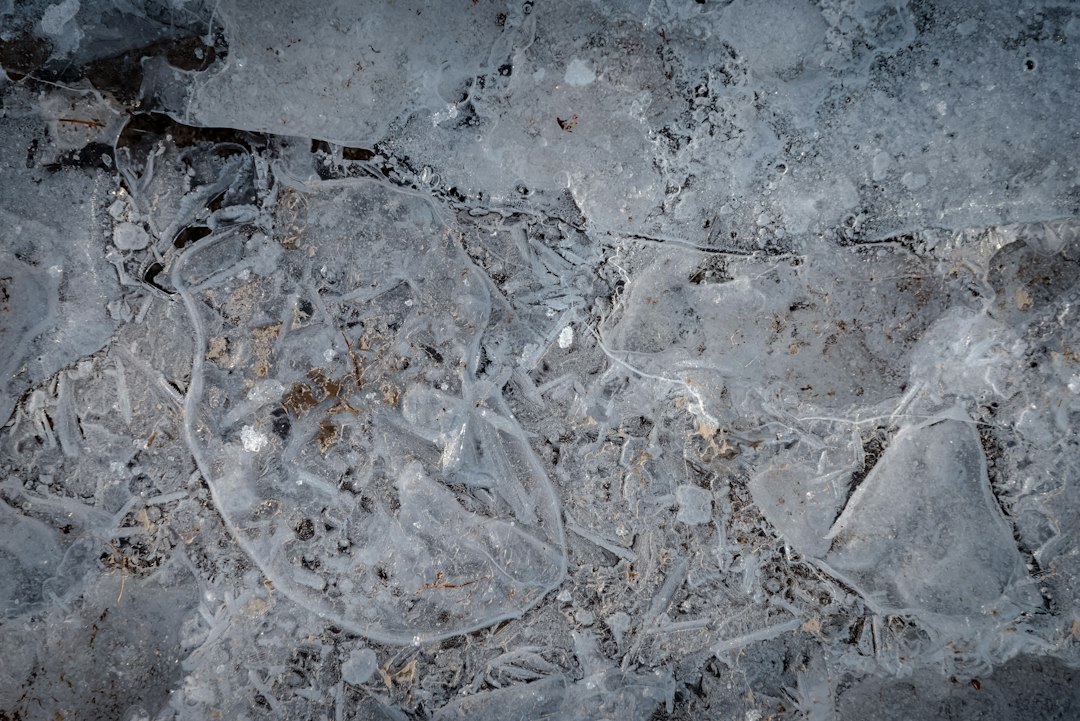
Understanding Freezing Solid vs. First Ice: A Fundamental Distinction
The transition of water from a liquid to a solid state is a ubiquitous phenomenon, shaping landscapes, influencing weather patterns, and playing a crucial role in countless natural processes. However, the seemingly simple act of freezing encompasses a spectrum of behaviors, often misunderstood under broad terms like “ice.” Two key distinctions emerge when observing this transformation: the formation of “first ice” and the state of being “frozen solid.” While both involve a loss of fluidity, they represent different stages and exhibit distinct characteristics. Understanding these differences is not merely an academic exercise; it holds practical implications in fields ranging from meteorology and climatology to civil engineering and even culinary arts. This article delves into the core differences between first ice and the state of being frozen solid, exploring the underlying scientific principles, observable manifestations, and the significance of this crucial distinction.
In exploring the fascinating phenomenon of freezing solid versus the formation of first ice, one can gain deeper insights by reading a related article on the topic. This article delves into the scientific principles behind these processes, highlighting the differences in temperature and conditions that lead to each state. For more information, you can check out the article at Freaky Science.
The Genesis of Ice: Delving into Nucleation and Crystal Formation
The process by which water transitions from a liquid to a solid is fundamentally governed by the principles of thermodynamics and the behavior of water molecules. The formation of ice is not an instantaneous event but rather a gradual process that begins with nucleation, the initial formation of tiny ice crystals. This is where the concept of “first ice” finds its most literal meaning.
The Crucial Role of Nucleation
Nucleation is the critical first step in the crystallization of any substance, and water is no exception. For ice crystals to form, a stable nucleus must emerge from the supercooled liquid. This nucleus is essentially a tiny, ordered cluster of water molecules that have aligned themselves in the hexagonal crystalline structure characteristic of ice. In pure water, nucleation can be a challenging process. Water molecules possess a significant amount of kinetic energy, and for them to slow down and arrange themselves into a rigid lattice, the temperature must drop below the standard freezing point of 0°C (32°F). This phenomenon is known as supercooling.
Homogeneous Nucleation: This refers to the spontaneous formation of ice nuclei within the bulk of the liquid itself, without the assistance of any external surfaces or impurities. Homogeneous nucleation of pure water typically occurs at significantly lower temperatures, around -38°C to -40°C (-36°F to -40°F). At these extremely low temperatures, the thermal motion of the water molecules is sufficiently suppressed that they can overcome the energy barrier required to form a stable nucleus. While theoretically possible in laboratory settings with highly purified water, homogeneous nucleation is rarely observed in natural environments due to the pervasive presence of impurities.
Heterogeneous Nucleation: In almost all natural scenarios, ice formation is initiated by heterogeneous nucleation. This process involves the formation of ice nuclei on existing surfaces or the adsorption of impurities that act as nucleating agents. These agents provide a more energetically favorable template for water molecules to arrange themselves into the ice lattice. Common heterogeneous nucleating agents include:
- Dust particles: Microscopic particles of soil, minerals, or other debris suspended in the atmosphere or water can provide surfaces for ice crystal formation.
- Microorganisms: Certain bacteria and fungi, particularly those found in soil and on plant surfaces, produce proteins that are highly effective ice-nucleating agents. These biological nucleators can trigger ice formation at temperatures as high as -2°C to -5°C (28°F to 23°F).
- Irregular surfaces: Any microscopic imperfections or rough patches on surfaces within the water or in contact with it can promote heterogeneous nucleation.
The presence of these nucleating agents significantly lowers the supercooling requirement, allowing ice to form at temperatures closer to 0°C. This is why a puddle might start to develop a thin film of ice on its surface on a chilly evening, even if the air temperature is only slightly below freezing.
The Structure of Ice: A Crystalline Marvel
Once a stable nucleus has formed, surrounding water molecules begin to attach themselves to it, extending the ice crystal lattice. Water molecules are polar, meaning they have a slight positive charge on the hydrogen atoms and a slight negative charge on the oxygen atom. In liquid water, these molecules are constantly in motion, forming and breaking hydrogen bonds with each other. As the temperature drops and nucleation occurs, these hydrogen bonds become more stable and ordered, leading to the characteristic hexagonal structure of ice.
The primary form of ice found in nature is Ice Ih (Ice one hexagonal). This crystalline structure is characterized by layers of water molecules arranged in a hexagonal pattern, with each oxygen atom bonded to four hydrogen atoms through hydrogen bonds. Two of these hydrogen bonds are directed towards neighboring oxygen atoms, while the other two are more strongly associated with the specific oxygen atom. This intricate arrangement gives ice its rigidity and its lower density compared to liquid water, which is why ice floats.
The process of crystal growth can occur in various ways, influencing the appearance of the “first ice.” If nucleation happens uniformly throughout a body of water, a more solid mass of ice might form. However, if nucleation occurs primarily at the surface, as is common with atmospheric cooling, thin, delicate ice structures like frazil ice or anchor ice can develop. These initial formations are often less dense and can have a more porous or feathery appearance compared to a solid block of ice.
Defining First Ice: The Initial Manifestations of Solidification
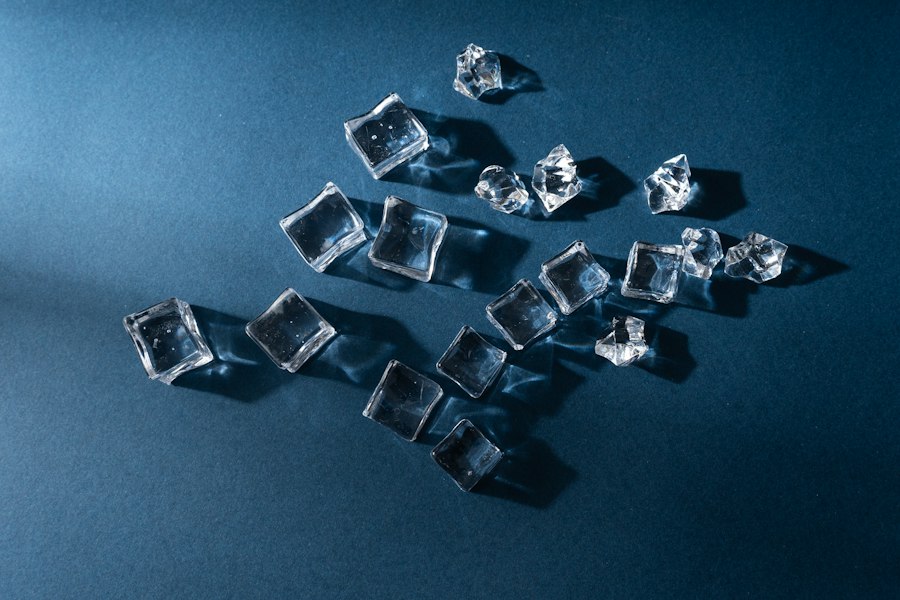
“First ice” is a term that describes the very initial stages of ice formation. It represents the point at which the liquid water begins to lose its fluidity and exhibit solid-like characteristics, but before it has fully transformed into a substantial, rigid mass. This stage is characterized by specific physical properties and often takes on particular forms depending on the environmental conditions.
Appearance and Texture
The visual characteristics of first ice are often its most distinguishing features. Unlike a solid block of ice, first ice is typically thin, delicate, and can appear in various forms:
- Surface film: This is perhaps the most common manifestation of first ice. A thin, transparent or slightly opaque layer of ice forms on the surface of a body of water. It can initially appear as a shimmering or frosty layer, gradually thickening as more water freezes. This film may be continuous or broken by areas of unfrozen water.
- Needles or plates: Under specific conditions, ice crystals can grow outwards from the nucleation sites as distinct needles or plates. This is often observed in supercooled water where crystal growth is rapid. These formations can appear scattered across the surface or clustered together.
- Frazil ice: This is a collection of ice crystals that form in turbulent, supercooled water. Unlike the smooth surface ice, frazil ice appears as small, slushy particles or “ice flowers” that can accumulate to form a viscous mass. It is often seen in rivers and streams during very cold weather.
- Anchor ice: This type of ice forms on the riverbed or other submerged surfaces, rather than the free surface. It typically forms when supercooled water comes into contact with the colder bed material, and the ice crystals adhere to it. Anchor ice can be a significant problem for hydropower facilities and navigation.
The texture of first ice is also distinct. It is often brittle, easily broken, and can have an airy or porous structure due to trapped air bubbles or the space between ice crystals. Touching first ice might reveal its fragility, and it may readily disintegrate or melt back into liquid water with minimal disturbance or warming.
Temperature and Thickness Thresholds
While there isn’t a universally defined thickness or temperature threshold for what constitutes “first ice,” it generally refers to ice formations that are:
- Thin: Typically ranging from a few micrometers to a few millimeters in thickness.
- Newly formed: Indicating a recent transition from liquid to solid.
- Potentially unstable: More susceptible to melting or breaking apart compared to thicker, established ice.
The temperature at which first ice forms is generally at or slightly below the freezing point of water (0°C or 32°F), influenced by the degree of supercooling required for nucleation. However, even at temperatures slightly above 0°C, factors like evaporative cooling or contact with a colder surface can lead to the formation of first ice.
Environmental Factors Influencing First Ice Formation
Several environmental factors play a significant role in the type and extent of first ice formation:
- Stillness of water: Calm water conditions favor the formation of smooth, continuous surface ice films. Turbulence, as seen in rivers, is more likely to produce frazil ice.
- Air temperature: Colder air temperatures accelerate the rate of heat loss from the water, promoting faster freezing.
- Presence of impurities: As discussed earlier, impurities act as nucleating agents, allowing ice to form at higher temperatures and potentially influencing the crystal structure of the first ice.
- Surface area to volume ratio: Bodies of water with a larger surface area relative to their volume will lose heat more rapidly, leading to quicker formation of surface ice.
- Wind: Wind can increase evaporative cooling, which can lower the water temperature and promote ice formation. However, strong winds can also break up newly formed ice.
In essence, first ice is the tentative step into the solid state. It is the initial evidence of the molecular reorganization of water into a crystalline structure, a delicate precursor to the more robust and encompassing state of being frozen solid.
The State of Being Frozen Solid: A Complete Transformation
“Frozen solid” signifies a complete and thorough transition of a body of water into a rigid, crystalline state. This is in stark contrast to the initial, often delicate formations of first ice. When something is frozen solid, it implies that the entire volume, or a substantial portion thereof, has achieved a temperature at or below its freezing point and has undergone complete solidification.
Uniform Temperature and Rigidity
The defining characteristic of being frozen solid is the uniform low temperature throughout the substance. The entire mass of water has reached a thermal state where the molecular kinetic energy is significantly reduced, allowing for the complete formation of the ice lattice. This results in a material that exhibits uniform rigidity.
- Uniform Rigidity: Unlike first ice, which might be brittle and easily fractured, a body of water that is frozen solid possesses a consistent and uniform hardness. Attempts to deform it will meet significant resistance, and breakage will likely result in clean fractures rather than crumbling or disintegration.
- Lack of Fluidity: The most obvious indicator of being frozen solid is the complete absence of any liquid component. There are no pockets of unfrozen water, and the entire substance behaves as a solid mass.
Ice Thickness and Structural Integrity
The concept of being frozen solid is intrinsically linked to thickness and structural integrity. While first ice might be a thin film, frozen solid implies a substantial depth of ice formation.
- Substantial Thickness: This can range from several centimeters for smaller bodies of water like a bucket of water left outside, to meters for large lakes, rivers, or glaciers. The thicker the ice, the more profoundly it is considered “frozen solid.”
- Structural Integrity: A body of water frozen solid possesses significant structural integrity. It can bear considerable weight, forming platforms for activities like ice skating or even supporting heavy vehicles if sufficiently thick. This is a direct consequence of the complete interlocking of ice crystals throughout the entire volume.
- Resistance to Melting: Due to its substantial mass and internal temperature being at or below freezing, a frozen solid body of water is much more resistant to melting than first ice. It requires a significant input of thermal energy to raise its temperature and initiate the phase transition back to a liquid.
Implications and Applications
The state of being frozen solid has numerous practical implications and applications across various domains:
- Winter Navigation and Recreation: Frozen solid bodies of water create opportunities for activities like ice fishing, snowmobiling, and even building temporary structures like ice roads or igloos. The ability of the ice to support weight is paramount for these activities.
- Food Preservation: Freezing food solid is a primary method of preservation. The low temperature inhibits the growth of microorganisms and slows down enzymatic processes that cause spoilage, extending the shelf life of perishable items.
- Civil Engineering: Understanding ice formation and the properties of frozen solid materials is crucial for designing infrastructure in cold climates. Bridges, pipelines, and buildings in regions with permafrost or seasonal freezing need to account for the expansion and contraction of water as it freezes solid.
- Geology and Glaciology: Large bodies of ice, such as glaciers and ice sheets, are essentially massive accumulations of water that have been frozen solid over millennia. Studying their formation, movement, and melting provides vital information about Earth’s climate history and future changes.
- Scientific Research: In laboratories, controlled freezing of liquids to a solid state is fundamental for various experiments, from cryopreservation of biological samples to the study of material properties at low temperatures.
In summary, being frozen solid represents the culmination of the freezing process. It is a state of complete solidification, characterized by uniform rigidity, substantial thickness, and significant structural integrity, with wide-ranging practical and scientific implications.
When exploring the fascinating differences between freezing solid and the formation of first ice, it’s interesting to consider how these processes affect various ecosystems. For a deeper understanding of these phenomena, you might want to check out this related article on freezing processes, which delves into the science behind ice formation and its implications for wildlife and climate. Understanding these concepts can enhance our appreciation of the natural world and the delicate balance of temperatures that influence life.
The Critical Crossover: Transitioning Between States
| Metric | Freezing Solid | First Ice |
|---|---|---|
| Definition | Complete solidification of a liquid into a solid state | Initial formation of ice crystals on a liquid surface |
| Temperature | At or below 0°C (32°F) for water, sustained | At or just below 0°C (32°F), initial freezing point |
| Phase Change | Liquid to solid throughout the entire volume | Liquid to solid begins at surface or edges |
| Duration | Longer time, depends on volume and conditions | Short time, initial stage of freezing |
| Appearance | Opaque or clear solid block | Thin, patchy ice crystals or sheets |
| Impact on Environment | Solid ice can support weight, affects ecosystems | May cause slippery surfaces, initial hazard |
| Examples | Frozen lake, ice cubes fully solidified | Frost on pond surface, ice forming on car windshield |
The journey from liquid water to a solid state is not an abrupt switch but a continuous process of molecular reorganization. The distinction between “first ice” and “frozen solid” lies in the different phases and characteristics exhibited during this transition. Understanding the crossover point and the factors that govern it is essential for comprehending the full spectrum of ice formation.
The Dynamic Equilibrium of Freezing
At temperatures just below 0°C (32°F), a dynamic equilibrium exists at the interface between liquid water and ice. While ice crystals are forming and growing, there is also a continuous process of water molecules detaching from the ice lattice and returning to the liquid state.
- Net Growth: For ice to form and thicken, the rate of molecule addition to the ice lattice must exceed the rate of molecule detachment. This net growth is what leads to the expansion of ice formations.
- Influence of Temperature Gradient: The rate of net growth is heavily influenced by the temperature gradient across the ice-water interface. A steeper gradient (a greater difference in temperature between the bulk liquid and the ice surface) will lead to faster freezing.
- Latent Heat of Fusion: The process of freezing releases latent heat of fusion. This energy must be dissipated for ice to continue forming. In still air or water, this heat dissipates relatively slowly, allowing for a more gradual thickening. In turbulent environments or with rapid air circulation, heat dissipation is faster, accelerating the freezing process.
Thickness as a Key Differentiator
The most obvious differentiator between first ice and frozen solid is thickness.
- First Ice: Represents the initial stages of crystal formation and growth, typically characterized by very thin layers, often measured in micrometers or millimeters. It is the nascent stage where the liquid is just beginning to assert its solid characteristics.
- Frozen Solid: Implies a significant depth of solidified water. While there isn’t a precise numerical threshold, it suggests a layer of ice substantial enough to exhibit considerable structural integrity and resistance to melting. For example, a thin sheen of ice on a pond is “first ice,” while a thick, walkable layer is “frozen solid.”
Structural Changes Accompanying Growth
As ice grows from its initial formation to a frozen solid state, significant structural changes occur:
- Initial Crystal Interlocking: First ice might consist of individual, loosely interlocked crystals, particularly if frazil ice is forming.
- Denser Lattice Formation: As freezing progresses and temperatures drop further below 0°C, the ice lattice becomes denser and more ordered. The hexagonal structure becomes more pronounced, and the crystals grow and merge, creating a more cohesive and rigid material.
- Inclusion of Air Bubbles: During the transition to frozen solid, air that was dissolved in the liquid water can become trapped within the ice. The appearance of these bubbles can change as the ice thickens, from small, dispersed bubbles in first ice to larger, elongated bubbles in thicker, more slowly frozen ice.
The crossover from first ice to frozen solid is a continuous spectrum. There isn’t a single, definitive moment of transition, but rather a gradual progression where the characteristics of the ice evolve. However, recognizing the initial fragile formations versus the robust, thick layers is crucial for practical decision-making, especially concerning safety on frozen water bodies.
Practical Implications and Safety Considerations
The distinction between first ice and frozen solid has profound practical implications, particularly concerning safety. Misunderstanding or underestimating these differences can lead to hazardous situations.
Safety on Frozen Water Bodies
The most critical application of understanding this distinction lies in assessing the safety of frozen water bodies like lakes, ponds, and rivers.
- First Ice Danger: First ice is inherently dangerous. It is thin, brittle, and may not be able to support any significant weight. Even a seemingly solid-looking film can break easily under the weight of a person, animal, or vehicle. It is crucial to treat any newly formed ice with extreme caution and avoid venturing onto it.
- Assessing Thickness for Safety: To determine if ice is safe to walk on, a general rule of thumb is to look for a minimum thickness of 4 inches (10 cm) of clear, solid ice for walking. Thicker ice is required for activities like snowmobiling (8-12 inches or 20-30 cm) or even driving a car (12-15 inches or 30-38 cm). Ice thickness can vary significantly even within the same body of water due to currents, varying depths, and the presence of springs or inlets.
- Appearance as an Indicator: While appearance can be deceiving, very clear, solid ice is generally stronger than opaque or white ice, which often indicates the presence of trapped air bubbles or a less dense structure. However, thickness remains the primary determinant of safety.
- Factors Affecting Ice Strength: Several factors can compromise ice strength, even if it appears to be of sufficient thickness:
- Currents: Moving water beneath the ice can create thin spots and channels.
- Springs and inlets: Groundwater seeping into the body of water can create warmer areas and weaken the ice.
- Snow cover: Snow acts as an insulator, slowing down the freezing process and potentially making the ice weaker.
- Ice aging: Ice can become weaker over time, especially with fluctuating temperatures.
Other Applications of the Distinction
Beyond safety on frozen water, the difference between first ice and frozen solid is relevant in other contexts:
- Weather Forecasting and Climate Studies: Meteorologists and climatologists monitor the formation and extent of ice cover. The timing of first ice formation can indicate the onset of winter and influence local weather patterns. The persistence and thickness of ice cover are crucial indicators of climate change.
- Agriculture: In some agricultural practices, understanding ice formation is important. For instance, frost on plants is a form of first ice, and its severity can impact crop yields. The freezing of soil to a significant depth (frozen solid) can affect root systems and nutrient availability.
- Culinary Applications: In cooking, the distinction is sometimes relevant. For example, when making ice cream or sorbet, the formation of small ice crystals (approaching first ice) is desirable for a smooth texture, whereas large ice chunks (frozen solid) indicate an undesirable texture. Similarly, rapidly freezing delicate foods can create fine ice crystals, preserving texture better than slow freezing which can lead to large ice crystal formation.
- Industrial Processes: In industries that rely on freezing or refrigeration, controlling the rate of freezing and the final ice structure is often critical. For instance, in the production of artificial ice, the desired ice formation characteristics will depend on its intended use.
In conclusion, the seemingly simple concept of ice formation encompasses a crucial distinction between the initial delicate stages of “first ice” and the complete solidification represented by “frozen solid.” This understanding is not just for scientific curiosity but is vital for ensuring safety, guiding practical applications, and informing our understanding of the natural world. Always exercise caution and consult reliable resources when assessing the safety of frozen water bodies.
Why Hot Water Freezes Faster Than Cold (The Mpemba Effect)
FAQs
What is the difference between freezing solid and first ice?
Freezing solid refers to the process of a substance turning completely into a solid state, while first ice is the initial formation of ice crystals on the surface of a liquid.
How do freezing solid and first ice occur?
Freezing solid occurs when the temperature of a substance drops below its freezing point, causing the molecules to slow down and arrange themselves into a solid structure. First ice occurs when the temperature of a liquid reaches the freezing point, leading to the formation of ice crystals on the surface.
Which one is more gradual, freezing solid or first ice?
Freezing solid is typically a more gradual process as the entire substance needs to reach the freezing point before solidifying. In contrast, first ice can form relatively quickly on the surface of a liquid once it reaches the freezing point.
Can freezing solid and first ice occur simultaneously?
Yes, freezing solid and first ice can occur simultaneously in some cases. For example, when a liquid is rapidly cooled, both the formation of ice crystals on the surface (first ice) and the solidification of the entire substance (freezing solid) can happen at the same time.
What are some examples of freezing solid and first ice in everyday life?
An example of freezing solid is water turning into ice cubes in a freezer, while first ice can be seen when frost forms on a window pane during cold weather.