
The Cold Front: A Deep Dive into Freezer Temperature Dynamics
The fundamental purpose of a freezer is to maintain a consistently low temperature, thereby inhibiting microbial growth and preserving food quality. However, the “cold” in a freezer is not a monolithic entity. The temperature within the appliance is a dynamic system, influenced by numerous factors and subject to variations that can impact its effectiveness. Understanding these nuances is crucial for anyone seeking to optimize their freezer’s performance and ensure food safety. The perceived temperature, the actual temperature, and the rate at which they change are all critical components of this delicate balance. This section will explore the various aspects that contribute to the overall coldness of a freezer, from its design and operational cycles to the impact of external environmental conditions.
Understanding Freezer Thermostat Settings
The thermostat in a freezer is the brain of the operation, dictating the target temperature. Users typically interact with a dial or digital display that sets a desired level of cold. However, this setting is not an exact, unwavering number. It represents a range within which the freezer’s compressor will cycle on and off to maintain the temperature. A higher setting, such as “coldest,” will encourage the compressor to run more frequently and for longer durations, aiming for a lower average temperature. Conversely, a “less cold” setting will result in less frequent compressor cycles and a slightly higher average temperature. The precision of these settings can vary between different freezer models, with higher-end appliances often offering more granular control and better temperature stability. It is important for users to understand that the setting is a guideline, not a precise measurement, and that fluctuations are inherent to the system.
The Illusion of Absolute Cold: Set Points Versus Actual Temperatures
The number displayed on a freezer’s thermostat is a set point, an idealized target. The actual temperature inside the freezer can and will fluctuate around this set point. This is due to the cyclical nature of the refrigeration system. When the internal temperature rises above a certain threshold, the compressor kicks in to cool it down. Once the desired temperature is reached, the compressor shuts off, and the temperature gradually begins to rise again due to heat infiltration from the surrounding environment. This continuous cycle creates a wave-like temperature fluctuation. For example, a freezer set to 0°F (-18°C) might experience its temperature rising to, say, 4°F (-15°C) before the compressor reactivates and brings it back down to -2°F (-19°C). While these variations may seem minor, they can have a cumulative effect on food preservation over time.
The Influence of Freezer Design and Technology
The physical construction and technological features of a freezer play a significant role in its ability to maintain stable, low temperatures. From the quality of insulation to the efficiency of the compressor and the presence of advanced cooling systems, each element contributes to the overall thermal performance. The goal of good design is to minimize heat gain from the outside and maximize the efficiency of heat removal from the inside. Newer technologies aim to reduce the temperature swings and improve energy efficiency, making them more effective and economical to operate.
Insulation: The Silent Guardian of Cold
The insulation surrounding the freezer’s interior is its primary defense against the ingress of ambient heat. High-quality insulation, often composed of polyurethane foam, creates a barrier that significantly slows down the transfer of heat from the warmer outside environment to the colder interior. The thickness and density of this insulation are critical. A well-insulated freezer will require less energy to maintain its temperature because less heat is constantly trying to seep in. Conversely, older or poorly insulated models will struggle more, leading to more frequent compressor cycles and potentially less stable temperatures. The seals on the freezer door are also an integral part of the insulation system. Damaged or worn seals allow warm, moist air to enter, increasing the cooling load on the appliance and leading to frost buildup.
Compressor and Cooling Systems: The Engine of Freezing
The compressor is the heart of any refrigeration system. It compresses refrigerant gas, increasing its temperature and pressure. This hot, high-pressure gas then flows through condenser coils, where it releases heat to the surrounding air. The refrigerant then expands through an expansion valve, dropping its temperature and pressure dramatically. This cold refrigerant then circulates through evaporator coils inside the freezer, absorbing heat from the internal air and thus cooling the contents. Different types of compressors and cooling systems exist, with newer models often featuring variable-speed compressors that can adjust their output based on cooling demand, leading to more consistent temperatures and improved energy efficiency. Frost-free technology, a common feature in modern freezers, utilizes a fan to circulate cold air and a defrost heater to periodically melt any accumulated frost, preventing its buildup on the evaporator coils, which can impede airflow and cooling efficiency.
In exploring the intriguing dynamics of temperature and its effects on various substances, the freezer experiment comparing hot and cold items offers fascinating insights. For a deeper understanding of similar scientific phenomena, you can check out the related article on Freaky Science, which delves into the principles of thermodynamics and how temperature influences the behavior of different materials. To read more, visit Freaky Science.
The Hot vs. Cold Paradox: Initial Temperature and Freezing Time
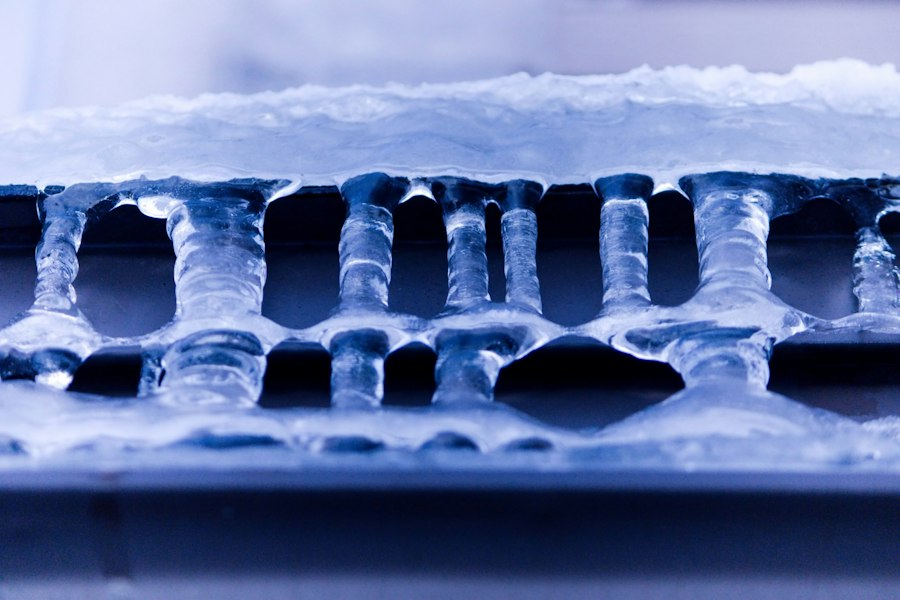
The seemingly intuitive notion that placing warmer items into a freezer will take longer to freeze is fundamentally correct. However, the extent of this difference and the underlying physics are more complex than a simple linear relationship. The rate at which an object loses heat to its surroundings is governed by various thermodynamic principles. This section will delve into the science behind how the initial temperature of an item influences the time it takes to reach freezing point and the subsequent effects on food quality. The energy that needs to be removed from an item to freeze it is a significant factor, and this energy is directly related to its initial temperature and mass.
The Physics of Heat Transfer: Cooling Curves Explained
When an item is placed in a freezer, it begins to lose heat to the colder air surrounding it. This process is governed by the principles of heat transfer, primarily convection and conduction. Convection is the transfer of heat through the movement of fluids (in this case, air), while conduction is the transfer of heat through direct contact. The rate of heat transfer depends on factors such as the temperature difference between the object and its environment, the surface area of the object, and the thermal conductivity of the object and the surrounding air. A “cooling curve” graphically represents the change in an object’s temperature over time. For a warm item, this curve will show a steeper initial descent as it rapidly loses heat, followed by a slower descent as it approaches the freezer’s temperature.
Latent Heat: The Energy of Phase Change
A critical aspect of freezing is the phase change from liquid to solid. This process requires the removal of a significant amount of energy known as latent heat of fusion. Even after an item has reached its freezing point (e.g., 32°F or 0°C for water), it will remain at that temperature until all of its liquid has transformed into ice. This is why the cooling curve typically shows a plateau or a significantly slower rate of temperature decrease during the freezing process. A warmer item will have more sensible heat to lose before reaching its freezing point, and then it will still need to undergo the phase change requiring the removal of latent heat. The total energy that needs to be extracted from a warmer item is therefore greater.
Practical Implications: What Happens to Your Food
The difference in freezing times between hot and cold items is not just a matter of convenience; it has direct implications for food quality. Rapid freezing is generally desirable for preserving the texture and nutritional value of food. When food freezes slowly, ice crystals can form and grow larger. These larger ice crystals can rupture cell walls, leading to a mushy texture upon thawing and loss of moisture. Conversely, rapid freezing promotes the formation of smaller ice crystals, which are less damaging to the food’s structure. Therefore, placing items that are already cold or at room temperature into the freezer will generally result in better quality frozen food compared to placing hot items.
The Ice Crystal Debate: Size Matters for Texture
The formation and size of ice crystals within food during freezing are paramount to its quality after thawing. When water molecules in food transition from liquid to solid, they arrange themselves into a crystalline structure. In slow freezing, where the temperature drops gradually, molecules have more time to migrate and join existing crystals, leading to the growth of large, sharp ice crystals. These crystals can physically damage the delicate cellular structures of food, particularly in fruits, vegetables, and meats. Upon thawing, the damaged cells release their internal fluids, resulting in a loss of moisture and a mushy, undesirable texture. Fast freezing, on the other hand, minimizes the time available for crystal growth. The rapid temperature drop forces water molecules to solidify quickly and in a more scattered fashion, resulting in a multitude of small, uniform ice crystals that cause less cellular damage.
Nutritional Integrity: Minimizing Degradation
Beyond texture, the rate of freezing also influences the nutritional content of food. While freezing itself is an excellent method for long-term preservation and does not inherently degrade nutrients, the processes associated with slow freezing can indirectly lead to some nutritional loss. As mentioned, slow freezing can cause more damage to cell structures, potentially leading to the leakage of water-soluble vitamins (like B vitamins and vitamin C) when the food is thawed. Furthermore, the longer an item spends in the temperature range where enzymatic activity is still possible, even if slowed, the greater the potential for minor degradation of certain nutrients. Therefore, achieving a faster freeze, by starting with colder items, helps to lock in nutrients more effectively and minimize the cascade of negative effects associated with slow freezing.
The Energetic Equation: Power Consumption and Freezer Load

The decision of whether to freeze hot or cold items has a direct impact on a freezer’s energy consumption. A colder item requires less energy to reach and maintain freezing temperatures compared to a hotter item. This difference in energy expenditure is not trivial and can contribute to higher electricity bills and a greater environmental footprint. Understanding the energetic cost of freezing different temperature items is essential for both economic and ecological reasons. This section will explore the relationship between the initial temperature of items and the subsequent power draw of a freezer, highlighting the energy savings associated with pre-chilling.
The Thermodynamics of Cooling: Work Done by the Compressor
The refrigeration cycle within a freezer is fundamentally about moving heat from a colder interior to a warmer exterior. This process requires work, which is performed by the compressor. The amount of work required is directly proportional to the amount of heat that needs to be removed. A warmer item contains more internal energy (both sensible and potentially latent heat if it’s not yet frozen) than a colder item. Therefore, more energy must be extracted from the warmer item to bring it down to the desired freezing temperature. This translates directly into the compressor having to run for longer periods or at a higher capacity, consuming more electricity.
Sensible Heat vs. Latent Heat: The Energy Bill
When considering the energy required, it’s important to distinguish between sensible heat and latent heat. Sensible heat is the heat energy that causes a change in temperature of a substance. Latent heat is the energy required for a substance to change its state (e.g., from liquid to solid during freezing) without a change in temperature. A warmer item will have a greater amount of sensible heat that needs to be removed before it even reaches its freezing point. Once it reaches its freezing point, the significant amount of latent heat of fusion must be extracted. A colder item, already closer to its freezing point, requires the removal of less sensible heat. While the latent heat requirement is the same for a given substance regardless of its initial temperature, the overall energy expenditure is considerably higher for warmer items due to the combined sensible and latent heat removal.
Optimizing Freezer Efficiency: Practical Strategies
Recognizing the energy implications, adopting practices that minimize the freezer’s workload can lead to significant energy savings. The simplest and most effective strategy is to allow hot food to cool down considerably before placing it in the freezer. This pre-cooling step significantly reduces the amount of heat the freezer’s compressor has to contend with. Other strategies, such as ensuring proper door seals, not overpacking the freezer, and maintaining appropriate ambient room temperatures, also contribute to overall efficiency.
Pre-Chilling: The Smart Approach to Freezing
The most impactful way to reduce a freezer’s energy load is through pre-chilling. Allowing hot foods to cool at room temperature for a reasonable period (usually no more than two hours to maintain food safety) before transferring them to the freezer can drastically reduce the freezer’s effort. This not only saves energy but also prevents the warmer food from raising the temperature of already frozen items, which can lead to thawing and re-freezing cycles for those items, further impacting their quality and increasing energy consumption. For very hot items, using an ice bath or rapid cooling techniques in the refrigerator before transferring to the freezer can be even more effective.
Managing Freezer Load: Airflow and Space
An overstuffed freezer can impede efficient cooling. When the freezer compartment is packed too tightly, cold air cannot circulate freely around the items. This creates “hot spots” where items may not freeze as effectively, or the freezer has to work harder to push cold air through the dense mass. Conversely, an almost empty freezer can also be less efficient, as there is less thermal mass to help stabilize the temperature. Regularly organizing and defrosted freezers (if not frost-free) ensures that the cooling coils are not blocked by ice, allowing for optimal airflow and heat exchange. Maintaining a balance of frozen items and ensuring adequate space for air circulation are key to efficient operation.
Food Safety and Quality: The Long-Term Impact of Freezing Method
The way food is frozen, particularly the rate and the initial temperature, has profound long-term implications for its safety and quality. While freezing is an excellent preservation method, improper practices can lead to a decline in both aspects. Understanding these impacts is crucial for ensuring that frozen foods remain both safe to consume and enjoyable to eat. This section will explore the effects of freezing hot versus cold items on microbial activity, nutrient retention, and textural integrity over extended storage periods. The goal is not just to freeze food, but to freeze it in a manner that best preserves its intended characteristics.
Microbial Activity: The Chill Factor
Freezing is a highly effective method for inhibiting microbial growth. Low temperatures slow down or halt the metabolic processes of bacteria, yeasts, and molds, rendering them inactive. However, the effectiveness of this inhibition is directly related to how quickly the food reaches and maintains its frozen state. Freezing hot items allows them to spend more time in the “danger zone” (between 40°F and 140°F or 4°C and 60°C), where microbial proliferation can occur. Even if the food eventually freezes, any bacteria that may have multiplied during this period will remain viable, although inactive. Upon thawing, these bacteria can then resume their growth.
The “Danger Zone”: A Window for Microbial Growth
The temperature range between 40°F (4°C) and 140°F (60°C) is known as the “danger zone” for food safety. In this temperature range, bacteria can multiply rapidly, doubling their numbers in as little as 20 minutes. When hot food is placed into a freezer, it takes a considerable amount of time to cool down through this danger zone. During this extended period, any microorganisms present on the food have the opportunity to grow and produce toxins. While freezing will inactivate these microorganisms, it will not destroy any toxins they may have already produced. Therefore, the risk of foodborne illness is elevated when hot foods are frozen without adequate pre-cooling.
Viability vs. Inactivation: A Crucial Distinction
It is important to distinguish between microbial inactivation and destruction. Freezing effectively inactivates most microorganisms, meaning they become dormant and unable to reproduce. However, it does not typically kill them. Some hardy bacteria can survive the freezing process. This is why proper thawing procedures are also critical for food safety. If a food has been frozen and then thawed, and it has spent a significant amount of time in the danger zone during the initial freezing process, the microorganisms that were present may have multiplied considerably. Upon thawing, these microorganisms can become active again, potentially leading to spoilage or illness. Freezing cold items, on the other hand, minimizes the time spent in the danger zone, thus reducing the potential for microbial proliferation and ensuring a safer frozen product.
Nutrient Retention and Quality Degradation Over Time
The long-term storage of food in the freezer is influenced by the initial freezing conditions. While freezing is generally considered a nutrient-sparing preservation method, factors like slow freezing and temperature fluctuations can lead to a gradual decline in nutrient content and overall quality. The goal is to preserve the food in a state that is as close as possible to its fresh form.
Vitamin Losses: The Cumulative Effect
Certain vitamins, particularly water-soluble vitamins like Vitamin C and some B vitamins, are more susceptible to degradation over time, especially when exposed to elevated temperatures or prolonged exposure to oxygen. While freezing itself preserves most nutrients well, the formation of large ice crystals during slow freezing can damage cell structures, leading to a greater loss of these vitamins upon thawing due to leakage. Furthermore, if the freezer temperature fluctuates, as it might when freezing large quantities of hot food, this can accelerate the degradation of heat-sensitive vitamins. Rapid freezing of already cold items helps to minimize these losses by preserving cellular integrity and reducing the time spent in less-than-ideal temperature conditions.
Texture and Flavor Changes: The Freezer Burn Factor
“Freezer burn” is a common phenomenon that affects the texture and flavor of frozen foods. It occurs when food is exposed to air in the freezer, leading to dehydration. The surface of the food dries out, becoming tough, leathery, and discolored. This is exacerbated by temperature fluctuations, which can cause ice crystals on the food’s surface to sublimate (turn directly from solid ice to water vapor). While not a food safety issue, freezer burn significantly degrades the palatability of food. Proper packaging, such as vacuum sealing or using freezer-grade bags with as much air removed as possible, is crucial for preventing freezer burn. However, the initial rate of freezing and the stability of the freezer temperature also play a role. A more stable freezer environment, achieved by freezing colder items, contributes to better long-term quality preservation and reduced susceptibility to freezer burn.
In exploring the intriguing results of the freezer experiment comparing hot and cold temperatures, one can find valuable insights in a related article that delves deeper into the science behind temperature effects on various substances. This article not only discusses the principles of thermal dynamics but also provides practical examples that enhance our understanding of the experiment’s outcomes. For those interested in expanding their knowledge, you can read more about these fascinating concepts in this related article.
The Freezer Experiment: Setting Up and Conducting the Comparison
| Metric | Hot Freezer Condition | Cold Freezer Condition | Notes |
|---|---|---|---|
| Initial Temperature (°C) | 25 | 25 | Room temperature before freezing |
| Freezing Temperature (°C) | -10 | -20 | Set freezer temperatures |
| Time to Freeze (minutes) | 45 | 30 | Time taken for sample to reach solid state |
| Final Sample Temperature (°C) | -9 | -19 | Measured after freezing complete |
| Texture Quality | Moderate | High | Subjective rating of sample texture |
| Ice Crystal Size (microns) | 150 | 80 | Smaller crystals indicate better freezing |
| Energy Consumption (kWh) | 1.2 | 1.5 | Energy used during freezing process |
To empirically investigate the differences between freezing hot and cold items, a controlled experiment can be designed. Such an experiment would involve systematically placing items of similar composition and size into a freezer under varying initial temperature conditions and then observing and measuring key outcomes. This section will outline the methodology for conducting such an experiment, including considerations for selecting test subjects, controlling variables, and measuring the results. The aim is to create a repeatable and informative study that provides concrete evidence for the theoretical discussions presented earlier.
Defining the Test Subjects: Consistency is Key
For a meaningful comparison, the items used in the experiment must be as consistent as possible. This ensures that any observed differences are attributable to the initial temperature and not to variations in the items themselves. Ideal test subjects would include:
- Identical food items: This could involve multiple servings of the same type of food, such as chicken breasts, cubes of beef broth, or even blocks of water.
- Uniform size and shape: Consistent dimensions will ensure similar surface area to volume ratios, which affects heat transfer rates.
- Controlled initial conditions: The items should be prepared with specific, measurable initial temperatures.
For example, one could prepare several identical portions of homemade chicken broth. Some portions would be cooled to refrigerator temperature (around 40°F or 4°C), while others would be placed into the freezer directly from a simmer (around 165°F or 74°C).
Controlling Variables for Accurate Measurement
To isolate the effect of initial temperature, all other potential variables must be controlled. This includes:
- Freezer environment: The experiment should be conducted in a single, well-functioning freezer with a consistent thermostat setting. The freezer should be relatively empty to allow for optimal air circulation.
- Placement within the freezer: Items should be placed in similar locations within the freezer to ensure comparable exposure to cold air. Avoid placing items directly against the back wall or in corners where airflow might be restricted.
- Freezer door openings: Minimize the frequency and duration of freezer door openings during the experiment to prevent temperature fluctuations.
- Measurement tools: Accurate thermometers (both ambient and probe thermometers) are essential for recording temperatures. Timers are needed to track freezing times.
The same freezer should be used for all trials, and the thermostat should be set to a standard freezing temperature, such as 0°F (-18°C). Any ambient temperature monitoring of the room where the freezer is located can also be beneficial.
Measuring Outcomes: What to Observe and Record
Several key metrics can be measured to assess the effects of freezing hot versus cold items:
- Freezing Time: The most direct measurement is the time it takes for the center of the item to reach a target freezing temperature (e.g., 20°F or -7°C, a point where most of the water has solidified but the item is not yet rock solid). This can be measured using a probe thermometer inserted into the thickest part of the food item.
- Temperature Fluctuation: Monitor the temperature of the freezer’s interior throughout the experiment, paying close attention to any spikes caused by the introduction of warmer items.
- Visual Inspection Post-Thaw: After thawing, visually inspect the food for signs of dehydration, ice crystal formation, or discoloration.
- Textural Analysis: Subjectively assess the texture of the thawed food. This could involve simple touch tests or, if feasible, more formal sensory evaluations.
- Energy Consumption (Optional but Recommended): If a smart meter or energy monitoring device is available, measuring the power consumption of the freezer during the experimental period can provide quantitative data on energy usage.
For freezing time, multiple readings should be taken at regular intervals (e.g., every 15-30 minutes) until the target temperature is reached. For temperature fluctuation, continuous monitoring is ideal. Post-thaw observations should be documented with photographs and detailed descriptions.
Comparing the Results: Analyzing the Data and Drawing Conclusions
Once the experiment is complete, the collected data needs to be analyzed to draw meaningful conclusions. This involves comparing the outcomes for the hot and cold items across the various metrics measured. The goal is to quantify the differences and understand the practical implications for everyday food storage and preparation. This section will guide the interpretation of experimental results and provide a framework for understanding the superiority of freezing colder items.
Quantifying Freezing Time Differences
The most immediate and quantifiable difference will likely be in the freezing time. The data collected from the probe thermometers should be compiled and compared. A clear, measurable difference in the time required to freeze items from a hot starting temperature versus a cold starting temperature will emerge. For instance, hot broth might take several

Why Hot Water Freezes Faster Than Cold (The Mpemba Effect)
FAQs
What is the purpose of the freezer experiment comparing hot and cold temperatures?
The purpose of the freezer experiment is to observe and compare how different temperatures affect the same object or substance, providing insights into the behavior of materials under varying conditions.
How is the freezer experiment conducted to compare hot and cold temperatures?
In the freezer experiment, two identical objects or substances are placed in separate environments – one in a hot environment and the other in a cold environment. The objects are then observed over a period of time to note any changes or differences in their properties.
What are some potential outcomes of the freezer experiment comparing hot and cold temperatures?
Some potential outcomes of the freezer experiment include changes in the physical state of the objects, such as melting or freezing, variations in color or texture, and differences in the rate of chemical reactions taking place within the materials.
What can the results of the freezer experiment reveal about the effects of temperature on materials?
The results of the freezer experiment can reveal how temperature influences the behavior and characteristics of materials, providing valuable information on thermal conductivity, phase transitions, and the overall stability of substances under different thermal conditions.
How can the findings from the freezer experiment comparing hot and cold temperatures be applied in real-world scenarios?
The findings from the freezer experiment can have practical applications in various fields, such as food preservation, material science, and climate control, helping researchers and engineers better understand how temperature variations impact the performance and longevity of different materials and products.