Genesis of the Forty Kilogram Water Vacuum Experiment
The scientific endeavor, at its core, thrives on curiosity and the relentless pursuit of understanding. Often, the most profound insights emerge not from grand, complex apparatus, but from elegantly simple experiments that isolate fundamental principles. The “Forty Kilogram Water Vacuum Experiment,” while perhaps sounding imposing due to its weight designation, is precisely such an undertaking. It delves into the intricate and often counterintuitive world of fluid dynamics, specifically examining the behavior of water under conditions of reduced atmospheric pressure. The titular forty kilograms refers to the substantial amount of water being manipulated, allowing for observable phenomena that might be lost in smaller-scale tests. This experiment is designed to move beyond theoretical descriptions and provide a tangible, observable demonstration of how pressure differentials influence liquid behavior, offering a unique pedagogical tool and a platform for deeper scientific inquiry.
The motivation behind such an experiment stems from a desire to demystify concepts frequently encountered in physics and engineering textbooks. Boiling points, cavitation, vapor pressure, and atmospheric pressure are not abstract notions; they are forces that shape our world, from the depths of the ocean to the heights of the atmosphere. By creating a controlled environment where these forces can be manipulated, the experiment seeks to bridge the gap between theoretical knowledge and practical understanding. The forty-kilogram water volume is crucial here; it provides sufficient inertia and visual mass for phenomena to be readily apparent and for photographic or video documentation to be effective. Smaller volumes might exhibit similar principles, but their visual impact and the ease with which students or observers can grasp the underlying mechanics are often diminished. Thus, the experiment’s scale is a deliberate choice, aiming for clarity and impact.
Furthermore, the Forty Kilogram Water Vacuum Experiment serves as an excellent case study for the scientific method itself. It necessitates careful planning, precise execution, meticulous observation, and rigorous analysis. The design of the vacuum chamber, the methods for generating and maintaining the vacuum, the temperature control of the water, and the procedures for safely introducing and removing the water all require careful consideration. The potential for unexpected outcomes, inherent in any scientific investigation, adds an element of excitement and encourages a flexible, adaptive approach to problem-solving. This experiment, therefore, is not just about demonstrating fluid dynamics; it is about fostering a deeper appreciation for the scientific process, from hypothesis formation to conclusion drawing. The sheer volume of water also allows for investigations into the rate of evaporation and condensation under vacuum, adding further layers of complexity and learning opportunities.
Precursors and Theoretical Underpinnings
Before delving into the experimental setup, it is essential to ground the undertaking in established scientific principles. The behavior of water in a vacuum is governed by several key concepts, primarily the relationship between pressure and the phase transitions of liquids. At standard atmospheric pressure (approximately 101.3 kilopascals or 1 atmosphere), water boils at 100 degrees Celsius (212 degrees Fahrenheit). This boiling point is the temperature at which the vapor pressure of the water equals the surrounding atmospheric pressure. When the surrounding pressure is reduced, the vapor pressure required for boiling is also reduced. Consequently, water will boil at temperatures lower than 100 degrees Celsius. In a perfect vacuum, water can theoretically boil at temperatures well below freezing.
Vapor pressure is a critical factor. It is the pressure exerted by a vapor in thermodynamic equilibrium with its condensed phases (solid or liquid) at a given temperature in a closed system. For water, vapor pressure increases with temperature. When the external pressure on the water is lowered to match its vapor pressure at a given temperature, the liquid begins to vaporize, which we perceive as boiling. The forty kilograms of water provide a significant thermal mass, meaning it will take time for the water’s temperature to change, allowing for controlled observation of boiling phenomena under vacuum. This also allows for the study of how the latent heat of vaporization influences the temperature of the remaining liquid as boiling progresses.
Cavitation is another phenomenon that can occur under reduced pressure, particularly in moving fluids. While this experiment focuses on static or quasi-static conditions, understanding cavitation is relevant. Cavitation is the formation of vapor-filled bubbles in a liquid when the pressure in that liquid drops below the vapor pressure of the liquid. These bubbles can then collapse violently when they move to regions of higher pressure, causing damage and noise. In the context of this experiment, while direct cavitation in a still body of water is less likely than boiling, the principles of pressure reduction leading to vaporization are directly applicable. The rapid boiling observed in a vacuum chamber can, in some respects, be seen as a macro-level manifestation of the same fundamental pressure-driven phase change that underlies cavitation.
Designing the Apparatus: Containing the Force
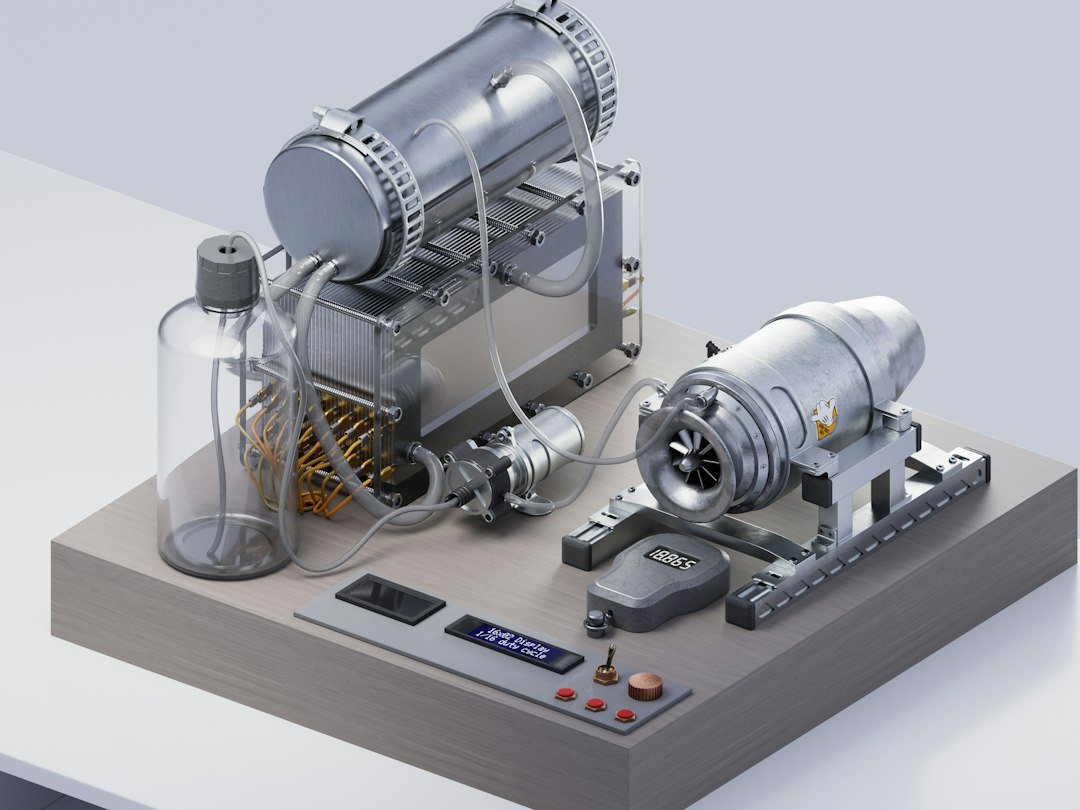
The construction of the apparatus for the Forty Kilogram Water Vacuum Experiment is paramount to its success and safety. The core component is a robust vacuum chamber capable of withstanding the significant pressure differential between the atmosphere and the evacuated space. This chamber must be constructed from materials that are non-reactive with water and strong enough to prevent implosion. Glass, especially thick borosilicate glass, is often a suitable material for smaller-scale demonstrations, offering excellent visibility. However, for forty kilograms of water, a more substantial chamber is required, likely constructed from reinforced steel or a similar high-strength alloy. The internal volume of the chamber must be sufficient to accommodate the forty kilograms of water along with adequate headspace for vapor formation and any potential splashing.
Sealing is of critical importance. The vacuum chamber must be hermetically sealed to prevent air from leaking in and compromising the vacuum. This requires high-quality gaskets, typically made of Viton or similar resilient materials, and precise machining of the chamber flanges. The method for introducing and removing the water also needs careful design. Ports or valves must be integrated into the chamber, ensuring that they can be opened and closed without creating leaks when under vacuum. These ports should be robust and capable of handling the weight and potential pressure of the water. Considering the volume, a pumping system capable of rapidly evacuating the chamber is essential. This might involve a combination of roughing pumps and diffusion or turbomolecular pumps to achieve the desired low-pressure environment.
Temperature control of the water is another crucial design consideration. The experiment can be conducted with water at various initial temperatures, and understanding how temperature affects the boiling point under vacuum is a key learning objective. Therefore, the vacuum chamber should ideally be equipped with a system for heating or cooling the water. This could involve an external jacket through which a temperature-controlled fluid circulates, or internal heating/cooling elements. Monitoring the water temperature accurately is also vital, necessitating the use of calibrated thermometers or temperature probes inserted into the chamber, ensuring they are sealed against vacuum leakage. The entire setup must be designed with safety in mind, considering the potential for rapid boiling, pressure changes, and the handling of significant quantities of water.
The forty kilogram water vacuum experiment has garnered significant attention in the scientific community for its intriguing implications on fluid dynamics and vacuum technology. For those interested in exploring more about the principles behind such experiments and their applications, a related article can be found at Freaky Science, which delves into various scientific phenomena and experiments that challenge our understanding of the physical world.
The Experimental Procedure: A Step-by-Step Exploration
The execution of the Forty Kilogram Water Vacuum Experiment requires a systematic and controlled approach to ensure accurate observations and safe operation. The procedure can be broken down into several distinct phases, from preparation to data collection and analysis. Each phase is critical for the overall success and scientific validity of the experiment. Understanding the nuances of each step allows for a more profound appreciation of the underlying physical principles. The sheer volume of water involved necessitates careful handling and adherence to established laboratory safety protocols.
Initial Setup and Water Preparation
The first step involves preparing the vacuum chamber and the forty kilograms of water. The chamber must be thoroughly cleaned and inspected for any potential defects. Any residues or contaminants can affect the water’s behavior and the vacuum quality. Forty kilograms of water, depending on the source, should be tested for purity. Deionized or distilled water is often preferred to minimize the presence of dissolved impurities that could influence vapor pressure or nucleation of boiling. The water should be brought to the desired initial temperature. This temperature is a critical variable. For demonstrating boiling at room temperature, the water might need to be heated slightly above ambient temperature. For experiments demonstrating boiling at significantly reduced temperatures, the water might be cooled. Accurate temperature measurement is essential at this stage.
The water is then carefully introduced into the vacuum chamber. Given the volume, this might involve using a pump or a carefully controlled gravity feed system. The process should be as smooth as possible to avoid introducing excessive air bubbles into the water. Once the water is inside, the chamber is sealed. This sealing process is critical and must be done meticulously, ensuring that all gaskets are properly seated and that the chamber is completely airtight. Following the sealing, the vacuum pumps are engaged. The rate at which the vacuum is established can also be a factor. A gradual reduction in pressure might reveal different phenomena compared to a rapid evacuation.
Evacuation and Observation of Boiling
As the vacuum pumps work to reduce the pressure within the chamber, the primary phase of the experiment begins. The pressure gauge should be closely monitored. As the pressure drops, the water’s vapor pressure will eventually equal the ambient pressure within the chamber. At this point, boiling will commence. The characteristic bubbling and agitation of the water will become evident. The forty-kilogram volume allows for a substantial and observable boiling phenomenon. Unlike small-scale experiments where boiling might appear as a gentle simmer, with this volume, the boiling can be quite vigorous, resembling a rolling boil.
Crucially, observers should note the temperature of the water as boiling occurs. If the initial water temperature was, for example, 25 degrees Celsius, and boiling begins at a pressure of, say, 3 kilopascals, this provides a direct measurement of the boiling point at that reduced pressure. The experiment can be designed to systematically reduce the pressure and observe the corresponding boiling point. It is also important to observe whether the boiling continues as the pressure is maintained or if it subsides. The cooling effect of evaporation (due to the energy required for the phase change) can cause the water temperature to drop, potentially leading to a cessation of boiling even at low pressure if the ambient temperature is not actively maintained.
The appearance of the water during boiling under vacuum is also noteworthy. The rapid formation and collapse of vapor bubbles can create a frothy appearance. The clarity of the water can be assessed before, during, and after the process. The experiment can also be conducted with varying levels of dissolved gases in the water to observe any potential influence on the boiling process. The visual impact of forty kilograms of boiling water under vacuum is a powerful educational tool, making abstract concepts concrete and memorable for observers.
The forty kilogram water vacuum experiment showcases the fascinating principles of physics and fluid dynamics, and for those interested in exploring similar scientific phenomena, there is an intriguing article available on the Freaky Science website. This article delves into various experiments that challenge our understanding of gravity and pressure, providing insights that complement the findings of the water vacuum experiment. You can read more about these captivating experiments by visiting Freaky Science.
Data Recording and Analysis
Throughout the evacuation and boiling process, meticulous data recording is essential. This includes:
- Initial Water Temperature: Recorded before evacuation begins.
- Pressure Readings: Corresponding to the onset of boiling, during sustained boiling, and at any point where significant changes are observed.
- Water Temperature During Boiling: Regularly monitored and recorded to understand the relationship between pressure and boiling point, and to observe any temperature drop due to evaporative cooling.
- Visual Observations: Detailed notes on the nature of the boiling (e.g., vigorous, gentle, frothy), any observed condensation patterns on the chamber walls, and the appearance of the water.
- Time Stamps: To correlate pressure and temperature changes with specific events.
Once the experimental phase is complete, the collected data can be analyzed. The primary objective is to plot the relationship between pressure and boiling point for water. This data can be compared to theoretical vapor pressure curves of water. Deviations from theoretical values can be discussed in terms of experimental error, purity of the water, and the limitations of the vacuum achieved. The experiment can also be used to quantify the rate of evaporative cooling. By observing the temperature drop over time while maintaining a constant low pressure and observing boiling, the latent heat of vaporization can be indirectly explored.
Furthermore, the visual data, such as photographs or videos, can be used to illustrate concepts like nucleate boiling and the effect of pressure on phase transitions. The forty-kilogram volume ensures that these visual demonstrations are impactful and easily understandable. The analysis phase is where the raw observations are transformed into scientific understanding, reinforcing the learning objectives of the experiment.
Phenomena Observed: Unveiling the Secrets of Water Under Pressure
The Forty Kilogram Water Vacuum Experiment offers a compelling visual and quantitative demonstration of several key fluid dynamic phenomena. The reduction of external pressure fundamentally alters the conditions under which water transitions from liquid to gas. The substantial volume of water employed ensures that these changes are not subtle but are readily observable, providing a rich dataset for analysis and discussion. The interplay between vapor pressure, temperature, and the forces acting on the liquid is brought to the forefront.
The Dramatic Onset of Boiling
One of the most striking phenomena observed is the dramatically lowered boiling point of water when subjected to a vacuum. With forty kilograms of water, the onset of boiling is not a gentle simmer but a noticeable and often vigorous agitation. If the experiment begins with water at room temperature (e.g., 20-25 degrees Celsius), achieving a sufficient vacuum can cause the water to boil profusely. This is because, at a lower pressure, the water molecules require less kinetic energy – and thus a lower temperature – to escape into the gaseous phase. The vapor pressure of the water at this lower temperature now matches the reduced ambient pressure within the chamber, leading to the formation of vapor bubbles throughout the liquid body.
The visual spectacle of forty kilograms of water boiling at what might be considered room temperature is a powerful counterpoint to the common understanding of boiling occurring only at 100 degrees Celsius. This observation directly challenges preconceived notions and reinforces the understanding that boiling is a pressure-dependent phenomenon. The continuous production of bubbles, the churning of the water, and the potential for a significant increase in the volume occupied by the water and its vapor are all visually evident. This phase is critical for establishing the core principle of the experiment: the inverse relationship between pressure and boiling point.
Evaporative Cooling and Temperature Drop
As the water boils under vacuum, a significant amount of energy is consumed in the phase transition from liquid to gas. This energy is drawn from the water itself, leading to a phenomenon known as evaporative cooling. With forty kilograms of water, this cooling effect can be substantial and easily measured. As the boiling continues, the temperature of the remaining liquid will steadily decrease. This decrease in temperature is a direct consequence of the latent heat of vaporization. Each molecule that transitions into the gaseous phase carries away a considerable amount of energy.
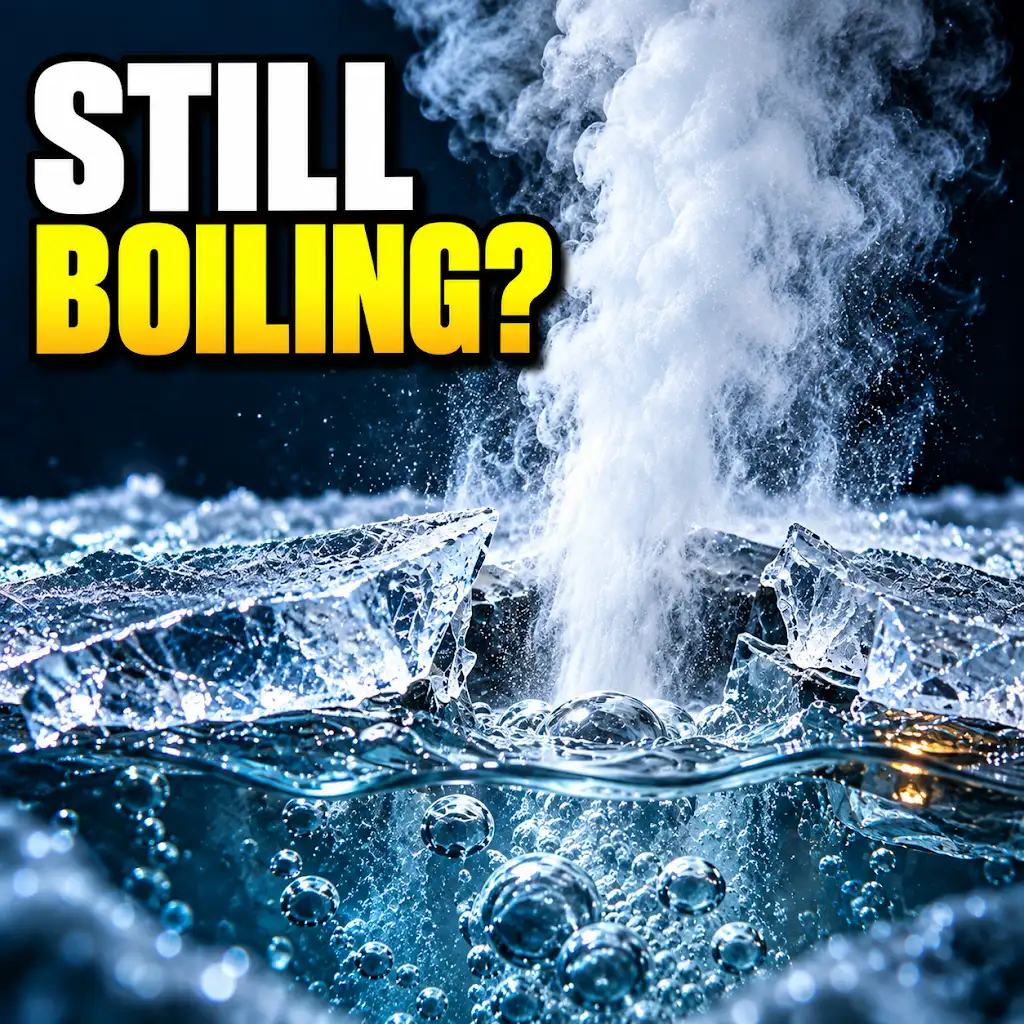
If the vacuum is maintained, the water can continue to boil at progressively lower temperatures. In extreme cases, with a sufficiently low pressure and if the water is initially cooled, it can even boil at temperatures below its freezing point. This results in a phenomenon called “boiling ice,” where the ice crystals are formed and simultaneously vaporized. While this might require very low pressures, the general principle of evaporative cooling leading to a temperature drop is observable even in less extreme scenarios. Monitoring the water temperature alongside pressure readings provides a quantitative measure of this cooling effect and allows for calculations related to the energy transfer involved in vaporization.
Condensation Patterns and Equilibrium
As water vaporizes and fills the headspace of the vacuum chamber, it will eventually come into contact with the cooler surfaces of the chamber walls. This leads to condensation, where the water vapor transitions back into the liquid phase. The patterns of condensation can provide further insights into the dynamics within the chamber. On the interior surfaces of the vacuum chamber, observers might notice a shimmering or streaking effect as water droplets form and then trickle down the walls. This visual display highlights the dynamic equilibrium that exists between the liquid and gaseous phases within the confined space.
In a truly sealed system with no external heat input, the system will eventually reach a point of equilibrium where the rate of evaporation equals the rate of condensation. However, during the active boiling phase, evaporation will generally exceed condensation. The visual appearance of condensation can also be influenced by the temperature gradient between the water and the chamber walls. If the chamber walls are significantly cooler than the water vapor, condensation will be more rapid. The observation of condensation patterns can help in understanding the movement of vapor within the chamber and the factors influencing the phase change back to liquid. This aspect of the experiment also touches upon concepts related to humidity and saturation vapor pressure in a closed system.
Applications and Educational Value: Beyond the Lab Bench
The insights gained from the Forty Kilogram Water Vacuum Experiment extend far beyond a simple demonstration of physics principles. The phenomena observed have direct relevance in numerous industrial processes, scientific research areas, and even everyday life. The experiment’s substantial scale and the clarity of the observed effects make it an exceptionally valuable tool for education, fostering a deeper and more intuitive understanding of fluid dynamics.
Industrial Relevance and Technological Implications
The principles demonstrated in this experiment are fundamental to a wide range of industrial applications. Vacuum distillation, for instance, relies heavily on reducing the boiling point of liquids by lowering the ambient pressure. This is crucial for separating heat-sensitive compounds that would otherwise degrade at their atmospheric boiling points. Examples include the purification of pharmaceuticals, petrochemical refining, and the production of essential oils. The ability to control boiling point through pressure manipulation is a cornerstone of these processes, and the forty-kilogram experiment provides a tangible model for understanding the underlying mechanics.
Freeze-drying, or lyophilization, is another critical application. By lowering the pressure and temperature of a substance, water can be sublimated directly from solid (ice) to gas, effectively removing moisture without damaging the material. This is vital for preserving food products, sensitive biological samples, and pharmaceutical ingredients. While the experiment might not directly simulate sublimation, the principles of reduced pressure enabling phase transitions are directly transferable.
Furthermore, the understanding of cavitation, even if not the primary focus, is paramount in fields like pump design, naval engineering, and aerospace. Uncontrolled cavitation can lead to material erosion and system failure. Therefore, understanding the conditions under which it occurs, which are intrinsically linked to vapor pressure and pressure differentials, is essential for designing robust and efficient machinery. The forty-kilogram water vacuum experiment, by highlighting the power of pressure reduction, indirectly informs these fields by illustrating the fundamental forces at play.
Pedagogical Power of Scale and Observation
The sheer scale of the forty-kilogram water vacuum experiment imbues it with significant pedagogical power. Abstract concepts like vapor pressure and boiling point, often confined to textbook diagrams and equations, become palpable realities. For students, witnessing forty kilograms of water boil at room temperature is a profoundly memorable experience that can ignite a lasting interest in science. The visual impact of the vigorous boiling, the observable temperature drop due to evaporative cooling, and the visual cues of condensation all contribute to a holistic learning experience.
This experiment serves as an excellent platform for teaching the scientific method. Students can be involved in designing the experiment, hypothesizing outcomes, meticulously recording data, and analyzing their findings. The potential for unexpected observations encourages critical thinking and problem-solving skills. The scale also allows for more effective group work and observation, as multiple individuals can clearly witness and discuss the phenomena simultaneously.
Moreover, the experiment can be adapted for various educational levels. For younger students, it can serve as a dramatic demonstration of how pressure affects liquids. For older students and those pursuing higher education in science and engineering, it can be the basis for quantitative analysis, exploring thermodynamic principles, and comparing experimental results with theoretical models. The forty-kilogram volume ensures that the experiment is not a fleeting, easily missed event but a substantial demonstration that commands attention and facilitates deeper engagement with the subject matter.
Future Research Directions and Extensions
While the Forty Kilogram Water Vacuum Experiment offers a wealth of observable phenomena, it also opens avenues for further research and exploration. One extension could involve systematically investigating the effect of different initial water temperatures on the pressure required to induce boiling and the rate of evaporative cooling. This would allow for the construction of a more detailed experimental vapor pressure curve for water.
Another avenue could be to study the effect of dissolved solutes on the boiling point under vacuum. Introducing different salts or sugars into the forty kilograms of water could reveal how these substances alter the vapor pressure and, consequently, the boiling behavior. This would connect the experiment to concepts like colligative properties and their industrial relevance in solutions.
Investigating the impact of different vacuum pump speeds on the rate of boiling and cooling could also yield interesting results. Does a faster evacuation lead to more vigorous initial boiling or a more rapid temperature drop? Conversely, a slower, more controlled evacuation might reveal more subtle pressure-temperature relationships. The experiment could also be extended to include the study of other liquids besides water, allowing for comparative analyses of their vapor pressures and boiling characteristics under vacuum. The robustness of the forty-kilogram scale provides a solid foundation for such comparative investigations, ensuring that observable and quantifiable results can be obtained.
Water Boiled While Ice Formed. Could a Lander Sink Into It?
FAQs
What is the purpose of the forty kilogram water vacuum experiment?
The purpose of the experiment is to study the behavior of water under vacuum conditions when subjected to a weight of forty kilograms.
How is the forty kilogram water vacuum experiment conducted?
The experiment involves placing a container filled with water on a scale, then creating a vacuum around the container while applying a weight of forty kilograms on top of the water.
What are the expected outcomes of the forty kilogram water vacuum experiment?
The experiment is expected to demonstrate the effects of vacuum pressure on water, potentially leading to changes in the water’s properties such as boiling point, freezing point, and evaporation rate.
What are the potential applications of the findings from the forty kilogram water vacuum experiment?
The findings from the experiment could have implications for various fields such as physics, chemistry, and engineering, providing insights into how water behaves under extreme conditions and potentially leading to new technologies or processes.
Are there any safety precautions to consider when conducting the forty kilogram water vacuum experiment?
It is important to follow proper safety protocols when conducting the experiment, including wearing appropriate protective gear, ensuring the equipment is properly set up, and being cautious when handling the vacuum apparatus and heavy weights.