
You’re standing in the kitchen, the aroma of roasting garlic and simmering tomatoes filling the air. You reach for a vibrant bell pepper, its skin smooth and cool under your fingertips. You might be thinking about its crisp texture, its sweet flavor, or maybe its nutritional benefits. But have you ever considered its interaction with the invisible forces that surround you, forces like electromagnetism? You see, food, just like everything else in the universe, is not inert. It hums with energy, and a crucial aspect of this energetic interaction is its ability to absorb electromagnetic radiation. This isn’t some fringe science; it’s a fundamental principle that influences how food is cooked, preserved, and even how we perceive its qualities.
Your journey into understanding food’s electromagnetic absorption begins with grasping the basic nature of electromagnetic radiation. It’s a spectrum, a vast range of energies from radio waves to gamma rays, all traveling at the speed of light. Each part of this spectrum interacts differently with matter, and the food you eat is no exception. From the microwave oven that heats your leftovers to the sunlight that ripens your fruit, electromagnetism plays a silent, yet profound, role in your culinary world.
You might picture food as simply a collection of molecules. And while that’s true, these molecules are not static entities. They possess charge distributions and vibrational patterns that make them responsive to electromagnetic fields. When electromagnetic waves encounter food, several things can happen. The energy of the wave can be absorbed, converted into heat, or it can be reflected, passing by without much effect. Some waves might even pass through the food, a phenomenon you’ve likely experienced with things like radio waves. The key is that the specific properties of the food’s molecular structure dictate how it interacts with different parts of the electromagnetic spectrum.
Molecular Foundations: Dipoles and Dielectrics
At the heart of food’s electromagnetic absorption are its constituent molecules. Think about water, the most abundant molecule in most foods. Water molecules are polar, meaning they have a slight positive charge on one side and a slight negative charge on the other. These are called dipoles. When an electromagnetic wave, particularly one in the microwave frequency range, passes through food, these tiny dipoles try to align themselves with the oscillating electric field of the wave. This rapid back-and-forth rotation of water molecules generates friction, which is precisely how microwaves heat your food.
Beyond water, other molecules in food also exhibit dielectric properties. Fats, proteins, and carbohydrates all have different molecular structures and charge distributions. This means they will absorb electromagnetic radiation differently. Some molecules might be highly responsive to specific frequencies, while others might be relatively transparent. This selective absorption is what allows for nuanced cooking and preservation techniques.
The Role of Ions and Free Electrons
While molecular dipoles are crucial for microwave absorption, other food components can also interact with electromagnetic radiation. If your food contains dissolved salts or other ionic compounds, these charged particles can also be influenced by the electric field of electromagnetic waves. They can move and oscillate, contributing to energy absorption and heating. In some cases, particularly with higher energy radiation, free electrons within certain molecular structures can also be excited, leading to further absorption.
Penetration Depth and Frequency Dependence
It’s important to understand that not all electromagnetic radiation penetrates food equally. Lower frequency waves, like radio waves, can often pass through food with minimal absorption. Higher frequency waves, like microwaves, are absorbed more readily, especially by polar molecules like water. The penetration depth – how far into the food the radiation can reach – is dependent on both the frequency of the wave and the composition of the food. This is why you might notice that a thick piece of food heats unevenly in a microwave; the outer layers absorb most of the energy, while the center might remain cooler.
Research into how food absorbs electromagnetic energy has gained significant attention in recent years, revealing fascinating insights into the interactions between food molecules and electromagnetic fields. For a deeper understanding of this topic, you can explore a related article that discusses the principles of energy absorption in various food types and their implications for health and nutrition. To read more, visit this article.
The Culinary Applications: From Ovens to Preservation
Your understanding of food’s electromagnetic absorption directly translates into practical applications in your kitchen and beyond. These principles are not just theoretical; they are the backbone of many technologies that shape how you prepare and store your food.
Microwaving: The Art of Selective Heating
You’re probably most familiar with electromagnetic absorption through your microwave oven. It’s a marvel of engineering that leverages the dielectric properties of water. When you place your food inside, the magnetron generates electromagnetic waves at a specific frequency (typically around 2.45 GHz). These waves then bounce around inside the oven cavity, interacting with the water molecules in your food. The rapid rotation of these water molecules generates heat, cooking your food from the inside out.
Optimizing Microwave Cooking
Understanding how microwaves work allows you to optimize your cooking. Foods with high water content, like vegetables and soups, heat up quickly. Denser foods or those with lower water content, like bread or some cakes, might require longer cooking times or might not heat as evenly. You can also use this knowledge to your advantage. For instance, covering food in the microwave traps steam, which is also heated by microwaves, leading to more efficient and even cooking. Rearranging food during the cooking process can also help to expose different parts to the microwave field, promoting more uniform heating.
The Science Behind Uneven Heating
You’ve likely experienced the frustration of a microwave-cooked meal with hot spots and cold spots. This is a direct consequence of electromagnetic absorption. The shape and density of the food, along with the distribution of water within it, all play a role. Microwave energy doesn’t always distribute perfectly evenly. Areas with a higher concentration of water will absorb more energy and get hotter faster. Also, the waves can create interference patterns within the food, leading to areas of higher and lower intensity.
Infrared Cooking: Radiant Heat and Surface Browning
You might not always think of it as electromagnetic absorption, but infrared heating is another common method you encounter. Think of an infrared grill or a radiant broiler. These devices emit infrared radiation, which is a form of heat you can feel as warmth. When this infrared radiation strikes your food, it’s absorbed by the surface molecules, causing them to vibrate and heat up. This is what gives you that desirable sear and browning on your steak or roasted vegetables.
The Maillard Reaction and Infrared
Infrared radiation is particularly effective at promoting surface browning. The higher temperatures achieved on the food’s surface accelerate the Maillard reaction, a complex series of chemical reactions between amino acids and reducing sugars that creates the characteristic brown color and savory flavors we associate with cooked foods. You can also see this in action with toasters, which use infrared elements to brown your bread.
Beyond Surface: Deeper Penetration of Infrared
While infrared radiation is primarily absorbed by the surface, it can penetrate to a certain depth, depending on the food’s composition and the intensity of the radiation. This allows for a combination of surface cooking and some degree of internal heating, offering a different cooking profile than microwaves.
Radio Frequency (RF) Heating: Industrial Applications
You might not use a radio frequency oven in your home kitchen, but these devices are widely used in industrial food processing. RF heating uses electromagnetic waves in the radio frequency range to heat food. Because RF waves can penetrate deeper into food than microwaves, they are particularly useful for drying, pasteurization, and sterilization of bulk food products.
Uniform Heating in Industrial Settings
One of the advantages of RF heating in industrial settings is its potential for more uniform heating compared to microwaves, especially for large volumes of food. The lower frequencies can penetrate more uniformly, reducing the occurrence of hot and cold spots that can be problematic in home microwave cooking. This is crucial for ensuring product safety and quality in large-scale food production.
Drying and Sterilization with RF
RF heating is highly effective for drying foods. The electromagnetic waves excite water molecules, causing them to evaporate. This process can be more efficient and faster than traditional drying methods. RF energy can also be used for pasteurization and sterilization, effectively killing microorganisms without necessarily cooking the food to the same extent as other methods.
Food Preservation: Extending Shelf Life Through Electromagnetic Interactions

The ability of food to absorb electromagnetic radiation also plays a significant role in how we preserve it, preventing spoilage and extending its shelf life. These methods often rely on controlled energy transfer to inhibit microbial growth or enzymatic activity.
Irradiation: A Powerful Preservation Tool
You might have heard of food irradiation, a process that uses controlled doses of ionizing radiation (like gamma rays or electron beams) to kill bacteria, mold, and insects in food. This process is a direct application of electromagnetic energy absorption. The ionizing radiation has enough energy to break chemical bonds within the microorganisms, rendering them harmless.
Safety and Nutritional Integrity
It’s important to note that food irradiation is a safe and effective method when applied correctly. The radiation passes through the food, but it is not retained. The process is carefully controlled to ensure that the food is sterilized or preserved without significantly altering its nutritional value or taste. Think of it like cooking; the energy input changes the food, but in irradiation, the goal is often microbial inactivation.
Applications in Spices and Meats
Irradiation is particularly useful for preserving foods that are prone to spoilage, such as spices, which can harbor bacteria, and raw meats, to reduce the risk of foodborne illness. It can also be used to prevent sprouting in potatoes and onions and to extend the shelf life of fruits and vegetables.
The Role of UV Radiation in Food Safety
Ultraviolet (UV) radiation, another part of the electromagnetic spectrum, is also used in food preservation, particularly for surface disinfection. UV light can damage the DNA of bacteria and viruses, preventing them from replicating. This is often used to disinfect packaging materials or the surfaces of food processing equipment.
Surface Sanitization with UV
You might see UV lights used in some refrigerators or in food preparation areas for surface sanitation. While UV radiation is effective for killing microorganisms on surfaces, its penetration depth into food is limited. It’s primarily a surface treatment, making it a useful tool for preventing cross-contamination.
Potential for Extended Shelf Life
By reducing the microbial load on the surface of food products, UV treatment can contribute to extended shelf life and improved food safety. It’s a non-thermal method, meaning it doesn’t add heat to the food, which can be advantageous for preserving delicate ingredients.
The Sensory Experience: How Electromagnetic Absorption Influences Taste and Texture

You might not consciously realize it, but the way food interacts with electromagnetic radiation can subtly influence your sensory experience – how it tastes, how it feels in your mouth, and even how it looks.
Browning and Flavor Development
As mentioned earlier, infrared and other high-temperature cooking methods that rely on electromagnetic absorption are crucial for developing desirable flavors. The Maillard reaction and caramelization, both triggered by heat generated through electromagnetic absorption, create a complex array of flavor compounds that you find appealing in roasted, grilled, and baked foods.
The Chemistry of Deliciousness
The browning reactions are not just about color; they are about creating new molecules that contribute to the rich, savory, and sweet notes you associate with well-cooked food. Without this electromagnetic interaction, your roasted chicken would be pale and bland.
Texture Modification
The way electromagnetic energy heats food can also significantly impact its texture. Microwaving, for example, can cause rapid water evaporation, leading to a sometimes-chewy or tough texture if not managed properly. Conversely, controlled infrared heating can create a crispy exterior while keeping the interior moist.
Moisture Migration and Structural Changes
The rapid heating that occurs with some forms of electromagnetic absorption can lead to quick moisture migration within the food. This can result in localized areas of dryness or toughness. Understanding these dynamics allows you to adjust cooking times and methods to achieve your desired textural outcome.
Color Changes and Visual Appeal
The browning reactions driven by electromagnetic absorption are also responsible for the appealing visual cues that signal a food is ready to eat. The golden-brown crust on bread, the deep char on grilled vegetables, or the rich color of roasted meat all owe their visual appeal to the interaction of food with electromagnetic energy.
The Psychology of Color
Color plays a significant role in our perception of food. Brown and golden hues are often associated with deliciousness, ripeness, and proper cooking. This visual appeal is a direct result of electromagnetic energy driving chemical changes within the food.
Recent studies have shown that food can absorb electromagnetic energy, influencing its nutritional properties and flavor profile. This fascinating topic is explored in detail in an article on Freaky Science, where the interactions between food and various forms of energy are discussed. For those interested in understanding how these processes work, you can read more about it in this insightful piece. The article sheds light on the science behind food’s ability to absorb energy, which could have implications for cooking methods and food preservation. To learn more, check out the full article here.
Future Frontiers: Innovations in Electromagnetic Food Technology
| Food Type | Electromagnetic Energy Absorption |
|---|---|
| Water | High |
| Meat | Medium |
| Fruits and Vegetables | Low |
The scientific exploration of food’s electromagnetic absorption is far from over. Researchers are continuously developing new and innovative ways to harness these principles for improved food production, safety, and quality.
Advanced Microwave and RF Technologies
You can expect to see continued advancements in microwave and RF technologies for food processing. This includes developing more precise control over heating patterns, reducing cooking times, and enhancing energy efficiency. Imagine a microwave that could perfectly cook any dish with optimal texture and flavor every time.
Precision Heating and Targeted Energy Delivery
Future technologies might allow for highly targeted energy delivery, focusing electromagnetic radiation on specific components of food for precise cooking or processing. This could lead to entirely new culinary techniques and a greater ability to control the outcome of food preparation.
Non-Thermal Processing Innovations
The drive for healthier and more minimally processed foods is fueling research into non-thermal preservation methods that leverage electromagnetic principles. This could include developing more effective UV treatments or exploring new forms of electromagnetic energy that can inactivate microbes without significantly altering the food’s structure or nutritional content.
Pulsed Electric Fields (PEF) and Other Emerging Technologies
While not strictly absorption in the same way as heating, Pulsed Electric Fields (PEF) is another electromagnetic-based technology that is gaining traction. PEF involves applying short, high-voltage electric pulses to food. These pulses create temporary pores in cell membranes, leading to microbial inactivation and other effects. While the mechanism is different from absorption leading to heat, it still falls under the umbrella of electromagnetic field interactions with food.
Enhanced Sensory and Nutritional Properties
Researchers are also exploring how electromagnetic interactions can be used to enhance the sensory and nutritional properties of food. This could involve techniques to better extract beneficial compounds, to improve the bioavailability of nutrients, or to create novel textures and flavors.
Bioavailability and Nutrient Enrichment
Imagine a future where specific electromagnetic treatments could make nutrients in food more easily absorbed by your body. Or where controlled electromagnetic energy could be used to fortify foods with beneficial compounds, creating more nutritious and functional foods.
In conclusion, the next time you prepare a meal or enjoy a snack, take a moment to appreciate the invisible forces at play. Food’s electromagnetic absorption is a fundamental aspect of its existence, shaping everything from how it’s cooked and preserved to how you experience its taste and texture. As science continues to unravel the intricacies of these interactions, you can look forward to even more exciting and innovative ways that electromagnetism will contribute to the future of food.
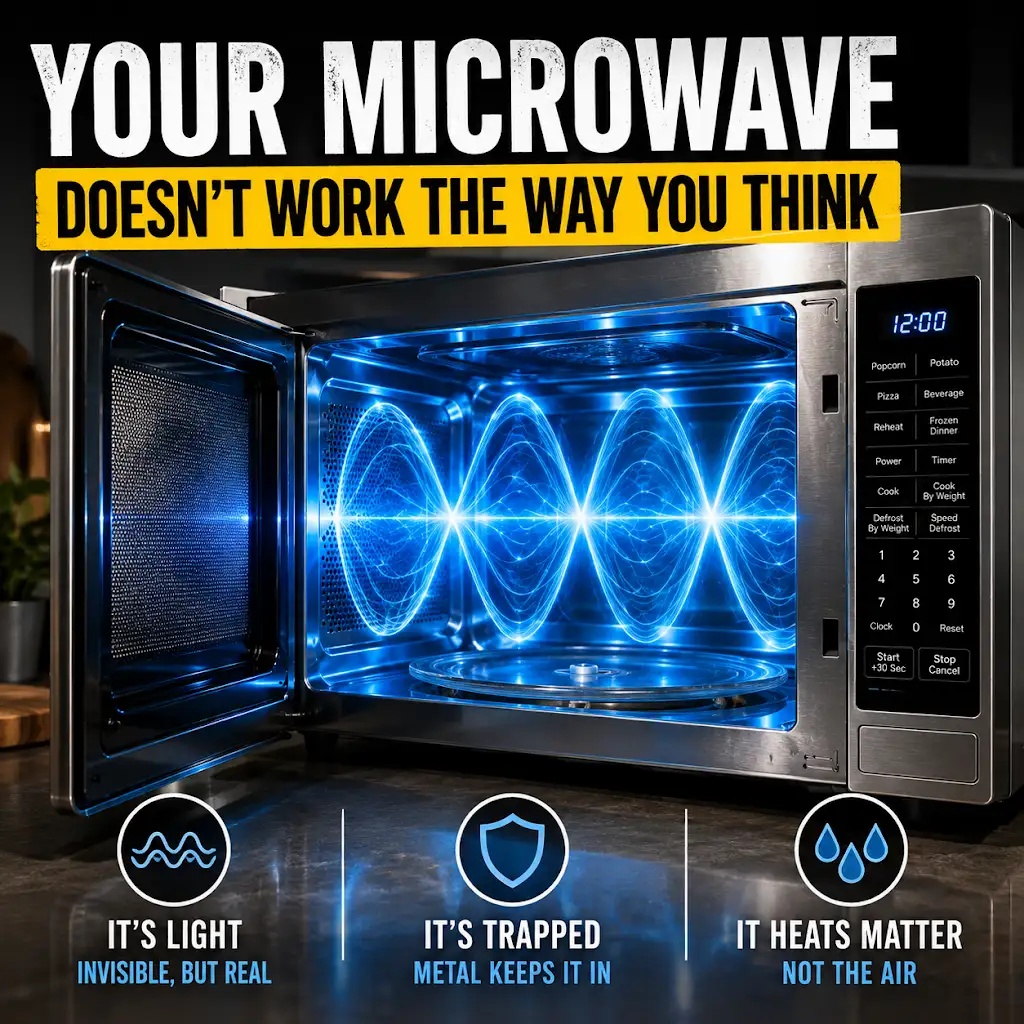
Your Microwave Doesn’t Work the Way You Think
FAQs
What is electromagnetic energy and how does it relate to food absorption?
Electromagnetic energy is a form of energy that is all around us, including in the form of light, radio waves, and microwaves. When it comes to food, electromagnetic energy can be absorbed by the molecules in the food, causing them to vibrate and generate heat.
How does microwave cooking work in relation to food and electromagnetic energy?
Microwave cooking works by using electromagnetic waves to agitate the water molecules in food, causing them to generate heat and cook the food from the inside out. This is why microwaves are able to heat food quickly and efficiently.
What types of food are most affected by electromagnetic energy absorption?
Foods that have a high water content, such as fruits, vegetables, and meats, are most affected by electromagnetic energy absorption. This is because water molecules are particularly responsive to electromagnetic waves and can absorb the energy more readily.
Are there any potential health concerns related to food absorption of electromagnetic energy?
There is ongoing research into the potential health effects of consuming food that has been cooked using electromagnetic energy. While some studies have suggested that there may be a loss of nutrients in food cooked with microwaves, more research is needed to fully understand the impact on health.
How can we minimize the potential negative effects of electromagnetic energy absorption in food?
To minimize potential negative effects, it is recommended to use microwave-safe containers and to avoid overcooking food in the microwave. Additionally, incorporating a variety of cooking methods, such as steaming, baking, and grilling, can help to ensure a balanced approach to food preparation.