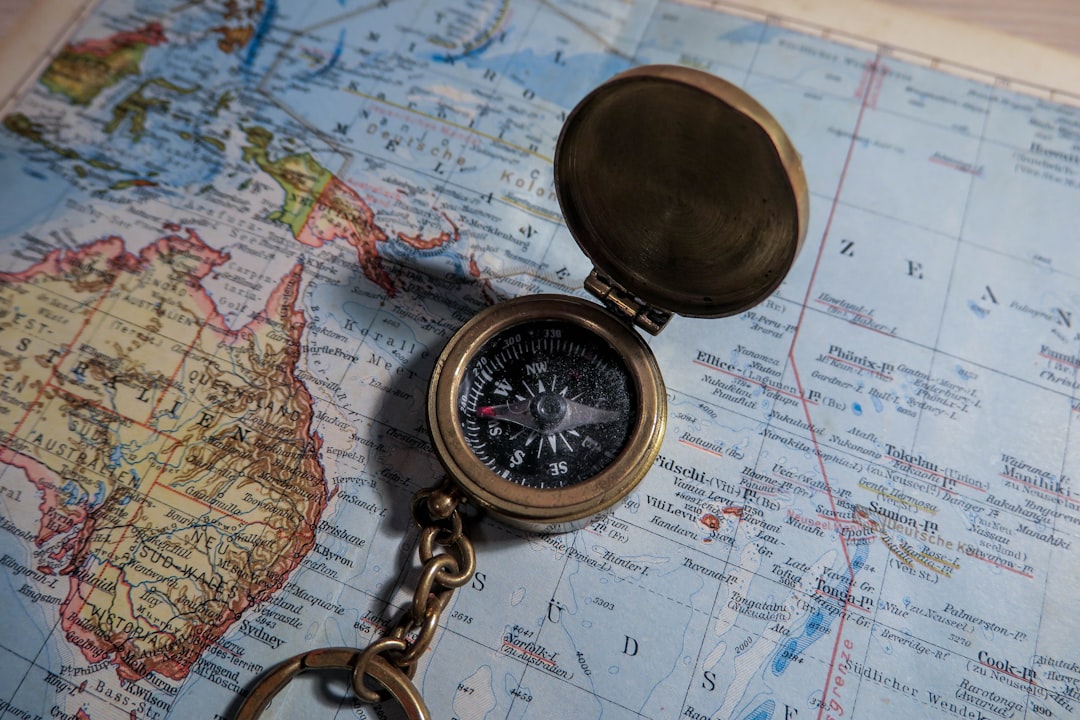
The human experience is often depicted as a journey, a winding path across an intricate landscape. While some journeys are meticulously planned with detailed maps and sophisticated instruments, many others unfold in territories unfamiliar and uncharted. The metaphorical “compass” represents the established guides, the clear directives, and the readily available solutions that often define our initial approaches to life’s challenges. However, the modern world, with its rapid technological advancements, shifting social paradigms, and increasingly complex problems, frequently thrusts individuals into situations where traditional navigational tools prove inadequate or entirely absent. This article explores the art and science of “finding one’s way” when the conventional compass is unavailable, examining strategies, psychological frameworks, and practical applications for navigating ambiguity and charting a novel course.
The Erosion of Certainty: When the Compass Breaks
The concept of a broken or absent compass is not merely an abstract metaphor; it reflects a tangible reality in various facets of human endeavor. From professional trajectories to personal growth, and from societal planning to scientific discovery, the erosion of certainty necessitates a fundamental shift in approach.
Technological Disruption and Shifting Paradigms
The digital age, characterized by exponential technological growth, routinely disrupts established industries and professional roles. Individuals entering rapidly evolving fields often find themselves in a landscape where skills become obsolete quickly and career paths are no longer linear. Consider the early 2000s, when the internet fundamentally altered industries from retail to media. Those who clung to outdated business models or skill sets often found themselves adrift, while those who embraced the unknown and adapted to emerging technologies successfully navigated the new terrain. The “compass” of traditional education and long-term career planning proved insufficient.
Societal Flux and Moral Ambiguity
Societies themselves are dynamic entities, constantly evolving. Moral and ethical frameworks that once provided clear guidance can become subject to re-evaluation and debate. This is particularly evident in discussions surrounding artificial intelligence, genetic engineering, and environmental ethics. There is no universally recognized “compass” to dictate the definitive path forward on these issues. Individuals and institutions must grapple with complex considerations, weigh competing values, and forge new ethical guidelines. The absence of a pre-existing moral compass forces collective introspection and the creation of novel frameworks.
Personal Growth in an Unscripted Life
On a more individual level, the concept of a broken compass manifests in personal crises and transitions. A sudden career change, the end of a long-term relationship, or the unexpected loss of a loved one can shatter existing structures and leave an individual feeling disoriented. The predictable routines and established routines that once provided a sense of direction are gone. In these moments, the individual is compelled to navigate not by pre-ordained maps, but by an internal sense of purpose and evolving self-awareness. The “compass” of past experiences, while valuable, may not point to the desired future.
Internal Navigation: The Power of Self-Reflection and Intuition
When external guides are absent, the focus inevitably shifts inward. The capacity for self-reflection and the cultivation of intuition become paramount in establishing an internal guidance system. This internal compass relies not on external signals, but on a deep understanding of one’s own values, strengths, and aspirations.
Values as Guiding Stars
In the absence of clear directives, an individual’s core values serve as foundational principles for decision-making. These values – integrity, compassion, innovation, resilience, for example – act as a consistent inner compass, even when the external landscape is in flux. To identify these values, a process of introspection is necessary. Journaling, meditation, and critical self-assessment can illuminate what truly matters to an individual. When faced with a perplexing choice, asking “Does this align with my core values?” can provide clarity and a sense of direction. This internal alignment offers a stable reference point in a world of variables.
Cultivating Intuition: The Silent Partner
Intuition, often dismissed as mere gut feeling, is a sophisticated cognitive process that synthesizes vast amounts of information – both conscious and subconscious – to arrive at a rapid judgment or insight. While not a substitute for logical reasoning, it can offer valuable guidance in situations where data is incomplete or ambiguous. Developing intuition involves paying close attention to nuanced cues, learning from past experiences (both successes and failures), and trusting one’s inner voice. It is akin to a finely tuned sensor array, detecting subtle shifts in environment and potential outcomes. Practicing mindfulness and engaging in creative activities can strengthen this intuitive capacity, allowing it to function as a supplementary compass in uncharted territory.
The Iterative Cycle of Action and Reflection
Navigation without a compass rarely involves a single, perfect decision. Instead, it is an iterative process of taking small, deliberate steps, observing the outcomes, and adjusting one’s course accordingly. This cycle of “act, observe, and adapt” is central to internal navigation. It requires a willingness to experiment, to embrace failure as a learning opportunity, and to continuously refine one’s approach. This agile methodology, prevalent in software development, has significant applicability to personal and professional navigation. Each action taken, however small, generates new data, allowing for recalibration and improved direction.
External Scrutiny: Borrowing Light from Others
While internal navigation is crucial, it does not imply isolation. In the absence of a personal compass, individuals can strategically leverage external resources and perspectives to illuminate their path. This involves active learning, seeking diverse viewpoints, and embracing collaborative exploration.
Active Listening and Observational Learning
Even without a pre-designed map, the environment around us offers a wealth of information. Active listening, not just to words but also to contexts and subtexts, can provide crucial clues. Observing how others navigate similar challenges, particularly those who have successfully charted new territories, can offer valuable insights and patterns. This is not about blind imitation, but rather about discerning transferable principles and strategies. For example, studying the biographies of innovators in nascent industries can reveal common threads in how they approached ambiguity and built something new from scratch. By paying attention to the successes and failures of others, an individual can glean valuable navigational data without relying on a pre-printed guide.
The Power of Diverse Perspectives and Mentorship
No single individual possesses all the answers, especially in uncharted territory. Actively seeking out diverse perspectives, engaging with individuals from different backgrounds, disciplines, and experiences, can provide a multitude of “data points” that help to triangulate a direction. Mentorship, in particular, offers a unique advantage. A mentor, even if they haven’t faced the exact same challenge, can offer wisdom gleaned from their own journeys of navigating uncertainty, providing a sounding board and a critical friend. Their experiences act as proxy compass readings, offering potential vectors and pitfalls to consider. This collaborative exploration is a vital component of finding one’s way when the known paths are absent.
Experimentation and Prototyping
In scientific discovery, hypothesis testing and experimentation are fundamental. Similarly, when navigating without a compass, adopting an experimental mindset is critical. Instead of aiming for a perfect grand plan from the outset, one can design small “prototypes” or experiments to test different approaches. For example, before committing to a major career shift, an individual might undertake a small project in the new field, volunteer their time, or shadow someone in that role. These low-stakes experiments provide real-world data and feedback, helping to refine the course without significant risk. This iterative approach to “trying things out” generates valuable information about the terrain, much like sending out scouting parties into unknown lands can provide intelligence for the main expedition.
Adapting to the Landscape: Resilience and Resourcefulness
Navigating without a compass often involves encountering unexpected obstacles and unforseen circumstances. The ability to adapt, to pivot when necessary, and to harness available resources in novel ways, is crucial for sustained progress.
Embracing Uncertainty and Cultivating Flexibility
The human brain often craves certainty, finding comfort in predictability. However, when the compass is gone, embracing uncertainty becomes a fundamental skill. This involves re-framing ambiguous situations not as threats, but as opportunities for creativity and learning. Cultivating mental flexibility, the ability to shift perspectives and adjust strategies quickly, is key. This is akin to a skilled sailor who, in the absence of wind, understands how to trim sails to catch the slightest breeze or even use oars to make progress. Rigidity in thinking or adherence to outdated plans can lead to stagnation.
Resourcefulness: Making Do with What’s Available
When traditional tools are unavailable, resourcefulness becomes paramount. This involves creatively identifying and utilizing existing assets, whether they be skills, connections, or available information, in new and unconventional ways. A classic example is the story of Apollo 13, where engineers, facing a critical failure, had to improvise solutions using only the limited resources available on board the spacecraft. Their ability to ingeniously adapt existing components to solve novel problems saved the mission. In professional and personal contexts, resourcefulness might involve repurposing existing skills for a new role, leveraging unexpected connections, or creatively finding information from unconventional sources. It is the art of turning limitations into opportunities.
Building and Nurturing Networks
In an interconnected world, an individual’s network of relationships serves as a powerful resource, particularly when navigating uncertainty. These networks provide not only potential sources of information and advice but also emotional support and collaborative opportunities. Actively building and nurturing a diverse network – colleagues, mentors, peers, friends, family – creates a safety net and a resource pool for problem-solving. When lost, knowing that one has a community to turn to for guidance or assistance can be invaluable. This network can act as a distributed intelligence system, collectively offering a compass forged from diverse individual experiences.
The Art of Charting a New Atlas: Beyond Navigation
Ultimately, the act of “finding your way without a compass” transcends mere navigation; it becomes the process of charting a new atlas, of creating previously unrecorded pathways and understanding.
The Creation of New Knowledge and Pathways
Every time an individual or group successfully navigates an uncharted domain, they contribute to the collective knowledge base. Their journey, their trials and errors, their insights and discoveries, become the new “compass readings” for those who follow. This is the essence of innovation and progress. The first explorers who ventured across oceans without reliable charts did not just find their way; they created the very maps that would guide future generations. Similarly, in any field, individuals who boldly venture into the unknown and succeed not only reach their destination but also leave behind a clearer path for others.
Cultivating a Growth Mindset
The journey of navigating without a compass is inherently one of continuous learning and evolution. It demands a growth mindset – the belief that one’s abilities and intelligence can be developed through dedication and hard work. Individuals with a growth mindset view challenges as opportunities to learn and grow, rather than as insurmountable obstacles. This perspective is crucial for sustained navigation in uncertain environments, as it fosters resilience in the face of setbacks and encourages a relentless pursuit of knowledge and improvement.
Defining Personal Success Beyond Fixed Coordinates
In a world without a fixed compass, the definition of “success” itself becomes more fluid and personalized. It is no longer solely about reaching a pre-defined destination or achieving a universally accepted milestone. Instead, success lies in the journey of discovery, the process of learning, the cultivation of resilience, and the internal satisfaction of having chartered one’s own course. The true measure of achievement is not simply arriving, but in the wisdom gained, the skills acquired, and the new pathways discovered along the way. Your compass ultimately becomes your evolving sense of purpose and your capacity for self-direction. This self-defined success, forged in the crucible of uncertainty, is arguably more meaningful and enduring than any externally imposed definition.

WARNING: Earth’s Core Is Now Rotating Backwards
FAQs

How can I determine direction without a magnetic compass?
You can determine direction by using natural indicators such as the position of the sun, the stars, or landmarks. For example, the sun rises in the east and sets in the west, and at night, the North Star (Polaris) can help you find north in the Northern Hemisphere.
What are some common natural navigation methods?
Common natural navigation methods include using the sun’s position during the day, observing the stars at night, following the growth patterns of moss on trees (which often grows on the north side in the Northern Hemisphere), and using landmarks like rivers or mountain ranges.
Can I use a watch to find direction without a compass?
Yes, you can use an analog watch to find direction. In the Northern Hemisphere, point the hour hand at the sun; halfway between the hour hand and 12 o’clock is south. In the Southern Hemisphere, point the 12 o’clock mark at the sun; halfway between 12 and the hour hand is north.
Is it possible to navigate accurately without any tools?
While it is possible to navigate using natural signs and methods, accuracy can vary depending on conditions such as weather, terrain, and your familiarity with the environment. Combining multiple methods improves reliability.
What should I do if I get lost without a compass?
If you get lost without a compass, stay calm and try to retrace your steps if possible. Use natural navigation techniques to orient yourself, look for landmarks, and if necessary, stay put and signal for help. Carrying a map and learning basic navigation skills before heading out is always recommended.