The Fascinating Transformation: Understanding Water’s Freezing Point
Water, that ubiquitous substance essential for all known life, possesses a remarkable ability to transition between its liquid and solid states. This transformation, known as freezing, is a fundamental concept in science that can be easily explored through a simple, accessible experiment. Understanding why water freezes and the factors that influence this process unlocks a deeper appreciation for the physical world around us. At its core, freezing is a process driven by the loss of thermal energy. Molecules within liquid water are in constant motion, bumping into each other and sliding past one another. As this thermal energy is removed, the molecules slow down. At a specific temperature, known as the freezing point, the molecules lose enough energy to settle into a fixed, ordered structure – the crystalline lattice of ice. This transition is not instantaneous but rather a gradual process where the kinetic energy of the water molecules decreases, allowing intermolecular forces, primarily hydrogen bonds, to take hold and organize them into the rigid structure of ice. The characteristic hexagonal structure of ice is a direct consequence of the way water molecules, with their bent shape and polar nature, arrange themselves to maximize these hydrogen bond interactions. Each water molecule can form up to four hydrogen bonds with its neighbors, creating a stable, open lattice. This open structure is why ice is less dense than liquid water, a unique property that allows ice to float. This buoyancy is crucial for aquatic life, as it insulates bodies of water from freezing solid, providing a habitable environment during colder months. The energy released during freezing is called the latent heat of fusion, and it must be removed for the phase change to occur. Conversely, melting ice requires energy input to break the hydrogen bonds and allow the molecules to move more freely.
In exploring the fascinating phenomenon of water freezing, you might find the article on Freaky Science particularly insightful. It delves into various experiments that illustrate the unique properties of water and its freezing process. For more detailed information and related experiments, you can check out the article here: Freaky Science Water Freezing Experiment.
Setting Up Your Freezing Adventure: A Practical Guide
Embarking on a water freezing experiment requires minimal materials, making it an ideal activity for home or classroom settings. The primary requirement is, of course, water. Tap water is perfectly suitable, though distilled water can be used for slightly purer results. The container for the water is also important. Small, clear containers are best for observation, such as ice cube trays, small plastic cups, or even empty yogurt containers. The transparency allows for clear visibility of the freezing process. For a more engaging experience, consider using containers of different shapes and sizes. This variation can lead to interesting observations about how the shape of the container might influence the speed or manner of freezing. For instance, a container with a larger surface area exposed to the cold might freeze faster than a taller, narrower one with the same volume of water. Beyond water and containers, the crucial element is a source of cold. A freezer is the most common and effective option. Ensure your freezer is set to a temperature below the freezing point of water, which is 0 degrees Celsius (32 degrees Fahrenheit). For younger experimenters, adult supervision is recommended, especially when handling freezer compartments. Thermometers are valuable tools for quantitatively measuring the temperature changes. A simple household thermometer or a laboratory thermometer can be used to track the water’s temperature as it cools and freezes, and to monitor the ambient temperature of the freezer. If you wish to explore the effect of dissolved substances on freezing, you will need additional items. Salt, sugar, and perhaps even rubbing alcohol can be incorporated into separate samples of water to observe their impact. Measuring spoons or scales will be useful for ensuring consistent quantities of these additives. Finally, a notebook and pen or pencil are essential for recording observations, documenting the timeline of events, and sketching any visual changes observed. This documentation transforms a simple observation into a scientific record, crucial for analysis and drawing conclusions. The act of writing down what is seen, heard, and even felt (e.g., the cold from the container) reinforces the learning process and encourages critical thinking about the experiment’s outcome.
Observing the Freezing Process: What to Look For
The true magic of this experiment lies in the careful observation of the changes that occur as water transitions from liquid to solid. Begin by preparing your water samples. For a baseline experiment, fill one container with plain water. Then, prepare additional samples with dissolved substances, ensuring you record the type and amount of each additive. Place all containers in the freezer simultaneously. Now, the waiting game and the observation begin.
Initial Cooling and Subtle Changes
As the water begins to cool, you might not notice dramatic changes immediately. However, if you are using a thermometer, you will observe the temperature steadily decreasing. Look closely at the surface of the water. You might start to see tiny ice crystals forming, particularly around the edges of the container or on any imperfections on the surface. These are the first signs of nucleation – the initial formation of ice crystals. The water may appear slightly cloudier as these crystals begin to form. The hydrogen bonds between water molecules are weakening, but the molecules still have enough energy to move.
The Formation of Ice Crystals
As the temperature drops further, the formation of ice crystals will become more prominent. You will observe a visible layer of ice forming on the surface, gradually thickening and spreading downwards. If you are using clear containers, you might be able to see the intricate, branching patterns of ice crystals as they grow. These patterns are not random; they are dictated by the hexagonal symmetry of the water molecule and the way hydrogen bonds form. The speed at which this ice formation occurs can vary depending on the freezer’s temperature, the volume of water, and the shape of the container. If you are experimenting with different container shapes, note which ones appear to freeze faster and why you think that might be the case. Consider the surface area exposed to the cold air.
Complete Solidification and Structural Observations
Eventually, the entire volume of water will transform into solid ice. At this stage, examine the frozen block. Does it look uniformly solid, or are there any pockets of unfrozen water? This is particularly interesting if you have used a taller container, as the top layer often freezes first, potentially trapping air bubbles or even liquid water beneath it if the cooling is rapid. If you have used multiple containers, compare the final ice formations. Does the ice from the container with salt look different from the ice from the container with sugar? You might notice that the ice formed from water with dissolved substances can appear different. For instance, salt can sometimes lead to a more fractured or opaque ice, and it might melt faster if exposed to warmer air. Observe any trapped air bubbles within the ice. These bubbles are formed when air dissolved in the water is expelled as the water freezes, as the solid lattice of ice cannot accommodate as much dissolved gas as liquid water can. The size and distribution of these bubbles can provide clues about the freezing process.
The Impact of Additives: A Comparative Study
If you have included additives like salt or sugar, this is where their influence becomes most apparent. Compare the ice formed from plain water with the ice formed from the solutions. You will likely observe that the water with dissolved solutes freezes at a lower temperature than plain water. This phenomenon, known as freezing point depression, is a crucial concept in chemistry and has practical applications, such as the use of salt on icy roads. The dissolved particles interfere with the formation of the ice crystal lattice. They get in the way of the water molecules trying to arrange themselves into a regular structure, requiring even more energy to be removed for freezing to occur. Note the appearance of the ice. Does it look different? Is it as hard and clear as the ice from plain water? Does it seem to melt faster when removed from the freezer? Document these differences meticulously. The presence of impurities can also affect the clarity of the ice.
Exploring Deeper: Factors Influencing Freezing
Beyond the basic observation of water turning into ice, the experiment offers a gateway to understanding several fascinating scientific principles. The influence of dissolved substances is just one aspect. The rate of cooling, the presence of impurities in the water itself, and even the volume of water can all play significant roles.
Freezing Point Depression: The Magic of Salt and Sugar
As alluded to earlier, the addition of solutes like salt and sugar significantly impacts the freezing point of water. This is a direct application of colligative properties, which are properties of solutions that depend only on the concentration of solute particles, not on their identity. When salt (sodium chloride) dissolves in water, it dissociates into sodium ions and chloride ions. Sugar, on the other hand, dissolves as whole molecules. Both types of dissolved particles disrupt the hydrogen bonding network of water molecules, making it harder for them to arrange themselves into the crystalline structure of ice. Consequently, a lower temperature is required to overcome this disruption and achieve freezing. This is why salting roads effectively melts ice and prevents refreezing. The salt lowers the freezing point of the water on the road surface, causing it to melt even when the ambient temperature is slightly below 0°C. Sugar also causes freezing point depression, though generally to a lesser extent than salt because it doesn’t dissociate into as many individual particles.
Nucleation: The Spark of Ice Formation
The formation of ice crystals doesn’t happen spontaneously throughout the entire body of water at once. It begins at specific points called nucleation sites. These can be imperfections on the surface of the container, tiny dust particles suspended in the water, or even microscopic irregularities on the ice that has already formed. Without nucleation sites, water can become supercooled – remaining in a liquid state even below its freezing point. Introducing a nucleation site, such as gently tapping the container or dropping a small ice crystal into supercooled water, can trigger rapid freezing. This phenomenon highlights the importance of surfaces and impurities in initiating phase transitions. In nature, dust particles in the atmosphere play a crucial role in the formation of ice crystals in clouds, which eventually lead to snowfall. Experimenting with different types of containers and observing if some seem to promote faster nucleation can be an interesting extension.
The Role of Container Shape and Size
The geometry of the container plays a subtle yet significant role in how water freezes. A container with a larger surface area relative to its volume will generally freeze faster. This is because more of the water’s surface is directly exposed to the cold air of the freezer, allowing for a more efficient transfer of thermal energy. Consider an ice cube tray versus a deep, narrow glass filled with the same amount of water. The ice cube tray, with its numerous shallow compartments, will produce ice cubes much faster than the glass. The shape can also influence the appearance of the ice. For example, the flat surfaces of ice cubes are a result of the rectangular mold of the tray. Observing how the ice forms against the different walls and corners of various containers can reveal insights into the directional growth of ice crystals.
The Impact of Air Bubbles
As mentioned earlier, air bubbles trapped within the ice are a common observation. These bubbles form because as water cools and freezes, its ability to hold dissolved gases, like oxygen and nitrogen from the air, decreases. These gases are then expelled from the forming ice crystal lattice and get trapped as bubbles. The size and distribution of these bubbles can vary depending on the rate of freezing and the initial concentration of dissolved gases in the water. Rapid freezing tends to trap more and smaller bubbles, often resulting in cloudy ice. Slower freezing allows more time for dissolved gases to escape, leading to clearer ice. If you are using distilled water, which has had most of its dissolved gases removed, you might observe significantly fewer and smaller air bubbles in the resulting ice compared to tap water. This further illustrates the interplay between water’s chemical composition and its physical behavior.
In exploring the fascinating phenomenon of water freezing, you might find it interesting to read about various experiments that delve into the science behind this process. One such article discusses the unique properties of water and how temperature affects its state. For more insights, you can check out this related article that provides a deeper understanding of the subject and offers additional experiments to try at home.
Connecting to the Wider World: Real-World Applications of Freezing
| Trial | Initial Water Temperature (°C) | Volume of Water (ml) | Freezing Time (minutes) | Freezing Point Observed (°C) | Notes |
|---|---|---|---|---|---|
| 1 | 25 | 100 | 15 | 0 | Clear ice formation |
| 2 | 50 | 100 | 18 | 0 | Longer freezing time due to higher initial temp |
| 3 | 25 | 200 | 28 | 0 | Increased volume increased freezing time |
| 4 | 5 | 100 | 10 | 0 | Faster freezing due to lower initial temp |
| 5 | 25 | 100 | 15 | -1 | Supercooling observed before freezing |
The simple act of freezing water has profound implications and numerous applications in our daily lives and across various industries. Understanding these connections transforms a basic science experiment into a lesson about the practical power of scientific principles.
Keeping Food Fresh: The Art of Preservation
Refrigeration and freezing are cornerstones of modern food preservation. By lowering the temperature below the freezing point of water, the growth of microorganisms, such as bacteria and fungi, which are responsible for spoilage, is significantly inhibited. Microbes require water to metabolize and reproduce, and in the solid state of ice, this water becomes largely unavailable to them. Freezing not only slows down spoilage but also preserves the nutritional value and texture of food for extended periods. This allows for food to be stored, transported, and consumed long after it has been harvested or prepared, contributing to food security and reducing waste. Think about the frozen vegetables in your grocery store or the ice cream in your freezer – these are direct beneficiaries of understanding and controlling the freezing process.
Engineering and Construction: Battling the Freeze-Thaw Cycle
In regions experiencing cold climates, the phenomenon of freezing and thawing has significant implications for infrastructure. When water seeps into cracks in roads, sidewalks, or building foundations and then freezes, it expands. This expansion exerts immense pressure on the surrounding material, causing it to fracture and degrade over time. This is known as the freeze-thaw cycle. Understanding this process is crucial for engineers and construction professionals who must design materials and structures that can withstand these forces. Techniques such as proper drainage, using frost-resistant materials, and employing specific construction methods are all employed to mitigate the damaging effects of freezing and thawing. The presence of frost heaves, which can buckle roads and cause damage to foundations, is a direct visual manifestation of this powerful physical process.
Scientific Research and Technological Innovation
The study of water’s freezing behavior is fundamental to many scientific disciplines, from meteorology and climate science to materials science and cryogenics. In meteorology, understanding how ice crystals form in clouds is essential for weather forecasting and predicting precipitation. Climate scientists study the behavior of ice sheets and glaciers, which are vast reservoirs of frozen water, to understand their impact on global sea levels and climate change. In materials science, researchers explore methods for freezing sensitive biological samples, such as cells and tissues, without damaging them, a process known as cryopreservation. This has vital applications in medicine, for organ transplantation and fertility treatments. Furthermore, the development of antifreeze compounds, used in car radiators and aircraft de-icing, is a direct result of research into modifying water’s freezing point. This demonstrates how exploring even the simplest scientific phenomena can lead to complex and life-enhancing technological advancements. The ability to control and manipulate the freezing process, whether to preserve food or to understand planetary ice formations, is a testament to the enduring importance of basic scientific inquiry.
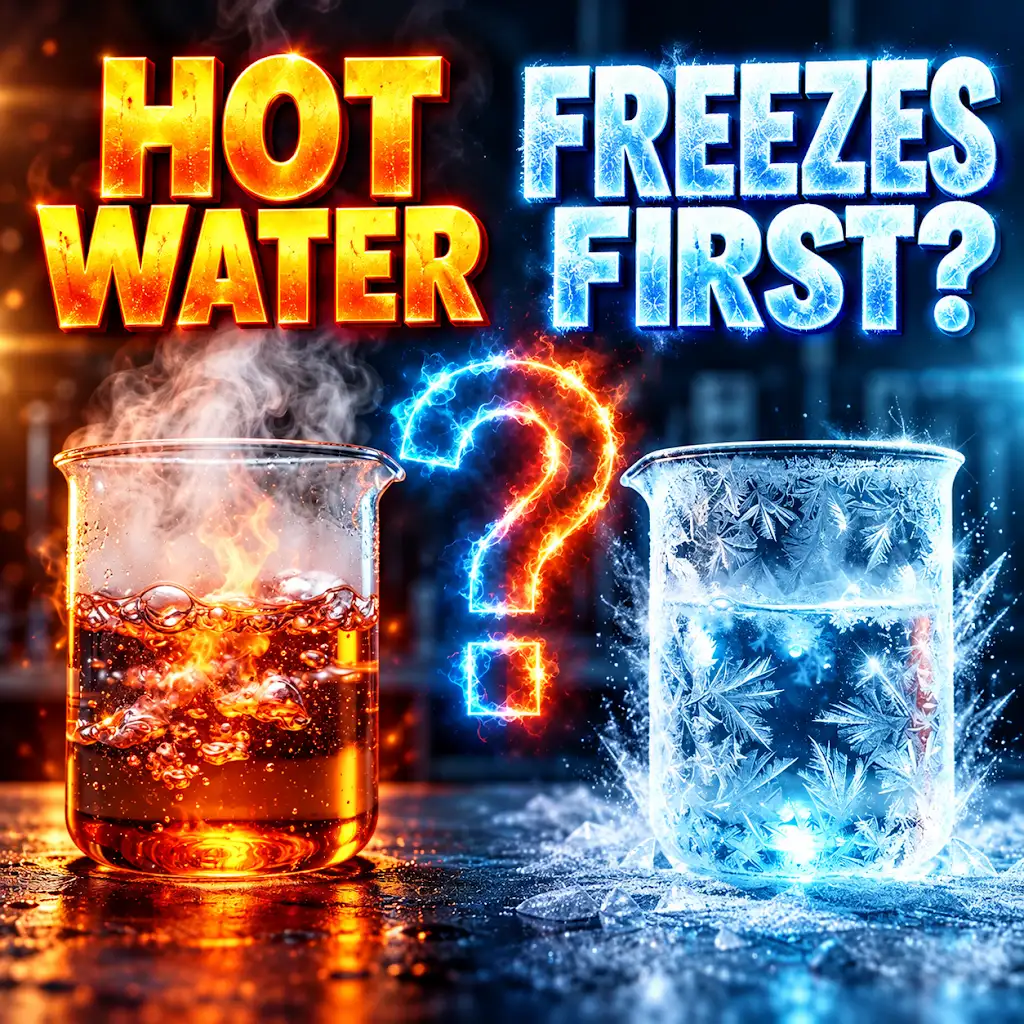
Why Hot Water Freezes Faster Than Cold (The Mpemba Effect)
FAQs
What materials are needed for a water freezing experiment?
To conduct a water freezing experiment, you will need a container to hold the water, water, a thermometer to measure the temperature, a freezer to freeze the water, and a timer to track the time it takes for the water to freeze.
How does the temperature affect the freezing time of water?
The lower the temperature, the faster water will freeze. This is because as the temperature decreases, the molecules in the water slow down and come closer together, eventually forming a solid structure.
What factors can influence the freezing time of water?
Factors such as the initial temperature of the water, the size and shape of the container, the temperature of the freezer, and any additives in the water (such as salt) can all influence the freezing time of water.
Why does water expand when it freezes?
Water expands when it freezes because the molecules form a crystalline structure that takes up more space than when they were in a liquid state. This expansion is why ice is less dense than liquid water and why ice floats on water.
What are some real-life applications of understanding the freezing properties of water?
Understanding the freezing properties of water is important in various fields such as food preservation, weather forecasting, and material science. It helps in predicting how substances will behave at different temperatures and how to control the freezing process for different purposes.