The hushed darkness of the cinema screen flickered, then ignited with a cascade of vibrant nebulae. A voice, calm yet possessing an almost palpable gravity, began to unfold a narrative that would stretch the very fabric of perception. This was not just a documentary; it was an invitation to explore the unseen, a journey into the mind-bending realms of science that challenged assumptions and ignited wonder. The film, grandly titled “Exploring the Unseen: Mind-Bending Science,” promised a deep dive into phenomena that often elude our everyday understanding, and it delivered with breathtaking visual artistry and scientifically rigorous, yet accessible, explanations.
The film’s initial foray into the unseen focused on the most intricate and elusive landscape of all: the human brain. It established early on that our perception of reality is not a passive reception of external stimuli, but an active, dynamic construction. The documentary expertly painted a picture of the brain as an architect, constantly interpreting, predicting, and fabricating the world we experience.
The Illusion of Direct Experience
One of the most captivating segments illustrated how our senses, far from being perfect windows, are inherently limited and prone to manipulation. The filmmakers employed vivid visual examples, taking viewers through optical illusions that would make even the most seasoned observer question their own eyes. They showcased how the brain fills in gaps, how expectations can shape what we perceive, and how the very notion of a singular, objective reality is a sophisticated illusion.
Beyond the Visible Spectrum
The documentary didn’t just stop at visual tricks. It ventured into the auditory realm, demonstrating how our ears, while sensitive, miss a vast spectrum of sounds. The exploration extended to the olfactory and tactile senses, highlighting the subtle ways in which these too are filtered and interpreted. It became clear that what we experience is a carefully curated version of the world, tailored for survival and utility rather than absolute fidelity. This segment underscored the idea that true understanding requires acknowledging these inherent limitations and seeking to transcend them.
The Magic of Memory: Reconstructing the Past
The film then turned its attention to memory, a notoriously fallible yet fundamental aspect of our cognitive architecture. It presented memory not as a pristine recording device, but as a reconstructive process, akin to piecing together fragments of information that are constantly being reinterpreted and overlaid with new experiences. This led to a profound realization: the memories we hold dear, the foundations of our identity, are not immutable truths but narratives we tell ourselves, subject to change and distortion.
The Unreliable Witness Within
The documentary delved into the science behind this unreliability, explaining phenomena like confabulation, where the brain spontaneously creates false memories to fill in gaps. It also explored the concept of suggestibility, showcasing how easily memories can be implanted or altered through external influences. This revelation prompted a moment of introspection for many in the audience, challenging them to question the certainty of their own past experiences and the weight they place upon them. The emphasis here was on understanding memory not as a weakness, but as an inherent characteristic of a dynamic and adaptive mind.
If you’re fascinated by the complexities of the universe and the mind-bending concepts explored in science documentaries, you might find the article on Freaky Science particularly intriguing. It delves into the latest discoveries in quantum physics and the implications they have on our understanding of reality. For more insights, check out the article here: Freaky Science Article.
The Quantum Realm: Where Logic Takes a Holiday
Having established the subjective nature of our perceived reality, “Exploring the Unseen” bravely plunged into the bewildering world of quantum mechanics, a realm where the familiar rules of classical physics appear to dissolve. The transition was jarring but expertly handled, moving from the tangible to the utterly abstract.
The Act of Observation: A Paradoxical Power
The documentary’s approach to quantum entanglement and superposition was particularly illuminating. It explained how particles can exist in multiple states simultaneously until observed, and how two entangled particles can instantaneously influence each other, regardless of distance. This concept, often described in highly technical terms, was rendered accessible through elegant animations and relatable analogies, illustrating the profound implications of the observer effect on the very nature of existence.
Schrödinger’s Cat and Beyond
The enduring image of Schrödinger’s cat, a thought experiment that encapsulates the strangeness of superposition, was brought to life with compelling visuals. The film moved beyond this well-known example to explore more complex quantum phenomena, such as quantum tunneling and the seemingly impossible behavior of subatomic particles. The takeaway was not a complete understanding, but a profound appreciation for the counter-intuitive nature of reality at its most fundamental level, a realm where probability reigns supreme.
The Fabric of Spacetime: More Than Meets the Eye
Einstein’s theories of relativity, long considered the bedrock of our understanding of gravity and the cosmos, were re-examined through the lens of the documentary’s theme of the unseen. The film posited that spacetime itself is not merely a passive stage for events, but an active, dynamic entity, capable of warping, bending, and even stretching.
Gravitational Waves: Ripples in the Cosmic Pond
A significant portion of this segment was dedicated to the groundbreaking discovery of gravitational waves. The documentary meticulously explained how these ripples in spacetime, generated by cataclysmic cosmic events like the collision of black holes, were once purely theoretical. The visual representation of these waves, subtle yet powerful, brought home the immense scale and interconnectedness of the universe. It emphasized how even the most subtle distortions in the fabric of reality can carry profound information about distant events.
The Enigma of Dark Matter and Dark Energy
The film then confronted two of the biggest mysteries in cosmology: dark matter and dark energy. It explained that the visible matter we can observe – stars, galaxies, ourselves – constitutes only a small fraction of the universe’s total mass-energy. The vast majority remains unseen, influencing the cosmos through gravitational interactions (dark matter) and driving its accelerated expansion (dark energy). This segment left the audience with a humbling sense of how much “unseen” material shapes the universe we inhabit.
The Unseen Sentience: Beyond the Human Horizon
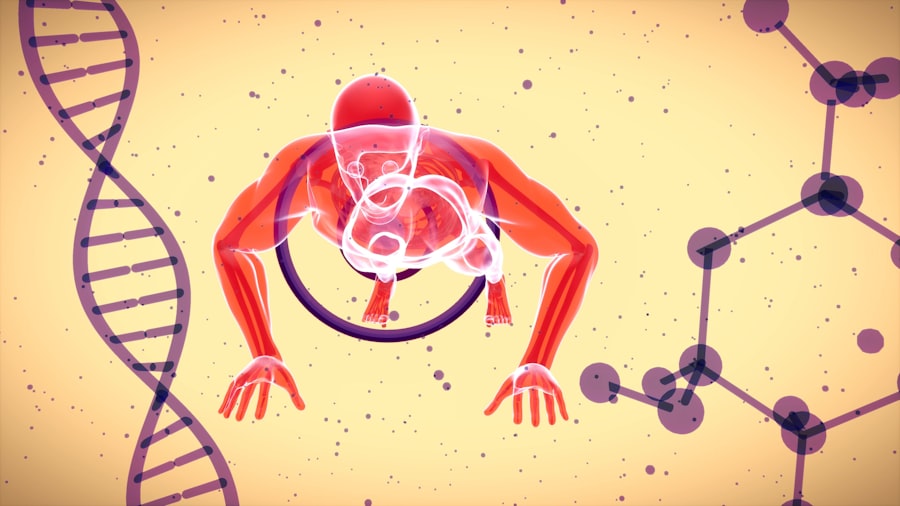
“Exploring the Unseen” then shifted its focus to the question of sentience, pushing the boundaries of what we consider consciousness to extend beyond the human experience, and even beyond familiar biological forms.
If you’re fascinated by the complexities of the universe and the mind-bending concepts explored in science documentaries, you might find the article on Freaky Science particularly intriguing. It delves into the latest discoveries that challenge our understanding of reality and perception. For more insights, check out this related article that explores the intersection of science and the extraordinary.
The Complex Lives of the Unseen
The documentary explored the intricate communication networks of organisms often overlooked, such as fungi and bacteria. It revealed the sophisticated ways in which these microscopic entities interact, forming complex communities with emergent properties. The film highlighted how our anthropocentric view often blinds us to the intelligence and agency present in the natural world, even in forms radically different from our own.
Mycelial Networks: The Earth’s Hidden Internet
A particularly striking example was the exploration of mycelial networks, the intricate web of fungal threads that connect plants beneath the soil. The documentary showcased research suggesting that these networks can transmit nutrients, share information about threats, and even facilitate communication between different plant species. This challenged the viewers’ understanding of individuality and cooperation in the natural world, suggesting a profound biological interconnectedness that operates largely beyond our direct observation.
The Future of Intelligence: Artificial and Beyond
The film’s exploration of unseen sentience naturally led to discussions about artificial intelligence. It moved beyond the simplistic portrayals of robots in popular culture to delve into the nuanced scientific research aiming to create genuine artificial consciousness. The documentary posed provocative questions about the nature of intelligence itself, and whether it is solely a biological phenomenon.
Machine Learning and the Emergence of Understanding
The segment on machine learning was particularly insightful, explaining how algorithms can learn and adapt, sometimes in ways that surprise even their creators. While not claiming true sentience for current AI, the film invited viewers to contemplate the potential for emergent intelligence in complex computational systems. The discussions touched upon the ethical implications and the profound questions surrounding the definition of life and consciousness in a rapidly evolving technological landscape.
The Frontier of Perception: Pushing Human Boundaries
The documentary concluded by returning to the human capacity to perceive and understand, focusing on the ongoing effort to extend our sensory and cognitive limits.
Neuroscience and the Exploration of Consciousness
The film highlighted the cutting-edge research in neuroscience, detailing advancements in brain-computer interfaces and brain imaging. It demonstrated how scientists are beginning to decode the neural correlates of consciousness, offering tantalizing glimpses into the very nature of subjective experience. The visual representations of brain activity, once purely abstract, were brought to life, revealing the intricate dance of neurons that underpins our thoughts and emotions.
Neuroplasticity and the Malleable Mind
The concept of neuroplasticity – the brain’s remarkable ability to reorganize itself throughout life – was presented as a key to expanding our perceptual horizons. The documentary showcased examples of individuals who have overcome significant neurological challenges, as well as scientific efforts to enhance cognitive abilities through targeted training and interventions. This offered a message of hope and agency, suggesting that our capacity for understanding and experiencing the world is not fixed but can be actively cultivated.
The Quest for Extended Senses
Finally, the documentary touched upon speculative technologies and scientific endeavors aimed at developing entirely new senses. From devices that translate radio waves into audible sounds to immersive virtual realities that can simulate previously unimaginable experiences, the film showcased humanity’s burgeoning quest to break free from the limitations of our biological endowment. The ultimate takeaway was a profound sense of wonder at the vastness of the unseen, both within ourselves and in the universe around us, and a renewed appreciation for the scientific endeavor that continually pushes the boundaries of our understanding. The film left its audience not with answers, but with a more profound set of questions, urging them to continue their own exploration of the unseen.

Birds Can Sense Something Humans Never Will
FAQs
What is the mind bending science documentary about?
The mind bending science documentary explores cutting-edge scientific concepts and theories that challenge our understanding of the world around us. It delves into topics such as quantum physics, the nature of reality, consciousness, and the potential for parallel universes.
Who are the experts featured in the mind bending science documentary?
The documentary features interviews and insights from leading scientists, physicists, philosophers, and researchers who are at the forefront of their respective fields. These experts provide in-depth analysis and perspectives on the mind bending scientific concepts presented in the documentary.
How does the mind bending science documentary challenge traditional scientific thinking?
The documentary challenges traditional scientific thinking by exploring concepts and theories that push the boundaries of our current understanding of the universe. It presents thought-provoking ideas that may challenge conventional scientific beliefs and encourage viewers to question their perceptions of reality.
What are some of the mind bending scientific concepts discussed in the documentary?
The documentary discusses mind bending scientific concepts such as the multiverse theory, time dilation, the nature of consciousness, quantum entanglement, and the implications of parallel dimensions. These concepts are presented in a way that encourages viewers to consider the profound implications they have on our understanding of the universe.
Where can I watch the mind bending science documentary?
The mind bending science documentary is available for streaming on various platforms, including online streaming services, educational websites, and through select television networks. Viewers can check their local listings or online streaming platforms to access the documentary.