The sheer immensity of the cosmos, a tapestry woven with stars, galaxies, and the enigmatic fabric of spacetime, has captivated humanity for millennia. From ancient stargazers charting celestial movements to modern scientists peering into the universe’s deepest secrets, the pursuit of understanding our cosmic home has been an enduring quest. For undergraduates embarking on their academic journeys, the field of cosmology offers a profound and intellectually stimulating avenue to explore these fundamental questions. This article delves into the exciting world of undergraduate cosmology, highlighting its core concepts, the journey of learning, and the potential it holds for shaping future generations of scientific thinkers.
The Grand Tapestry: Unveiling Cosmological Foundations
At its heart, cosmology is the study of the origin, evolution, and large-scale structure of the universe. It is a field that bridges physics, mathematics, and astronomy, demanding a multidisciplinary approach to unravel the mysteries of existence. For undergraduate students, this foundational exploration begins with grasping the fundamental principles that govern our universe.
The Expanding Universe: A Paradigm Shift
A cornerstone of modern cosmology is the understanding that the universe is not static but is, in fact, expanding. This revolutionary idea, first proposed by Georges Lemaître and later supported by Edwin Hubble’s observations of redshift in distant galaxies, fundamentally changed our perception of the cosmos. Undergraduate courses often dedicate significant time to understanding Hubble’s Law, the relationship between a galaxy’s distance and its recessional velocity. Students learn about redshift, a phenomenon where light from receding objects is shifted towards longer, redder wavelengths, serving as a cosmic speedometer. This expansion is not an explosion into pre-existing space, but rather the stretching of spacetime itself, a concept that can be initially counterintuitive but is crucial to grasp. Visualizations and analogies, such as points on an inflating balloon, are often employed to help students conceptualize this dynamic process. The implications of this expansion are far-reaching, leading to questions about the universe’s ultimate fate: will it continue expanding forever, or will gravity eventually halt and reverse this cosmic stretch?
The Big Bang: Genesis of Everything
The prevailing model for the universe’s origin is the Big Bang theory. Far from being a mere explosion, the Big Bang describes a period of rapid expansion and cooling from an extremely hot, dense state. Undergraduate cosmology programs introduce students to the evidence supporting this theory. The Cosmic Microwave Background (CMB) radiation, a faint afterglow of the Big Bang permeating the entire universe, is a key piece of this puzzle. Students learn how the CMB’s temperature and its slight anisotropies (tiny variations in temperature) provide a snapshot of the universe in its infancy, offering invaluable insights into its initial conditions and subsequent evolution. The abundance of light elements, such as hydrogen and helium, also aligns perfectly with predictions made by Big Bang nucleosynthesis, further solidifying this model. Understanding the Big Bang theory requires grappling with concepts of extreme temperatures, densities, and the fundamental laws of physics operating under conditions vastly different from those we experience today.
The Dark Side of the Cosmos: Unseen Influences
While visible matter, stars, and galaxies make up a small fraction of the universe’s content, modern cosmology reveals a universe dominated by unseen forces. The concepts of dark matter and dark energy are central to undergraduate studies. Dark matter, inferred from its gravitational effects on galaxies and galaxy clusters, accounts for a significant portion of the universe’s mass. Its nature remains one of the biggest mysteries in physics, with ongoing research exploring various candidates, from WIMPs (Weakly Interacting Massive Particles) to axions. Dark energy, an even more enigmatic component, is responsible for the accelerating expansion of the universe. Its discovery, through observations of distant supernovae, has revolutionized our understanding of cosmic dynamics and poses profound questions about the fundamental nature of spacetime and vacuum energy. Undergraduate students are introduced to the observational evidence for these dark components and the theoretical frameworks attempting to explain them.
For those interested in delving deeper into the fascinating world of cosmology, a related article can be found at this link: Freaky Science. This resource offers a variety of insights and discussions on current theories and discoveries in the field, making it an excellent complement to undergraduate studies in cosmology. Whether you’re exploring the origins of the universe or the nature of dark matter, this article provides valuable information that can enhance your understanding of the cosmos.
The Student’s Journey: Navigating the Cosmological Landscape
Embarking on an undergraduate cosmology curriculum is a journey of intellectual discovery, demanding a robust understanding of physics and mathematics, coupled with a keen sense of curiosity. The learning process is multifaceted, involving theoretical exploration, computational modeling, and exposure to cutting-edge research.
The Mathematical Language of the Cosmos
Cosmology is inherently a mathematical discipline. Undergraduate students must develop a strong foundation in calculus, differential equations, and linear algebra to comprehend the complex equations that describe the universe. General relativity, Einstein’s theory of gravity, forms the mathematical bedrock of modern cosmology. Courses delve into the intricacies of spacetime curvature, the Einstein field equations, and their application to cosmological models. Students learn to manipulate these equations to understand phenomena like the expansion of the universe, the formation of black holes, and the dynamics of gravitational waves. The ability to translate physical concepts into mathematical formulations and vice versa is a crucial skill honed throughout the undergraduate journey.
From Theory to Computation: Modeling the Universe
While theoretical frameworks provide the conceptual understanding, computational tools are essential for testing these theories against observational data and for exploring complex scenarios that cannot be solved analytically. Undergraduate cosmology programs often incorporate computational projects, where students learn to use programming languages like Python or C++ to simulate cosmological phenomena. They might model the growth of cosmic structures, the evolution of galaxy clusters, or the behavior of dark matter halos. This hands-on experience with simulations allows students to visualize abstract concepts, gain intuition about complex systems, and develop valuable data analysis skills. Exposure to scientific visualization techniques also helps in making the vastness and intricacies of the universe more tangible.
Engaging with Research: The Frontier of Knowledge
Undergraduate cosmology is not solely about mastering established theories; it is also about engaging with the active frontiers of research. Many universities offer opportunities for students to participate in research projects, working alongside faculty members on genuine scientific investigations. This could involve analyzing astronomical data from telescopes, contributing to the development of new simulation techniques, or even exploring theoretical aspects of dark matter or dark energy. These research experiences provide invaluable insights into the scientific process, fostering critical thinking, problem-solving skills, and a deeper appreciation for the challenges and rewards of scientific discovery. It’s during these endeavors that students often encounter the latest advancements and begin to formulate their own research questions.
Tools of the Trade: Observing and Interpreting the Universe
Cosmologists rely on a sophisticated array of observational instruments and analytical techniques to probe the universe. Undergraduate education often introduces students to these crucial tools, bridging the gap between theoretical predictions and empirical evidence.
Telescopes and Detectors: Our Eyes on the Cosmos
From ground-based observatories to space-based telescopes, humanity has developed an impressive arsenal of instruments to capture light and other cosmic signals. Undergraduate students learn about the principles behind various types of telescopes, including optical, radio, X-ray, and gamma-ray telescopes, each designed to observe different parts of the electromagnetic spectrum. They also learn about the specialized detectors that capture these faint signals, from CCDs (Charge-Coupled Devices) in optical telescopes to arrays of antennas in radio interferometers. The development and capabilities of iconic instruments like the Hubble Space Telescope, the James Webb Space Telescope, and the Large Hadron Collider (which probes fundamental particles relevant to cosmology) are often discussed, highlighting the technological advancements that have enabled our current understanding of the universe.
Data Analysis and Interpretation: Making Sense of Cosmic Signals
The vast amounts of data generated by astronomical observations require sophisticated analytical techniques. Undergraduate cosmology students are trained in the principles of data analysis, learning how to process raw data, identify patterns, and extract meaningful information. This often involves statistical methods, signal processing, and the use of specialized software packages. They learn to interpret the spectra of light from distant objects to determine their composition, temperature, and velocity, and to analyze the distribution of galaxies in large-scale surveys to understand the structure of the cosmic web. The ability to critically evaluate observational data and to draw sound conclusions is a paramount skill developed through these analytical exercises.
Gravitational Waves and Neutrinos: New Windows to the Universe
Beyond electromagnetic radiation, new messengers are revolutionizing cosmology. The detection of gravitational waves by LIGO and Virgo has opened a completely new window into the universe, allowing us to observe cataclysmic events like the merger of black holes and neutron stars. Undergraduate courses increasingly incorporate discussions on these new observational frontiers, explaining how gravitational wave detectors work and what insights they provide into the nature of gravity and extreme astrophysical phenomena. Similarly, the study of neutrinos, elusive subatomic particles that travel vast distances unimpeded, offers another unique probe of the universe’s most energetic processes. Understanding these emerging fields gives students a glimpse into the dynamic and evolving nature of cosmological research.
The Big Questions: Enduring Mysteries and Future Directions
Despite the remarkable progress in cosmology, the universe continues to present profound mysteries that drive ongoing research and inspire new generations of scientists. Undergraduate cosmology programs often touch upon these unresolved questions, fostering a sense of wonder and the ambition to contribute to their eventual solutions.
The Nature of Dark Matter and Dark Energy: The Cosmic Enigma
As mentioned earlier, the identities of dark matter and dark energy remain among the most significant unsolved puzzles in physics. Undergraduate students are exposed to the various theoretical models proposed to explain these phenomena, from supersymmetry and extra dimensions for dark matter to modifications of gravity and the cosmological constant for dark energy. Discussions often center on the ongoing experimental efforts to detect dark matter particles directly or indirectly, and the observational campaigns aimed at precisely measuring the properties of dark energy. The pursuit of these answers represents a frontier of fundamental physics that could reshape our understanding of the universe’s composition and evolution.
The Early Universe and Inflation: Setting the Stage
While the Big Bang theory explains the universe’s subsequent evolution, the precise events that transpired in the very first moments remain a subject of intense investigation. The theory of cosmic inflation, a hypothetical period of extremely rapid expansion in the universe’s first fraction of a second, is a key concept explored in undergraduate cosmology. Inflation elegantly addresses several cosmological puzzles, such as the flatness problem and the horizon problem, and predicts the existence of primordial gravitational waves, which scientists are actively searching for. Understanding the conditions and physics of the earliest universe is crucial for a complete picture of cosmic origins.
The Fate of the Universe and Multiverses: Speculative Horizons
The ultimate destiny of the universe is another question that captivates the imagination. Whether the universe will expand forever, collapse in a “Big Crunch,” or undergo some other dramatic transformation depends on the interplay of gravity, dark energy, and other cosmological parameters. Undergraduate courses may explore these different scenarios and the observational evidence that supports or refutes them. Furthermore, some theoretical frameworks, particularly those arising from string theory and inflationary cosmology, suggest the possibility of a multiverse – a collection of many universes, each with potentially different physical laws and constants. While highly speculative, these ideas push the boundaries of our conceptual understanding of reality and are often discussed as potential future avenues of research.
Undergraduate cosmology offers a fascinating glimpse into the universe’s origins and structure, and students often seek additional resources to deepen their understanding. A related article that provides insightful perspectives on this topic can be found at Freaky Science, where readers can explore various concepts and theories that shape our comprehension of the cosmos. This resource is particularly beneficial for those looking to enhance their studies and engage with current discussions in the field.
Beyond the Undergraduate Degree: Pathways in Cosmology
| Metric | Description | Typical Value / Range | Relevance to Undergraduate Cosmology |
|---|---|---|---|
| Hubble Constant (H₀) | Rate of expansion of the universe | 67 – 74 km/s/Mpc | Fundamental for understanding cosmic expansion and age of universe |
| Cosmic Microwave Background (CMB) Temperature | Temperature of relic radiation from Big Bang | ~2.725 K | Key evidence for Big Bang theory and early universe conditions |
| Dark Matter Density (ΩDM) | Fraction of total energy density in dark matter | ~0.27 (27%) | Important for structure formation and galaxy dynamics |
| Dark Energy Density (ΩΛ) | Fraction of total energy density in dark energy | ~0.68 (68%) | Explains accelerated expansion of the universe |
| Baryon Density (Ωb) | Fraction of total energy density in ordinary matter | ~0.05 (5%) | Relates to formation of stars, planets, and life |
| Age of the Universe | Time elapsed since the Big Bang | ~13.8 billion years | Sets timeline for cosmic evolution studies |
| Redshift (z) | Measure of how much the universe has expanded since light was emitted | 0 (present) to >10 (early universe) | Used to study distant galaxies and cosmic history |
| Scale Factor (a) | Dimensionless measure of the expansion of the universe | 0 (Big Bang) to 1 (present) | Fundamental in cosmological models and equations |
A degree with a focus on cosmology opens up a diverse range of academic and professional pathways. The skills and knowledge acquired are highly transferable, preparing students for advanced study, research careers, and even roles in related fields.
Graduate Studies: Deepening the Exploration
For many undergraduate cosmology students, the natural next step is graduate school, pursuing a Master’s or Doctoral degree. This allows for specialized research in a particular area of cosmology, such as observational cosmology, theoretical cosmology, or particle astrophysics. Graduate programs involve rigorous coursework, extensive research, and the completion of a dissertation. These programs are designed to train independent researchers who can contribute new knowledge to the field and lead future investigations. The journey through graduate school is a commitment to becoming an expert in a chosen subfield of cosmology.
Research and Academia: Shaping the Future
A significant number of cosmology graduates pursue careers in academia, becoming professors, researchers, and educators. They conduct cutting-edge research, publish their findings in scientific journals, and teach the next generation of cosmologists. These roles are vital for the continued advancement of our understanding of the universe. Academic positions often involve securing research grants, collaborating with international teams, and contributing to the broader scientific community through conferences and outreach activities. The pursuit of tenure and professorships is a long but rewarding path for those passionate about the academic life.
Industry and Beyond: Diverse Applications of Cosmological Thinking
While academia is a traditional path, the analytical and problem-solving skills developed in undergraduate cosmology are highly valued in various industries. Graduates may find opportunities
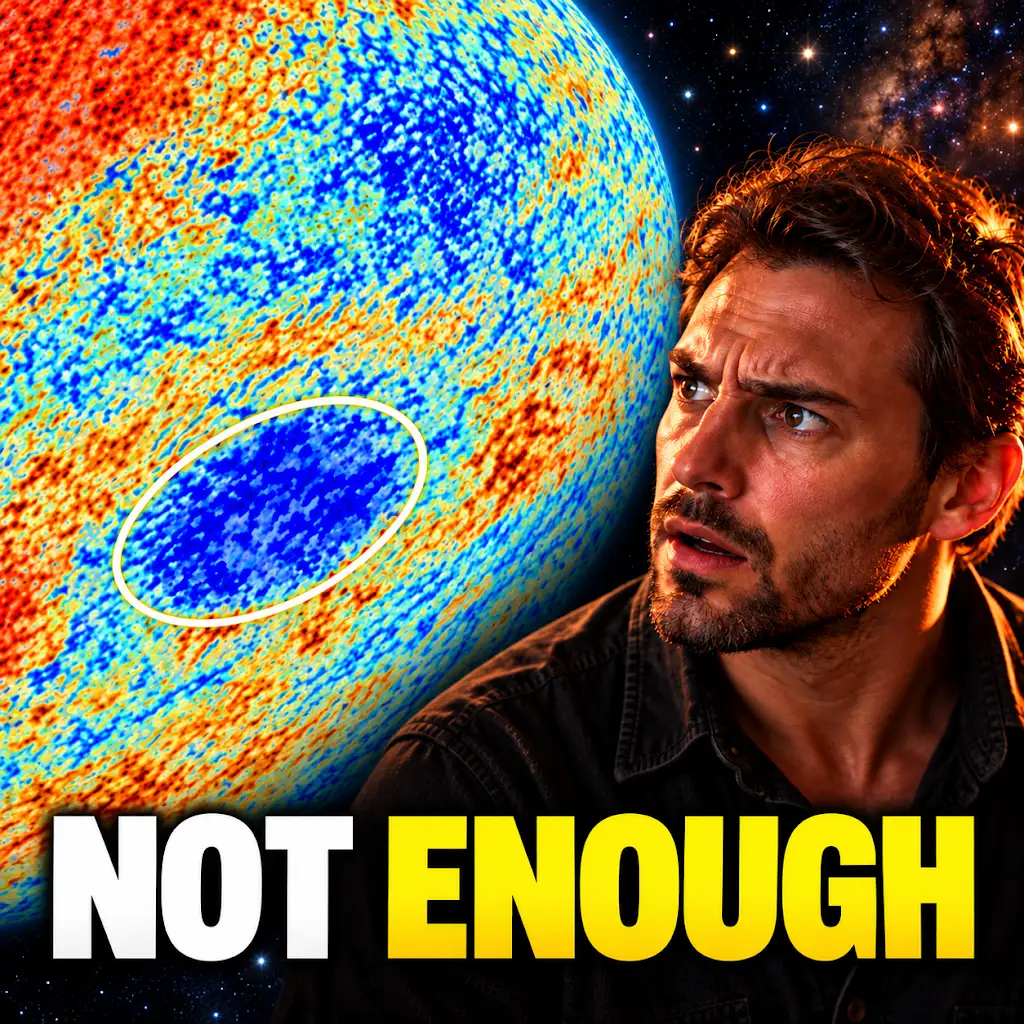
The Universe’s Cold Spot Has an Explanation. It’s Not Enough.
FAQs
What is undergraduate cosmology?
Undergraduate cosmology is the study of the origins, evolution, and eventual fate of the universe at a beginner level. It involves exploring topics such as the Big Bang theory, dark matter, dark energy, and the large-scale structure of the universe.
What are some key concepts covered in undergraduate cosmology courses?
Some key concepts covered in undergraduate cosmology courses include the expansion of the universe, cosmic microwave background radiation, the formation of galaxies and galaxy clusters, the composition of the universe, and the timeline of the universe from the Big Bang to the present day.
What skills can students develop through studying undergraduate cosmology?
Students studying undergraduate cosmology can develop critical thinking skills, problem-solving abilities, mathematical and analytical skills, and a deeper understanding of the scientific method. They also gain knowledge about the latest discoveries and theories in the field of cosmology.
What career opportunities are available for students with a background in undergraduate cosmology?
Students with a background in undergraduate cosmology can pursue careers in research institutions, observatories, space agencies, academia, science communication, and data analysis. They can also work in industries related to aerospace, technology, and engineering.
What are some recommended resources for learning more about undergraduate cosmology?
Some recommended resources for learning more about undergraduate cosmology include textbooks such as “An Introduction to Modern Cosmology” by Andrew Liddle, online courses from platforms like Coursera and edX, scientific journals like “The Astrophysical Journal,” and popular science books by authors like Stephen Hawking and Neil deGrasse Tyson.