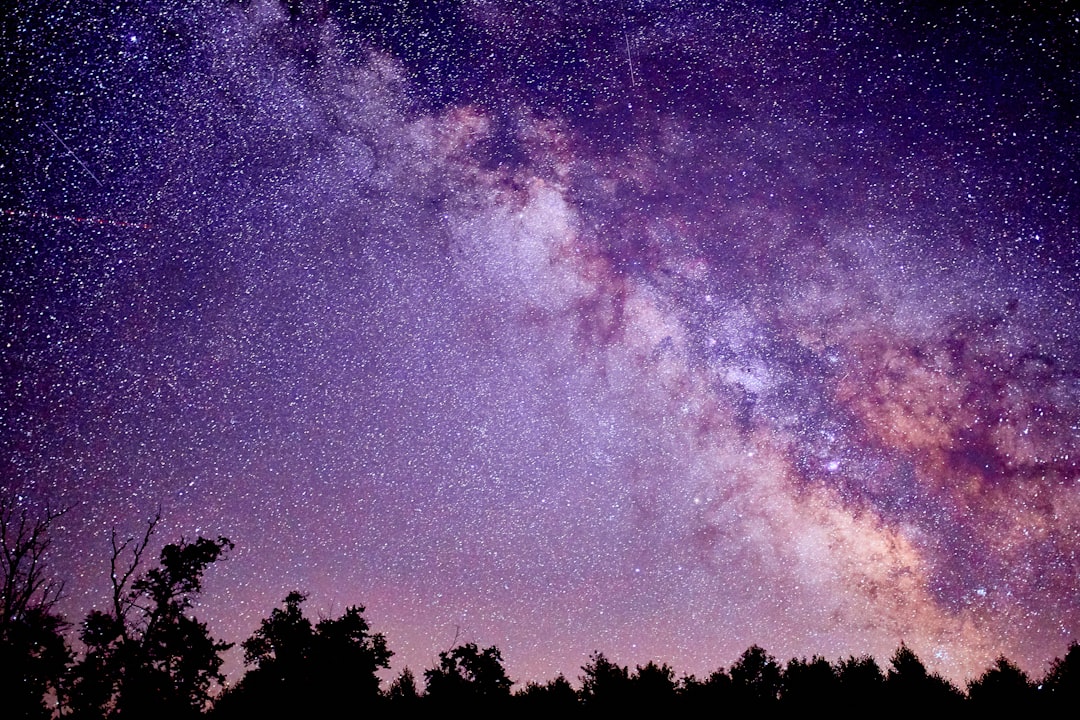
The cosmos, a vast and enigmatic expanse, has long captivated human curiosity. For millennia, our understanding of the universe has been limited by the reach of our naked eyes, discerning only the brightest stars and the familiar phases of the moon. However, with the advent of sophisticated telescopes and groundbreaking imaging techniques, humanity has begun to peer deeper into the cosmic tapestry than ever before. Among the most compelling tools in this exploration are false-color astronomy images, which transform the invisible into the vividly visual, revealing hidden details and breathtaking beauty in celestial objects. These images are not merely artistic renditions; they are scientific instruments, employing specific color palettes to represent data that would otherwise remain inaccessible to human perception. By assigning colors to different wavelengths of light – often those beyond the visible spectrum, such as infrared, ultraviolet, or X-rays – astronomers can differentiate between various chemical compositions, temperatures, and physical processes occurring light-years away. This article delves into the captivating world of false-color astronomy, exploring how these unique visualizations unlock profound insights into the universe’s most stunning phenomena.
False-color imaging in astronomy is a powerful technique that transcends the limitations of human vision. Our eyes are attuned to a narrow band of the electromagnetic spectrum, perceiving only visible light. However, the universe communicates in a much broader language of radiation, encompassing radio waves, microwaves, infrared, ultraviolet, X-rays, and gamma rays. Each of these wavelengths carries vital information about the physical conditions and constituents of celestial objects. False-color images act as translators, converting these invisible wavelengths into visible colors that our brains can interpret.
Mapping Invisible Light to Visible Hues
The process begins with capturing data across different parts of the electromagnetic spectrum. Telescopes equipped with specialized detectors are used to collect light at specific wavelengths. For instance, a telescope might capture images in infrared light, which is associated with heat and the presence of dust clouds, and in visible light, which reveals the glow of stars and gas. Each of these captured datasets is then processed, and specific colors are assigned to represent the intensity of radiation at each wavelength.
Infrared Insights: Revealing Hidden Structures
Infrared light, in particular, plays a crucial role in false-color astronomy. Dust and gas clouds, which are opaque to visible light, become transparent in the infrared spectrum. This allows astronomers to see through the obscuring veils and observe the birth of stars within nebulae, the disks of gas and dust surrounding young stars where planets form, and the intricate structures of galaxies obscured by interstellar dust. By assigning red to longer infrared wavelengths and blue to shorter ones, astronomers can highlight these otherwise hidden features.
Ultraviolet Whispers: The Signature of Hotter Objects
Ultraviolet (UV) radiation, on the other hand, is emitted by hotter objects. This includes young, massive stars, active galactic nuclei, and the highly energetic outflows from black holes. While UV light is invisible to our eyes, it can be captured by specialized instruments. Assigning colors like blue or violet to UV data allows astronomers to pinpoint these intensely hot regions and study the processes that drive them.
X-ray Emissaries: Probing Extreme Environments
X-rays are produced in some of the most energetic and extreme environments in the universe, such as supernova remnants, the accretion disks around black holes, and the hot gas in galaxy clusters. These sources are incredibly bright in X-rays but often faint or invisible in visible light. False-color X-ray images, where X-ray emission might be represented by colors like green or yellow, reveal the dynamics of these powerful cosmic events and provide insights into the behavior of matter under extreme conditions.
Why Not True Color?
While true-color images aim to represent how objects would appear to the human eye, they are often limited in their scientific utility when dealing with faint or distant objects, or when studying phenomena outside the visible spectrum. False color allows astronomers to:
- Enhance Contrast: By assigning specific colors to different intensity levels, astronomers can dramatically enhance the contrast between various features, making subtle details more apparent.
- Differentiate Materials: Different chemical elements and molecules emit or absorb light at distinct wavelengths. False color allows scientists to map the distribution of these materials, providing clues about the composition and evolution of cosmic objects.
- Visualize Non-Visible Data: As discussed, much of the universe’s activity occurs in wavelengths our eyes cannot detect. False color is essential for making this information visible and comprehensible.
- Highlight Physical Processes: Temperature, density, and magnetic fields can all influence the emission of light at different wavelengths. False color can be used to map these physical parameters, revealing dynamic processes like stellar winds, shock waves, and accretion flows.
False color astronomy images have sparked considerable debate regarding their scientific accuracy and the interpretation of celestial phenomena. A related article that delves into this topic is available at Freaky Science, where it explores how these images can enhance our understanding of the universe while also raising questions about the fidelity of the data they represent. The article emphasizes the importance of context in interpreting these images, highlighting both their artistic appeal and their role in scientific communication.
Cosmic Canvas: Galaxies Painted in New Light
Galaxies, the colossal stellar cities that populate the universe, are prime subjects for false-color imaging. These majestic structures, containing billions to trillions of stars, are complex and multifaceted, their true nature often obscured by dust, distance, and the limitations of visible light. False-color techniques unlock a deeper understanding of their formation, evolution, and the dazzling phenomena they harbor.
Spiral Spectacles: Unraveling Galactic Arms
Spiral galaxies, with their iconic swirling arms, are particularly captivating. While visible light reveals the bright stars and nebulae within these arms, infrared images, often rendered in reds and oranges, can pierce through the dust that pervades these regions. This allows astronomers to see the sites of ongoing star formation, where young, massive stars are born within dense gas clouds. Ultraviolet data, perhaps displayed in blues, can highlight the hot, young stellar populations that illuminate the spiral arms.
The Milky Way in Infrared: A Window to Our Galactic Core
Our own Milky Way galaxy, when viewed through infrared eyes, reveals a dramatically different landscape than its visible-light counterpart. The dense dust at the galactic center, which blocks visible light, is transparent to infrared radiation. This allows us to see the chaotic environment of the supermassive black hole, Sagittarius A*, and the dense stellar cluster surrounding it. False-color infrared maps of the Milky Way have been instrumental in studying stellar dynamics and the extreme physics near the galactic center.
Elliptical Enigmas: The Dwellings of Ancient Stars
Elliptical galaxies, often appearing as smooth, featureless ovals, are home to older stellar populations and contain much less gas and dust than spiral galaxies. While their visible light appearance can be relatively uniform, false-color imaging can still reveal subtle variations in stellar populations and the presence of intracluster gas. Studying these galaxies in different wavelengths can provide insights into their formation through galactic mergers and their long-term evolution.
Galactic Collisions: Cosmic Dances of Destruction and Creation
The universe is a dynamic place, and galaxies are not static entities. They interact, collide, and merge, creating spectacular celestial displays. False-color images are particularly adept at capturing the chaos and beauty of these cosmic encounters.
The Antennae Galaxies: A Tale of Stellar Birth in Turmoil
The Antennae Galaxies, a pair of interacting galaxies, are a classic example. Visible light shows the bright knots of star formation, but infrared images reveal vast quantities of dust heated by the intense radiation and stellar winds. By assigning different colors to various infrared and visible light wavelengths, astronomers can map the distribution of dust, gas, and newly formed stars, showcasing how these collisions trigger bursts of star formation.
The Mice Galaxies: Tracing Intergalactic Gas Streams
The Mice Galaxies, another interacting system, show long tidal tails of gas and stars extending from the main galactic bodies. False-color images, particularly those sensitive to neutral hydrogen gas (often mapped in specific radio wavelengths and then assigned a false color), can trace these streams of material stripped from the galaxies during their close encounter. This helps astronomers understand the dynamics of galactic interactions and the flow of matter between galaxies.
Stellar Nurseries: Birthplaces of Stars in Vivid Hues
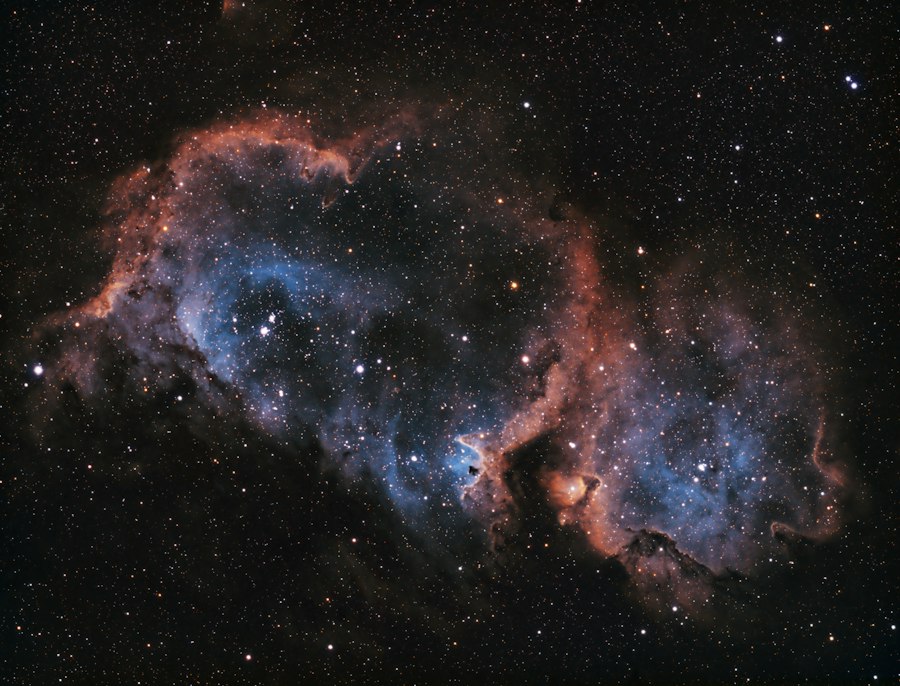
Nebulae, the vast interstellar clouds of gas and dust, are the stellar nurseries of the universe. Within these ethereal expanses, gravity pulls matter together, igniting nuclear fusion and giving birth to new stars. False-color imaging has revolutionized our understanding of these cosmic cradles, revealing intricate structures and dynamic processes that would otherwise remain hidden.
Emission Nebulae: The Luminous Glow of Ionized Gas
Emission nebulae, like the Orion Nebula, glow brightly because they are illuminated by ultraviolet radiation from nearby hot, young stars. This radiation ionizes the gas, causing it to emit light at specific wavelengths. In visible light, these nebulae appear as beautiful, colorful clouds. False-color images can enhance this beauty and provide more detailed information.
The Orion Nebula: A Multi-Wavelength Masterpiece
The Orion Nebula is a frequent subject of false-color imaging. Visible light images showcase the vibrant reds of hydrogen-alpha and the blues of scattered starlight. However, infrared images reveal dense pockets of gas and dust where stars are still forming, hidden from visible light. X-ray images might pinpoint energetic young stars or shock fronts. By combining these datasets and assigning appropriate false colors, astronomers can create a comprehensive picture of star formation in action, from the initial collapse of gas clouds to the emergence of young stars.
Reflection Nebulae: Sculpted by Stellar Light
Reflection nebulae, unlike emission nebulae, do not emit their own light. Instead, they reflect the light of nearby stars. The color of a reflection nebula depends on the color of the illuminating star and the scattering properties of the dust grains.
The Pleiades: A Diamond Cluster in Blue and Gold
The Pleiades star cluster, a collection of young, hot stars, is surrounded by a beautiful blue reflection nebula. In visible light, the nebula is predominantly blue due to the scattering of light by dust. False-color images can be used to enhance subtle variations in color, revealing details about the dust composition and its interaction with the stellar radiation. By assigning specific colors to different wavelengths of scattered light, astronomers can map out the intricate structures within the nebula, revealing how the light from the young stars shapes and sculpts the dust.
Dark Nebulae: Veils of Dust Obscuring the View
Dark nebulae, composed of dense clouds of gas and dust, appear as dark patches against the brighter background of stars or emission nebulae. They are often so opaque that they block visible light entirely. However, these clouds are precisely where new stars are born.
The Horsehead Nebula: A Silhouette Revealed
The iconic Horsehead Nebula, a dark nebula silhouetted against a bright emission nebula, is a prime example. While its visible-light silhouette is dramatic, infrared and radio observations can penetrate the dust and reveal the gas and molecular clouds within. False-color images that combine visible light with infrared or radio data can highlight the density variations within the dark nebula and pinpoint the regions where gravitational collapse is likely to occur, leading to the formation of new stars.
Supernovae and Stellar Remnants: The Explosive End and its Aftermath
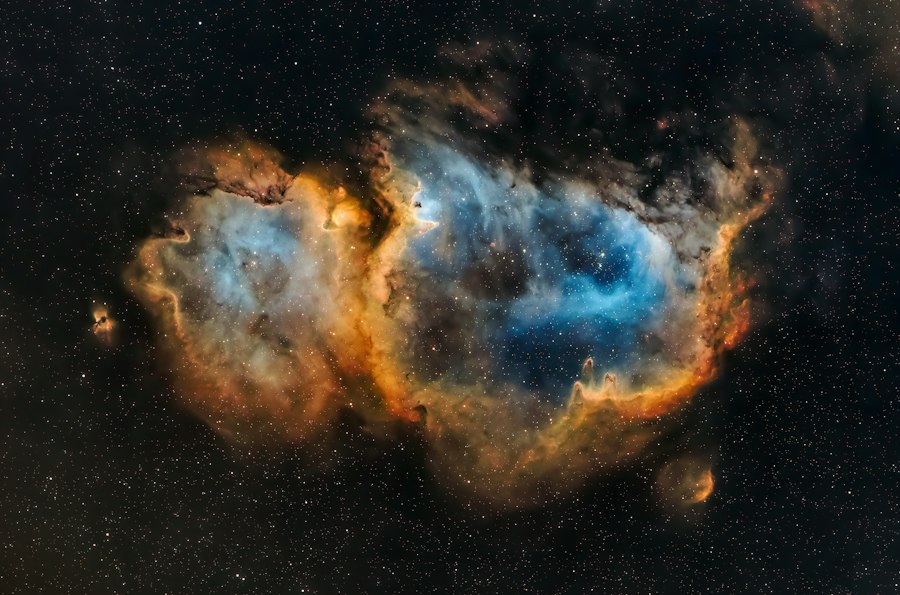
The life cycle of stars culminates in dramatic events, none more so than supernovae – the explosive deaths of massive stars. The aftermath of these cosmic explosions leaves behind spectacular remnants, providing astronomers with insights into the extreme physics of stellar evolution and the creation of heavy elements. False-color imaging is indispensable in unraveling the intricate structures and energetic processes within these celestial fireworks.
Supernova Remnants: Expanding Shells of Cosmic Debris
When a massive star explodes as a supernova, it ejects a vast shell of gas and dust at incredible speeds. These expanding remnants, like the Crab Nebula, are filled with shock waves, high-energy particles, and complex magnetic fields.
The Crab Nebula: A Multi-Wavelength Observatory
The Crab Nebula is a supernova remnant that has been studied extensively across the electromagnetic spectrum. Visible light images reveal the filamentary structure of the expanding gas. However, X-ray and radio observations are crucial for understanding the highly energetic processes at play. False-color X-ray images, often rendered in vibrant colors, highlight the synchrotron radiation produced by electrons spiraling in strong magnetic fields. Radio observations can map the distribution of neutral hydrogen and other molecules. By combining these different wavelength datasets, astronomers can create a stunning false-color visualization that reveals the dynamic interaction of shock waves, magnetic fields, and high-energy particles, showcasing the physics of a stellar explosion in unprecedented detail.
Neutron Stars and Pulsars: The Dense Cores of Exploded Stars
At the heart of some supernova remnants lie neutron stars, incredibly dense objects left behind after the supernova. Many neutron stars are pulsars, rapidly rotating objects that emit beams of radiation.
Pulsar Wind Nebulae: Cosmic Accelerators
Pulsars can create powerful wind nebulae, energetic outflows of particles that interact with the surrounding supernova remnant. False-color imaging can highlight the intricate structures of these nebulae, revealing the flow of energy from the pulsar and its impact on the interstellar medium. Different colors can represent different energy levels of particles or the presence of specific elements ejected by the supernova.
White Dwarfs and Planetary Nebulae: The Gentle Demise of Smaller Stars
For stars like our Sun, their end is a more gradual process, leading to the formation of white dwarfs and the ejection of their outer layers as planetary nebulae. Despite the gentler demise, these objects can still be visually stunning and scientifically significant.
The Helix Nebula: The Eye of God
The Helix Nebula, also known as the “Eye of God,” is a well-known planetary nebula. Visible light images showcase its intricate, ring-like structures and the central white dwarf. False-color images can enhance the visibility of different elements present in the nebula, such as oxygen, nitrogen, and sulfur, by assigning specific colors to their emission lines. This allows astronomers to map the composition and structure of the nebula with great precision, revealing the complex processes of stellar shedding and the interaction of the white dwarf’s radiation with the ejected gas.
False color astronomy images have sparked discussions about their scientific accuracy and the interpretation of data they provide. For those interested in delving deeper into this topic, a related article can be found at Freaky Science, which explores how these images are created and the implications they have for our understanding of the universe. By using color to represent different wavelengths of light, astronomers can reveal details that are not visible to the naked eye, yet this technique also raises questions about the potential for misinterpretation.
Exploring the Unseen: Planets, Exoplanets, and the Search for Life
| Question | Answer |
|---|---|
| Are false color astronomy images scientifically accurate? | False color astronomy images are scientifically accurate representations of astronomical objects, as they are created using data from different wavelengths of light to highlight specific features that may not be visible in standard color images. |
Beyond the dramatic events of star birth and death, false-color astronomy also plays a vital role in exploring planets within our solar system and the ever-growing catalogue of exoplanets – planets orbiting stars other than our Sun. These visualizations help us understand planetary atmospheres, surface compositions, and the potential for habitability.
Our Solar System in a New Light: Unveiling Planetary Features
Planets within our solar system, while observable in visible light, reveal a wealth of additional information when imaged in different wavelengths.
Mars: A World of Hidden Water and Dust Storms
Mars, the Red Planet, is a prime example. Visible light images show its rusty surface and polar ice caps. However, infrared observations can reveal the presence of water ice and hydrated minerals, providing clues about the planet’s past and present water content. False-color infrared images can highlight regions with significant subsurface ice or areas prone to dust storms. UV observations can probe the upper atmosphere and the behavior of its thin atmosphere.
Jupiter and Saturn: Atmospheric Dynamics in Technicolor
The giant gas planets, Jupiter and Saturn, are characterized by their swirling cloud bands and dynamic atmospheres. False-color images, particularly those using different infrared wavelengths, can reveal the temperature variations and chemical compositions of their atmospheric layers, showing features like deep storm systems and ammonia ice clouds that are not readily apparent in visible light. This helps astronomers understand the complex meteorological processes occurring on these distant worlds.
The Dawn of Exoplanet Exploration: Detecting Distant Worlds
The discovery and characterization of exoplanets are among the most exciting frontiers in modern astronomy. While most exoplanets are detected indirectly, through the dimming of their star’s light as they transit or the wobble of the star due to the planet’s gravity, false-color techniques are beginning to play a role in their direct imaging and atmospheric analysis.
Direct Imaging of Exoplanets: Capturing Faint Lights
Directly imaging exoplanets is incredibly challenging due to the overwhelming brightness of their host stars. However, advanced techniques using specialized telescopes and adaptive optics can sometimes capture faint light from these distant worlds. False-color techniques are essential for processing these faint signals and separating them from the starlight. Different colors can be assigned to represent the intensity of light at different wavelengths, helping to determine the planet’s temperature and, potentially, its atmospheric composition.
Atmospheric Signatures: The Search for Biosignatures
The ultimate goal in exoplanet research is to find signs of life, or biosignatures. This involves analyzing the light that passes through or is reflected by an exoplanet’s atmosphere. Different molecules, such as oxygen, methane, or water vapor, absorb or emit light at specific wavelengths.
Spectroscopy: Decoding Atmospheric Fingerprints
Spectroscopy, a technique that breaks down light into its constituent wavelengths, is crucial here. By analyzing the spectrum of light from an exoplanet, astronomers can identify the chemical fingerprints of various gases in its atmosphere. False-color representations of these spectra can help visualize the absorption and emission lines, making it easier to identify the presence of potential biosignatures. For example, the presence of both oxygen and methane in an atmosphere, which would not typically coexist without a continuous source, could be a tantalizing indicator of life.
The Art and Science of Visualization: Communicating Cosmic Wonders
False-color astronomy images are not just scientific tools; they are powerful vehicles for public engagement and education. Their breathtaking beauty sparks wonder and curiosity, inviting a broader audience to connect with the wonders of the universe. The artistry involved in creating these images is as important as the scientific rigor.
Collaboration Between Scientists and Artists
The creation of stunning false-color images often involves a close collaboration between astronomers and visual artists or data visualizers. Astronomers provide the raw data and the scientific context, explaining what each wavelength represents and what physical processes are being depicted. Artists then use their expertise to select color palettes and apply rendering techniques that are both scientifically accurate and aesthetically compelling.
Choosing the Right Palette: Enhancing Meaning and Impact
The choice of colors is not arbitrary. It is carefully considered to highlight specific scientific features and to convey the intended message. For example, using warm colors like reds and oranges for hotter regions and cooler colors like blues and greens for colder regions is a common convention. However, other palettes might be chosen to emphasize specific chemical elements, magnetic field lines, or the distribution of matter. The goal is to create an image that is not only beautiful but also informative and easy to interpret.
Inspiring the Next Generation of Explorers
These vibrant cosmic vistas have the power to inspire awe and ignite a passion for science in people of all ages. By making the universe accessible and visually engaging, false-color images can encourage young minds to pursue careers in astronomy, physics, and related fields, ensuring that the exploration of the cosmos continues for generations to come. They serve as a constant reminder of the vastness and beauty of the universe, urging us to continue looking up, asking questions, and pushing the boundaries of our knowledge.
In conclusion, false-color astronomy images are far more than just pretty pictures. They are sophisticated scientific instruments that unlock the secrets of the universe, transforming invisible data into stunning visual narratives. From the birth of stars to the explosive deaths of supernovae, and from the atmospheric dynamics of our own planets to the distant whispers of exoplanets, these images provide an unparalleled window into the cosmos, fueling both scientific discovery and profound human wonder. They are a testament to humanity’s relentless drive to understand our place in the universe and the extraordinary beauty that lies beyond our everyday perception.
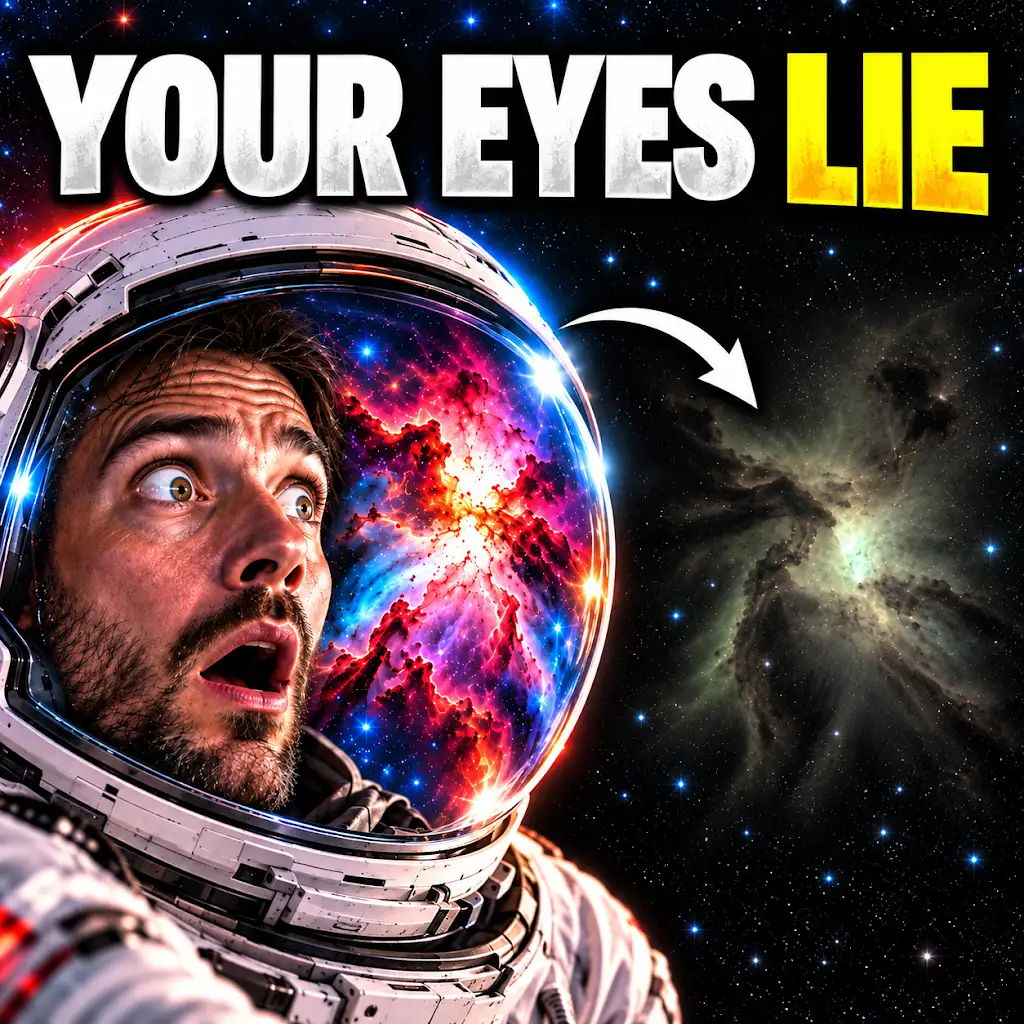
The Space Photos Are Real—But Your Eyes Would See This
FAQs
What are false color astronomy images?
False color astronomy images are images of celestial objects that have been assigned colors that do not correspond to the natural colors of the objects. These colors are often used to represent different wavelengths of light, allowing scientists to study and analyze the objects in more detail.
How are false color astronomy images created?
False color astronomy images are created by combining data from different wavelengths of light, such as infrared, ultraviolet, and X-ray, and assigning each wavelength a different color. This allows scientists to visualize and study the different characteristics of celestial objects that may not be visible in the natural colors of visible light.
Are false color astronomy images scientifically accurate?
Yes, false color astronomy images are scientifically accurate in the sense that they accurately represent the data collected from different wavelengths of light. However, it is important to note that the colors used in these images are not representative of the natural colors of the celestial objects, and are instead used to highlight specific features for scientific analysis.
What are the benefits of using false color astronomy images?
False color astronomy images allow scientists to study and analyze celestial objects in more detail by visualizing data from different wavelengths of light. This can provide valuable insights into the composition, temperature, and other characteristics of the objects that may not be visible in natural color images.
How are false color astronomy images used in scientific research?
False color astronomy images are used in scientific research to study and analyze celestial objects, such as stars, galaxies, and nebulae. By visualizing data from different wavelengths of light, scientists can gain a better understanding of the physical properties and processes occurring within these objects, leading to new discoveries and insights in the field of astronomy.