
The year 2026 is poised to usher in a new era of cosmic exploration, not through the launch of a new telescope or a groundbreaking experimental discovery, but through the immersive and accessible medium of documentary film. “Exploring the Universe: Cosmology Documentary 2026” is set to redefine our understanding and appreciation of the cosmos, offering a visually stunning and intellectually rigorous journey from the infinitesimal quantum realm to the grandest galactic structures. This ambitious project promises to synthesize the latest scientific advancements with cutting-edge filmmaking techniques, creating an experience that is both educational and profoundly awe-inspiring. The documentary aims to demystify complex cosmological concepts, making them comprehensible to a broad audience while simultaneously pushing the boundaries of visual representation for phenomena that have never been directly observed.
The team behind “Exploring the Universe: Cosmology Documentary 2026” is a collaboration of leading cosmologists, astrophysicists, and renowned filmmakers. This interdisciplinary approach is crucial, ensuring that scientific accuracy is paramount while artistic vision brings the universe to life. The documentary will delve into the most pressing questions in cosmology: the nature of dark matter and dark energy, the origins of the universe through the lens of inflation and the Big Bang, the formation and evolution of galaxies, and the search for extraterrestrial life. It will leverage the latest data from instruments like the James Webb Space Telescope, the upcoming Vera C. Rubin Observatory, and theoretical models that continue to refine our cosmic narrative. The filmmakers are committed to translating abstract mathematical equations and theoretical frameworks into tangible, visual narratives that resonate with the human desire to understand our place in the grand cosmic tapestry.
Illuminating the Invisible: Dark Matter and Dark Energy
The vast majority of the universe remains unseen and largely mysterious, composed of dark matter and dark energy. These enigmatic components are not merely academic curiosities; they are fundamental to the structure and evolution of the cosmos as we know it. “Exploring the Universe: Cosmology Documentary 2026” dedicates significant segments to unraveling these cosmic enigmas, employing sophisticated visual metaphors and animations to depict their hypothesized effects.
The Gravitational Scaffolding: Understanding Dark Matter
Dark matter, comprising approximately 27% of the universe, exerts a gravitational influence that is crucial for the formation of galaxies and galaxy clusters. However, it does not interact with electromagnetic radiation, making it invisible to traditional telescopes. The documentary will explore the indirect evidence for dark matter, such as the rotation curves of galaxies, gravitational lensing, and the cosmic microwave background radiation. Viewers will be guided through the ongoing search for the fundamental particles that constitute dark matter, from weakly interacting massive particles (WIMPs) to axions, detailing the experimental efforts underway in underground laboratories and particle colliders worldwide. The visual presentation will move beyond simple infographics, employing immersive CGI to illustrate how dark matter acts as a gravitational scaffold, drawing ordinary matter together to forge the cosmic structures we observe. The narrative will emphasize the ongoing nature of scientific inquiry, acknowledging that while the evidence for dark matter is compelling, its precise nature remains one of cosmology’s greatest unsolved puzzles.
The Accelerating Expansion: The Enigma of Dark Energy
Even more pervasive than dark matter is dark energy, estimated to constitute about 68% of the universe. This mysterious force is responsible for the observed acceleration of the universe’s expansion, a phenomenon that has profound implications for its ultimate fate. The documentary will trace the history of this discovery, from early observations of distant supernovae to the precise measurements made by modern surveys. Animated sequences will depict the concept of dark energy as an intrinsic property of spacetime itself, a sort of cosmic anti-gravity pushing galaxies further apart. The film will explore various theoretical models attempting to explain dark energy, including the cosmological constant and quintessence, highlighting the challenges and ongoing debates within the scientific community. The visualizers will aim to convey the sheer scale of this phenomenon, illustrating how over billions of years, dark energy has dominated the universe’s expansion, shaping its future trajectory towards a cold, dark, and ever-expanding void, or perhaps something far more complex.
If you’re intrigued by the wonders of the universe and the latest advancements in cosmology, you might find the upcoming documentary set for release in 2026 particularly fascinating. It promises to explore groundbreaking theories and discoveries that could reshape our understanding of the cosmos. To delve deeper into related topics and stay updated on scientific developments, you can check out this insightful article on Freaky Science, which covers various aspects of cosmology and space exploration. For more information, visit Freaky Science.
Origins and Evolution: From the Big Bang to Galaxy Formation
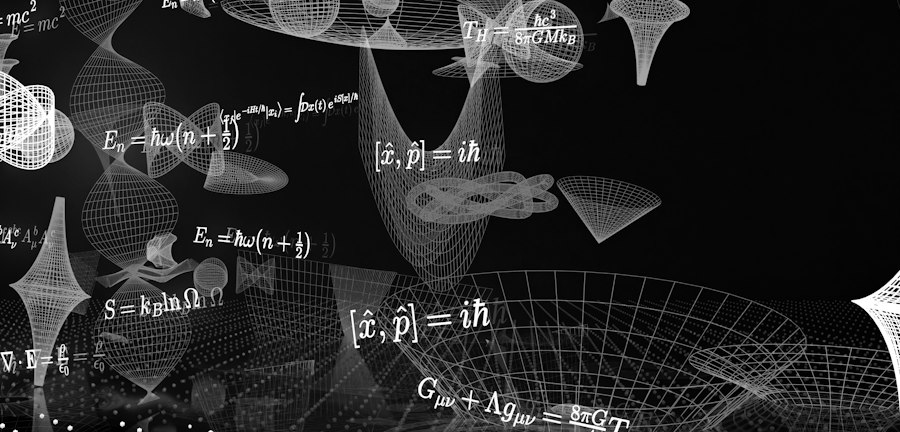
The story of the universe is a grand narrative of cosmic evolution, beginning with an explosive origin and leading to the intricate structures we see today. “Exploring the Universe: Cosmology Documentary 2026” will meticulously reconstruct this evolutionary timeline, offering a breathtaking visual journey through billions of years of cosmic history.
Echoes of Creation: The Big Bang and Cosmic Inflation
The documentary will begin at the very beginning, exploring the prevailing scientific model of the Big Bang. While often misunderstood as a simple explosion, the Big Bang represents the rapid expansion of space itself from an incredibly hot and dense state. The film will meticulously explain the evidence supporting the Big Bang theory, including the redshift of distant galaxies and the existence of the cosmic microwave background (CMB) radiation, the faint afterglow of the early universe. A significant portion will be dedicated to the theory of cosmic inflation, a hypothetical period of exponential expansion that occurred fractions of a second after the Big Bang. This theory elegantly explains several puzzling features of the universe, such as its flatness and homogeneity, and the origin of the initial density fluctuations that seeded the formation of all cosmic structures. Visualizations will aim to portray the immense energies and fleeting moments of this primordial epoch, using abstract yet scientifically informed imagery to depict quantum fluctuations giving rise to the seeds of all matter and energy.
Cosmic Architects: The Birth and Growth of Galaxies
Once the universe cooled sufficiently, gravity began its work, pulling together the slightly denser regions of matter. “Exploring the Universe: Cosmology Documentary 2026” will then transition to the fascinating process of galaxy formation. Viewers will witness the coalescence of gas and dark matter into the first stars and then into the primordial galaxies. The documentary will showcase the incredible diversity of galactic shapes and sizes – from the majestic spiral arms of our own Milky Way to the elliptical behemoths found at the centers of galaxy clusters. The film will delve into the role of mergers and interactions between galaxies, demonstrating how these cosmic collisions have sculpted the universe over eons. The advanced CGI will bring to life the chaotic beauty of these galactic dramas, from the initial clumping of gas and dust to the violent ballet of colliding galaxies, illustrating the dynamic and ever-evolving nature of the cosmic landscape. The narrative will also touch upon the formation of supermassive black holes at the centers of galaxies, their profound influence on galactic evolution, and the ongoing cycle of star formation and death that characterizes these colossal stellar islands.
The Search for Life Beyond Earth: Astrobiology and Exoplanets
The question of whether we are alone in the universe is one that has captivated humanity for centuries. “Exploring the Universe: Cosmology Documentary 2026” will bring viewers to the forefront of this thrilling quest, exploring the scientific endeavors to find life beyond our solar system and the implications of such a discovery.
In the upcoming cosmology documentary set to release in 2026, viewers will explore the mysteries of the universe and the latest discoveries in astrophysics. This fascinating journey into the cosmos is complemented by a related article that delves deeper into the scientific advancements shaping our understanding of space. For those interested in expanding their knowledge, the article can be found here, providing insights that will enhance the viewing experience of the documentary.
Worlds Beyond Our Sun: The Exoplanet Revolution
The past few decades have witnessed a revolution in our understanding of planetary systems, with the discovery of thousands of exoplanets – planets orbiting stars other than our Sun. The documentary will highlight the methods used to detect these distant worlds, from the transit method, where planets are observed passing in front of their stars, to the radial velocity method, which detects the wobble of a star caused by a planet’s gravitational pull. The film will showcase the incredible diversity of exoplanets discovered, ranging from gas giants larger than Jupiter to rocky, Earth-sized worlds. Particular attention will be paid to exoplanets residing within the “habitable zone” of their stars, the region where liquid water could exist on a planet’s surface – a key ingredient for life as we know it. The visualizations will bring these exoplanets to life, offering speculative but scientifically grounded depictions of their potential landscapes and atmospheres, based on the data gathered by telescopes like Kepler and TESS, and the ambitious future missions planned to characterize these distant worlds.
The Conditions for Life: Astrobiological Frontiers
Identifying potentially habitable exoplanets is only the first step. The documentary will then delve into the science of astrobiology, exploring the fundamental requirements for life to emerge and thrive. This will involve examining extremophiles on Earth – organisms that survive in seemingly inhospitable environments – to understand the potential resilience and adaptability of life. The film will discuss the search for biosignatures – chemical indicators in exoplanet atmospheres that could signal the presence of life, such as oxygen, methane, or specific combinations of gases. The narrative will explore the ongoing efforts to analyze exoplanet atmospheres using advanced spectroscopic techniques, with the James Webb Space Telescope playing a pivotal role. The documentary will also contemplate the philosophical and scientific implications of finding extraterrestrial life, from its potential impact on our understanding of biology and evolution to the profound questions it raises about our place in the cosmos. The filmmakers aim to convey both the scientific rigor and the profound wonder associated with this ongoing quest, illustrating that the search for life is not just a scientific endeavor but a deeply human one.
The Future of the Cosmos: Fate and Our Cosmic Horizon
As we gaze further into the universe and ponder its origins, we must also consider its ultimate destiny. “Exploring the Universe: Cosmology Documentary 2026” will conclude by exploring the various scientific scenarios for the future of the cosmos, offering a thought-provoking glimpse into what lies beyond our current observational horizon.
The Expanding Void: The Fate of the Universe
The accelerated expansion driven by dark energy leads to several possible futures for the universe. The documentary will detail the most widely discussed scenarios, including the “Big Freeze” or “Heat Death,” where the universe continues to expand indefinitely, becoming increasingly cold and dilute, with stars eventually burning out and black holes evaporating. Another possibility, though less favored by current data, is the “Big Rip,” where the accelerating expansion becomes so strong that it tears apart galaxies, stars, planets, and even atoms themselves. The film will present these scenarios with compelling visualizations, illustrating the vast scales of time and the gradual decay of cosmic structures. The narrative will emphasize that our understanding of dark energy is crucial to definitively predicting the universe’s ultimate fate, and that future observations will refine these predictions. The visual language will convey a sense of cosmic grandeur and inevitable change, reminding viewers of the transient nature of all things within the grand cosmic timeline.
Pushing the Boundaries: Future of Cosmic Exploration
Looking ahead, “Exploring the Universe: Cosmology Documentary 2026” will also touch upon the exciting future of cosmological research and exploration. This includes upcoming observatories, theoretical advancements, and new avenues of inquiry. The documentary will highlight the potential of next-generation telescopes, both ground-based and space-based, to probe even deeper into the universe’s past and to provide more detailed insights into its composition and evolution. The film will also discuss the ongoing development of sophisticated computational models and simulations that allow cosmologists to test complex theories and explore hypothetical scenarios with unprecedented fidelity. The narrative will conclude with an optimistic outlook, emphasizing the enduring human drive to explore and understand, and the vast, awe-inspiring universe that awaits further discovery, urging viewers to remain curious and engaged with the unfolding story of our cosmos. The documentary intends to leave the audience with a profound sense of wonder, a deeper appreciation for the scientific process, and a renewed sense of connection to the grand cosmic narrative.
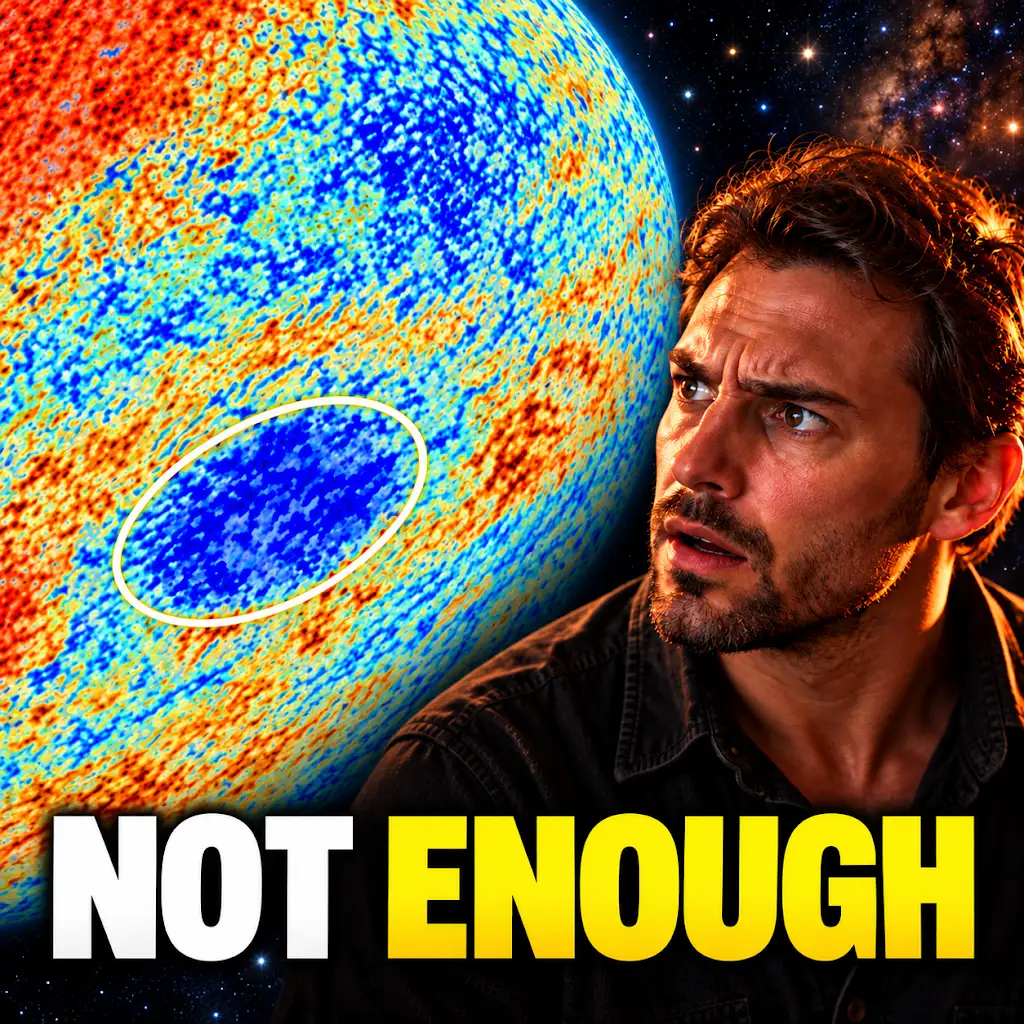
The Universe’s Cold Spot Has an Explanation. It’s Not Enough.
FAQs
What is the focus of the cosmology documentary 2026?
The cosmology documentary 2026 explores the latest advancements and discoveries in the field of cosmology, including theories about the origins of the universe, dark matter, and dark energy.
Who are the experts featured in the cosmology documentary 2026?
The documentary features interviews with leading cosmologists, astrophysicists, and researchers who are at the forefront of exploring the mysteries of the universe.
How is the information presented in the cosmology documentary 2026 conveyed to the audience?
The information in the cosmology documentary 2026 is presented through a combination of interviews, animations, visualizations, and simulations to help viewers better understand complex cosmological concepts.
What sets the cosmology documentary 2026 apart from other documentaries on the subject?
The cosmology documentary 2026 stands out for its cutting-edge visuals, in-depth analysis of current research, and its ability to make complex scientific concepts accessible to a wide audience.
Where can viewers watch the cosmology documentary 2026?
The cosmology documentary 2026 is available for streaming on various platforms, including online streaming services, educational websites, and select theaters for special screenings.