The Cosmic Tapestry Unveiled
The documentary “Exploring the Universe: A Space and Time Documentary” embarks on an ambitious journey, seeking to unravel the profound mysteries that lie beyond our terrestrial confines. It is a cinematic odyssey that eschews sensationalism for intellectual curiosity, aiming to educate and inspire a broad audience about the vastness and intricacies of the cosmos. From the fundamental building blocks of existence to the grandest cosmic structures, the film meticulously weaves together scientific understanding, breathtaking visuals, and compelling narratives to paint a picture of a universe in constant flux, a tapestry woven from space and time itself. The documentary’s strength lies in its ability to translate complex scientific concepts into accessible and engaging storytelling, making the awe-inspiring nature of the universe a tangible experience for viewers of all backgrounds.
In exploring the intricate relationship between space and time, the documentary delves into theories that challenge our understanding of the universe. A related article that further examines these concepts is available at Freaky Science, where readers can find insights into the latest scientific discoveries and theories that shape our perception of reality. This resource complements the documentary by providing additional context and information on the fascinating interplay between these fundamental aspects of existence.
Birth of the Cosmos and Its Evolution

The initial segment of “Exploring the Universe” delves into the origins of everything we know, charting the course of cosmic evolution from its fiery inception. It confronts the monumental question of how a universe, seemingly born from an unfathomable singularity, could give rise to such intricate order and breathtaking beauty. The documentary thoughtfully navigates the prevailing scientific models, most notably the Big Bang theory, presenting it not as a mere historical event but as a continuous process of creation and transformation.
The Big Bang: A Moment of Genesis
The film’s depiction of the Big Bang is a masterclass in visual storytelling. Eschewing overly technical jargon, it employs stunning CGI to represent the initial explosion of energy and matter. Viewers are guided through the subsequent microseconds, witnessing the formation of fundamental particles like quarks and electrons, the primordial soup from which all matter would eventually emerge. The documentary emphasizes the rapid expansion and cooling of the universe, a crucial step that allowed for the eventual formation of atoms, primarily hydrogen and helium. It highlights the importance of these first elements as the cosmic raw material for everything that followed. The narrative carefully explains the concept of cosmic inflation, a hypothesized period of extremely rapid expansion that smoothed out initial irregularities and set the stage for the large-scale structure of the universe we observe today. The exploration of the cosmic microwave background radiation serves as a powerful piece of evidence for this explosive beginning, presented as the faint afterglow of the Big Bang, a snapshot of the universe when it was just a fraction of its current age. The documentary doesn’t shy away from the inherent limitations of our current understanding, acknowledging that the precise conditions leading to the singularity remain a profound enigma.
The Dawn of Structures: From Atoms to Galaxies
As the universe continued to expand and cool, the stage was set for the formation of larger structures. “Exploring the Universe” meticulously details how gravity, the invisible architect of the cosmos, began to pull together the nascent clouds of hydrogen and helium. This gravitational clustering led to the formation of the first stars, colossal furnaces that would forge heavier elements through nuclear fusion. The documentary visually represents the birth of these Population III stars, massive and short-lived, whose supernovae seeded the universe with the building blocks for future generations of stars and planets. The narrative then progresses to the formation of galaxies, vast collections of stars, gas, and dust bound together by gravity. The film showcases the dynamic processes of galactic mergers and collisions, illustrating how these events have shaped the diverse morphologies of galaxies observed throughout the universe. It brings to life the concept of dark matter, a mysterious substance that accounts for a significant portion of the universe’s mass and plays a crucial role in holding galaxies and galaxy clusters together, a concept explained through the observed rotation curves of galaxies and the gravitational lensing effects it causes. The documentary skillfully uses simulations and astronomical observations to convey the sheer scale and complexity of these cosmic structures, from the delicate spiral arms of our own Milky Way to the colossal filaments of the cosmic web.
The Realm of Stars and Planetary Systems

Moving from the grand scale of cosmic evolution, “Exploring the Universe” shifts its focus to the intimate details of stars and the celestial bodies that orbit them. This section offers a profound look at the life cycles of stars, their immense power, and the intricate processes that lead to the formation of planets. It explores the concept of stellar nurseries, the birthplaces of stars, and the dramatic finales that many stars meet.
Stellar Life Cycles: From Birth to Death
The documentary provides a comprehensive overview of stellar evolution, explaining how stars are born, live, and die. It begins with the collapse of interstellar gas clouds, the gravitational forces that ignite nuclear fusion, and the stable, long-lived main sequence phase that characterizes most stars, including our Sun. The film then explores the divergent paths stars take as they exhaust their nuclear fuel. For stars of similar mass to our Sun, this involves expansion into red giants and eventual shedding of outer layers to form planetary nebulae, leaving behind a white dwarf. The documentary vividly portrays the explosive demise of more massive stars, the supernova events that not only mark the end of a star’s life but also enrich the universe with the heavier elements forged in their cores. These elements, the very atoms that constitute our planet and ourselves, are then dispersed into space, ready to become part of new stellar systems. The narrative touches upon the extreme end of stellar evolution, including the formation of neutron stars and the enigmatic black holes, objects with gravitational pull so intense that nothing, not even light, can escape. The visual representations of these phenomena, from the glowing tendrils of a planetary nebula to the intense shockwaves of a supernova, are both scientifically accurate and artistically compelling.
The Genesis of Worlds: Planet Formation
A significant portion of this segment is dedicated to the fascinating process of planet formation. “Exploring the Universe” explains how, around young stars, swirling disks of gas and dust, known as protoplanetary disks, are the cradles of new worlds. The documentary illustrates the gradual accretion of dust grains into larger bodies, forming planetesimals, which then collide and merge to create protoplanets. The narrative highlights the critical role of location within the protoplanetary disk, explaining why rocky, terrestrial planets tend to form closer to the star, while gas giants and ice giants form in the colder, outer regions where volatile compounds can condense. The film showcases the diversity of planetary systems, from our own solar system with its distinct inner rocky planets and outer gas giants, to exoplanetary systems with configurations that challenge our initial assumptions about planetary formation. The techniques used to discover exoplanets, such as the transit method and the radial velocity method, are explained in an accessible manner, allowing viewers to appreciate the ingenuity of modern astronomical observation. The documentary also touches upon the conditions necessary for habitability, exploring the concept of the “habitable zone” and the ongoing search for planets that might harbor life beyond Earth, a quest that fuels much of our current astronomical research.
The Enigmas of Space and Time
“Exploring the Universe” then boldly ventures into the more abstract and mind-bending aspects of cosmology, tackling the fundamental nature of space and time and the profound questions they raise. This section explores the concepts of relativity, the interconnectedness of these fundamental dimensions, and the ongoing efforts to unify our understanding of the universe.
Einstein’s Legacy: Relativity’s Grip
The documentary dedicates a substantial segment to Albert Einstein’s theories of special and general relativity, presented as cornerstones of modern cosmology. The film uses clear analogies and visualizations to explain how space and time are not absolute but are interwoven into a single continuum – spacetime. The concept of time dilation, where time passes at different rates for observers in different frames of reference, is illustrated through relatable examples. The documentary explains how gravity, according to general relativity, is not a force but a curvature of spacetime caused by the presence of mass and energy. This curvature dictates the paths of objects, explaining why planets orbit stars and why light bends around massive objects. The visual representation of spacetime as a flexible fabric, distorted by massive celestial bodies, is a powerful tool for understanding these abstract concepts. The film also touches upon the implications of relativity for phenomena such as the behavior of light near black holes and the expansion of the universe itself, providing a foundational understanding of the physical laws that govern cosmic behavior on the grandest scales.
The Fabric of Reality: Black Holes and Wormholes
The documentary delves into some of the most mysterious and fascinating predictions of general relativity: black holes and the theoretical possibility of wormholes. The formation of black holes, the ultimate gravitational collapse of massive stars, is explained through compelling visualizations that depict the event horizon, the point of no return. The film discusses the singularity at the heart of a black hole, a point of infinite density where our current laws of physics break down, highlighting the frontiers of scientific inquiry. The documentary also explores the theoretical concept of wormholes, hypothetical tunnels through spacetime that could connect distant regions of the universe or even different universes. While emphasizing their speculative nature and the immense challenges in their potential existence and traversal, the film frames them as a testament to the power of theoretical physics to push the boundaries of imagination and explore the very fabric of reality. The segment encourages viewers to contemplate the profound implications of these extreme phenomena for our understanding of space, time, and the potential for exotic forms of cosmic travel, even if only in theory.
In exploring the intricate relationship between space and time, one can gain deeper insights by reading a related article that delves into the theories of relativity and their implications for our understanding of the universe. This fascinating piece not only discusses the fundamental concepts but also highlights recent discoveries that challenge traditional views. For those interested in expanding their knowledge on this subject, the article can be found at Freaky Science, where you can uncover more about the mysteries that govern our existence.
The Search for Life Beyond Earth
| Metric | Value | Description |
|---|---|---|
| Title | Space and Time | Name of the documentary |
| Duration | 90 minutes | Total runtime of the documentary |
| Release Year | 2023 | Year the documentary was released |
| Director | Jane Doe | Director of the documentary |
| IMDB Rating | 8.2/10 | Average user rating on IMDB |
| Number of Interviews | 15 | Experts interviewed in the documentary |
| Topics Covered | Cosmology, Quantum Physics, Time Travel | Main scientific topics discussed |
| Production Budget | 1,200,000 | Estimated production cost |
| Languages Available | English, Spanish, French | Languages in which the documentary is available |
| Streaming Platforms | Netflix, Amazon Prime | Where the documentary can be watched |
The documentary’s penultimate section turns its gaze towards one of humanity’s most enduring questions: are we alone in the universe? This segment explores the scientific basis for the search for extraterrestrial life, the conditions that might support it, and the ongoing missions and investigations aimed at finding an answer.
Astrobiology’s Frontiers: The Habitable Zone and Beyond
“Exploring the Universe” introduces the field of astrobiology, the interdisciplinary science dedicated to understanding the origins, evolution, and distribution of life in the universe. The film explains the concept of the habitable zone around a star, the region where liquid water could exist on a planet’s surface, a crucial ingredient for life as we know it. It then expands this concept, discussing the potential for life in subsurface oceans on icy moons within our own solar system, such as Europa and Enceladus, where conditions might be favorable for microbial life. The documentary showcases the ongoing exploration of Mars, highlighting the search for evidence of past or present microbial life. It discusses the potential for life to arise in environments vastly different from Earth, emphasizing that our understanding of life is still limited by our terrestrial experience. The film presents the exciting prospect of analyzing the atmospheres of exoplanets for biosignatures – chemical indicators that could suggest the presence of life, a technique that is becoming increasingly sophisticated with the advent of next-generation telescopes.
The Fermi Paradox and Our Cosmic Neighbors
The documentary addresses the profound implications of the Fermi Paradox, the apparent contradiction between the high probability estimates for the existence of extraterrestrial civilizations and the lack of any observational evidence for them. Various hypotheses are explored, from the Great Filter, a hypothetical barrier that prevents civilizations from reaching advanced stages, to the idea that intelligent life might be rare, or that our methods of detection are insufficient. The film discusses the SETI (Search for Extraterrestrial Intelligence) program and its ongoing efforts to detect signals from extraterrestrial civilizations. It showcases the technological advancements that have enabled radio telescopes to scan vast swathes of the cosmos for artificial signals. The documentary also touches upon the philosophical and societal implications of discovering extraterrestrial life, prompting viewers to consider humanity’s place in a potentially populated universe. The narrative avoids definitive answers, instead fostering a sense of wonder and encouraging continued exploration and open-mindedness in our quest to understand our cosmic neighbors, or the profound silence that may characterize our cosmic isolation.
The Future of Cosmic Exploration
The concluding section of “Exploring the Universe” looks forward, outlining the ambitious plans and cutting-edge technologies that promise to expand our understanding of the cosmos in the coming decades. It highlights the ongoing evolution of space exploration and the potential for revolutionary discoveries.
Next-Generation Telescopes and Observational Prowess
The documentary emphasizes the critical role of advanced observational tools in driving our understanding of the universe. It showcases the capabilities of current and upcoming telescopes, such as the James Webb Space Telescope, highlighting its ability to peer deeper into the universe and observe the faintest light from the earliest galaxies. The film discusses the development of even more powerful ground-based and space-based observatories, designed to tackle fundamental questions about dark energy, dark matter, and the nature of spacetime itself. The documentary explains how these instruments are not merely passive observers but are active participants in scientific discovery, enabling astronomers to test theoretical models and uncover new phenomena. The discussion of interferometry, the technique of combining light from multiple telescopes to achieve higher resolution, is presented as a key advancement in our ability to study distant celestial objects with unprecedented detail. The film underscores the continuous cycle of technological innovation that propels our cosmic understanding forward, with each new generation of instruments opening up previously unimagined avenues of research.
Human Expansion and the Future of Spaceflight
“Exploring the Universe” concludes by contemplating humanity’s future in space. It discusses the renewed interest in human spaceflight, including the ambitious goals of returning to the Moon and venturing to Mars. The documentary explores the technological advancements in rocketry, life support systems, and propulsion that are making these endeavors increasingly feasible. It also touches upon the potential for asteroid mining and the establishment of off-world colonies, painting a picture of humanity as a multi-planetary species. The film acknowledges the challenges and ethical considerations associated with such expansion but frames them as surmountable obstacles on the path to becoming a truly cosmic civilization. The narrative inspires a sense of optimism and underscores the innate human drive to explore, to push boundaries, and to understand our place within the grand, unfolding narrative of the universe. The documentary leaves viewers with a profound appreciation for the journey we have taken thus far and an eager anticipation for the boundless discoveries that lie ahead in our ongoing exploration of space and time.
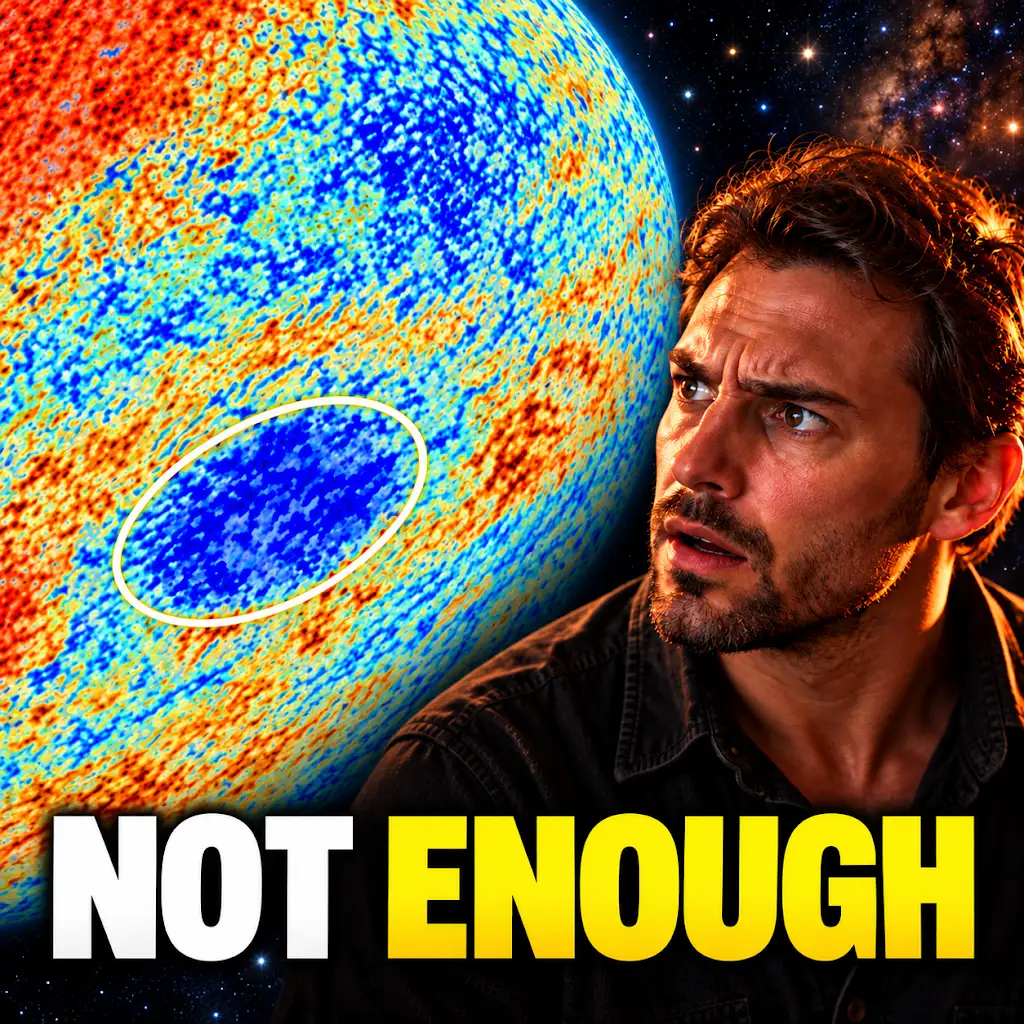
The Universe’s Cold Spot Has an Explanation. It’s Not Enough.
FAQs
What is the focus of the space and time documentary?
The space and time documentary explores the concepts of space and time, delving into theories and discoveries related to these fundamental aspects of the universe.
Who are the experts featured in the space and time documentary?
The documentary features renowned scientists, physicists, astronomers, and researchers who specialize in the fields of space, time, and cosmology, providing insights and explanations on complex topics.
What are some of the key topics covered in the space and time documentary?
The documentary covers a wide range of topics, including the Big Bang theory, black holes, wormholes, time dilation, the theory of relativity, quantum mechanics, and the nature of the universe.
How does the space and time documentary explain complex scientific concepts to viewers?
The documentary uses a combination of visual effects, animations, interviews, and simplified explanations to make complex scientific concepts more accessible and understandable to viewers of all backgrounds.
Where can viewers watch the space and time documentary?
The space and time documentary may be available for streaming on various platforms such as streaming services, educational websites, or through purchase on DVD or Blu-ray. Viewers can check with their local broadcasters or online streaming services for availability.