
Simulation theory is a philosophical concept that explores whether reality as we perceive it might be an artificial construct. The theoretical framework has historical roots in ancient philosophy, particularly in Plato’s Allegory of the Cave, which describes prisoners who can only see shadows on a wall and mistake these shadows for reality. This allegory presents an early conceptual parallel to modern simulation theory by suggesting that human perception may capture only a limited aspect of actual existence.
The development of computer science and virtual reality technologies in the 20th century provided contemporary context for examining simulation theory. In 2003, philosopher Nick Bostrom published a influential paper titled “Are You Living in a Computer Simulation?” that formalized the argument for modern audiences. Bostrom’s central thesis proposes that if advanced civilizations could create simulations indistinguishable from reality, then statistically, many conscious beings could exist within such simulations rather than in a base reality.
This argument generated significant philosophical and scientific discussion about the nature of existence and the possibility of simulated worlds.
Key Takeaways
- Simulation theory explores the idea that reality might be an artificial simulation created by advanced beings.
- Philosophical and ethical questions arise about consciousness, free will, and morality within a simulated universe.
- Advances in technology and physics provide new ways to investigate and potentially validate the simulation hypothesis.
- Critics challenge the theory based on lack of empirical evidence and philosophical counterarguments.
- The concept influences popular culture and prompts discussions on the future societal impact if simulation theory proves true.
The Philosophical Implications of Simulation Theory
The philosophical implications of simulation theory are profound and multifaceted. At its core, the theory challenges the very foundations of epistemology—the study of knowledge and belief. If reality is indeed a simulation, then the criteria by which individuals ascertain truth and knowledge must be reevaluated.
The distinction between what is real and what is simulated becomes blurred, leading to questions about the nature of existence itself. Are the experiences and emotions felt within a simulation any less valid than those experienced in what is deemed “real”? This inquiry invites a reexamination of human consciousness and the essence of being.
Moreover, simulation theory raises ethical questions regarding free will and determinism. If individuals are mere avatars within a programmed environment, to what extent do they possess autonomy? The implications extend to moral responsibility; if actions are predetermined by the parameters of a simulation, can individuals be held accountable for their choices?
These philosophical dilemmas compel thinkers to grapple with the nature of agency and the moral frameworks that govern human behavior, ultimately leading to a deeper understanding of what it means to exist. One fascinating concept to explore is simulation theory, which suggests our reality might be an artificial simulation.
Evidence Supporting Simulation Theory
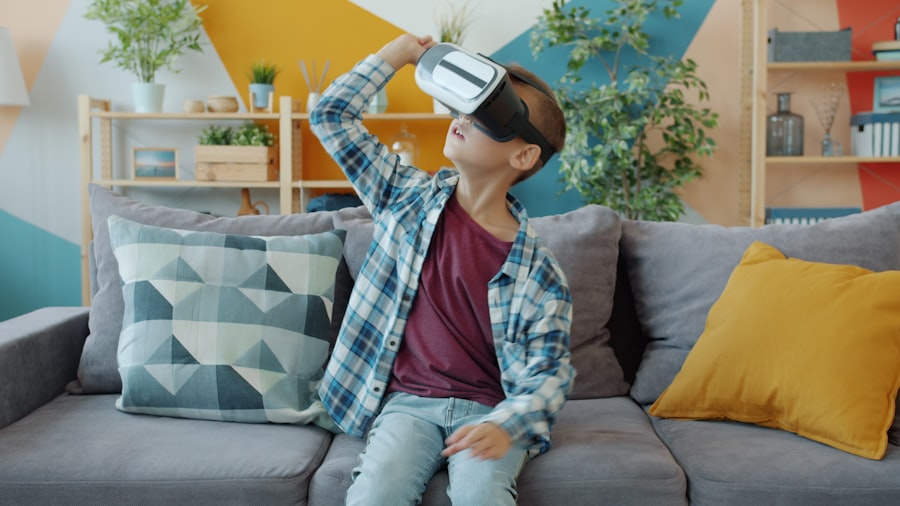
While simulation theory may initially appear speculative, proponents argue that there are various forms of evidence that lend credence to its plausibility. One compelling argument stems from advancements in technology and computer simulations themselves. As virtual environments become increasingly sophisticated, the line between reality and simulation continues to blur.
For instance, video games and virtual reality experiences have reached levels of detail that can evoke genuine emotional responses from players, suggesting that simulated experiences can be remarkably lifelike. This technological progression raises questions about the potential for future civilizations to create simulations indistinguishable from reality. Additionally, some scientists point to anomalies in physics as potential indicators of a simulated universe.
Quantum mechanics, with its perplexing principles such as wave-particle duality and entanglement, presents phenomena that challenge conventional understandings of reality. Some theorists propose that these irregularities could be interpreted as glitches or limitations within a simulated framework. Furthermore, the discovery of patterns in cosmic structures and the fine-tuning of physical constants have led some to speculate that these elements may reflect an underlying design characteristic of a simulation rather than random occurrences in an ungoverned universe.
The Role of Technology in Understanding Simulation Theory
Technology plays a pivotal role in both the exploration and understanding of simulation theory.
These simulations not only serve as tools for scientific inquiry but also provide insights into the nature of reality itself.
For instance, simulations in fields such as cosmology allow scientists to model the formation of galaxies and the evolution of the universe, offering glimpses into processes that would otherwise remain inaccessible. Moreover, developments in artificial intelligence (AI) have further enriched discussions surrounding simulation theory. As AI systems become more sophisticated, questions arise about consciousness and self-awareness within simulated environments.
If an AI can exhibit behaviors indistinguishable from those of a human being, does it challenge traditional notions of sentience? This intersection between technology and philosophy invites deeper contemplation about the nature of existence and the potential for creating conscious entities within simulations.
The Simulation Argument and Its Critics
| Aspect | Description | Key Proponent(s) | Related Concepts | Common Criticisms |
|---|---|---|---|---|
| Definition | The hypothesis that reality, including the Earth and the universe, is an artificial simulation, such as a computer simulation. | Nick Bostrom | Virtual reality, Artificial intelligence, Computationalism | Lack of empirical evidence, unfalsifiability, philosophical skepticism |
| Origin | Popularized by philosopher Nick Bostrom in 2003 with his paper “Are You Living in a Computer Simulation?” | Nick Bostrom | Philosophy of mind, Metaphysics | Assumptions about future technology capabilities |
| Core Argument | One of the following is true: (1) civilizations never reach a posthuman stage; (2) posthuman civilizations are not interested in running ancestor simulations; (3) we are almost certainly living in a simulation. | Nick Bostrom | Anthropic principle, Probability theory | Speculative assumptions, anthropic bias |
| Philosophical Implications | Questions the nature of reality, consciousness, and existence. | Various philosophers and scientists | Solipsism, Cartesian skepticism | Challenges to traditional epistemology |
| Scientific Considerations | Attempts to find empirical evidence such as pixelation of space-time or computational limits in physics. | Some physicists and computer scientists | Quantum mechanics, Computational physics | No conclusive evidence found yet |
The simulation argument has garnered both support and criticism from various quarters. Proponents assert that Bostrom’s argument presents a compelling case for considering the possibility that humanity exists within a simulation. They argue that if advanced civilizations are likely to create numerous simulations, then statistically speaking, it is more probable for beings to exist within a simulation than in an original reality.
However, critics challenge the assumptions underlying the simulation argument. Some contend that it relies on speculative premises about future technological capabilities and motivations for creating simulations.
Others argue that the argument fails to account for the complexities of consciousness and subjective experience, suggesting that even if simulations were possible, they may not replicate the richness of human existence. These critiques highlight the ongoing debate surrounding simulation theory and underscore the need for rigorous examination of its foundational assumptions.
The Moral and Ethical Considerations of Simulation Theory
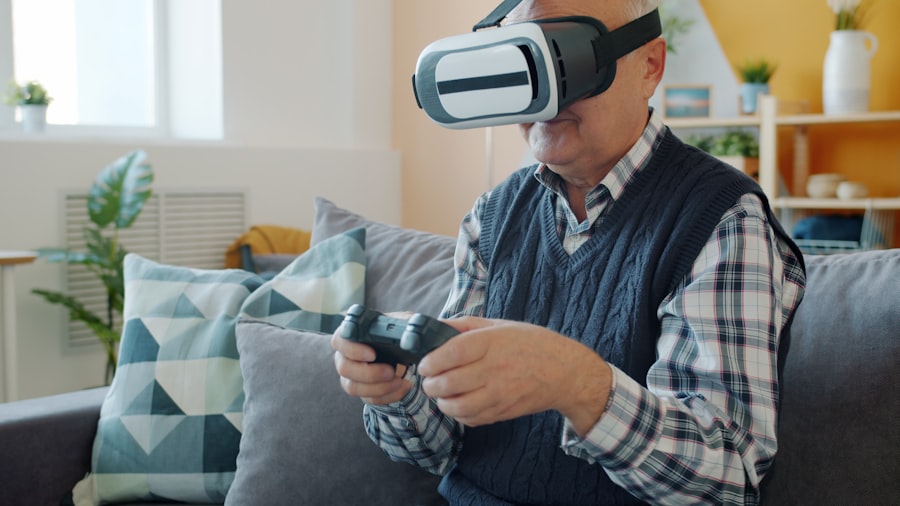
The moral and ethical considerations surrounding simulation theory are intricate and far-reaching. If individuals are indeed living within a simulation, questions arise regarding their treatment by those who control or create these simulated environments. Are simulated beings entitled to rights and protections similar to those afforded to sentient beings in what is considered “real” life?
This inquiry challenges existing ethical frameworks and compels society to reconsider its responsibilities toward entities that may possess consciousness within a simulated context. Furthermore, the implications extend to issues of power dynamics and control within simulations. If a select few possess the ability to manipulate or govern simulated realities, ethical dilemmas emerge regarding consent and autonomy.
The potential for exploitation or abuse within such frameworks raises urgent questions about justice and equity in both simulated and non-simulated contexts. As society grapples with these moral quandaries, it becomes increasingly important to establish ethical guidelines that address the complexities introduced by simulation theory.
Simulation Theory in Popular Culture
Simulation theory has permeated popular culture, influencing literature, film, and art in profound ways. Works such as “The Matrix” have brought mainstream attention to the concept, exploring themes of reality versus illusion through a gripping narrative that resonates with audiences worldwide. The film’s portrayal of a dystopian future where humanity is unknowingly trapped within a simulated reality has sparked discussions about free will, identity, and the nature of existence itself.
Beyond cinema, literature has also embraced simulation theory as a thematic exploration. Novels like “Neuromancer” by William Gibson delve into virtual realities and artificial intelligence, raising questions about consciousness and human experience in an increasingly digital world. These cultural representations not only entertain but also serve as vehicles for philosophical inquiry, prompting audiences to reflect on their own perceptions of reality and existence.
The Potential Ramifications of Living in a Simulated Reality
The ramifications of living in a simulated reality are vast and multifaceted. If humanity were to accept the premise that existence is a simulation, it could fundamentally alter perspectives on life, purpose, and meaning. Individuals might grapple with existential questions regarding their significance within a constructed environment—does life hold intrinsic value if it is merely an elaborate program?
Such contemplations could lead to shifts in societal values and priorities as people seek to navigate their existence with newfound awareness. Moreover, acceptance of simulation theory could influence scientific inquiry and technological development. Researchers might prioritize understanding the underlying mechanisms governing simulated realities, leading to advancements in fields such as artificial intelligence and virtual environments.
This shift could foster innovative approaches to problem-solving while simultaneously raising ethical considerations about the implications of creating increasingly sophisticated simulations.
The Intersection of Physics and Simulation Theory
The intersection between physics and simulation theory presents intriguing possibilities for understanding the fundamental nature of reality. As physicists explore concepts such as quantum mechanics and string theory, parallels emerge between these scientific inquiries and ideas central to simulation theory. For instance, quantum entanglement challenges traditional notions of locality and causality—concepts that could be interpreted as indicative of underlying rules governing a simulated universe.
Additionally, researchers have begun investigating whether certain physical phenomena could be explained through computational models akin to those used in simulations. This exploration blurs the lines between empirical science and philosophical speculation, inviting scientists to consider whether our understanding of physics might be limited by our perceptions shaped by a potentially simulated reality.
The Search for Proof of Simulation Theory
The quest for proof of simulation theory remains an elusive endeavor fraught with challenges. While proponents argue for its plausibility based on philosophical reasoning and technological advancements, empirical evidence remains scant. Researchers have proposed various methods for testing the hypothesis—ranging from examining cosmic rays for signs of computational limits to exploring anomalies in physical laws—but definitive proof remains out of reach.
This search for evidence raises questions about the nature of proof itself within philosophical discourse. If reality is indeed a simulation, how might one discern between genuine evidence and artifacts produced by the simulation? The complexities inherent in this inquiry underscore the need for interdisciplinary collaboration among philosophers, scientists, and technologists as they navigate uncharted territory in pursuit of understanding.
The Future of Simulation Theory and Its Impact on Society
As society continues to evolve alongside technological advancements, the future of simulation theory holds significant implications for humanity’s collective consciousness. With each leap forward in virtual reality and artificial intelligence, individuals may find themselves increasingly confronted with questions about their own existence within potentially simulated frameworks. This ongoing dialogue could foster greater awareness about the nature of reality while encouraging critical thinking about technology’s role in shaping human experience.
Moreover, as discussions surrounding simulation theory permeate public consciousness, they may influence cultural narratives around identity, agency, and morality. Society may begin to embrace more nuanced perspectives on existence—recognizing that whether real or simulated, experiences hold value in shaping individual lives. Ultimately, as humanity grapples with these profound questions about reality’s nature, it may pave the way for new philosophical paradigms that redefine understanding across disciplines while fostering deeper connections among individuals navigating an increasingly complex world.
The simulation theory posits that our reality might be an artificial simulation, akin to a highly advanced computer program. This intriguing concept raises questions about the nature of existence and consciousness. For a deeper exploration of related scientific ideas and theories, you can check out this article on Freaky Science, which delves into various thought experiments and philosophical implications surrounding the nature of reality.
WATCH THIS! EXPOSED: This Quantum Physics Secret Proves Reality Is Not Real 🤯
FAQs
What is the simulation theory?
Simulation theory is the hypothesis that reality, including the Earth and the universe, could be an artificial simulation, such as a computer simulation, created by a more advanced civilization.
Who popularized the simulation theory?
Philosopher Nick Bostrom popularized the simulation theory in 2003 with his paper “Are You Living in a Computer Simulation?” where he argued that one of three propositions is likely true, including the possibility that we live in a simulation.
What evidence supports the simulation theory?
There is no direct empirical evidence supporting the simulation theory. Some proponents point to anomalies in physics, the nature of consciousness, or computational limits in the universe as suggestive, but these remain speculative.
Is simulation theory the same as virtual reality?
No, simulation theory is a philosophical hypothesis about the fundamental nature of reality, whereas virtual reality refers to computer-generated environments experienced by users within our current reality.
Can simulation theory be tested or proven?
Currently, simulation theory is difficult to test or falsify scientifically because any evidence could itself be part of the simulation. Some researchers have proposed theoretical tests, but none have been conclusively implemented.
What are the implications if simulation theory is true?
If true, it would mean that our perceived reality is artificially created, raising questions about the nature of existence, consciousness, free will, and the intentions of the creators of the simulation.
Is simulation theory widely accepted by scientists?
Simulation theory is a topic of philosophical and scientific debate but is not widely accepted as fact. Many scientists view it as an interesting hypothesis but remain skeptical due to lack of evidence.
How does simulation theory relate to philosophy?
Simulation theory intersects with philosophical questions about reality, perception, consciousness, and epistemology, similar to thought experiments like Descartes’ evil demon or the brain in a vat scenario.
Are there any cultural references to simulation theory?
Yes, simulation theory has influenced popular culture, including movies like “The Matrix,” which explore themes of simulated realities and questioning the nature of existence.
What technologies could potentially create a simulation like the one proposed?
Advanced computing technologies, such as quantum computers or future supercomputers, could theoretically simulate complex environments and consciousness, but current technology is far from achieving this level of simulation.