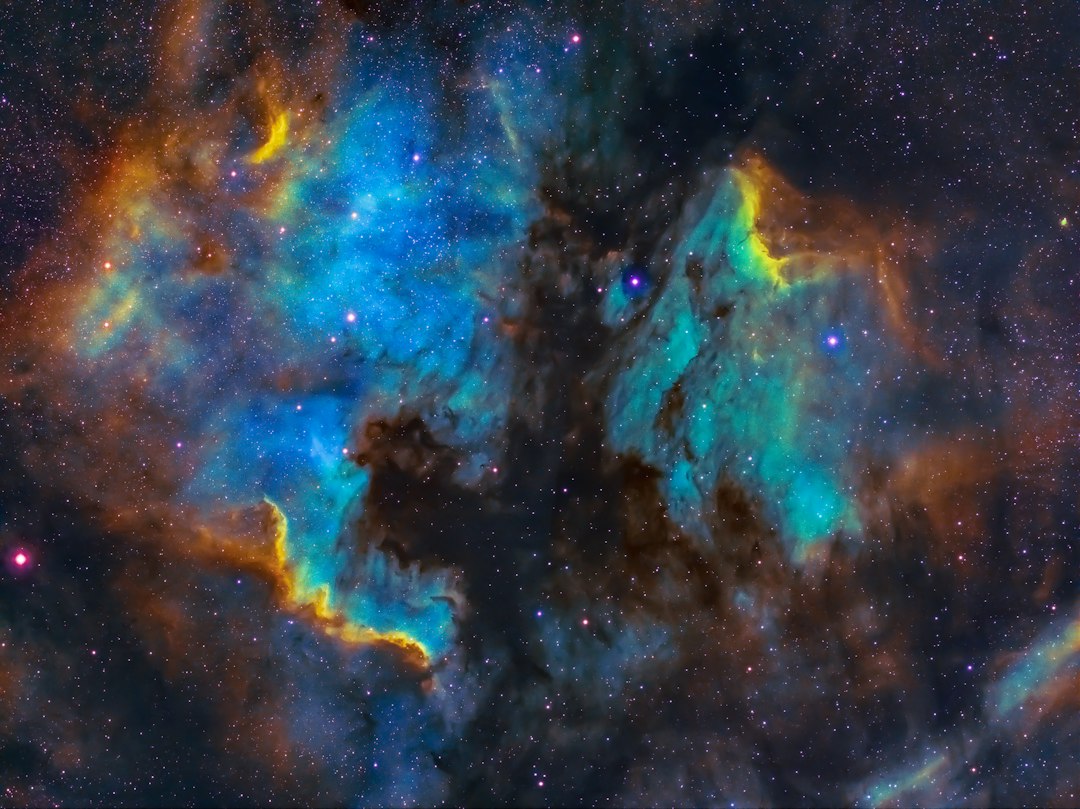
The vast expanse of the cosmos, a canvas painted with stars, galaxies, and nebulae, has long captivated the human imagination. Yet, within this seemingly uniform tapestry, anomalies persist, challenging our understanding of the universe’s fundamental laws. Among these cosmic enigmas, the “Cold Spot” in the cosmic microwave background (CMB) stands out as a particularly perplexing phenomenon. This region, a vast patch of space demonstrably cooler than its surroundings, has baffled cosmologists since its discovery, sparking a torrent of theories and intense debate. Exploring this mysterious cold spot offers a unique window into the deepest mysteries of the universe, potentially hinting at physics beyond our current Standard Model.
The Unexpected Chill: Unveiling the Cosmic Cold Spot
The cosmic microwave background radiation is a faint afterglow from the Big Bang, a ubiquitous hum that permeates all of space. This radiation, a relic of the universe’s infancy, carries with it a snapshot of the conditions just a few hundred thousand years after its explosive birth. For decades, this ancient light was observed to be remarkably uniform in temperature, with only minuscule fluctuations that scientists attributed to the early seeds of cosmic structure. The discovery of the Cold Spot, therefore, was a profound shock.
The initial detection of this anomaly came from data collected by the Wilkinson Microwave Anisotropy Probe (WMAP) satellite in the early 2000s. Scientists noticed a region, spanning roughly 1.8 billion light-years across, that was about 2.7 millikelvin colder than the average temperature of the CMB. This difference, though seemingly small on a human scale, is significant in the context of the universe’s thermal uniformity. Subsequent observations by the Planck satellite, with its higher resolution and sensitivity, confirmed the existence of the Cold Spot, solidifying its place as a genuine cosmic puzzle. The sheer scale of this region further amplifies its mystery. It’s not a fleeting anomaly; it’s a persistent, enormous void in the expected thermal distribution of the universe.
Measuring the Cosmic Echoes: The Science Behind the CMB
The cosmic microwave background radiation is a cornerstone of modern cosmology. It provides direct evidence for the Big Bang theory and is a crucial tool for understanding the universe’s composition, age, and evolution. The CMB is essentially a blackbody radiation spectrum, meaning it emits and absorbs electromagnetic radiation in a way that is dictated by its temperature. The temperature of the CMB is currently measured to be around 2.725 Kelvin (-270.425 degrees Celsius or -454.765 degrees Fahrenheit). The minute variations in this temperature, typically on the order of parts per hundred thousand, are known as anisotropies. These anisotropies are incredibly important because they represent the initial density fluctuations in the early universe that eventually grew into the galaxies and large-scale structures we observe today.
Scientists use highly sensitive instruments, like WMAP and Planck, to map these tiny temperature differences across the sky. These instruments measure the intensity of microwave radiation coming from different directions. By analyzing the pattern and magnitude of these fluctuations, cosmologists can infer a wealth of information about the universe, including the amount of dark matter, dark energy, and ordinary matter, as well as the geometry of spacetime. The Cold Spot represents a significant deviation from these expected patterns, a region where the CMB is demonstrably colder than predicted by the standard cosmological model, known as Lambda-CDM. The precision with which these instruments measure the CMB is a testament to scientific advancement, allowing us to probe the universe with unprecedented detail.
Decoding the Data: Statistical Significance and Potential Biases
The significance of the Cold Spot isn’t just in its existence, but in its statistical improbability within the framework of the standard Lambda-CDM model. This model, which has been incredibly successful in explaining a vast array of cosmological observations, predicts that such a large, significantly colder region should be exceedingly rare. Cosmologists assess the statistical significance of anomalies like the Cold Spot by simulating countless universes based on the Lambda-CDM model and checking how often a feature of comparable size and temperature deviation occurs by chance. The Cold Spot, by these simulations, appears to be a rare event, perhaps even a “one-in-a-million” or “one-in-a-billion” occurrence, suggesting that our standard model might be incomplete.
However, scientists are also meticulous in ruling out mundane explanations. Before invoking exotic physics, they rigorously examine potential sources of observational bias or instrumental errors. This includes carefully accounting for the effects of foreground emissions from our own Milky Way galaxy, such as dust and synchrotron radiation, which can mimic or mask CMB signals. They also consider how the specific instruments used might have limitations or peculiar responses. While these efforts have largely ruled out simple observational artifacts as the sole cause, the possibility of subtle, unaccounted-for systemic effects remains an area of ongoing investigation. The scientific process demands this level of scrutiny, ensuring that extraordinary claims are supported by extraordinary evidence.
Recent studies have highlighted the intriguing phenomenon known as the “cold spot” in the universe, which challenges our understanding of cosmic structure and the distribution of dark matter. For a deeper exploration of this topic, you can read more in the related article available at Freaky Science, where scientists discuss the implications of this cold region and its potential origins.
Unraveling the Anomaly: Theories and Hypotheses

The existence of the Cold Spot has ignited a vigorous scientific debate, leading to a plethora of theoretical explanations, ranging from mundane to the truly speculative. Each proposed solution attempts to reconcile the observed anomaly with our current understanding of physics or, in some cases, suggests that our understanding needs a significant revision.
The Gravitational Pull: Supervoids and Large-Scale Structures
One of the most compelling and less exotic explanations for the Cold Spot is its potential connection to a vast cosmic structure known as a supervoid. Supervoids are immense regions of space that contain significantly fewer galaxies and less matter than average. According to Einstein’s theory of general relativity, massive objects warp spacetime. As photons from the CMB pass through a supervoid, they would have to travel “uphill” against a weaker gravitational potential than they would in denser regions. When these photons emerge from the supervoid, they would lose energy, resulting in a blueshift and a perceived lower temperature in our observations.
The “ISW effect” (Integrated Sachs-Wolfe effect) plays a crucial role here. This effect describes how CMB photons gain or lose energy as they traverse evolving gravitational potentials. In an expanding universe, if photons are passing through a region that is less dense and its gravitational potential is decaying more slowly than the average, they will lose energy. The Cold Spot aligns geographically with a known supervoid, the Boötes Void, although the extent of this alignment and the magnitude of the effect are still subjects of detailed study and debate. While this explanation is within the realm of established physics, the sheer scale of the supervoid required to produce such a significant temperature drop is itself remarkable.
Echoes from Another Realm: Exotic Physics and Parallel Universes
More speculative, yet tantalizing, hypotheses venture into realms beyond the Standard Model of particle physics and cosmology. One such idea proposes that the Cold Spot could be a “bruise” or imprint left by interactions with another universe or brane. In string theory, our universe is envisioned as a three-dimensional “brane” embedded in a higher-dimensional space. If this brane collided with another brane in the very early universe, it could have left a lasting structural scar, manifesting as a region of lower temperature in the CMB.
Another intriguing, though highly hypothetical, explanation suggests that the Cold Spot might be the result of primordial quantum fluctuations that were unusually large and generated a specific, non-Gaussian pattern in the early universe. These non-Gaussianities are deviations from the expected random distribution of fluctuations predicted by the simplest inflationary models. If the Cold Spot is indeed a signature of such non-Gaussianities, it could provide valuable clues about the physics of inflation, the hypothetical period of rapid expansion in the universe’s first moments. Some theories even suggest that the Cold Spot could be a statistical anomaly, a rare fluctuation that simply occurred in our observable universe and doesn’t necessarily point to new physics, but its significance is such that it warrants deep investigation.
Inflationary Imprints: Beyond the Standard Inflationary Model
The theory of cosmic inflation, which posits a period of exponential expansion shortly after the Big Bang, is a cornerstone of modern cosmology. It elegantly explains many features of the universe, including its flatness and homogeneity. However, the Standard Model of inflation, which predicts a specific statistical distribution of temperature fluctuations in the CMB, seems to struggle with the Cold Spot. This has led some physicists to explore modifications to inflationary theory.
One possibility is that inflation wasn’t a perfectly smooth process. Perhaps there were periods of unusual behavior or interactions that left a lasting imprint. For instance, some models propose that the universe might have undergone multiple inflationary epochs, or that there were specific quantum processes at play during inflation that are not captured by the simplest models. These more complex inflationary scenarios could potentially generate the large-scale, cold anomaly observed as the Cold Spot. Studying the Cold Spot, therefore, becomes a powerful probe for testing and refining our understanding of the universe’s very earliest moments.
The Scientific Scrutiny: Validating and Refining Explanations

The exploration of the Cold Spot is an ongoing scientific endeavor. Researchers are not content with merely observing an anomaly; they are dedicated to rigorously testing and refining potential explanations through further observations, theoretical modeling, and sophisticated data analysis. The path from discovery to understanding is paved with meticulous work and critical evaluation.
Observing the Depths: Future CMB Missions and Their Role
The current understanding of the Cold Spot is primarily based on data from WMAP and Planck. However, future cosmic microwave background missions promise to provide even more precise measurements and potentially reveal new details about this anomaly and others. Instruments like the proposed LiteBIRD satellite, with its advanced polarization sensitivity, could offer a clearer picture of the CMB’s polarization patterns, which can carry additional information about the universe’s early history and the nature of cosmic structures.
These future missions aim to improve the signal-to-noise ratio, reduce foreground contamination, and map the CMB with higher resolution. This enhanced precision will be crucial for distinguishing between competing theories. For example, if the Cold Spot is indeed caused by a supervoid, more detailed observations might reveal subtle variations in its structure that could either support or refute this hypothesis. Similarly, if exotic physics is at play, future missions might detect other correlated anomalies in the CMB that would strengthen the case for new theoretical frameworks.
Computational Cosmology: Simulating the Universe’s Evolution
Theoretical cosmologists play a vital role in this investigation by developing complex computer simulations. These simulations aim to model the evolution of the universe from the Big Bang to the present day, incorporating various physical processes and parameters. By running simulations that include different scenarios for the formation of large-scale structures, the properties of dark matter, and even hypothetical new physics, researchers can compare the simulated CMB maps to the actual observations.
If a simulation, for instance, that includes a particularly large and underdense supervoid, produces a Cold Spot that closely matches the observed characteristics, it provides strong support for the supervoid explanation. Conversely, if simulations based on the standard Lambda-CDM model consistently fail to reproduce the anomaly, it further strengthens the argument for physics beyond the standard model. These computational tools are essential for exploring the parameter space of cosmological theories and for predicting what we should expect to see in future observations.
Statistical Tools: Robust Analysis and Anomaly Detection
The detection and characterization of anomalies like the Cold Spot rely heavily on sophisticated statistical techniques. Cosmologists use a battery of statistical tests to determine the likelihood of observing such a feature purely by chance within a given cosmological model. These tests help to quantify the “surprisingness” of the anomaly and to assess the confidence with which we can reject or accept certain theoretical explanations.
Furthermore, the analysis of CMB data involves complex algorithms to separate the faint CMB signal from foreground contamination and to identify subtle patterns. The development and refinement of these statistical tools are an active area of research. As datasets become larger and more complex, the need for robust and sensitive statistical methods becomes even more critical. This ongoing methodological development ensures that our conclusions are based on solid statistical foundations.
Implications for Cosmology: A Window to the Unknown
The persistent mystery of the Cosmic Cold Spot has profound implications for our understanding of the universe. It serves as a powerful reminder that our current cosmological model, while remarkably successful, may not be the complete picture. The anomaly challenges us to think beyond established paradigms and to consider the possibility of new physics.
Testing the Limits of Lambda-CDM: A Standard Model Under Scrutiny
The Lambda-CDM model has been the workhorse of cosmology for decades, successfully explaining a wide range of observations, from the abundance of light elements to the large-scale structure of the universe. However, the Cold Spot, along with other observed anomalies like the “Axis of Evil” (a peculiar alignment of large-scale structures in the CMB), suggests that the Lambda-CDM model might have limitations.
If the Cold Spot is definitively attributed to a supervoid within the Lambda-CDM framework, it would reinforce the model’s validity while highlighting the impressive scale of cosmic structures. However, if no satisfactory explanation can be found within the Standard Model, it would necessitate significant revisions or the introduction of new fundamental physics. This scrutiny is not a weakness of science, but its strength; it drives progress by pushing the boundaries of our knowledge.
The Search for New Physics: Beyond Our Current Understanding
The possibility that the Cold Spot is a signature of physics beyond the Standard Model is perhaps the most exciting prospect. It could be evidence for new fundamental forces, unknown particles, or even a glimpse into the very nature of spacetime at its most fundamental level. For instance, if the anomaly is related to non-Gaussianities in the CMB, it could provide direct evidence for specific models of inflation that go beyond the simplest, single-field, slow-roll scenarios.
Such discoveries would revolutionize our understanding of the universe and open up entirely new avenues of research. It could lead to a deeper comprehension of dark matter and dark energy, or even hint at the existence of parallel universes or extra dimensions. The Cold Spot, therefore, represents not just a puzzle, but a potential gateway to unraveling some of the universe’s most profound secrets.
Reassessing the Cosmological Principle: Is the Universe Truly Homogeneous?
The Cosmological Principle, a fundamental tenet of modern cosmology, states that the universe is homogeneous and isotropic on large scales. This means that, when viewed from a sufficiently large perspective, the universe should look the same in all locations and in all directions. The existence of such a large and significantly colder region as the Cold Spot raises questions about the universality of this principle.
While the Cold Spot is a relatively small region compared to the vastness of the observable universe, its statistical significance and peculiar temperature deviation challenge the notion of perfect large-scale uniformity. If it is indeed caused by an extraordinarily large supervoid, it might suggest that the distribution of matter on the largest scales is not as uniform as we have assumed. This could lead to a revision of our understanding of how cosmic structures form and evolve, and potentially alter our measurements of cosmological parameters.
Recent studies have highlighted the intriguing phenomenon of cold spots in the universe, which challenge our understanding of cosmic structure and evolution. For those interested in exploring this topic further, a related article offers insights into the implications of these cold spots on our perception of dark matter and cosmic inflation. You can read more about it in this fascinating article that delves into the mysteries of the universe.
The Continuing Quest: Embracing the Unknown
| Metric | Value | Description |
|---|---|---|
| Location (RA, Dec) | 03h 15m, -19° | Approximate celestial coordinates of the Cold Spot |
| Angular Size | 5° to 10° | Apparent size of the Cold Spot on the cosmic microwave background (CMB) sky |
| Temperature Deviation | -70 µK | Temperature difference compared to the average CMB temperature |
| Redshift | ~1 | Estimated redshift of structures possibly associated with the Cold Spot |
| Significance Level | 2-3 sigma | Statistical significance of the Cold Spot anomaly in CMB data |
| Possible Explanations | Supervoid, cosmic texture, statistical fluke | Leading hypotheses explaining the Cold Spot phenomenon |
The Cosmic Cold Spot remains one of the most intriguing enigmas in modern cosmology. It stands as a testament to the vastness and complexity of the universe, and to the ongoing human endeavor to understand our place within it. While the debate surrounding its origin continues, the exploration of this anomalous region has already yielded valuable insights and spurred significant scientific inquiry.
Whether the Cold Spot is ultimately explained by an exceptionally large supervoid, by subtle deviations within inflationary theory, or by entirely new physics, its study underscores the dynamic and evolving nature of scientific understanding. It encourages a healthy skepticism of established models when faced with compelling observational evidence and inspires a relentless pursuit of knowledge, pushing the boundaries of what we know and what we can imagine. The Cold Spot, a chilling reminder of the universe’s mysteries, continues to beckon us toward deeper understanding, fueling our cosmic quest.
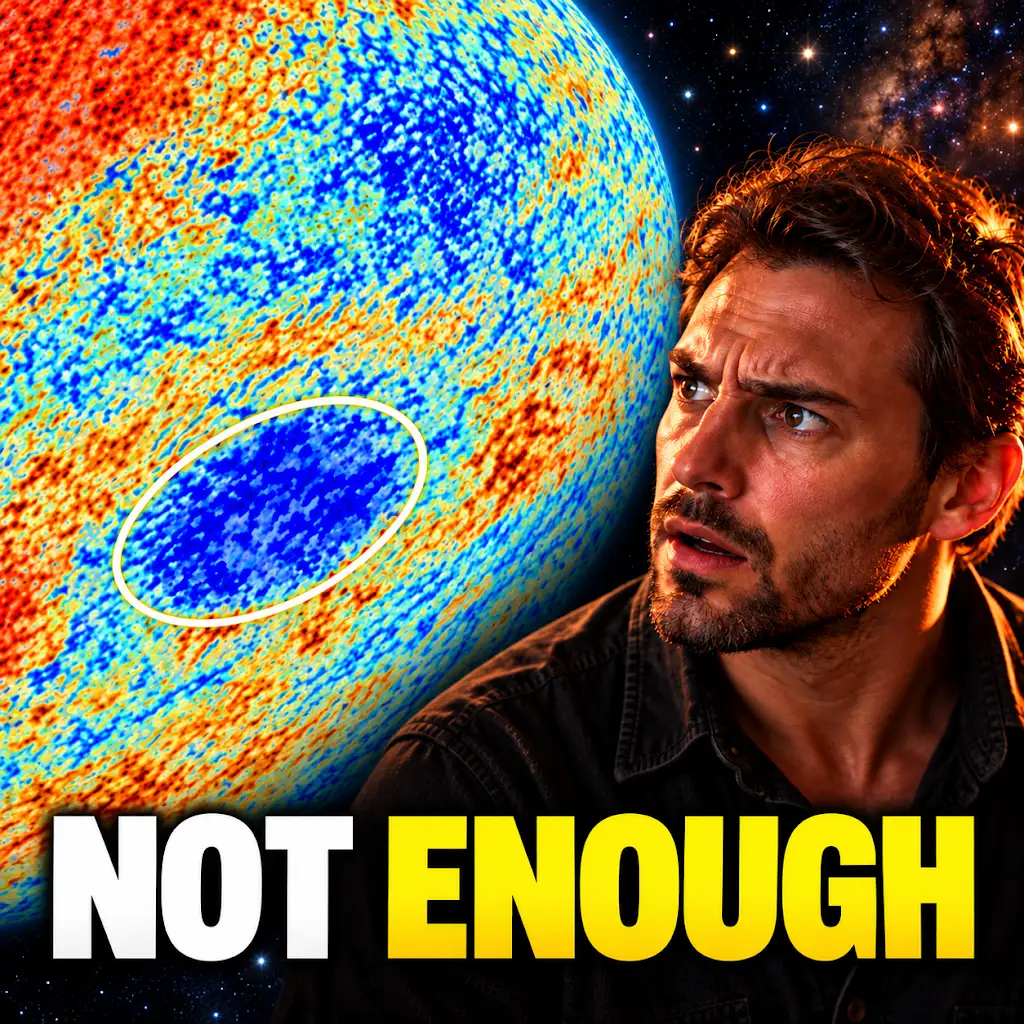
The Universe’s Cold Spot Has an Explanation. It’s Not Enough.
FAQs
What is a cold spot in the universe?
A cold spot in the universe refers to an area of space that has a significantly lower temperature compared to its surroundings.
How are cold spots in the universe detected?
Cold spots in the universe are detected using telescopes that measure the temperature of cosmic microwave background radiation, which is the afterglow of the Big Bang.
What causes cold spots in the universe?
Cold spots in the universe can be caused by various factors, such as the presence of voids or regions with lower density of matter, as well as the effects of dark energy.
Are cold spots in the universe common?
Cold spots in the universe are relatively rare, as most of the universe is filled with radiation and matter that is evenly distributed. However, they can provide valuable insights into the large-scale structure of the cosmos.
What can we learn from studying cold spots in the universe?
Studying cold spots in the universe can help scientists better understand the evolution of the cosmos, the distribution of matter and energy, as well as the nature of dark matter and dark energy.