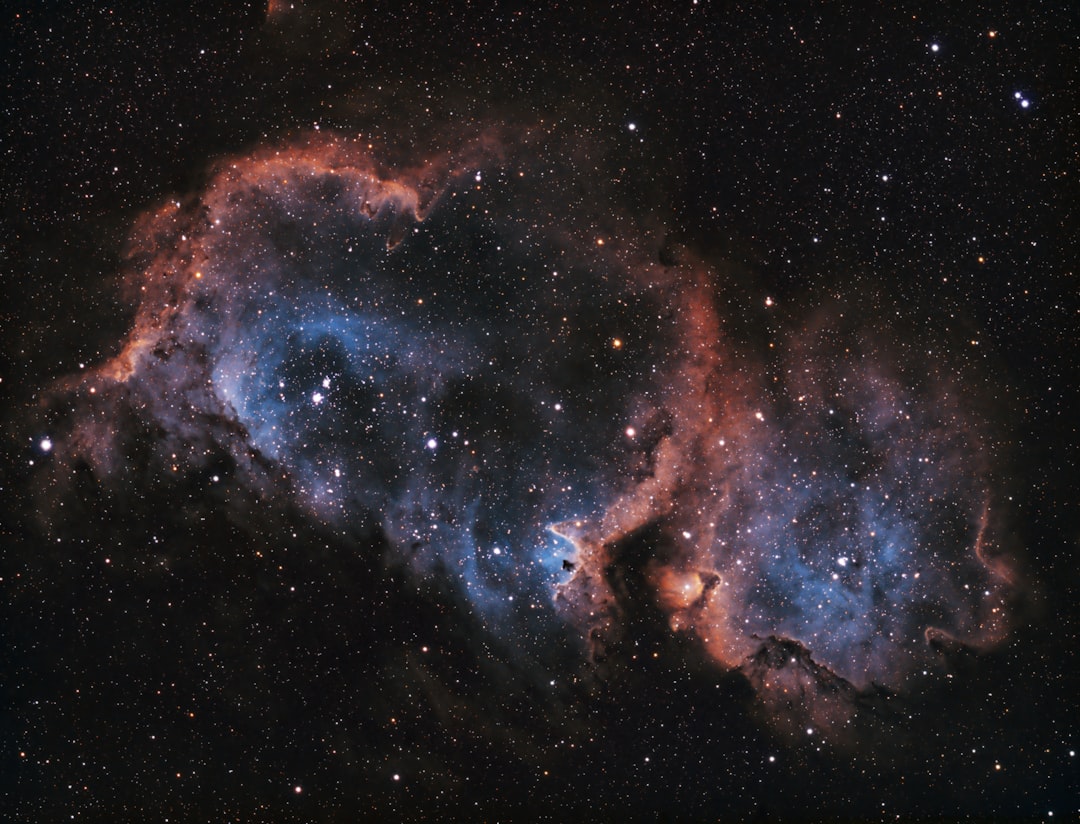
The universe, a tapestry of stars, galaxies, and celestial phenomena, has captivated humanity for millennia. From the earliest stargazers to the most advanced astrophysicists, the human intellect has consistently sought to unravel its deepest secrets. This article delves into the foundational principles of astronomy, inviting the intellectually curious to embark on a journey of cosmic discovery. It assumes no prior specialized knowledge, yet aims to provide a comprehensive overview for those seeking a deeper understanding of our place in the vast expanse.
Astronomy, an ancient yet perpetually evolving science, is fundamentally about observation and interpretation. Its history is a testament to humanity’s persistent quest for knowledge, evolving from rudimentary celestial charts to sophisticated telescopic surveys.
Early Astronomical Observations
The earliest forms of astronomy were deeply intertwined with calendrical systems and religious practices. Ancient civilizations, such as the Babylonians, Egyptians, and Maya, meticulously tracked the movements of the sun, moon, and visible planets, developing intricate predictive models.
Naked-Eye Astronomy
Prior to the invention of the telescope, all astronomical observations were conducted with the naked eye. This era saw remarkable achievements, including the Greek geocentric model, which, though incorrect in its fundamental premise, provided a remarkably consistent framework for predicting planetary positions for over a millennium.
The Rise of Astrometry
Astrometry, the precise measurement of the positions and movements of celestial objects, began in earnest with Hipparchus in the 2nd century BCE. His star catalog, containing the positions and magnitudes of over a thousand stars, laid the groundwork for future astronomical mapping and understanding of stellar motion.
The Copernican Revolution and Beyond
A paradigm shift occurred with the introduction of the heliocentric model by Nicolaus Copernicus in the 16th century, placing the Sun, rather than the Earth, at the center of the solar system. This revolutionary idea, initially met with resistance, gradually gained acceptance due to the work of subsequent astronomers.
Galileo and the Telescope
Galileo Galilei’s use of the telescope in the early 17th century provided empirical evidence supporting the heliocentric model. His observations of Jupiter’s moons, the phases of Venus, and the rugged surface of the Moon challenged prevailing Aristotelian views and marked a pivotal moment in observational astronomy.
Kepler’s Laws of Planetary Motion
Johannes Kepler, building upon the meticulous observations of Tycho Brahe, formulated three laws of planetary motion, describing the elliptical orbits of planets around the Sun, their varying speeds, and the relationship between their orbital periods and distances. These laws provided a mathematical framework for understanding celestial mechanics.
Newton and Universal Gravitation
Isaac Newton’s theory of universal gravitation, published in the late 17th century, unified terrestrial and celestial mechanics. This monumental achievement explained the force governing planetary orbits, the tides, and the fall of objects on Earth, providing a complete physical explanation for Kepler’s empirical laws.
For those who are intellectually curious about the wonders of the universe, a fascinating article can be found at this link: Exploring the Mysteries of Dark Matter. This article delves into the enigmatic substance that makes up a significant portion of the universe’s mass yet remains invisible and undetectable by conventional means. It discusses the latest theories and research surrounding dark matter, offering insights into how it influences galaxies and the overall structure of the cosmos. Whether you’re a seasoned astronomer or just starting your journey into the field, this piece provides a compelling overview of one of the most intriguing topics in modern astrophysics.
Exploring Our Cosmic Neighborhood: The Solar System
Our solar system, a relatively small corner of the Milky Way galaxy, nevertheless offers a diverse array of celestial objects, each providing unique insights into planetary formation and evolution.
The Sun: Our Star
The Sun, a G-type main-sequence star, is the gravitational anchor and energy source for our solar system. Its properties and processes are critical for understanding stellar evolution and the potential for life.
Solar Structure and Fusion
The Sun’s immense energy is generated through nuclear fusion reactions in its core, converting hydrogen into helium. This process sustains the Sun’s luminosity and emits vast quantities of energy, reaching Earth as sunlight.
Solar Activity and Its Effects
The Sun exhibits various forms of activity, including sunspots, solar flares, and coronal mass ejections. These phenomena can have significant impacts on Earth, affecting communication systems, power grids, and even astronaut safety.
The Planets: A Diverse Menagerie
Our solar system comprises eight recognized planets, categorized into two main groups: the terrestrial planets and the gas/ice giants.
Terrestrial Planets
Mercury, Venus, Earth, and Mars are the inner, rocky planets. They share common characteristics such as solid surfaces, relatively high densities, and fewer moons compared to the gas giants. Each, however, possesses distinct geological histories and atmospheric compositions.
Earth: An Oasis of Life
Earth stands out as the only known planet to harbor life. Its unique combination of liquid water, a protective atmosphere, and a stable climate has fostered a rich biosphere.
Mars: A Red Enigma
Mars, with its polar ice caps, ancient riverbeds, and tantalizing hints of past liquid water, continues to be a primary target for astrobiological research, probing the potential for past or present extraterrestrial life.
Gas and Ice Giants
Jupiter, Saturn, Uranus, and Neptune are the outer planets, characterized by their immense size, low densities, and primarily gaseous compositions.
Jupiter: The King of Planets
Jupiter, the largest planet in our solar system, acts as a gravitational bully, influencing the orbits of other celestial bodies and protecting the inner solar system from certain cometary impacts.
Saturn: The Ringed Jewel
Saturn is renowned for its spectacular ring system, composed of countless icy particles ranging in size from dust grains to boulders. These rings provide valuable insights into planetary formation processes.
Beyond the Planets: Asteroids, Comets, and Dwarf Planets
The solar system extends beyond the recognized planets to include a vast array of smaller bodies.
The Asteroid Belt
Located primarily between Mars and Jupiter, the asteroid belt contains millions of rocky bodies, remnants from the early solar system that failed to coalesce into a planet.
Comets: Icy Travelers
Comets are icy, dusty bodies that originate in the outer reaches of the solar system, such as the Oort Cloud and the Kuiper Belt. As they approach the Sun, they develop characteristic tails of gas and dust, illuminated by solar radiation.
Dwarf Planets and the Kuiper Belt
Beyond Neptune lies the Kuiper Belt, a region populated by icy bodies, including several dwarf planets like Pluto, Eris, and Makemake. These objects represent a frontier of exploration, holding clues about the formation of the outer solar system.
Stars, Galaxies, and the Immense Scale of the Cosmos
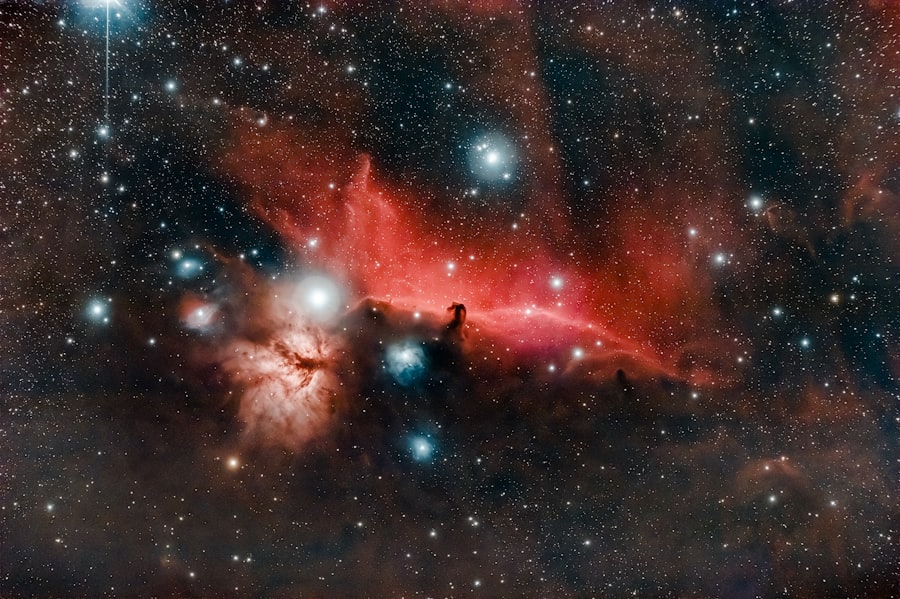
Stepping beyond our solar system, the universe unfolds into an astonishing hierarchy of stars, star clusters, galaxies, and galaxy clusters, revealing a universe of unimaginable scale and complexity.
The Lifecycle of Stars
Stars are not static objects but undergo a profound life cycle, born from nebulae, burning brightly for millions or billions of years, and eventually meeting dramatic or gradual ends.
Stellar Nurseries: Nebulae
Stars are born within vast clouds of gas and dust known as nebulae. Gravitational collapse within these nebulae leads to the formation of protostars, which eventually ignite nuclear fusion in their cores.
Stellar Evolution and Classification
The life and death of a star are determined primarily by its initial mass. Stars are classified based on their spectral type, temperature, and luminosity, forming the basis of the Hertzsprung-Russell diagram, which plots these characteristics against each other.
Stellar Remnants: White Dwarfs, Neutron Stars, and Black Holes
A star’s demise can take several forms. Low-mass stars, like our Sun, evolve into white dwarfs. More massive stars can explode as supernovae, leaving behind either incredibly dense neutron stars or, for the most massive stars, black holes – regions of spacetime where gravity is so strong that nothing, not even light, can escape.
Galaxies: Islands of Stars
Galaxies are vast collections of billions of stars, gas, dust, and dark matter, bound together by gravity. Our own galaxy, the Milky Way, is just one of billions in the observable universe.
Types of Galaxies
Galaxies are broadly categorized into several morphological types: spiral, elliptical, and irregular. Each type provides insights into galactic formation and evolutionary processes.
Spiral Galaxies
Spiral galaxies, like the Milky Way, are characterized by a central bulge and prominent spiral arms, sites of active star formation.
Elliptical Galaxies
Elliptical galaxies are generally older, with less active star formation, and range in shape from nearly spherical to highly elongated.
Irregular Galaxies
Irregular galaxies lack a defined shape, often resulting from gravitational interactions or collisions with other galaxies.
The Milky Way: Our Galactic Home
The Milky Way is a barred spiral galaxy, approximately 100,000 light-years in diameter, containing an estimated 100-400 billion stars. Our solar system resides in one of its spiral arms.
Beyond Galaxies: Clusters and Superclusters
Galaxies are not uniformly distributed throughout the cosmos but are clustered together, forming larger structures.
Galaxy Clusters
Galaxy clusters are gravitationally bound collections of hundreds to thousands of galaxies, often containing vast amounts of hot X-ray emitting gas.
Superclusters: The Largest Structures
Superclusters are the largest known structures in the universe, consisting of multiple galaxy clusters and groups. They form a cosmic web, with vast voids between these filamentary structures.
The Expanding Universe and the Big Bang Theory

One of the most profound discoveries in 20th-century astronomy was the realization that the universe is not static but is expanding. This observation forms the cornerstone of the Big Bang theory, our prevailing cosmological model.
Hubble’s Law and the Expanding Universe
In the 1920s, Edwin Hubble observed that distant galaxies are receding from us, and the farther away they are, the faster they are receding. This relationship, known as Hubble’s Law, provided direct evidence for the expansion of the universe.
Redshift as Evidence of Expansion
The light from receding galaxies is stretched to longer, redder wavelengths, an effect known as redshift. This phenomenon is analogous to the Doppler effect for sound waves, where the pitch of a siren changes as it moves towards or away from an observer.
The Big Bang Theory: The Universe’s Origin Story
The Big Bang theory posits that the universe began from an extremely hot, dense state approximately 13.8 billion years ago and has been expanding and cooling ever since.
Cosmic Microwave Background Radiation
A key piece of evidence supporting the Big Bang theory is the cosmic microwave background (CMB) radiation, a faint glow of microwave radiation permeating the entire universe. This radiation is interpreted as the afterglow of the Big Bang, a relic of the universe’s early hot phase.
Nucleosynthesis in the Early Universe
The Big Bang theory also successfully predicts the observed abundance of light elements, such as hydrogen and helium, which were formed during the first few minutes after the Big Bang through a process called nucleosynthesis.
The Future of the Universe: A Cosmic Destiny
While the universe is currently expanding, its ultimate fate remains a subject of ongoing research and debate.
Dark Energy and Accelerated Expansion
Current observations suggest that the universe’s expansion is not only ongoing but is also accelerating. This acceleration is attributed to a mysterious force known as dark energy, which constitutes approximately 68% of the universe’s total energy density.
Possible Fates: Big Freeze, Big Crunch, or Big Rip
Depending on the nature of dark energy and the curvature of spacetime, the universe could face several potential fates: a “Big Freeze” (eternal expansion and cooling), a “Big Crunch” (gravitational collapse), or a “Big Rip” (extreme acceleration tearing apart all matter).
For those who are intellectually curious about the wonders of the universe, exploring the latest discoveries in astronomy can be truly captivating. A fascinating article that delves into the mysteries of black holes and their impact on the cosmos can be found at Freaky Science. This resource not only provides insights into the nature of these enigmatic entities but also discusses their role in the evolution of galaxies, making it a must-read for anyone eager to expand their understanding of the universe.
Unveiling the Invisible: Dark Matter and Dark Energy
| Metric | Description | Value / Example | Relevance to Astronomy |
|---|---|---|---|
| Age of the Universe | Estimated time since the Big Bang | 13.8 billion years | Helps understand cosmic evolution and timeline |
| Speed of Light | Speed at which light travels in vacuum | 299,792 km/s | Fundamental for measuring distances and time in space |
| Distance to the Nearest Star (Proxima Centauri) | Closest star to the Sun | 4.24 light years | Sets scale for interstellar distances |
| Number of Known Exoplanets | Planets discovered outside our solar system | 5,500+ (as of 2024) | Expands understanding of planetary systems and potential life |
| Diameter of the Milky Way | Size of our home galaxy | ~100,000 light years | Context for our place in the cosmos |
| Mass of the Sun | Amount of matter in the Sun | 1.989 × 10^30 kg | Central to solar system dynamics and stellar physics |
| Number of Galaxies in Observable Universe | Estimated total galaxies visible | ~2 trillion | Shows vastness and diversity of the universe |
| Temperature of Cosmic Microwave Background | Residual radiation from the Big Bang | 2.725 K | Evidence for Big Bang and universe’s early conditions |
The visible matter that makes up stars, planets, and galaxies accounts for only a small fraction of the universe’s total mass and energy. The majority is composed of elusive substances known as dark matter and dark energy, presenting some of the most profound mysteries in contemporary astronomy.
Dark Matter: The Cosmic Scaffolding
Dark matter, which does not interact with light or other electromagnetic radiation, makes up approximately 27% of the universe’s total mass-energy content. Its presence is inferred through its gravitational effects on visible matter.
Evidence for Dark Matter
Several lines of evidence point to the existence of dark matter:
Galactic Rotation Curves
The observed rotation speeds of stars within galaxies are far greater than can be accounted for by the visible matter alone, suggesting the presence of an unseen, massive halo of dark matter.
Gravitational Lensing
The bending of light from distant galaxies as it passes through massive galaxy clusters, an effect known as gravitational lensing, is stronger than predicted by visible matter, requiring the presence of additional, invisible mass.
Cosmic Microwave Background Anisotropies
The subtle variations in temperature across the cosmic microwave background radiation are consistent with models that include a significant component of dark matter, influencing the distribution of matter in the early universe.
Candidates for Dark Matter
Scientists are actively searching for the fundamental particles that might constitute dark matter. Leading candidates include Weakly Interacting Massive Particles (WIMPs) and axions, although a definitive detection has yet to be made.
Dark Energy: The Driving Force of Acceleration
Dark energy, the most enigmatic component of the universe, is responsible for the accelerating expansion of the cosmos. It accounts for roughly 68% of the universe’s mass-energy density.
The Cosmological Constant
One leading candidate for dark energy is the cosmological constant, a concept originally introduced by Albert Einstein. It represents a constant energy density inherent to spacetime itself, causing a repulsive gravitational effect.
Quintessence and Other Models
Other theoretical models for dark energy propose a dynamic, evolving energy field known as quintessence, or modifications to Einstein’s theory of general relativity on cosmic scales.
The Future of Dark Energy Research
Understanding the nature of dark energy is a primary goal of modern cosmology. Future astronomical missions and theoretical advancements are crucial for unraveling this profound mystery, which holds the key to the ultimate fate and driving forces of the universe.
The Search for Extraterrestrial Life: Astrobiology and Exoplanets
One of the most compelling questions in astronomy is whether life exists beyond Earth. The burgeoning field of astrobiology and the discovery of thousands of exoplanets have transformed this philosophical inquiry into a scientific pursuit.
Exoplanets: Worlds Beyond Our Own
Exoplanets are planets orbiting stars other than our Sun. Their discovery has revealed the astonishing diversity of planetary systems throughout the galaxy.
Detection Methods
Several methods are employed to detect exoplanets:
Transit Method
The transit method detects exoplanets by observing the slight dimming of a star’s light as a planet passes in front of it.
Radial Velocity Method (Doppler Spectroscopy)
This method detects exoplanets by observing the subtle wobble of a star caused by the gravitational tug of an orbiting planet.
Direct Imaging
While challenging, direct imaging involves capturing actual images of exoplanets, typically large, distant worlds orbiting far from their host stars.
Habitable Zones and the Fermi Paradox
The concept of the “habitable zone” refers to the region around a star where conditions are potentially suitable for liquid water to exist on a planet’s surface. The discovery of numerous exoplanets within such zones fuels the search for extraterrestrial life. However, the “Fermi Paradox” questions the apparent contradiction between the high probability of extraterrestrial life and the lack of observational evidence.
The Search for Biosignatures
A primary goal of astrobiology is the detection of biosignatures – chemical or physical indicators of past or present life.
Atmospheric Signatures
Future telescopes will be capable of analyzing the atmospheres of exoplanets for gases like oxygen, methane, or ozone in proportions that would be indicative of biological activity.
Direct Evidence
While a monumental challenge, the ultimate goal involves detecting actual microbial or macroscopic life forms beyond Earth, through direct probes or advanced imaging techniques.
The SETI Program: Listening for Intelligence
The Search for Extraterrestrial Intelligence (SETI) program uses radio telescopes to listen for artificial signals emanating from other civilizations. While no definitive signals have been detected to date, the ongoing effort represents a testament to humanity’s enduring curiosity about its place in the cosmos.
The exploration of the universe is an ongoing, boundless endeavor. Each discovery, whether a new exoplanet, a distant galaxy, or a revelation about the fundamental forces of nature, pushes the boundaries of human knowledge and reshapes our understanding of existence. For the intellectually curious, the cosmos remains an infinite canvas for inquiry, inviting us to ponder the grandest questions and to continue our relentless pursuit of cosmic enlightenment.

WATCH NOW ▶️ Our Galaxy Is Sliding Toward a Cosmic Drain
FAQs
What is astronomy?
Astronomy is the scientific study of celestial objects, space, and the universe as a whole. It involves observing and analyzing stars, planets, galaxies, and other phenomena beyond Earth’s atmosphere.
Why is astronomy important for intellectually curious individuals?
Astronomy satisfies intellectual curiosity by exploring fundamental questions about the origin, structure, and evolution of the universe. It encourages critical thinking, scientific inquiry, and a deeper understanding of our place in the cosmos.
What tools do astronomers use to study the universe?
Astronomers use telescopes (optical, radio, and space-based), spectrometers, cameras, and computer simulations to observe and analyze celestial phenomena. These tools help gather data across different wavelengths of light.
How can beginners get started with astronomy?
Beginners can start by learning basic constellations, using star charts or astronomy apps, and observing the night sky with binoculars or a small telescope. Joining local astronomy clubs or online communities can also enhance learning.
What are some recent discoveries in astronomy?
Recent discoveries include the detection of gravitational waves, imaging of black holes, identification of exoplanets in habitable zones, and insights into dark matter and dark energy, all of which expand our understanding of the universe.