Exploring the Depths: Petroleum Geology Unveiled
The quest for energy has long been a cornerstone of human civilization, and at the heart of this endeavor lies petroleum, a multifaceted mixture of hydrocarbons that fuels much of our modern world. Unlocking its secrets requires a deep journey into the Earth’s crust, a domain governed by the principles of petroleum geology. This discipline acts as Earth’s cartographer for buried treasure, not of gold or gems, but of fossil fuels formed over eons. Understanding petroleum geology is akin to deciphering an ancient, geological script written in rock layers, where each chapter tells a story of deposition, transformation, and migration of organic matter into the liquid and gaseous forms we now call oil and natural gas. This article delves into the fundamental concepts of petroleum geology, illuminating the processes that create and trap these vital resources beneath our feet.
The story of petroleum begins not with the drilling rig, but with the remains of ancient life. The Earth’s history is punctuated by periods of prolific biological activity, particularly in aquatic environments. Vast quantities of organic matter, derived from microscopic plankton and algae, settled on the seafloor or in lakebeds, often in oxygen-depleted settings. This sequestration prevented complete decomposition, allowing the organic material to accumulate in thick layers.
1. Source Rocks: The Cradle of Hydrocarbons
The bedrock of petroleum formation lies within what geologists term “source rocks.” These are sedimentary rocks, typically shales or limestones, rich in organic material known as kerogen. Kerogen is essentially a complex, insoluble organic polymer that serves as the precursor to oil and gas. The type and abundance of kerogen within a source rock are crucial determinants of the type of hydrocarbons that will eventually form.
Organic Matter Type and Abundance
The original biological source plays a significant role. For example, marine plankton tend to generate organic matter that, upon maturation, yields more oil and gas liquids, whereas terrestrial plant matter, when buried and transformed, can lean towards generating more gas. The richness of the source rock, measured as the percentage of organic carbon, is a direct indicator of its potential to generate hydrocarbons. Rocks with less than 0.5% total organic carbon are generally considered poor sources, while those exceeding 2% are considered excellent.
Burial and Thermal Maturation
Once deposited, these organic-rich sediments are buried by subsequent layers of deposition. As the burial depth increases, so does the ambient temperature and pressure. This geothermally driven process, known as thermal maturation, is critical for transforming the solid kerogen into liquid and gaseous hydrocarbons. This transformation can be visualized as a slow-cooked feast, where heat and pressure act as the oven, gradually breaking down the complex organic molecules into simpler, mobile ones.
2. The Geothermal Gradient: Earth’s Internal Oven
The Earth’s internal heat provides the energy for maturation. This heat is not uniformly distributed but varies depending on factors like the age of the crust, radioactive decay within the Earth’s mantle, and proximity to magmatic intrusions. The geothermal gradient describes how temperature increases with depth. In continental crust, it typically averages around 25-30 degrees Celsius per kilometer, but this can be significantly higher in tectonically active regions.
The Oil and Gas Window
The process of thermal maturation occurs within specific temperature ranges, often referred to as the “oil window” and the “gas window.”
The Oil Window
This is the temperature range, typically between 60°C and 160°C, where kerogen begins to break down and generate liquid hydrocarbons – crude oil. Within this window, different types of kerogen will generate oil at different temperatures. The lower end of the oil window tends to produce heavier, less volatile oils, while the higher end favors lighter, more volatile oils.
The Gas Window
Above the oil window, typically between 150°C and 250°C, the remaining kerogen and even the liquid hydrocarbons begin to crack into lighter hydrocarbon gases, such as methane, ethane, propane, and butane. This is the gas window, where the primary product is natural gas. Beyond this window, at even higher temperatures, virtually all organic matter is converted into graphite.
Petroleum geology is a critical field that explores the origin, occurrence, movement, and accumulation of hydrocarbons. For those interested in delving deeper into this subject, a related article that provides valuable insights is available at Freaky Science. This resource offers a comprehensive overview of the processes involved in the formation of petroleum reservoirs and the techniques used in exploration and extraction, making it an excellent starting point for anyone looking to expand their understanding of petroleum geology.
The Journey of Petroleum: Migration and Trapping
Once generated within the source rock, petroleum is not destined to stay put. Its mobility, a key characteristic of oil and gas, allows it to escape the confines of its birthplace and embark on a journey through the subsurface. This migration process, driven by various forces, is essential for accumulating petroleum into economically viable reservoirs.
1. Primary Migration: Escaping the Source Rock
Primary migration is the initial expulsion of petroleum from the pore spaces of the source rock into more permeable adjacent formations. While source rocks are organic-rich, they are often fine-grained and possess relatively low permeability, making the movement of hydrocarbons out challenging. This process can be facilitated by several factors:
Overpressure in Source Rocks
As hydrocarbons are generated within the confined pore system of a source rock, pressure can build up. This overpressure can exceed the rock’s strength, causing it to fracture and act as conduits for petroleum to escape.
Capillary Forces and Diffusion
In some instances, capillary forces, which describe the tendency of liquids to adhere to solid surfaces and to each other, can play a role in drawing hydrocarbons out of small pores. Diffusion, although a slow process, can also contribute to the movement of smaller hydrocarbon molecules.
2. Secondary Migration: The Long Haul
Once in more permeable rock layers, petroleum undergoes secondary migration, a more extensive movement through the subsurface. This journey is driven by a combination of buoyancy and pressure gradients.
Buoyancy: Rising Above the Water
Oil and natural gas are less dense than the surrounding formation water. This difference in density creates an upward buoyant force, causing petroleum to migrate towards the surface, just as a cork rises in water. This upward movement, however, is not unimpeded.
Pressure Gradients: Following the Path of Least Resistance
Differences in pressure within the subsurface also influence migration. Petroleum will naturally flow from areas of higher pressure to areas of lower pressure, seeking out pathways through permeable rock layers.
3. Trapping Petroleum: The Geological Accordion
For petroleum to accumulate in economically significant quantities, it must be intercepted by a geological barrier – a trap. These traps are essentially structural or stratigraphic configurations that impede further migration, allowing hydrocarbons to accumulate in a confined space. Without traps, the generated petroleum would disperse throughout the subsurface, never reaching concentrations that warrant exploration and production.
Structural Traps: The Earth’s Warped Floors
Structural traps are formed by the deformation of rock layers due to tectonic forces. These deformations create structures that can seal off pathways for hydrocarbon migration.
Anticlines: The Gentle Arches
Anticlines are upwardly convex folds in rock layers. The crest of an anticline, if sealed by impermeable rock above, acts as a perfect trap for buoyant hydrocarbons, with gas accumulating at the very top, followed by oil, and then water at the bottom.
Fault Traps: The Cracks and Seals
Faults, which are fractures in the Earth’s crust where rocks have moved relative to each other, can also create traps. If a permeable reservoir rock is juxtaposed against an impermeable fault block, or if the fault zone itself is sealed by impermeable material (like clay), hydrocarbons can accumulate.
Stratigraphic Traps: The Layered Labyrinths
Stratigraphic traps are formed by variations in the rock layers themselves, rather than by deformation. These traps are often more subtle and can be challenging to identify.
Unconformities: The Gaps in Time
An unconformity represents a surface of erosion or non-deposition, essentially a gap in the geological record. If a permeable reservoir rock is overlain by an impermeable sealing rock deposited on top of an erosional surface, hydrocarbons can be trapped beneath the unconformity.
Pinch-outs: The Fading Facies
As sediment bodies are deposited, their characteristics can change laterally. A pinch-out occurs when a permeable reservoir rock thins and ultimately disappears laterally, replaced by an impermeable rock. This creates a seal, trapping hydrocarbons within the remaining permeable section.
Reservoir Rocks: The Porous Holdings

The dwelling place of petroleum is the reservoir rock. These are porous and permeable rocks that can store and transmit significant quantities of hydrocarbons. Think of reservoir rocks as geological sponges, capable of soaking up and holding vast amounts of oil and gas. The quality of a reservoir rock is determined by its porosity and permeability.
1. Porosity: The Empty Spaces
Porosity refers to the volume of void space within a rock, expressed as a percentage of the total rock volume. These spaces, or pores, are the storage units for hydrocarbons. There are two main types of porosity:
Intergranular Porosity
This is the most common type of porosity and is formed by the spaces between individual grains of sediment. As sediments are deposited and lithified into sedimentary rocks, these original pore spaces are often preserved.
Fracture Porosity
This type of porosity is created by fractures or cracks within the rock. Fractures can significantly enhance the storage and flow capacity of a rock, especially in otherwise dense formations.
2. Permeability: The Flowing Pathways
Permeability is a measure of a rock’s ability to allow fluids to flow through it. High permeability means fluids can move easily; low permeability restricts flow. Permeability is directly related to the interconnectedness of the pore spaces.
Connected Pores: The Highway System
For a rock to be permeable, its pore spaces must be interconnected, forming a network of pathways. Even a rock with high porosity but poorly connected pores will have low permeability.
Pore Size and Shape: The Size of the Channels
The size and shape of the pores also influence permeability. Larger, more rounded pores tend to offer less resistance to fluid flow than smaller, irregular ones.
Seals and Overburden: The Protective Blanket
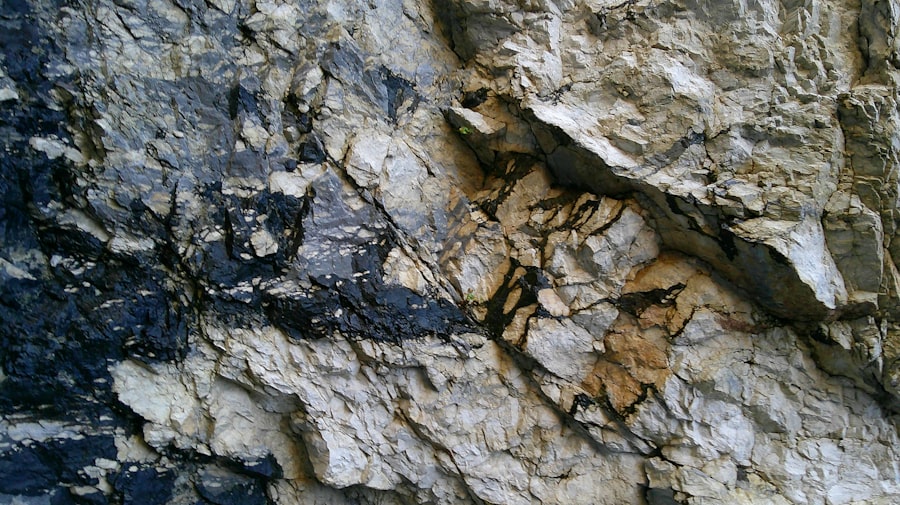
The preservation of petroleum within a trap for geological time requires an impermeable barrier above the reservoir rock, known as the seal or caprock. This seal prevents the hydrocarbons from migrating further upwards and escaping to the surface.
1. The Impermeability Imperative
The seal rock must possess very low permeability to effectively contain the mobile petroleum within the reservoir. Common seal rocks include:
Shales: The Tight Guardians
Fine-grained shales, with their tightly packed clay minerals, are excellent seals. Their small pore sizes and tortuous pathways significantly impede the movement of hydrocarbons.
Evaporites: The Salty Sentinels
Rocks formed from the evaporation of water, such as salt (halite) and anhydrite, are highly impermeable and often form very effective seals, particularly in large structural traps.
2. Burden of Proof: The Overburden Pressure
The weight of the overlying rock layers, known as the overburden, plays a crucial role in maintaining the integrity of the seal and the trap. The pressure exerted by the overburden helps to keep the pore spaces within the seal rock closed, preventing leakage. Geological processes that reduce the overburden pressure in the vicinity of a trap can lead to the loss of trapped hydrocarbons.
Petroleum geology is a fascinating field that explores the origins, accumulation, and extraction of hydrocarbons. For those interested in delving deeper into this subject, a related article can provide valuable insights into the latest advancements and techniques used in the industry. You can read more about these developments in the article on Freaky Science, which discusses innovative methods in petroleum exploration and production. This resource is an excellent starting point for anyone looking to expand their understanding of the complexities involved in petroleum geology.
Petroleum Systems: The Interconnected Puzzle
| Metric | Description | Typical Values / Units |
|---|---|---|
| Porosity | Percentage of void space in rock that can contain hydrocarbons | 5% – 30% |
| Permeability | Ability of rock to transmit fluids, measured in darcies or millidarcies | 0.1 – 1000 millidarcies |
| Reservoir Depth | Depth at which petroleum reservoirs are found | 500 – 5000 meters |
| API Gravity | Measure of petroleum liquid density relative to water | 10° – 45° API |
| Source Rock TOC (Total Organic Carbon) | Organic carbon content in source rock, indicating hydrocarbon potential | 1% – 15% |
| Thermal Maturity (Ro%) | Reflectance of vitrinite, indicating maturity of organic matter | 0.5% – 2.5% |
| Trap Type | Geological structure or stratigraphic feature that traps hydrocarbons | Structural, Stratigraphic, Combination |
| Recovery Factor | Percentage of hydrocarbons that can be technically recovered | 20% – 50% |
The concept of a petroleum system (PS) encapsulates all the essential geological elements and processes necessary for the generation, accumulation, and preservation of petroleum. A petroleum system is a valuable framework for understanding and evaluating petroleum prospectivity in a given region. It is like assembling an intricate puzzle, where each piece must be in its right place for a complete picture to emerge.
1. Essential Elements of a Petroleum System
For a petroleum system to be successful, several key elements must be present and appropriately timed:
Source Rock
As discussed, a viable source rock, containing sufficient organic matter that has been thermally matured, is the fundamental origin of hydrocarbons.
Reservoir Rock
A porous and permeable reservoir rock is needed to store the generated hydrocarbons.
Seal Rock
An impermeable seal rock is required to trap and retain the hydrocarbons within the reservoir.
Trap
A structural or stratigraphic trap provides the geometric configuration that concentrates the hydrocarbons.
Migration Pathway
Effective pathways for both primary and secondary migration are necessary for hydrocarbons to reach the reservoir and trap.
2. Timing: The Crucial Synchronicity
Crucially, the timing of these elements is paramount. The generation of hydrocarbons in the source rock must precede or coincide with the formation of the trap and the presence of the seal. If the trap forms after the hydrocarbons have already migrated out of the area, or if the source rock matures before a trap exists, no petroleum accumulation will occur. Petroleum geologists meticulously reconstruct the geological history of a basin to assess the temporal relationships between these elements. This detailed analysis is the bedrock of hydrocarbon exploration, guiding the search for these vital energy resources.
FAQs
What is petroleum geology?
Petroleum geology is the branch of geology that studies the origin, occurrence, movement, accumulation, and exploration of hydrocarbon fuels, primarily oil and natural gas.
How do petroleum geologists locate oil and gas reserves?
Petroleum geologists use geological surveys, seismic data, rock sampling, and subsurface mapping to identify potential reservoirs where oil and gas may be trapped.
What types of rocks are important in petroleum geology?
Reservoir rocks, such as sandstone and limestone, are porous and permeable, allowing hydrocarbons to accumulate. Source rocks, typically organic-rich shales, generate hydrocarbons under heat and pressure.
What is the role of structural traps in petroleum geology?
Structural traps are geological formations like folds or faults that create barriers, trapping hydrocarbons in reservoirs and preventing them from migrating to the surface.
Why is understanding sedimentary basins important in petroleum geology?
Sedimentary basins are regions where thick layers of sediment accumulate, often containing source rocks and reservoirs. Understanding their formation helps predict where oil and gas deposits may be found.