Exploring the Depths: How Sonar Works Underwater
The ocean, a vast and enigmatic expanse, holds secrets that have long captivated humanity. From its shimmering surface to its crushing abyssal plains, the underwater world remains largely unexplored, a frontier ripe for discovery. For centuries, direct observation was the only means of understanding what lay beneath the waves. However, with the advent of technology, new senses have been extended into this unseen realm. Among the most transformative of these is sonar, a system that allows us to “see” through the murky depths using sound. Sonar, an acronym for SOund Navigation And Ranging, is a remarkable technology that harnesses the principles of acoustics to map the seafloor, detect submerged objects, and even communicate across distances. Its applications span scientific research, marine navigation, defense, and resource exploration, making it an indispensable tool for venturing into the unknown.
Sonar, or Sound Navigation and Ranging, is a fascinating technology that utilizes sound waves to detect and locate objects underwater. By emitting sound pulses and analyzing the echoes that return, sonar systems can create detailed images of the seafloor and identify underwater obstacles. For a deeper understanding of how sonar works and its various applications, you can read a related article at Freaky Science. This resource provides insights into the principles of sonar technology and its significance in marine exploration.
The Fundamental Principle: Echoes in the Abyss
At its core, sonar operates on a deceptively simple principle: the echo. Humans are familiar with echoes in our everyday lives; a shout in a canyon or a clap in a large hall reverberates, returning a fainter version of the original sound. Sonar cleverly weaponizes this acoustic phenomenon underwater. The process begins with a sonar transducer, the system’s “speaker” and “ear.” This transducer emits a pulse of sound, often an ultrasonic frequency that is beyond the range of human hearing, into the surrounding water. This sound wave travels outward, an invisible probe into the depths.
The Journey of the Sound Pulse
The sound emitted by the sonar transducer is not a gentle whisper; it’s a focused burst designed to travel significant distances. The properties of this emitted pulse are critical to the sonar system’s effectiveness.
Frequency and Wavelength Considerations
The frequency of the sound wave directly influences its behavior underwater. Higher frequencies, while offering greater resolution and the ability to detect smaller objects, tend to attenuate (lose energy) more rapidly in water. Conversely, lower frequencies travel further with less attenuation but provide less detail. Sonar systems are designed with specific operational environments and objectives in mind, selecting frequencies that strike the optimal balance between range and resolution. The wavelength, which is inversely proportional to frequency, also plays a role. Longer wavelengths (lower frequencies) are better at penetrating sediment, while shorter wavelengths (higher frequencies) are more sensitive to the surface textures of objects.
The Transducer: More Than Just a Speaker
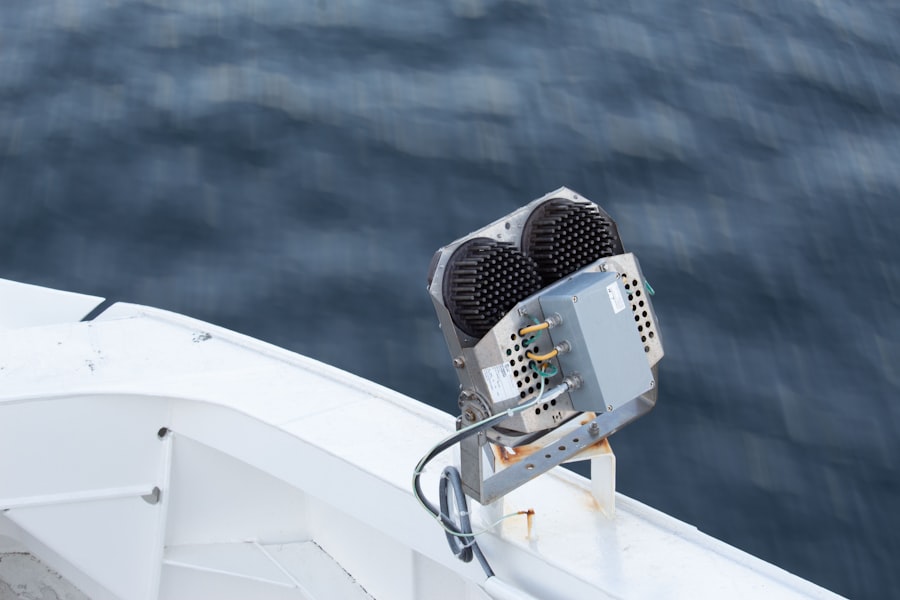
The transducer itself is a sophisticated piece of engineering. It typically utilizes piezoelectric crystals, materials that deform when an electric voltage is applied, generating mechanical vibrations that produce sound. In reverse, when these same crystals are struck by sound waves, they generate an electrical signal. This dual functionality allows a single transducer to both emit sound pulses and receive the returning echoes. The design and placement of the transducer are crucial for directing the sound beam and maximizing the capture of returning signals.
The Bounce Back: Returning Echoes
When the emitted sound pulse encounters an object – be it the seafloor, a sunken ship, a submarine, or a school of fish – a portion of its energy is reflected back towards the sonar transducer. This reflected sound is the echo. The characteristics of this echo, such as its intensity and the time it takes to return, provide valuable information about the object.
The Speed of Sound in Water: A Crucial Constant
The speed of sound in water is not constant and depends on several factors, including temperature, salinity, and pressure (depth). Typically, the speed of sound in seawater is around 1,500 meters per second. This speed is a fundamental constant used in sonar calculations. By measuring the time it takes for an echo to return, and knowing the speed of sound, the sonar system can accurately calculate the distance to the reflecting object.
What the Echo Reveals: Amplitude and Frequency Shifts
The echo is not merely a timestamp. Its amplitude, or strength, can indicate the size and reflectivity of the target. A hard, smooth object will reflect sound more strongly than a soft, irregular one. Beyond amplitude, the frequency of the returning echo can also be analyzed. If the object is moving towards or away from the sonar transducer, a phenomenon known as the Doppler effect will cause a shift in the echo’s frequency. This Doppler shift is crucial for determining the velocity of submerged objects.
Pinpointing Location: Time and Triangulation
The accurate determination of an object’s location underwater is paramount for navigation, mapping, and identification. Sonar systems employ sophisticated methods to transform raw echo data into precise positional information.
Measuring Distance: The Time-of-Flight Calculation
The most straightforward method of determining distance in sonar is based on the time it takes for the sound pulse to travel to the object and return. As mentioned earlier, the speed of sound in water is a known variable.
The Formula at Work
The fundamental formula for calculating distance (d) is:
$d = (c * t) / 2$
Where:
- ‘c’ is the speed of sound in water (meters per second).
- ‘t’ is the time elapsed between the emission of the sound pulse and the reception of the echo (seconds).
The division by 2 accounts for the fact that the sound pulse travels to the object and then back, covering the distance twice. This seemingly simple calculation forms the backbone of all sonar ranging.
Factors Affecting Time Measurement
Precise timing is critical for accurate distance measurement. Sonar systems employ high-speed electronics and sophisticated processing to capture the return of the echo with minimal delay. Environmental factors, such as water in the transducer’s immediate vicinity, can also introduce slight delays that need to be accounted for in sophisticated systems.
Determining Direction: Beamwidth and Array Geometry
While time-of-flight tells us how far away an object is, we also need to know in which direction it lies. This is achieved through two primary means: the directionality of the sonar beam and the use of multiple transducers.
Narrow Beams for Precision
Active sonar systems typically use directional transducers or arrays of transducers to focus the sound pulse into a specific beam. The narrower the beam, the more precisely the direction of the object can be determined. A wide beam will illuminate a larger area, making it harder to pinpoint the exact source of a particular echo.
Multiple Transducer Arrays for Enhanced Directional Accuracy
More advanced sonar systems employ arrays of transducers. By analyzing the slight differences in the arrival time of the echo at each transducer in the array, the system can calculate the precise angle of the returning sound wave. This technique, known as beamforming, allows for very accurate directional determination, even with relatively wide individual transducer elements.
Hydrophones: The Ears of the System
The receiving elements of a sonar system are called hydrophones. These are essentially underwater microphones that are highly sensitive to sound waves. In passive sonar, where the system only listens for sounds emitted by other sources, the arrangement and sensitivity of the hydrophones are paramount.
Triangulation and Multibeaming: Building a 3D Picture
For more comprehensive mapping and object location, sonar systems employ techniques that combine multiple soundings and advanced processing.
Side-Scan Sonar: Imaging the Seafloor’s Texture
Side-scan sonar systems utilize transducers that emit sound pulses sideways, perpendicular to the direction of the vessel’s travel. The echoes received reveal the texture and features of the seafloor in a \”banner\” image. This is invaluable for searching for wrecks, identifying geological formations, and surveying pipelines.
Multi-beam Echosounders: Creating Detailed Bathymetric Maps
Multi-beam echosounders are arguably the most important tools for modern seafloor mapping. They use sophisticated transducer arrays to emit multiple sound beams simultaneously, covering a wide swath of the seafloor. By rapidly sweeping these beams and processing the returning echoes, they can generate highly detailed three-dimensional bathymetric maps, revealing the contours and topography of the underwater landscape with remarkable accuracy.
Types of Sonar: Active vs. Passive
Just as we have different ways of perceiving the world, sonar technology is broadly categorized into two main types: active and passive. Each has its unique strengths and applications, catering to different underwater exploration and surveillance needs.
Active Sonar: The Sound-Emitting Explorer
Active sonar is the more commonly understood form of sonar. It involves the sonar system generating its own sound pulse and then listening for the echo. This self-generated sound acts as a probe, actively seeking out information about the underwater environment.
How Active Sonar Works in Practice
An active sonar system comprises a transmitter, a transducer (which acts as both transmitter and receiver), and a receiver. The transmitter generates an electrical signal that is converted into a sound pulse by the transducer. This pulse travels through the water, bounces off objects, and returns as an echo. The transducer then converts the returning sound wave back into an electrical signal, which is processed by the receiver to provide information about the target.
Advantages of Active Sonar
The primary advantage of active sonar is its ability to provide a complete picture of the underwater environment, regardless of whether other sound sources are present. It can detect objects that are not emitting any sound themselves, making it ideal for navigation, seafloor mapping, and the detection of submerged structures. The strength and timing of the echoes provide detailed information about the size, shape, range, and even the material composition of the target.
Disadvantages and Considerations for Active Sonar
However, active sonar is not without its drawbacks. The emitted sound pulses can be detected by other vessels, revealing the presence and position of the sonar-equipped platform. This is a significant concern for military applications where stealth is crucial. Furthermore, the continuous emission of sound can potentially interfere with marine life, particularly marine mammals that rely on sound for communication and navigation. Therefore, the use of active sonar is often regulated to minimize its impact on the environment.
Passive Sonar: The Silent Listener
Passive sonar systems, in contrast, do not emit any sound. Instead, they rely solely on listening to the ambient sounds present in the underwater environment. These sounds can originate from a variety of sources, including marine life, passing ships, geological activity, and even the distant roar of breaking waves.
The Art of Listening: Detecting and Analyzing Sounds
Passive sonar systems are essentially highly sensitive underwater listening devices. They employ arrays of hydrophones to capture even the faintest of sounds. These sounds are then amplified and processed to identify their sources. Sophisticated signal processing algorithms are used to filter out unwanted noise and to classify the detected sounds.
Strengths of Passive Sonar
The main advantage of passive sonar is its stealth. Because it does not emit any sound, it cannot be detected by other vessels. This makes it invaluable for military reconnaissance and intelligence gathering, allowing submarines and other platforms to operate undetected. It is also useful for scientific research, such as studying the vocalizations of marine mammals or monitoring underwater geological activity.
Limitations of Passive Sonar
The primary limitation of passive sonar is that it can only detect sound-emitting sources. If an object is silent, it will not be detected by passive sonar. Furthermore, the accuracy of passive sonar can be affected by background noise and the complexity of the underwater soundscape. Determining the exact range and precise location of a sound source can be more challenging with passive sonar than with active sonar, often requiring advanced techniques like TDOA (Time Difference of Arrival) or beamforming.
Sonar technology plays a crucial role in underwater exploration by using sound waves to detect objects and map the ocean floor. For a deeper understanding of how this fascinating technology operates, you can refer to a related article that explains the principles of sonar in detail. This article provides insights into the various applications of sonar, from marine biology to naval operations, showcasing its importance in underwater research. To learn more about sonar and its functionalities, visit this informative resource.
Applications of Sonar: Peering into the Underwater World
The ability of sonar to effectively “see” through water has unlocked a vast array of applications across numerous fields, transforming our understanding and utilization of the oceanic realm. Its versatility makes it an indispensable tool for both scientific inquiry and practical endeavors.
Marine Navigation and Safety: Charting Safe Passage
Sonar plays a critical role in ensuring the safe passage of vessels through the waters. By providing real-time information about the depth of the water, the presence of submerged obstacles, and the contours of the seafloor, sonar helps mariners avoid dangerous situations.
Depth Sounding and Bathymetric Mapping
Echosounders, a type of sonar, are used to measure the depth of the water beneath a vessel. This information is vital for naval architects designing ships, chartering safe routes, and avoiding collisions with submerged hazards such as rocks, sandbanks, and shipwrecks. Multi-beam echosounders are now the standard for creating detailed bathymetric charts, which are essential for modern navigation and maritime safety.
Obstacle Detection: Avoiding the Unseen
Active sonar systems are crucial for detecting submerged obstacles that are not visible from the surface. This includes icebergs, floating debris, and even other vessels operating below the waterline. Forward-looking sonar, which can scan ahead of a vessel, provides an early warning system, allowing navigators to take evasive action and prevent potentially catastrophic collisions.
Scientific Research: Unveiling Ocean Secrets
Sonar is a cornerstone of marine scientific research, enabling scientists to explore and understand the complex underwater environment.
Seafloor Mapping and Geological Studies
Sonar, particularly side-scan sonar and multi-beam echosounders, provides invaluable data for understanding the geology of the ocean floor. Scientists use this data to map underwater mountain ranges, canyons, volcanic features, and plate boundaries. This research contributes to our understanding of plate tectonics, earthquakes, and the formation of the Earth’s crust.
Marine Biology and Ecology Studies
Sonar can be used to detect and track marine life, such as schools of fish and marine mammals. Acoustic surveys can provide estimates of fish populations, helping in sustainable fisheries management. Scientists also use sonar to study the behavior of marine animals, their migration patterns, and their habitats. The development of bioacoustics has allowed for the identification and tracking of many species based on their unique vocalizations.
Archaeological Exploration: The Silent History Beneath
The exploration of shipwrecks and submerged archaeological sites is another significant application of sonar. Side-scan sonar is highly effective at identifying anomalies on the seafloor that may indicate the presence of historical wrecks. Once a potential site is identified, more advanced sonar systems can be used to create detailed images of the wreck and its surroundings, aiding in underwater archaeological investigations and preservation efforts.
Defense and Security: The Shadowy Realm of Submarines
In the realm of defense, sonar is an indispensable technology, particularly for submarine warfare and maritime surveillance.
Submarine Detection and Tracking
Submarines, by their nature, operate stealthily underwater. Sonar, both active and passive, is the primary means by which submarines and anti-submarine warfare (ASW) forces detect and track each other. Passive sonar is critical for submarines to remain hidden, while active sonar is used by ASW platforms to locate and prosecute targets.
Mine Warfare and Underwater Reconnaissance
Sonar plays a vital role in mine detection and countermeasure operations. Specialized sonar systems are used to scan the seabed for buried or moored naval mines, ensuring the safety of shipping lanes. Underwater reconnaissance missions also utilize sonar to map enemy installations, identify strategic locations, and gather intelligence.
Resource Exploration: Unlocking Subsea Wealth
Sonar technology is also instrumental in the exploration and extraction of valuable resources from the ocean floor and the subseabed.
Oil and Gas Exploration
Geophysical surveys using sonar are essential for the exploration of oil and gas reserves. Seismic surveys, which utilize sound waves to map subsurface geological structures, are a sophisticated form of sonar. These surveys help identify potential hydrocarbon traps and guide drilling operations.
Seabed Mineral Resource Mapping
Sonar is used to map the distribution of valuable mineral deposits on the seabed, such as polymetallic nodules and ferromanganese crusts. This information is crucial for assessing the economic viability of deep-sea mining operations and for understanding the geological processes that form these resources.
The Future of Sonar: Advancements and Innovations
The field of sonar technology is not static; it is continuously evolving with advancements in computing power, sensor technology, and signal processing. These innovations promise to extend the capabilities of sonar, opening up new frontiers in underwater exploration and understanding.
Enhanced Signal Processing and Artificial Intelligence
The sheer volume of data generated by modern sonar systems is immense. The development of more sophisticated signal processing algorithms, coupled with the application of artificial intelligence (AI) and machine learning (ML), is revolutionizing how this data is interpreted.
Automated Target Recognition (ATR)
AI-powered systems are being developed to automate the process of target recognition. Instead of human operators painstakingly analyzing sonar data, AI algorithms can be trained to identify specific objects, such as different types of marine life, underwater vehicles, or geological features, with greater speed and accuracy.
Noise Reduction and Signal Enhancement
Future sonar systems will likely employ advanced AI techniques to further reduce background noise and enhance the clarity of faint signals. This will be particularly important in challenging underwater environments where ambient noise levels are high.
Miniaturization and Swarm Technology
The trend towards miniaturization in electronics is also impacting sonar technology. Smaller, more agile sonar platforms are being developed, leading to new operational possibilities.
Unmanned Underwater Vehicles (UUVs) and Autonomous Underwater Vehicles (AUVs)
The integration of sonar into UUVs and AUVs is creating highly capable autonomous exploration platforms. These vehicles can operate for extended periods, reaching areas inaccessible to traditional manned vessels, and conduct detailed surveys with minimal human intervention.
Swarming Sonar Systems
The concept of “swarm sonar,” where multiple small, coordinated sonar devices work together, is also gaining traction. These swarms could provide unparalleled coverage of large areas or perform complex synchronized sensing tasks, offering a revolutionary approach to underwater data acquisition.
Quantum Sensing and Novel Acoustic Principles
Looking further into the future, researchers are exploring entirely new principles for underwater sensing, moving beyond traditional acoustic methods.
Quantum Acoustics
The burgeoning field of quantum acoustics holds the potential for highly sensitive and precise underwater sensing. While still in its early stages, research into quantum phenomena could lead to sonar systems with unprecedented capabilities for detecting subtle changes in the underwater environment.
Bio-inspired Sonar
Nature often provides elegant solutions to complex problems. Researchers are studying the highly sophisticated sonar systems of marine mammals, such as dolphins and whales, to develop bio-inspired sonar technologies that are more efficient, less disruptive to marine life, and capable of capturing richer information than current artificial systems.
Conclusion: The Ever-Expanding Reach of Sound
Sonar has fundamentally changed our relationship with the underwater world. From the rudimentary echo-sounding devices of the past to the sophisticated multi-beam systems and AI-driven analysis of today, sonar has consistently pushed the boundaries of our perception in the ocean’s depths. It allows us to navigate safely, to understand the intricate workings of marine ecosystems, to safeguard our maritime interests, and to uncover the hidden resources that lie beneath the waves. As technology continues to advance, the reach of sonar will only expand, promising further revelations about the vast, enigmatic, and vital underwater realm that covers the majority of our planet. The echoes of our innovations will continue to reverberate, illuminating the darkness and expanding our knowledge of the profound mysteries that still lie hidden beneath the surface of the sea.

The Secret Ocean Layer That Lets Sound Travel for Thousands of Miles
FAQs
What is sonar and how does it work underwater?
Sonar stands for Sound Navigation and Ranging, and it is a technology that uses sound waves to detect objects underwater. A sonar device emits sound pulses, which then bounce off objects in the water and return to the device. By measuring the time it takes for the sound waves to return, sonar can determine the distance and location of underwater objects.
What are the different types of sonar used underwater?
There are two main types of sonar used underwater: active sonar and passive sonar. Active sonar emits sound waves and listens for the echoes, while passive sonar listens for sounds already present in the water, such as those made by marine life or other vessels.
What are the applications of sonar technology underwater?
Sonar technology is used for a variety of applications underwater, including navigation, communication, fish finding, underwater mapping, and military purposes such as detecting submarines and underwater mines.
What are the limitations of sonar technology underwater?
Sonar technology can be limited by factors such as water temperature, salinity, and pressure, which can affect the speed and propagation of sound waves. Additionally, underwater terrain and marine life can also affect the accuracy of sonar readings.
How is sonar technology used to study marine life underwater?
Sonar technology is used to study marine life underwater by detecting and tracking the movements of fish and other marine animals. This information can be used for ecological research, fisheries management, and conservation efforts.