
The human fascination with the Earth’s interior is as ancient as humanity itself. For millennia, we’ve gazed at the stars, mapped the oceans, and climbed the highest peaks. Yet, the vast, enigmatic expanse beneath our feet remains largely a mystery. While our technological prowess allows us to probe the cosmos and understand the infinitesimal, delving deep into the planet’s core presents a unique set of challenges. Imagine descending not just a few meters, but a staggering 12 kilometers. What does that distance truly represent in terms of scale, scientific understanding, and the incredible engineering required to even approach such a feat? This article will embark on a journey to explore the profound implications of reaching a depth of 12 kilometers underground, unraveling the scientific frontiers, technological hurdles, and the potential discoveries that lie within.
Twelve kilometers might sound like a substantial distance, but when contextualized against the Earth’s radius, its true insignificance becomes apparent. This is not a minor excavation; it’s a journey that begins to brush against the very fabric of our planet’s internal structure. To truly grasp the magnitude of 12 km underground, we must break it down and compare it to familiar benchmarks.
Comparing to Familiar Heights and Depths
Most people understand the concept of height. A skyscraper, a mountain, even the altitude of commercial airplanes offer relatable points of reference. A 12 km descent is equivalent to tunneling through over three Mount Everests stacked on top of each other. Mount Everest, at its highest point, stands at approximately 8.8 kilometers above sea level. Therefore, reaching 12 kilometers underground means going significantly deeper than the planet’s highest natural elevation.
Consider the Mariana Trench, the deepest known point in Earth’s oceans. Its maximum depth is around 11 kilometers. So, 12 kilometers underground is even deeper than the crushing pressures and perpetual darkness of the ocean’s abyss. This comparison highlights that while we can explore the deepest parts of the ocean, reaching equivalent depths within the Earth’s crust presents entirely different, and arguably more formidable, challenges.
Navigating the Earth’s Crust
The Earth’s crust is the outermost solid shell of a rocky planet, dwarf planet, or natural satellite. On Earth, it is relatively thin compared to the other layers, such as the mantle and the core. The thickness of the Earth’s crust varies considerably, from about 5 kilometers under the oceans to over 70 kilometers under continental mountain ranges. A 12 km borehole, therefore, would penetrate a significant portion of the continental crust in many regions, reaching well into the lower crust or even approaching the Moho discontinuity – the boundary between the crust and the mantle.
The Significance of Reaching the Lower Crust
Reaching the lower crust is not merely about accumulating meters. It’s about entering a realm where conditions change dramatically. Temperatures begin to rise significantly, pressures become immense, and the very composition of the rock can shift. Understanding the geological processes occurring at these depths is crucial for comprehending plate tectonics, the formation of mountains, and the origin of seismic activity.
Exploring the depths of the Earth can be quite fascinating, especially when considering how deep 12 kilometers underground really is. To gain a better understanding of this depth and its implications, you can read a related article that delves into the mysteries of the Earth’s crust and the challenges faced by scientists studying these extreme environments. For more information, check out this article: Freaky Science.
Scientific Revelations Awaiting at 12 Kilometers
The scientific potential of a 12 km borehole is immense. It would offer unprecedented access to geological formations and processes that are currently only inferred from seismic data and surface observations. This depth would allow for direct sampling and in-situ measurements, revolutionizing our understanding of Earth’s internal dynamics.
Unlocking Secrets of the Continental Crust
The continental crust is a complex tapestry of rock types, fault lines, and mineral deposits. A 12 km bore would provide direct access to the geological history of a region, potentially revealing rock layers dating back billions of years. By studying the composition, structure, and isotopic signatures of these ancient rocks, geologists could refine models of crustal formation, evolution, and the processes that have shaped our planet over eons.
Investigating the Moho Discontinuity
The Mohorovičić discontinuity, or Moho, is the boundary between the Earth’s crust and the upper mantle. It is defined by a sharp change in seismic velocity. Reaching and sampling this boundary would be a monumental achievement. It would allow scientists to directly study the transition from crustal rocks to mantle peridotite, providing crucial data on the chemical and physical properties of this fundamental geological interface. Understanding the Moho is key to unraveling the mechanisms of isostasy, the gravitational equilibrium between the Earth’s crust and mantle.
Studying Ancient Microbial Life
The deep subsurface is not sterile. Microbes have been found thriving in extreme environments, including deep-sea hydrothermal vents and even within solid rock miles underground. A 12 km borehole could potentially uncover novel microbial ecosystems that have evolved in isolation for millions of years. Studying these extremophiles could offer insights into the origins of life on Earth, the potential for life on other planets with subsurface oceans, and could even yield new enzymes and biochemical compounds with applications in medicine and industry.
Deep Geothermal Energy Potential
The temperature gradient in the Earth increases with depth. At 12 kilometers, the temperatures would be significantly higher than at the surface, potentially reaching several hundred degrees Celsius. This vast reservoir of geothermal energy could be harnessed for sustainable power generation. While current geothermal technologies typically operate at much shallower depths, a successful 12 km borehole could pave the way for advanced geothermal systems, tapping into a virtually inexhaustible source of clean energy.
Reservoir Engineering for Enhanced Geothermal Systems (EGS)
Enhanced Geothermal Systems (EGS) involve creating or improving underground reservoirs to extract heat from hot rock. A 12 km borehole would allow for the exploration of deeper, hotter rock formations, potentially unlocking EGS potential in regions previously considered unsuitable for geothermal energy. This would require sophisticated reservoir modeling and engineering to ensure efficient heat extraction and long-term sustainability.
Economic Viability and Sustainability
The economic viability of deep geothermal energy hinges on the cost of drilling and the efficiency of energy extraction. A 12 km borehole represents a significant upfront investment. However, the potential for consistent, baseload power generation could make it a competitive long-term energy solution, especially as conventional fossil fuels become scarcer and more environmentally regulated.
Understanding Earthquakes and Seismicity
The deep crust is where many earthquakes originate. A 12 km borehole could be equipped with advanced seismic monitoring equipment, providing unprecedented high-resolution data on the stresses and strains building up within the Earth’s crust. This could lead to a better understanding of earthquake nucleation, rupture processes, and potentially even improved earthquake forecasting.
Monitoring Stress Accumulation in Fault Zones
By placing sensors directly within active fault zones at significant depths, scientists could directly measure the accumulation of stress, the subtle movements of rock masses, and the triggering mechanisms of seismic events. This data would be invaluable for refining seismic hazard assessments and developing more accurate models of earthquake behavior.
Studying the Source Mechanisms of Earthquakes
The data gathered from a 12 km borehole would allow for a more precise determination of the focal mechanisms of earthquakes, providing insights into the type of faulting and the direction of rupture. This, in turn, aids in understanding the forces that drive tectonic plate movement.
Technological Frontiers: The Engineering Marvel of 12 Kilometers

Drilling to a depth of 12 kilometers is not a simple extension of existing drilling practices. It pushes the boundaries of materials science, engineering, and robotics, requiring innovative solutions to overcome extreme conditions.
The Challenge of Extreme Pressure and Temperature
As one descends into the Earth, both pressure and temperature increase significantly. At 12 kilometers, the pressures would be on the order of several hundred megapascals, and temperatures could exceed 400°C. These conditions would deform, weaken, and even melt conventional drilling equipment and materials.
Advanced Drilling Fluids and Lubricants
Developing drilling fluids that can withstand these extreme temperatures and pressures is paramount. These fluids not only lubricate the drill bit but also help to stabilize the borehole walls and carry rock cuttings to the surface. New formulations with specialized additives and higher thermal stability are essential. Similarly, lubricants for drilling machinery must maintain their efficacy under these harsh conditions.
High-Strength Materials for Drill Bits and Casings
Drill bits and casings must be constructed from materials that can resist immense pressure and abrasive wear. This might involve advanced ceramics, superalloys, or even diamond composites. The design of these components must also account for thermal expansion and contraction, which can put additional stress on the structures.
Overcoming Borehole Instability
The immense pressure from the surrounding rock can cause boreholes to collapse. Maintaining borehole integrity at such depths is a critical challenge. The choice of drilling method, the design of casing strings, and the composition of drilling fluids all play a role in preventing instability.
Directional Drilling and Wellbore Construction
Advanced directional drilling techniques, employing steerable motors and sophisticated control systems, would be necessary to navigate through different rock strata and maintain the desired trajectory. The construction of wellbores at such depths would likely involve multiple casing strings, each designed to withstand specific pressure regimes and geological conditions.
In-Situ Stress Measurement and Stabilization Techniques
Understanding the in-situ stresses around the borehole is vital for preventing collapse. Techniques for measuring these stresses in real-time would allow for adjustments in drilling parameters and the application of targeted stabilization methods, such as injecting specialized cements or resins into fractured zones.
The Role of Robotics and Automation
Human intervention at such extreme depths is impossible. Therefore, robotic systems and advanced automation will be crucial for every stage of the operation, from drilling and sampling to monitoring and maintenance.
Autonomous Drilling Systems
Future drilling operations at 12 km would likely involve highly autonomous systems capable of making real-time decisions, optimizing drilling parameters, and responding to unforeseen geological challenges without constant human supervision.
Submersible and Downhole Tools
Specialized submersible robots equipped with sensors, manipulators, and sampling devices would be deployed down the borehole. These tools would perform tasks such as inspecting the borehole walls, collecting rock and fluid samples, and installing scientific instruments.
Historical Precedents and Future Ambitions

While 12 km underground is currently beyond our reach for any practical purpose beyond scientific exploration, humanity has a history of pushing drilling boundaries. These past endeavors offer valuable lessons and inspire future ambitions.
The Kola Superdeep Borehole: A Testament to Perseverance
The most famous example is the Kola Superdeep Borehole in Russia, which reached a depth of 12,262 meters (approximately 12.2 km). Drilled for scientific research, it was an ambitious project that began in 1970 and continued intermittently until 1992. Despite facing immense technical difficulties, including equipment failures and the inability to drill deeper due to rising temperatures, the project yielded invaluable scientific data about the Earth’s crust.
Challenges and Discoveries at Kola
The Kola borehole encountered unexpected geological conditions, including highly fractured rock and fluid-filled cavities. Scientists were surprised to find evidence of microbial life at depths previously thought to be sterile. The data also challenged existing models of the Earth’s crust, suggesting a more complex and dynamic structure than anticipated.
Lessons Learned from Kola
The Kola project highlighted the extreme difficulties of deep drilling and the need for innovative materials and technologies. It also underscored the immense scientific rewards that can be reaped from such endeavors, even when faced with significant setbacks. The experience gained from Kola serves as a crucial foundation for future deep drilling projects.
Other Notable Deep Drilling Projects
While Kola is the deepest, other significant deep drilling projects have contributed to our understanding of the Earth’s subsurface. These include the German Continental Deep Drilling Program (KTB), which reached a depth of 9 km, and various oil and gas exploration wells that have penetrated significant depths.
Scientific Drilling vs. Resource Extraction
It is important to distinguish between boreholes drilled for scientific research and those drilled for resource extraction. Scientific drilling prioritizes data acquisition and understanding geological processes, while resource extraction focuses on economic viability. Projects like Kola and KTB are invaluable for their pure scientific intent.
The Future of Deep Drilling Research
The ambition to reach even greater depths, perhaps to the upper mantle, continues to drive scientific exploration. Future projects may focus on specific geological questions, such as the nature of the Moho or the composition of the upper mantle, requiring even more advanced technologies and international collaboration.
Exploring the depths of the Earth can be quite fascinating, especially when considering how deep 12 kilometers underground really is. To put this into perspective, it is roughly equivalent to the height of Mount Everest, but instead of reaching for the sky, you would be delving into the Earth’s crust. For more intriguing insights on the mysteries of our planet, you can check out this article on Freaky Science, which delves into various geological phenomena and the wonders that lie beneath our feet.
The Philosophical and Societal Impact of Reaching 12 Kilometers
| Metric | Value | Context/Comparison |
|---|---|---|
| Depth | 12 kilometers (12,000 meters) | Equivalent to approximately 7.46 miles underground |
| Earth’s Crust Thickness | 5-70 kilometers | 12 km is within the Earth’s crust, deeper than most mines |
| Deepest Mine | 4 kilometers | 12 km is 3 times deeper than the deepest mine (Mponeng Gold Mine, South Africa) |
| Temperature | ~300°C (572°F) | Estimated temperature at 12 km depth due to geothermal gradient |
| Pressure | ~350-400 MPa (megapascals) | Pressure increases roughly 30 MPa per km depth |
| Geological Layer | Lower crust | 12 km is typically in the lower part of the continental crust |
| Human Access | Not accessible | Current technology limits human access to about 4 km depth |
Beyond the scientific and technological implications, the ability to explore such profound depths carries significant philosophical and societal weight. It challenges our perception of our planet and our place within it.
Redefining Our Understanding of “The Deep”
For most of human history, “the deep” has been associated with oceans or perhaps caves. The concept of a vast, hot, and pressurized realm within our own planet is a more recent and less tangible one. Reaching 12 kilometers underground would transform this abstract concept into a more concrete reality, fundamentally altering our spatial understanding of Earth.
Our Place in the Earth’s Stratigraphy
Understanding the different layers of the Earth—crust, mantle, core—is a fundamental aspect of geology. Reaching 12 km would allow us to experience, albeit indirectly, a significant portion of the crust, providing a tangible connection to Earth’s stratigraphy and its immense history. This deeper understanding can foster a greater appreciation for the planet’s complex systems and our dependence on them.
The Anthropocene and Subsurface Exploration
As we navigate the Anthropocene, an era defined by human impact on the planet, understanding the subsurface becomes increasingly critical. Issues such as carbon sequestration, geothermal energy, and the responsible management of underground resources all necessitate deeper exploration and knowledge of Earth’s internal processes.
Inspiring Future Generations of Scientists and Engineers
The sheer ambition and complexity of a 12 km deep drilling project would undoubtedly capture the imagination of young people. It would serve as a powerful inspiration for future generations of scientists, engineers, and explorers, encouraging them to pursue careers in fields that address some of humanity’s most pressing challenges.
STEM Education and Public Engagement
Such a monumental undertaking would provide unparalleled opportunities for STEM education and public engagement. Imagine real-time data feeds, interactive visualizations of the drilling process, and educational programs designed to explain the scientific discoveries being made at such depths. This can ignite a passion for science and foster a more scientifically literate society.
A New Frontier for Human Endeavor
Exploring the deep Earth is, in many ways, the last great frontier on our own planet. Just as the exploration of outer space has expanded our horizons and driven technological innovation, the exploration of our planet’s interior holds the potential for similar transformative impacts. Reaching 12 km underground would be a significant step in this ongoing human endeavor.
In conclusion, the question of “How far is 12 km underground?” transcends a simple measurement of distance. It represents a frontier of scientific discovery, a testament to human ingenuity, and a profound philosophical challenge. While current technology places this depth as an ambitious goal rather than an everyday reality, the pursuit of such a feat promises to unlock invaluable knowledge about our planet’s composition, dynamics, and history, while simultaneously inspiring innovation and a deeper connection to the Earth beneath our feet. The journey to 12 kilometers underground is not just about reaching a depth; it’s about expanding the boundaries of human knowledge and capability.
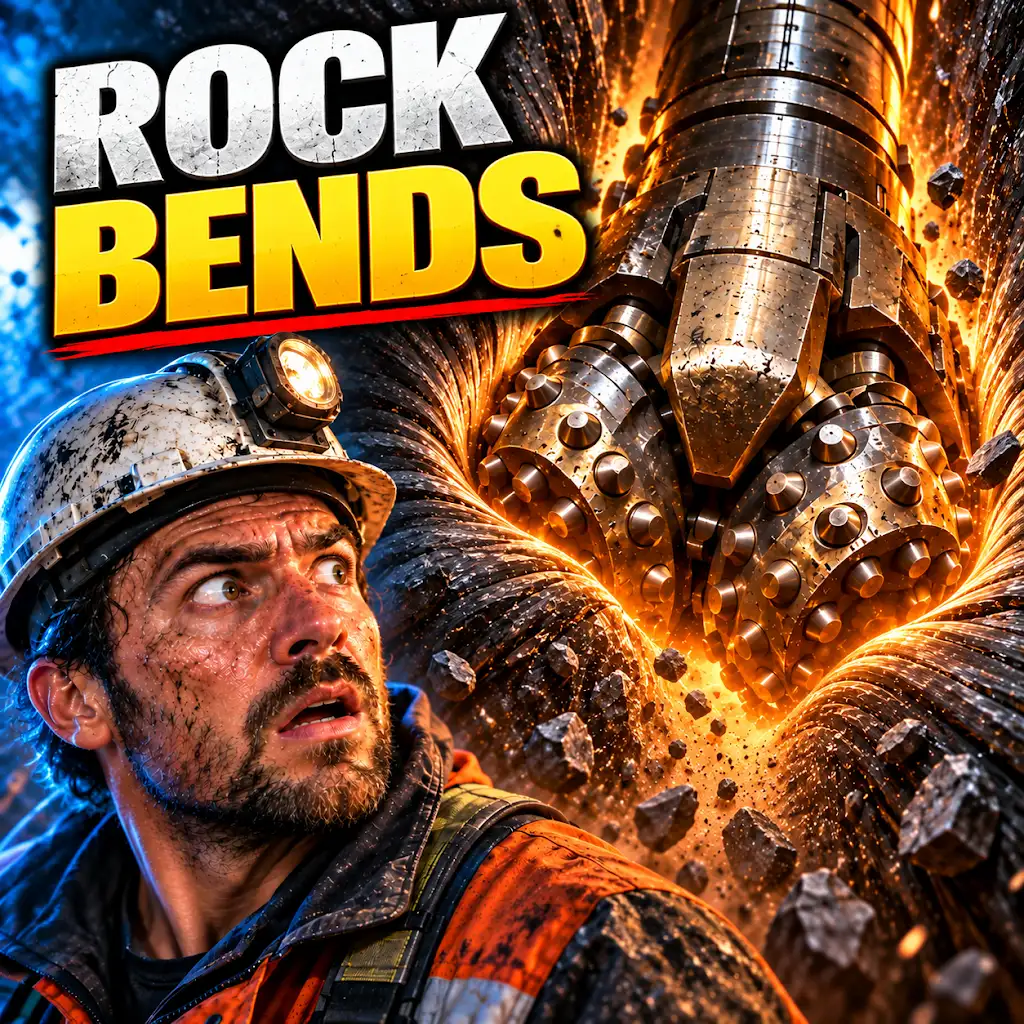
We Drilled 12 KM Into Earth—Then the Rock Started Bending
FAQs
1. How deep is 12 kilometers underground?
The depth of 12 kilometers underground is equivalent to approximately 7.46 miles.
2. What can be found at a depth of 12 kilometers underground?
At a depth of 12 kilometers underground, one would typically find the Earth’s upper mantle, which consists of solid rock material.
3. How does the pressure change at a depth of 12 kilometers underground?
At a depth of 12 kilometers underground, the pressure is significantly higher compared to the surface. The pressure increases by approximately 360 times the atmospheric pressure at sea level.
4. Are there any human-made structures that reach a depth of 12 kilometers underground?
As of now, there are no human-made structures that extend to a depth of 12 kilometers underground. The deepest human-made structure is the Kola Superdeep Borehole in Russia, which reaches a depth of about 12 kilometers.
5. What geological processes occur at a depth of 12 kilometers underground?
At a depth of 12 kilometers underground, various geological processes take place, such as the movement of tectonic plates, the formation of magma chambers, and the generation of seismic activity.